


North Korea Inside
· Pyongyang to Seoul in One Minute: North Korea Tests New Hypersonic Missile ‘Hwasong-11Ma’
· North Korean soldier crosses MDL on foot, 1st military defection under Lee administration
· North Korea: “The Emergence of a Multipolar World is an Irreversible Trend… Independence Remains an Unassailable Principle”
· “Those Who Cherish Their Families Can Also Love Their Country”: North Korea Signals Concern Over Rising ‘Family Breakdown’
Kim Myong-sung

They combine the high velocity of ballistic missiles with the low-altitude flight and maneuverability of cruise missiles, making them nearly impossible to intercept with existing air defense technologies. However, according to South Korea’s military, the missile in this test did not exhibit “any irregular maneuvers involving sudden changes in altitude or direction.”
This suggests that while North Korea may have mastered the basic gliding mechanics of hypersonic flight, its precision control and evasive capabilities remain incomplete. Notably, Kim Jong-un did not attend the launch. Experts interpret his absence as a sign that this was a technical verification test focused on performance assessment rather than a political demonstration.
Even so, some analysts view the timing—just one week before the APEC summit—as a deliberate political message, designed to draw international attention and reinforce Pyongyang’s relevance amid shifting regional dynamics. With an estimated range of 400 kilometers, the Hwasong-11Ma could reach southern South Korean cities such as Gyeongju, further underscoring its potential operational significance.
Defense analysts describe this test as part of an “intermediate phase” to verify the missile’s accuracy and stability, rather than the completion of North Korea’s hypersonic weapons program. Experts expect North Korea to conduct multiple additional tests to refine the Hwasong-11Ma’s glide performance and accuracy. Pyongyang is also believed to be developing strategies to expand the deployment of hypersonic systems from short- to medium-range categories.
If such tests continue, they are likely to place growing pressure on the South Korea–U.S. integrated missile defense network, heightening regional security concerns in the months ahead.
A North Korean soldier crossed the heavily fortified border into South Korea on foot on Oct. 19, and several armed North Korean troops breached the Military Demarcation Line (MDL) that same day in what appeared to be a tense pursuit, South Korean military sources said on Thursday.
South Korean soldiers identified the defector near a thicket by the MDL and tracked his movement with thermal imaging equipment and other surveillance tools, according to military sources.
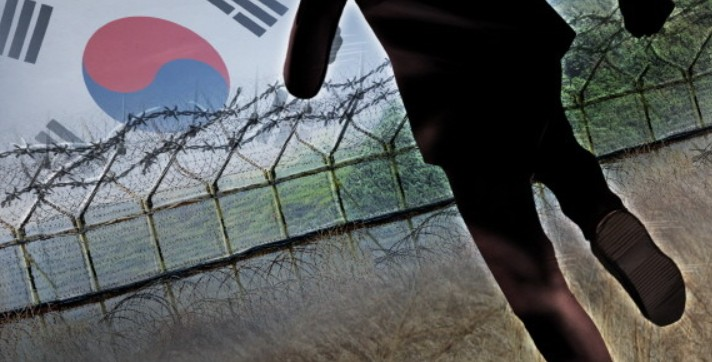
The soldiers guided him into custody minutes later. The North Korean soldier wore a North Korean military uniform, was unarmed, raised his hands and said he came to defect to the South. This marks the first known military defection under the Lee Jae Myung administration.
Although the North has installed triple-layer fences and buried land mines near the border, the South Korean military assessed that the defector did not take part in those fortification efforts.
Observers believe that he likely fled from a frontline unit or guard post. At almost the same time, South Korean forces observed fewer than 10 North Korean troops searching around their guard post on the northern side of the MDL.
Later in the afternoon, between 2 p.m. and 3 p.m., South Korean forces detected several armed North Korean soldiers south of the MDL.
The group appeared to be a chase team sent after the defector. The South Korean military issued warning broadcasts and fired warning shots in accordance with standard procedure. The armed group reportedly got as close as about 200 meters (656 feet) to a South Korean guard post before retreating northward. The South's military has not issued further details regarding this incident.
The exact point where the armed team crossed the MDL remains unclear. The terrain in the area features dense vegetation and rugged contours that complicate surveillance.
Another group of about 10 armed North Korean soldiers crossed the MDL in Gangwon on April 8 along the same line of contact. At the time, the Joint Chiefs of Staff (JCS) said they had tracked the group from the northern side and issued a warning broadcast as soon as the crossing occurred.
A JCS official said the forces “responded according to procedure” but declined to release further details due to operational security concerns.
Observers say the breach reflects North Korea's intensified efforts to track down defectors after North Korean leader Kim Jong‑un declared South Korea a “hostile state.”
Pyongyang has also strengthened border fortifications and surveillance along both the land frontier and the North‑China border.
North Korea: “The Emergence of a Multipolar World is an Irreversible Trend… Independence Remains an Unassailable Principle”
Amid its recent expansion of diplomatic engagements, North Korea has signaled, through state media, the advent of a multipolar world order as an inevitable development, framing the decline of the Western-led system as a historical certainty. Observers interpret this as a dual-purpose narrative: domestically, to reinforce the legitimacy of its self-proclaimed independence, and externally, to solidify strategic ties with China and Russia, thereby enhancing Pyongyang’s diplomatic leverage.
In a commentary published on the 19th, the Rodong Sinmun, the official organ of the Workers’ Party of Korea, asserted that “the establishment of a multipolar world is an unshakable trend, and independence constitutes an unstoppable fundamental current in the contemporary international system.”
In an article titled “The New Transformation in International Relations is an Irresistible Trend of the Times,” the paper elaborated that “the free world order, which the West has stubbornly maintained since the conclusion of the Cold War, is collapsing before our eyes,” emphasizing that “the West can no longer assert unchallenged dominance over other nations.”
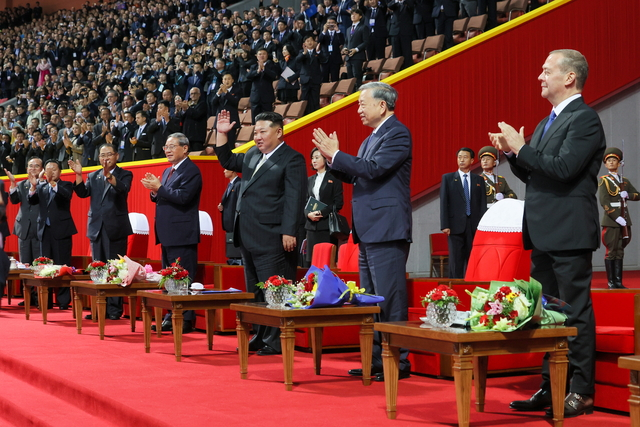
The commentary further noted that “countries that were once impoverished and subjugated now occupy positions on the international stage that demand recognition,” and cautioned that “the antiquated Western-led international economic framework is rapidly disintegrating, while attempts to expand military dominance are provoking inevitable backlash.”
This narrative aligns with North Korea’s recent diplomatic maneuvers aimed at consolidating its position within a purported multipolar bloc. Chairman Kim Jong Un’s activities include attending China’s military parade commemorating the 80th anniversary of victory in the War of Resistance Against Japanese Aggression, and hosting senior officials from China, Russia, and Southeast Asia at the 80th anniversary celebrations of the founding of the Workers’ Party.
These engagements underscore Pyongyang’s intent to position itself as an integral member of a multipolar order challenging the existing U.S.-centric unipolar system.
In a birthday congratulatory message to Russian President Vladimir Putin on October 7, Chairman Kim stated, “The North Korea-Russia alliance will make a significant contribution to the establishment of a just and multipolar world order.”
Analysts suggest that Pyongyang’s emphasis on multipolarity serves both to justify its confrontational stance toward the United States and Western powers and to reinforce the domestic perception of an independent, sovereign line of governance. The Rodong Sinmun’s commentary is widely regarded as a deliberate propaganda tool, crafted to convey to North Korean citizens that the ongoing transformation in the international system validates the country’s diplomatic and ideological orientation.
“Those Who Cherish Their Families Can Also Love Their Country”: North Korea Signals Concern Over Rising ‘Family Breakdown’
SEOUL — North Korea’s Rodong Sinmun highlighted the intrinsic link between familial devotion and patriotism in an article titled “Those Who Cherish Their Families Can Also Love Their Country Fervently,” published on October 17. Analysts interpret the piece as a response to increasing divorce rates and family disintegration amid the rise of the jangmadang (market) economy.
The newspaper asserted, “The country and the family are like a single organism,” emphasizing that “the family is the fundamental unit where parents, spouses, children, and siblings coexist, and it is through these families that the nation itself is constructed.” It further argued, “In our society, where the nation functions as one extended family, the welfare of each household and the prosperity of the country are inseparable,” adding that “only those who cherish their family can ardently love their country and emerge as true patriots.”
The commentary elaborated that “patriotism and familial devotion are mutually reinforcing, with the family serving as the wellspring of national loyalty.” It further proclaimed that “the family is the foundation of revolutionary spirit,” contending that “those who understand how to love their family can become loyal subjects who follow their leader and commander to the end, and true revolutionaries devoted to the homeland and its people,” thereby underscoring the regime’s focus on social cohesion and political loyalty.
Observers suggest that this rhetorical emphasis reflects North Korea’s mounting domestic concerns over family breakdown, exacerbated by the growth of the market economy. Testimonies from defectors indicate that divorce has risen sharply among couples in their 30s, frequently leaving minor children vulnerable and homeless. Urban women, often the primary earners within the informal market system, increasingly assert dissatisfaction with patriarchal norms through divorce or leaving home.
One defector, Ms. A, who entered South Korea three years ago, noted: “As women’s economic status rises and male authority diminishes, marital conflicts and divorce rates are high.” Reports indicate that children are often neglected or left on the streets due to inadequate enforcement of child support and the absence of a functioning social safety net.
The growing prevalence of sexual openness and infidelity has also accelerated family disintegration, while experts argue that North Korea’s family law remains largely disconnected from social realities, compounding the impact on children.
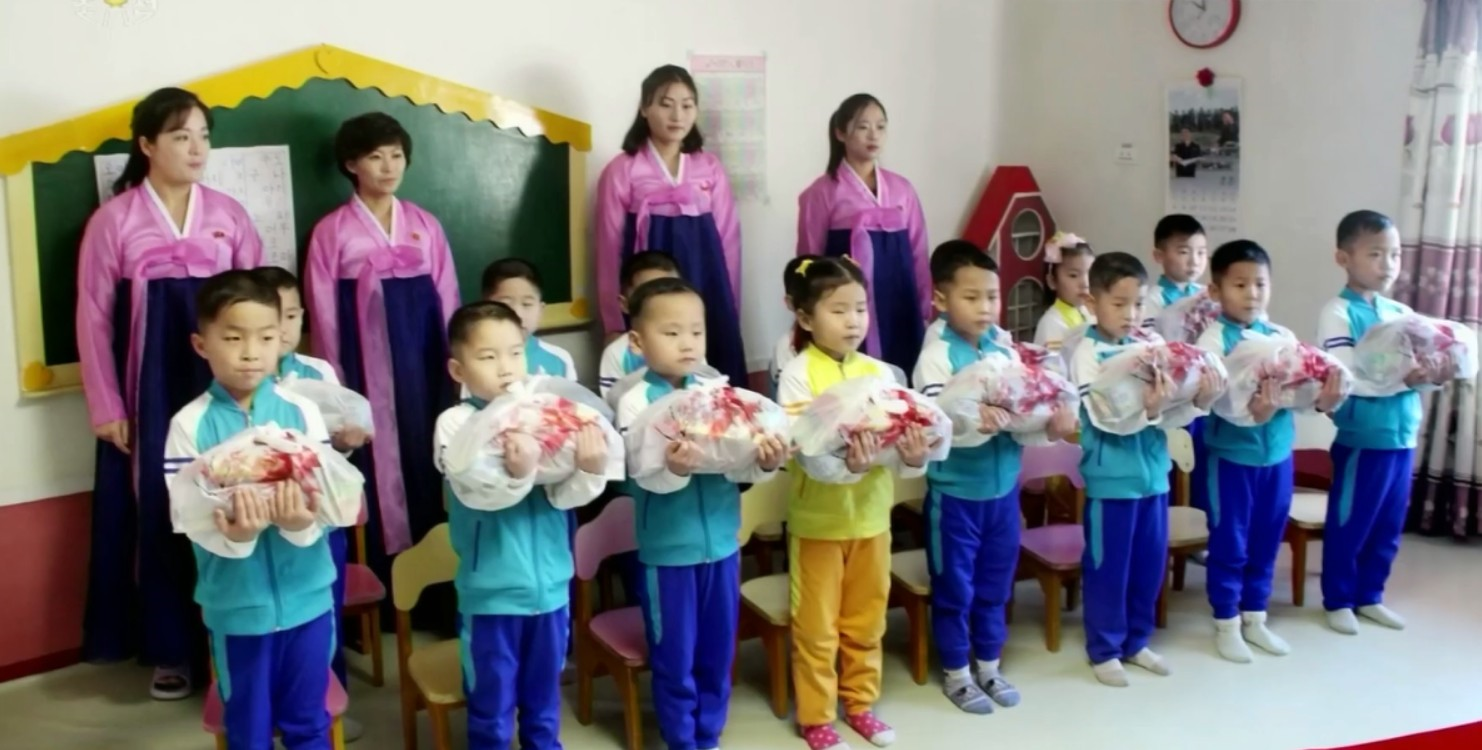
Analysts contend that family breakdown in North Korea is not merely a matter of individual behavior but a structural issue stemming from the intersection of political, economic, and institutional forces. Traditional family bonds have been weakened by early indoctrination that elevates loyalty to the leader as a surrogate paternal figure.
Economically, the 1990s famine and ensuing mass defections severely disrupted family structures, with many women who fled to China facing human trafficking, forced marriages, or prolonged separation from their families. The collapse of the rationing system forced couples to live apart, and remarriage and defection further eroded marital norms.
Institutionally, family laws—covering child support enforcement and remarriage regulations—are inconsistently applied, leaving women and children vulnerable. In some cases, women abandon their families due to the prohibitive costs of education or restricted access to universities for children outside elite cadre families.
A senior official from a state-run research institute assessed, “North Korea is confronting a structural crisis of family disintegration, arising from the tension between its ‘socialist extended family theory’ and the realities of a market economy. This phenomenon is generating social instability, moral erosion, and rising juvenile delinquency.”
The Rodong Sinmun article thus reflects the regime’s concern that family cohesion is not only a social issue but also a matter of national stability and political loyalty, underscoring the inseparability of private life and state imperatives in North Korean society.
-
PREV [Current Affairs Analysis]
-
NEXT [Feature Article]