

-
 [Feature Article]
Envisioning a Joint Inter-Korean Winter Olympics Jong-hwa ParkChairmanPeace and Unification SolidarityThe 2018 PyeongChang Winter Olympics represented a deliberate effort to ease entrenched tensions on the Korean Peninsula and to create diplomatic space for engagement. North Korean officials, athletes, and cheerleaders traveled to PyeongChang, and the Games fostered an atmosphere in which governmental and non-governmental actors alike participated in what may fairly be described as a notable instance of sports diplomacy. The event also set the stage for unprecedented high-level diplomacy, including direct engagement between North Korea and the United States.While South Korea’s active facilitation was indispensable, the subsequent convening of two U.S.–North Korea summits—the Singapore Summit (June 12, 2018) and the Hanoi Summit (February 27–28, 2019)—also reflected the political incentives of the respective leaders. Both President Donald Trump and Chairman Kim Jong Un demonstrated a willingness to depart from established diplomatic practice, motivated in part by the strategic value of high-visibility engagement on the global stage.Notwithstanding these developments, the structural realities of the Korean Peninsula remain resistant to rapid transformation. The geopolitical and diplomatic environment differs markedly from the conditions that enabled German reunification.Since the simultaneous admission of both Koreas to the United Nations in 1991, South Korea has maintained normalized diplomatic and trade relations not only with the United States and Japan but also with China and Russia. By contrast, North Korea continues to lack formal diplomatic relations with the United States and Japan.At the center of current tensions lies the North Korean nuclear issue—a complex and multidimensional challenge. The two U.S.–North Korea summits concluded without formal agreements. Although both sides articulated broad principles—North Korea’s commitment to “complete denuclearization” and U.S. security guarantees—the resulting joint statements did not specify implementation mechanisms, sequencing, or verification procedures. The absence of such details ultimately limited the durability of those diplomatic efforts.The absence of a North Korean delegation at the Milan–Cortina Winter Olympics represented a missed opportunity for renewed inter-Korean contact. However, forthcoming diplomatic developments may prove consequential. Should a new opportunity for a U.S.–North Korea summit emerge in connection with President Trump’s anticipated April visit to China, it could create diplomatic momentum with implications for the broader regional environment.Recent reports following a meeting between South Korean Foreign Minister Hyun-joon Cho and U.S. Secretary of State Marco Rubio indicate that the United States may be open to limited flexibility regarding the UN Security Council sanctions regime established after North Korea’s first nuclear test in 2006 (UNSCR 1718).In particular, Washington has reportedly signaled openness to humanitarian exceptions, including nutritional assistance, medical supplies, and support for water infrastructure. Given the United States’ central role in sustaining the sanctions framework, such signals may be interpreted as an opening for calibrated engagement.If the United States and Japan—neither of which maintains diplomatic relations with Pyongyang—were to adopt similarly constructive approaches, such steps would align with Seoul’s longstanding policy objective of fostering inter-Korean exchange, peaceful coexistence, and shared prosperity. Participation by China and Russia in such efforts would also be essential.Under these circumstances, it may be more productive to focus less on the binary question of formal recognition versus tacit acceptance of North Korea’s nuclear status, and instead to establish the long-term objective of a denuclearized and secure Korean Peninsula as a shared strategic goal. A phased approach—potentially beginning with a verified nuclear freeze—could provide a pragmatic starting point for negotiations.South Korea, both because of and despite the reality of division, has invested heavily in its national defense capabilities and is widely regarded as possessing one of the world’s leading conventional military forces. It has likewise achieved significant economic, technological, and cultural advancement. North Korea, though economically underdeveloped, has declared itself a nuclear-armed state.The war in Ukraine has underscored the fragility of security assurances. Ukraine’s decision to relinquish its nuclear arsenal under the 1994 Budapest Memorandum—receiving assurances from Russia, the United States, and the United Kingdom—did not ultimately prevent territorial violation or sustained conflict. This experience inevitably shapes strategic calculations on the Korean Peninsula.North Korea’s reported military support for Russia—including personnel and materiel—has come at significant human cost, but it has also reportedly provided combat experience as well as economic and strategic compensation. At the same time, the war has demonstrated the immense material and human costs of sustained conflict and the burdens of post-war reconstruction. These lessons may shape long-term security assessments in Pyongyang.Looking ahead, North Korea may seek to diversify its external partnerships beyond reliance on limited economic support from China, while exploring calibrated engagement with the United States and Japan. For its part, South Korea could interpret North Korea’s declaration of a “hostile two-state relationship” not as a permanent rupture but as a provisional stage consistent with the 1991 Inter-Korean Basic Agreement, which envisioned two systems coexisting within a broader national framework.Reducing Pyongyang’s concern over potential “absorption unification” and instead promoting peaceful coexistence characterized by constructive competition may create conditions conducive to gradual integration. Unlike the German case—where political absorption preceded social integration—the Korean Peninsula may benefit from a model that prioritizes peaceful coexistence, reciprocal development, and incremental reconciliation. In the context of an increasingly multipolar Northeast Asia, such an approach would emphasize autonomy, prudence, and long-term stability.Within this broader strategic vision, sports diplomacy retains both symbolic and practical value. If incremental confidence-building measures accumulate, the possibility of a jointly hosted Olympic Games in 2032 could become more realistic. The co-hosting model adopted by Milan and Cortina for the 2026 Winter Olympics demonstrates the viability of geographically distributed arrangements. A Seoul–Pyongyang joint bid, if conditions permit, could serve simultaneously as a symbol and instrument of reduced tensions.Sport is inherently competitive, and victory is celebrated through medals. Yet the enduring value of sport lies in the discipline, cooperation, and mutual respect cultivated through the process itself. A jointly hosted 2032 Olympic Games would not, in itself, resolve the structural challenges of the Korean Peninsula. It could, however, provide a meaningful platform for reducing tensions, promoting regional stability, and advancing a broader vision of peace and shared prosperity in Northeast Asia.The aspiration for a Seoul–Pyongyang Olympic Games is therefore not merely symbolic; it reflects a strategic hope that incremental confidence-building, sustained diplomacy, and peaceful coexistence may ultimately create the conditions for a more stable and cooperative Korean Peninsula.
26.02.13 -
 [Thematic Analysis]
Recommendations for Advancing Mutual National Interests Between the Republic of Korea and the United States Following the Coupang Incident Yui Haeng ChoAssistant ProfessorSeoul Theological UniversityThe situation surrounding the Coupang incident has escalated with notable speed and complexity. What began as a large-scale personal data breach involving a private company has evolved into a multidimensional issue encompassing regulatory enforcement, trade policy sensitivities, and alliance politics.The initial response by the South Korean government—including intensified oversight measures and a rigorous National Assembly hearing—was grounded in concerns over cybersecurity and personal data protection. Subsequent developments, however, have transformed the matter into a broader diplomatic and political issue.Coupang has emphasized its status as a U.S.-listed company and mobilized an extensive lobbying network, reportedly including individuals with close ties to senior U.S. political leadership. This strategy effectively internationalized what had initially been a domestic regulatory matter. In parallel, the U.S. ambassador to South Korea sent a direct letter to the South Korean deputy prime minister and minister of science and ICT, raising concerns over what was characterized as discriminatory treatment of U.S. firms—an intervention that departed from customary diplomatic practice.The issue was further politicized by President Trump’s announcement of an increase in tariffs on South Korean goods from 15 percent to 25 percent. Although the South Korean government stated unequivocally that the tariff decision is unrelated to the Coupang case, international observers have tended to interpret the two developments as interconnected.As a result, an incident that originated in a private-sector data security failure has evolved into a perceived strategic dispute between two allies. This transformation has contributed to the proliferation of distorted narratives within both policy communities.In South Korea, some political actors have portrayed the government’s regulatory posture as evidence of anti-American sentiment or a pro-China orientation. In the United States, certain political voices have depicted the situation as an instance of targeted regulation or political pressure against American companies operating overseas.These perceptions were further reinforced by a statement from the U.S. House Judiciary Committee, issued shortly after the tariff announcement, warning of potential economic retaliation should U.S. firms face discriminatory treatment. The issue has also become entangled with deliberations over pending special legislation on U.S. investment in the South Korean National Assembly, at times appearing to function as a bargaining variable in broader negotiations.The dispatch of senior South Korean officials to Washington and references to legislative coordination underscore the degree of diplomatic salience the matter has acquired. As a consequence, the original policy objectives—consumer data protection and cyber risk management—have been increasingly overshadowed by trade and tariff-related considerations.It is therefore essential to re-anchor the discussion in the substantive core of the issue. According to government estimates, the Coupang data breach affected approximately 33 million user records; even the company’s own estimate of 30 million constitutes an incident of exceptional scale. The compromised data reportedly include names, addresses, and contact information—datasets that, when combined, carry significant potential for secondary harm, including identity theft, financial fraud, targeted criminal activity, and sophisticated social engineering attacks.Even under a conservative assessment, the breach may have exposed personal information corresponding to more than 60 percent of the South Korean population. Given the high penetration of digital services among adults, the potential scope and severity of downstream harm are considerable.Moreover, South Korea’s digital ecosystem is marked by a high degree of integration among electronic government services, financial authentication systems, and online contracting mechanisms linked to resident registration identifiers. In such an environment, the systemic ripple effects of a large-scale data breach can be more severe than in jurisdictions with more fragmented digital architectures.Against this backdrop, proactive government intervention and enhanced supervisory oversight are consistent with preventive public responsibility and cannot reasonably be characterized as excessive. Accordingly, responses to the incident should be clearly decoupled from tariff negotiations and pursued instead through working-level cooperation between South Korean and U.S. authorities responsible for cybersecurity and personal data protection, within established frameworks of regulatory enforcement and consumer protection.Correcting misperceptions is a necessary first step. Claims that the South Korean government’s actions amount to “political pressure on U.S. companies” overlook a foundational principle of modern regulation: personal data protection and information security requirements are nationality-neutral. Regulatory scrutiny is driven by the scale of harm, the adequacy of risk management, the fulfillment of preventive obligations, and the effectiveness of post-incident responses—not by the national origin of a firm.South Korea’s supervisory authorities have applied these standards consistently in past cases involving domestic telecommunications providers, financial institutions, and digital platform companies, all of which have been subject to investigations, hearings, fines, corrective orders, and mandates for recurrence prevention following major breaches. These measures reflect accumulated institutional practice rather than selective or politically motivated enforcement. When regulatory processes are reframed through a political lens, both market confidence and regulatory credibility are eroded, increasing uncertainty for investors and stakeholders alike.Similarly, domestic narratives portraying the issue as evidence of either anti-American sentiment or geopolitical realignment obscure the underlying institutional reality. Digital regulation and personal data protection constitute autonomous policy domains shaped by technological change and evolving risk structures, rather than by diplomatic alignment.Democratic governments bear an obligation to safeguard the integrity of their digital environments and protect citizens’ data, and supervisory agencies operate pursuant to this delegated mandate. Across advanced economies, regulatory regimes are converging toward more stringent standards, including accelerated breach notification requirements, codified security investment obligations, mandatory internal control frameworks, and expanded executive accountability.These developments reflect a shared response to structurally heightened cyber risks, not ideological positioning. Politicized interpretations therefore impede constructive engagement with the technical and institutional challenges at hand.South Korea’s regulatory approach is consistent with broader international developments in digital governance. The European Union’s General Data Protection Regulation (GDPR) has established data protection as a global normative benchmark, embedding principles such as explicit consent, data minimization, and enforceable rights to erasure and portability. Its revenue-linked penalty structure has effectively transformed cybersecurity from a declarative commitment into a core managerial responsibility.This model has exerted significant influence on regulatory design worldwide, with multinational corporations increasingly adopting GDPR standards as a global compliance baseline. Within the United States, privacy protections and federal cybersecurity requirements have likewise continued to expand, underscoring that data protection is no longer a discretionary policy domain but an established international norm. South Korea’s regulatory measures align with this trajectory and therefore cannot credibly be characterized as anomalous in either scope or rigor.Cyber threats are inherently transnational, necessitating international cooperation and the development of shared norms. Instruments such as the Budapest Convention on Cybercrime provide frameworks for cross-border investigative cooperation, evidence preservation, and jurisdictional coordination. Ongoing efforts to develop a United Nations convention on cybercrime further underscore the international community’s commitment to governing cyberspace.National cybersecurity strategies increasingly prioritize critical infrastructure protection, public–private partnerships, and information-sharing mechanisms. Collectively, these developments reflect a growing recognition that robust information security regulation underpins market sustainability and transactional trust. While minimally regulated markets may yield short-term efficiencies, they carry the risk of long-term trust erosion and systemic failure.Although Coupang is listed on a U.S. stock exchange, the majority of its revenues are derived from South Korean consumers and the Korean market. Strengthening its security posture and enhancing transparency therefore serves shared interests rather than narrowly national ones. Increased investment in cybersecurity, reinforced internal controls, and more advanced incident response capabilities contribute positively to corporate risk management and firm valuation from the perspective of U.S. investors, while simultaneously protecting South Korean consumers.The United States itself treats cybersecurity and data protection as core components of national and economic security, reinforcing corporate accountability through securities regulation, critical infrastructure standards, and supply chain security policies. In this respect, the Coupang issue reflects a convergence—rather than a divergence—of regulatory philosophies.Within an expanded conception of security, cyber cooperation has emerged as a central pillar of the ROK–U.S. alliance. Alliance cooperation now extends beyond traditional military domains into technology, data governance, digital infrastructure, and platform ecosystems.Cyber incidents can generate direct economic and security repercussions across finance, logistics, energy, and communications, underscoring the need for coordinated alliance responses. Harmonizing security standards, coordinating incident response, sharing threat intelligence, and securing digital supply chains collectively enhance the alliance’s strategic depth. Regulatory cooperation should therefore be understood as an extension of security cooperation rather than as an impediment to it.In conclusion, the Coupang incident should be addressed primarily as a matter of regulatory enforcement focused on consumer protection and the prevention of recurrence, rather than as a political signal or a source of diplomatic confrontation. Allowing the issue to escalate into a broader trade or alliance dispute would impose unnecessary political and economic costs on both sides.By contrast, reframing the incident as an opportunity for working-level cooperation, mutual recognition of regulatory standards, and institutional learning can reinforce regulatory trust and strengthen alliance cohesion. At this juncture, what is required is strategic restraint combined with sustained policy communication—guiding the situation toward norms-based cooperation rather than conflict.
26.02.06 -
 [Feature Article]
The Significance and Challenges of the Three Core Objectives in the Lee Jae-myung Administration’s Korean Peninsula Peace Initiative Jong-cheol ParkVisiting Professor, Daejeon UniversityI. Strategic Significance of the Three Core ObjectivesThe year 2025 marks the 80th anniversary of both Korea’s liberation and its subsequent division. Over the past eight decades, profound transformations have occurred in the international order, the global ecological environment, inter-Korean relations, and the nature of the North Korean threat.The post–Cold War era of U.S. unipolarity has given way to a complex multipolar environment characterized by fragmentation across security, economic, cultural, and global governance domains. At the same time, advances in science and technology, industrial restructuring, climate change, and energy transitions are unfolding in overlapping and mutually reinforcing ways.Inter-Korean relations, which fluctuated between engagement and confrontation in the post-Cold War period, have entered a prolonged phase of near-total stalemate. North Korea has consolidated its nuclear capabilities as a de facto reality, articulated a doctrine of “two hostile states,” and oriented its strategy toward sustained confrontation with the South.This convergence of domestic and international shifts necessitates a comprehensive reassessment of South Korea’s North Korea and unification policy. A new paradigm for peace and coexistence is required—one that responds to transformations in the international system and global environment while realistically addressing altered inter-Korean dynamics.Against this backdrop, President Lee Jae-myung articulated three core objectives for peace on the Korean Peninsula in his 2025 Liberation Day address: (1) institutionalizing peaceful coexistence between the two Korea, (2) restoring the foundations for exchange and cooperation while creating conditions for joint growth, and (3) pursuing a nuclear-free Korean Peninsula through international cooperation.The first objective—institutionalizing peaceful coexistence—seeks to end entrenched hostility and establish durable mechanisms for peace, including the prevention of accidental clashes and the effective management of crises. In this context, President Lee emphasized respect for North Korea’s system, rejection of absorption-based unification, and the exclusion of hostile acts.The central pillar of this objective is the restoration of trust through sustained dialogue. Accordingly, the administration has undertaken initial confidence-building measures, such as halting leaflet distribution and suspending loudspeaker broadcasts, while signaling its intention to implement more substantive tension-reduction steps.The administration has also committed to respecting existing inter-Korean agreements reached under previous governments and selectively implementing feasible provisions. In particular, it has proposed a phased restoration of the September 19 Military Agreement as a practical mechanism to prevent accidental clashes and rebuild military confidence. Restoring inter-Korean communication channels, including military crisis management mechanisms, is viewed as essential to consolidating an institutional framework for peace.The second objective—restoring the foundations for exchange and cooperation and creating conditions for joint growth—seeks to rebuild socio-economic linkages through the resumption of exchanges in daily life, economic activity, and social engagement.Cooperation is to be pursued on the basis of mutual benefit and shared prosperity, with the goal of increasing interdependence and reinforcing the material foundations of stable peace. By delivering tangible improvements to the lives of both North and South Koreans, this approach aims to enhance the long-term sustainability of peaceful coexistence.The third objective—achieving a nuclear-free Korean Peninsula through international cooperation—acknowledges that denuclearization is a complex and protracted challenge unlikely to be resolved in the short term. The administration therefore envisions a multi-layered approach combining inter-Korean dialogue, U.S.–North Korea engagement, and coordinated multilateral diplomacy. The peaceful resolution of the nuclear issue is to be pursued through close South Korea–U.S. coordination, renewed North Korea–U.S. dialogue, and sustained international cooperation.II. Key Policy Tasks Across the Three ObjectivesIn its 2025 year-end work report, the Ministry of Unification outlined concrete measures aligned with these objectives. Based on the Ministry’s policy direction, the key tasks can be summarized as follows.1. Institutionalizing Peaceful CoexistenceRestoring inter-Korean communication channels is an immediate priority. The prolonged absence of dialogue has exacerbated misunderstandings and mistrust, underscoring the urgency of reestablishing mechanisms such as the Panmunjom liaison channel and military hotlines. Beyond restoration, jointly agreed procedures and safety protocols are needed to ensure effective crisis management.The phased reinstatement of the September 19 Military Agreement is particularly important for tension reduction and trust building. Institutionalizing confidence-building measures, such as establishing a joint inter-Korean crisis management center and developing a shared crisis response platform, would further strengthen stability.Over the medium to long term, a coherent roadmap toward a peace regime is required. Building on prior discussions, this roadmap should articulate sequential steps toward an end-of-war declaration, a peace agreement, and the formal establishment of a peace regime. Additionally, concluding a “Basic Inter-Korean Agreement” defining peaceful relations oriented toward eventual unification would provide a legal and normative foundation. Enacting a “Peaceful Unification Foundation Act” could further facilitate public participation in peacebuilding efforts.2. Restoring the Foundations for Exchange, Cooperation, and Joint GrowthIn light of global ecological changes and growing livelihood concerns, policy innovation is required to identify cooperation projects that deliver tangible benefits to populations on both sides of the border. Healthcare cooperation represents a particularly promising entry point.Comprehensive action plans addressing infectious diseases, maternal and child health, and healthcare infrastructure should be developed. One option would be to establish a trust fund to support disease eradication, medical supply provision, and pilot hospital modernization projects, implemented in partnership with international organizations and non-governmental actors.Climate and environmental cooperation could be advanced through multilateral carbon-neutrality frameworks. Given North Korea’s expressed interest in engaging international institutions on climate issues, the two Koreas could pursue cooperation within existing multilateral mechanisms. Similarly, in the area of disaster safety, a Korean Peninsula Disaster Risk Cooperation Program could be developed to facilitate rapid joint responses to natural disasters, drawing on international emergency response frameworks.Peacebuilding in border regions also holds significant potential. Establishing legislation for the peaceful use of the DMZ, implementing safeguards for border residents, and operationalizing the Special Peace Economy Zone Act would support balanced regional development. In parallel, restoring civilian-centered exchange requires easing restrictions on interpersonal contact and expanding both the scope and utilization of the Inter-Korean Exchange and Cooperation Fund.3. A Nuclear-Free Korean Peninsula and International CooperationProgress on denuclearization is closely linked to prospects for peaceful coexistence and joint growth. A phased approach should be adopted, beginning with initial limitations on nuclear capabilities, followed by gradual reductions over the medium to long term. For each phase, a calibrated package combining security assurances and economic incentives should be articulated.Efforts to resume U.S.–North Korea dialogue and inter-Korean dialogue must proceed in parallel. South Korea’s role as a facilitator—helping to create conditions conducive to renewed U.S.–North Korea engagement—is critical. This requires close coordination with the United States, as well as the maintenance of constructive relations with China, Russia, and other key stakeholders. To further broaden international support, the appointment of dedicated “Korean Peninsula Peace Envoys” to major capitals could also be considered.III. ConclusionThe Lee Jae-myung administration’s Korean Peninsula Peace Initiative seeks a structural transformation of inter-Korean relations through peace management, restored exchange and cooperation, and multilateral denuclearization efforts. At its core, the initiative aims to rebuild trust, institutionalize peace through socio-economic interdependence, and expand international cooperation in pursuit of a nuclear-free peninsula.Realizing these objectives will require a phased and systematic policy package supported by detailed implementation plans. In parallel, sustained efforts to reduce inter-Korean tensions and strengthen international coordination are essential.Domestically, expanding peace, unification, and democratic citizenship education can help build public consensus for peaceful coexistence. At the same time, strengthening governance through greater transparency, expanded access to North Korea–related materials, and enhanced research infrastructure will be critical to sustaining informed and effective policymaking.Taken together, these efforts represent a pragmatic attempt to adapt peace policy on the Korean Peninsula to a transformed strategic environment—one in which managing risk, institutionalizing stability, and broadening cooperation are no longer optional but necessary.
26.01.23 -
 [Issue Brief]
Restoring South Korea–China Relations: A Structural Precondition for Advancing Inter-Korean Relations— Reframing the ROK–U.S. Alliance as a Strategic Asset, Not SubordinationProfessor. Choi Jae dukSeoul School of Integrated Science and TechnologyPresident Lee Jae-myung’s state visit to China in January 2026—the first by a South Korean president in nearly eight years—marks a critical inflection point in the normalization of Korea–China relations. Coming on the heels of President Xi Jinping’s visit to Seoul in 2025, the summit signals a shared recognition that bilateral ties require strategic recalibration after a prolonged period of tension.Ahead of the visit, President Lee publicly reaffirmed South Korea’s adherence to the “One China” principle, as originally agreed upon at the establishment of diplomatic relations, in an interview with China Central Television (CCTV). By clearly restating Seoul’s long-standing position on the Taiwan issue, the administration took deliberate steps to prevent unnecessary strategic misperceptions and to restore an institutional baseline for diplomatic recovery. At the same time, President Lee emphasized that confrontation with China does not serve South Korea’s national interests. While underscoring the enduring importance of the ROK–U.S. alliance, he articulated Korea’s intent to pursue greater strategic autonomy amid intensifying U.S.–China competition.In this sense, the state visit represents more than bilateral rapprochement. It constitutes an effort by South Korea to reposition itself amid shifting great-power dynamics in Northeast Asia. The restoration of Korea–China relations functions simultaneously as a catalyst for economic stabilization, a diplomatic foundation for managing peace on the Korean Peninsula, and a strategic choice to recalibrate South Korea’s external posture during a period of structural transformation in the international order. Expanding diplomatic autonomy will be essential to reestablishing a strategic compass for South Korean foreign policy over the next decade.This recalibration must be understood against the backdrop of evolving U.S. strategy. In December 2025, the Trump administration released its second National Security Strategy (NSS), which revealed a notable shift in Washington’s global outlook. The document does not frame China as an ideological adversary or a target of regime-change, nor does it emphasize an overarching ideological confrontation.While it identifies the Taiwan Strait as a “critical strategic issue,” it places greater emphasis on allied cooperation and role-sharing rather than on direct U.S. military intervention. More significantly, the NSS identifies technology, industrial capacity, and supply chains as core domains of national security, signaling that the center of gravity in U.S.–China competition is shifting decisively from the military sphere to the technological and economic arenas.Of particular relevance to Seoul is what the NSS omits: there is no explicit reference to the North Korean nuclear issue. This absence suggests a relative downgrading of the Korean Peninsula within U.S. strategic priorities. Such a shift implies not only changes in Washington’s global posture but also the need for South Korea to reassess its own diplomatic and security strategies accordingly.These developments reflect broader structural constraints on American power. In the immediate post–World War II era, the United States accounted for roughly half of global GDP, enabling it to design and sustain the international order largely on its own terms.Today, the U.S. share has declined to approximately 25 percent, while China—whose global economic footprint was negligible four decades ago—now accounts for nearly 18 percent. Although China’s growth has slowed from its earlier breakneck pace, it has entered a phase of sustained medium-speed expansion while concentrating national resources on narrowing the technological gap with the United States.China has already made rapid advances in areas such as robotics, unmanned systems, defense technologies, and space capabilities. Its push for semiconductor self-sufficiency has become a core national strategy, and the expansion of AI ecosystems such as DeepSeek illustrates China’s ambition to shape next-generation digital standards. Through long-term initiatives such as China Standards 2035, Beijing is positioning itself not as a passive rule-taker but as an active architect of global technological governance.At the same time, China is moving to fill strategic space created by U.S. adjustments in Northeast Asia. Beyond cautious neighborhood diplomacy, Beijing has begun to signal a more proactive role in regional realignment. The visual symbolism of Chairman Kim Jong-un and President Vladimir Putin flanking President Xi Jinping at China’s Victory Day ceremony conveyed a message of emerging strategic coordination among China, North Korea, and Russia.Concurrently, China’s renewed emphasis on revitalizing its northeastern provinces and integrating eastern coastal development into the Belt and Road Initiative suggests a reorientation of strategic focus toward Northeast Asia.This trajectory was further underscored at the Shanghai Cooperation Organization (SCO) summit held in Tianjin in August 2025. The largest gathering in the organization’s history, the summit adopted both the Tianjin Declaration and a development strategy extending to 2035.These documents significantly broadened the SCO’s scope beyond security to include economic cooperation, science and technology, digital governance, and infrastructure development—highlighting China’s intent to expand its institutional and economic influence across Northeast Asia and Eurasia.Against this backdrop, the U.S. decision not to frame China as a systemic or ideological adversary in the 2025 NSS reflects strategic realism. Washington increasingly lacks the political, fiscal, and institutional capacity to unilaterally manage global order. Consequently, U.S.–China competition is evolving into a long-term structural contest centered on technology and economic resilience rather than direct military confrontation. The emphasis on allied burden-sharing, particularly regarding Taiwan, follows the same logic.In the near term, this strategic shift may actually reduce the likelihood of acute military crises in the Taiwan Strait. Although China’s military capabilities have expanded significantly, they do not yet match those of the United States in terms of full-scale warfighting capacity.At the same time, domestic constraints in the United States limit its ability to sustain prolonged large-scale conflicts. Under these conditions, strategic competition is increasingly taking the form of a protracted contest over technological ecosystems and economic rules rather than open conflict.For South Korea, these changes carry profound implications. The ROK–U.S. alliance remains the cornerstone of South Korea’s national security and must continue to be preserved. This is a non-negotiable premise. However, alliance centrality does not require the erosion of Seoul’s diplomatic autonomy. On the contrary, in a period of structural transition, the alliance should be leveraged not as a framework of subordination but as a strategic asset that expands South Korea’s policy options.During earlier phases of intensified U.S.–China rivalry, South Korea’s strategic space narrowed as alliance pressures mounted. Today, the landscape is more fluid. The United States is exhibiting stronger isolationist tendencies while demanding greater burden-sharing, and China is consolidating its regional focus while promoting new frameworks for diplomatic engagement. Between these forces, South Korea must secure sufficient structural space to actively shape its strategic choices.The omission of the North Korean nuclear issue from the NSS underscores a reordering of U.S. priorities on the Korean Peninsula. This development presents both risk and opportunity. While it may signal reduced U.S. attention, it simultaneously grants South Korea greater latitude to take initiative in managing peninsula affairs. Seoul must therefore evolve from a reactive ally into an active strategic actor within the alliance framework.The task ahead is to comprehensively leverage Korea’s geopolitical position and its economic and technological capabilities to expand strategic autonomy. While maintaining the alliance with Washington, Seoul must institutionalize its independent interests within that alliance. At the same time, Korea must manage frictions with China while enhancing its diplomatic standing amid Northeast Asia’s evolving order.The convergence of U.S. strategic retrenchment and China’s regional reorientation is opening a structural window for South Korea to move beyond passive adaptation toward proactive strategy. Seizing this opportunity—and translating it into sustained diplomatic autonomy—constitutes the central challenge for Korean foreign policy today.
26.01.16 -
 [Current Affairs Analysis]
South Korea’s Regulation of Coupang: Data Security, Not Discrimination, Lies at the Heart of the Controversy Chan-Kwon JeongDirector, National Security and Disaster Management Research InstituteThe large-scale personal data breach at platform company Coupang in November 2025 was not merely an isolated corporate security incident. Rather, it constituted a systemic event that exposed structural vulnerabilities in South Korea’s digital economy and its broader economic-security posture within the global digital order.Data breaches at major platform firms generate cascading effects that extend well beyond individual consumer harm, potentially undermining financial trust, disrupting supply chains, and weakening national competitiveness. As such, prevention, early detection, and rapid response are matters of public interest, not solely private corporate responsibility.In this case, Coupang repeatedly revised its public statements regarding both the timing of detection and the scope of the breach, exacerbating market uncertainty. More critically, the breach resulted not from an external cyber intrusion but from the actions of a former internal employee, and the company failed to identify the damage for approximately five months.This sequence of events points to a fundamental breakdown in internal security governance. Basic crisis-management protocols—such as the immediate revocation of access privileges upon employee departure and real-time monitoring of anomalous or unauthorized system activity—were either absent or ineffective.Accordingly, the South Korean government has classified the incident not as a routine corporate mishap but as a social and public-security issue. It has established a joint public–private investigative body and a government-wide task force to conduct a comprehensive inquiry under applicable laws, strengthen corporate accountability, protect affected individuals, and develop mechanisms to prevent recurrence.In response, some U.S. media outlets and political figures have criticized these measures as discriminatory regulation targeting a U.S.-linked company and as a potential trade-related concern. The South Korean government has rejected this characterization, emphasizing that its actions reflect the neutral enforcement of universally applicable personal data protection laws and apply equally to domestic and foreign firms.Concerns have also been raised that the dispute could negatively affect the recently strengthened Republic of Korea–United States alliance, highlighted by cooperation achieved at the APEC summit on issues such as approval processes for nuclear-powered submarine construction, consultations on enrichment and reprocessing, and collaboration in shipbuilding, semiconductors, and artificial intelligence.However, rather than escalating the issue through politicized or emotive framing, the more constructive approach is to clarify the facts, assess legal consistency, and dispel misperceptions. From this standpoint, the rationale and legitimacy of South Korea’s response to the Coupang incident merit careful consideration.First, South Korea’s emphasis on data sovereignty and cybersecurity is consistent with global regulatory trends. The actions taken against Coupang align closely with an international movement—led by the United States and other advanced economies—toward strengthening supply-chain security and protecting strategic digital assets.The European Union has explicitly framed data protection as a core element of “digital sovereignty,” while the United States increasingly treats semiconductors, artificial intelligence, cloud services, and cyber infrastructure as strategic national assets. South Korea’s investigation, corrective orders, and requirements for recurrence prevention are therefore aimed at reinforcing trust in the digital economy rather than constraining legitimate business activity.The actions of South Korea’s Personal Information Protection Commission do not constitute excessive regulation. Instead, they are broadly consistent with OECD privacy guidelines and the Asia-Pacific Economic Cooperation (APEC) Cross-Border Privacy Rules (CBPR) system. The underlying principles—corporate accountability, preventive safeguards, timely and transparent disclosure of incidents, and prompt remediation for harm—closely mirror those embedded in U.S. state-level privacy regimes such as the California Consumer Privacy Act (CCPA), as well as the European Union’s General Data Protection Regulation (GDPR). In this respect, South Korea’s response enhances its international credibility as a data-protection jurisdiction while reducing regulatory uncertainty for foreign investors and multinational firms.Second, the South Korean government’s measures can be understood as protective of U.S. investors rather than adverse to them. Although Coupang operates primarily in the South Korean market, it is deeply integrated into U.S. capital and financial markets as a New York Stock Exchange–listed company. Regulatory scrutiny and corrective measures imposed in South Korea therefore reinforce the governance standards expected by global investors. Financial penalties and compliance requirements serve multiple purposes: they compel management to internalize cyber risks as material financial and strategic liabilities, reduce information asymmetries, and strengthen corporate governance in line with international norms. From a long-term investment perspective, such measures enhance transparency and stability rather than undermine enterprise value. Framing these actions solely as anti-business regulation based on short-term cost considerations runs counter to the interests of institutional and long-horizon investors.Third, the growth of the data economy and the strength of the ROK–U.S. alliance are not mutually exclusive. The Coupang breach underscores how deeply digital platforms, cloud infrastructure, and AI-driven logistics systems are intertwined with national economies and security.Data failures no longer produce isolated private losses: they can generate systemic risks, including supply-chain disruptions, financial volatility, and erosion of national credibility. Addressing these risks through robust regulatory oversight is therefore complementary to alliance-based cooperation in advanced technologies, rather than detrimental to it.In sum, South Korea’s response to the Coupang data breach should be understood as an exercise in rule-based governance within a high-risk digital environment, not as discriminatory or protectionist regulation. Properly framed, it reinforces shared democratic values, investor protection, and the long-term resilience of the digital economy that underpins the ROK–U.S. partnership.
26.01.09 -
 [Thematic Analysis]
An Evaluation of the Lee Jae-myung Administration’s Foreign and Security Policy During Its First Six Months, with a Strategic Outlook and Policy Recommendations for the Coming YearHong Hyeng SikDirector, Hangil ResearchAn assessment of the Lee Jae-myung administration’s foreign and security policy during its first six months can be summarized as a results-oriented approach grounded in pragmatic diplomacy, national interests, and international realities. The administration has pursued a balanced strategy that places the ROK–U.S. alliance at its core, manages relations with neighboring states pragmatically, and simultaneously advances objectives related to economic security, national defense, and peace.Restoration of Normalized Diplomacy and International TrustThe administration’s first major achievement lies in the normalization of South Korea’s diplomacy and the restoration of international confidence through its reestablishment as a “normal state” within the international community.Over the past six months, the government has moved swiftly to address international concerns regarding democratic governance and political instability arising from domestic turmoil. In doing so, it has reinforced perceptions of democratic resilience and institutional stability.Within a notably short period, the administration achieved a series of tangible diplomatic outcomes: participation in the G7 Summit; a state visit to the United States and a ROK–U.S. summit; chairing a United Nations Security Council meeting for the first time by a South Korean president; the successful hosting of the Gyeongju APEC Summit; agreements with the United States on trade and security; the normalization of relations with Japan; and the restoration of diplomatic engagement with China. Collectively, these developments reflect a clear rebuilding of trust and relationships with major powers.Conclusion of ROK–U.S. Trade, Tariff, and Security NegotiationsThe second major achievement was the successful conclusion of comprehensive ROK–U.S. negotiations encompassing tariffs, trade, and security. Following the tariff agreement reached on July 31, the two countries arrived at a broader consensus on November 14, building on the August 25 White House meeting and the October 29 ROK–U.S. summit held on the sidelines of the Gyeongju APEC Summit. These outcomes were subsequently formalized in a joint fact sheet. The trade agreement created an opportunity for South Korea to elevate its partnership with the United States in the revitalization of U.S. manufacturing, positioning Seoul as a key technological and industrial partner. On the security front, the agreement resulted in a qualitative strengthening of the ROK–U.S. alliance.It reaffirmed Washington’s firm security commitment to the Korean Peninsula and secured U.S. support for South Korea’s pursuit of nuclear-powered submarines, as well as expanded cooperation in uranium enrichment and spent nuclear fuel reprocessing.Taken together, these outcomes established a new framework integrating trade and security cooperation, thereby elevating the bilateral alliance to a higher technological, economic, and strategic level.A New Approach to Diplomacy and Security NegotiationsThe third achievement concerns a shift in negotiation strategy. Rather than treating trade and security as separate domains, the Lee administration has adopted an integrated approach centered on mutual benefit and long-term strategic alignment.South Korea’s MASGA (Make American Shipping Great Again) proposal during tariff negotiations illustrates this approach, highlighting how South Korea’s shipbuilding competitiveness could contribute to the revitalization of the U.S. shipbuilding industry under the Trump administration, thereby producing reciprocal gains.The agreement on nuclear-powered submarines likewise reflects this logic of mutual accommodation. South Korea explicitly reaffirmed that it has no intention of pursuing nuclear weapons, thereby addressing U.S. nonproliferation concerns. At the same time, enhanced South Korean undersea capabilities could help alleviate the operational burden on U.S. forces in the Western Pacific. This arrangement both strengthens South Korea’s defense posture and demonstrates a clear application of the principle of reciprocal benefit.Importantly, this principle is not limited to the United States. Although it was applied first to Washington—reflecting the priority placed on resolving trade and security issues with the U.S.—the same framework is expected to guide Seoul’s diplomatic and security engagement with other partners going forward. The administration’s early achievements suggest that this strategy may yield more consistent and stable outcomes over time.Domestic Public Opinion and Political MomentumUpon the administration’s inauguration, the South Korean public identified foreign affairs and national security as the most important—and most concerning—policy areas. Early evaluations in these domains were lukewarm, contributing to a decline in presidential approval ratings. However, by the six-month mark, public assessments had shifted decisively in a positive direction.According to Gallup Korea, positive evaluations of the administration’s foreign policy rose from 47 percent in September—three months into the term—to 63 percent in December, following the Gyeongju APEC Summit. This figure represents the highest approval rating among all policy areas and even exceeds the administration’s overall job approval rating (62 percent). Notably, issues that initially weighed down public support have since become drivers of renewed approval.Based solely on domestic public opinion, the administration is therefore likely to maintain its current foreign and security policy trajectory into the coming year, with strong public backing providing additional political momentum.Outlook for 2026: Opportunities and ConstraintsWhile 2025 was characterized by a focus on restoring diplomacy—particularly through the ROK–U.S. relationship—2026 is expected to mark the “first year of strategic advancement” in foreign and security policy. South Korea’ key priorities will include resuming dialogue with North Korea and deepening relations with neighboring countries. In particular, stabilizing ties with China and Japan will be essential to advancing the “Korean Peninsula Peace and Cooperation Process,” which is expected to gain momentum next year.Beyond Northeast Asia, South Korea is also expected to expand its diplomatic reach across both the Global South and the Global North, while increasing its role in the global artificial intelligence ecosystem.Nevertheless, the success of the administration’s 2026 strategy is far from assured. Divergent national interests, non-negotiable core priorities, and heightened geopolitical risks could complicate efforts to pursue reciprocal cooperation.Guiding Principles Going ForwardEven under these constraints, South Korea’s foreign and security policy should adhere to two core principles. The first is alliance-centered pragmatism combined with strict reciprocity. This approach requires moving beyond declaratory assertions of national interest toward a more transactional posture that recognizes partners’ core interests and engages in calibrated give-and-take, a framework broadly aligned with the Trump administration’s worldview.The second principle is the need to secure strategic flexibility. Rather than preemptively defining South Korea’s international role in rigid terms, the administration should preserve room for maneuver by carefully assessing evolving power dynamics, partner interests, and geopolitical conditions. This approach is particularly relevant to its Korean Peninsula policy.While President Trump’s objectives regarding the Peninsula remain largely unchanged from his first term, their relative importance and modes of implementation differ. A focus on pragmatic, achievable steps—rather than rigid prioritization of ultimate goals—could reduce friction between Seoul and Washington and increase the likelihood of tangible outcomes.Finally, the administration must sustain domestic support through transparent internal communication, while externally continuing to articulate South Korea’s policy positions, identify shared interests, and strengthen its standing within the international community.
25.12.19 -
 [Thematic Analysis]
Sino–Japanese Confrontation and the Korean Peninsula in a Transitional Global Order: Assessing the Impact of Prime Minister Takaichi’s Taiwan Contingency Statement Heo Won-youngResearch ProfessorAsian Culture Research InstituteNational Mokpo UniversityThe recent escalation in tensions between China and Japan, sparked by Prime Minister Takaichi Sanae’s remarks in the Japanese Diet, has unfolded rapidly and with wide geopolitical reverberations. Within South Korea, however, the public reaction has largely resembled distant spectatorship, treating the confrontation as an external dispute with limited relevance to the Korean Peninsula.Such an assessment is misguided. This confrontation is emerging not in a period of international stability but amid a profound transition in the global order. Moreover, the trajectory of Sino-Japanese tensions carries meaningful implications for security dynamics on and around the Korean Peninsula during this volatile period.The current crisis began when Prime Minister Takaichi, responding to a question from Constitutional Democratic Party (CDP) lawmaker Katsuya Okada during the House of Representatives Budget Committee on November 7, 2025, stated: “If China were to employ naval assets and the use of force against Taiwan, it could constitute an existential crisis for Japan,” adding that Tokyo could respond “including through the exercise of collective self-defense.” Takaichi’s reference to an “existential crisis situation” traces back to a 2014 Cabinet decision under the second Abe administration. Faced with intensifying regional security challenges, including China’s military rise and North Korea’s advancing nuclear and missile capabilities, Abe sought to loosen the constraints imposed by Article 9 of Japan’s constitution, which renounces war and prohibits maintaining military forces.Although constitutional revision proved unattainable, his administration established a legal framework enabling Japan to exercise limited collective self-defense when an armed attack on a state “closely related to Japan” threatens the nation’s survival.This framework effectively opens the door for Japan to use military force when its ally, the United States, is attacked. Still, its application to inadvertent clashes or rapidly unfolding contingencies remains highly constrained, as the constitution limits Japan’s use of force to the “minimum necessary.” For more than a decade, successive prime ministers have avoided presenting concrete scenarios in which the clause might apply.Against this backdrop, Prime Minister Takaichi’s unusually explicit remarks were widely interpreted as signaling potential Japanese military involvement in a Taiwan contingency. Unsurprisingly, Beijing reacted sharply. On November 8, China’s Consul General in Osaka, Xue Jian, issued a provocative statement—“We cannot help but cut off the dirty neck”—fueling intense public anger in Japan. Soon after, China advised its citizens to avoid travel and study in Japan, while numerous concerts and cultural events involving Japanese performers in China were suspended or canceled.The fallout has since expanded into economic and security domains. Chinese airlines suspended 16 percent of flights to Japan, and imports of Japanese seafood—only recently resumed—were halted again. On December 4, China mobilized more than 100 naval and coast guard vessels in a show of force. Two days later, Chinese military aircraft reportedly locked radar onto Japanese Air Self-Defense Force jets, deepening the deterioration of bilateral relations.Two structural factors merit particular attention.First, China’s hardline response is rooted in the Xi administration’s broader challenge to the postwar regional order established by the San Francisco Peace Treaty. Beijing has recently asserted that the treaty is invalid and that Taiwan is “territory that defeated Japan must return to China.” In this context, Takaichi’s remarks have been leveraged by Beijing to strengthen domestic messaging on cross-strait issues, an area in which China is unlikely to compromise.Second, the factors driving Prime Minister Takaichi’s refusal to retract her remarks extend beyond her personal views. Japanese public sentiment has grown markedly hawkish since the early 2010s, shaped by repeated confrontations over the Senkaku Islands and a deepening sense of strategic vulnerability. A firm posture toward China now offers political advantage and strong public resonance.Moreover, the decline of pro-China factions within the Liberal Democratic Party and the exit of Komeito, historically a channel for Japan–China communication, from the governing coalition have eroded Tokyo’s diplomatic flexibility. These developments suggest that the current confrontation may persist for the foreseeable future.More broadly, the Sino-Japanese confrontation is unfolding amid a larger shift in U.S.–China competition and a reconfiguration of the international system itself. This broader context yields three key implications for the Korean Peninsula.First, the crisis underscores the erosion of the “Indo-Pacific” framework that centered on constraining China. The newly released National Security Strategy (NSS) of the second Trump administration emphasizes the importance of the Taiwan issue but adopts a noticeably restrained tone regarding China’s military threat. It reiterates President Trump’s long-standing view that alliances are not inherently beneficial and must be justified through greater burden sharing. The administration has offered no meaningful backing for Prime Minister Takaichi’s remarks.These trends suggest that the U.S.-led liberal international order, dominant since the end of the Cold War, is hollowing out beyond the economic domain. With the United States redefining the Western Hemisphere as its core strategic interest, and with the latest NSS making no reference to North Korea, global politics are increasingly characterized by raw power dynamics.In such an environment, the strategic preferences of great powers, particularly the United States, China, and Russia, will carry greater weight than the positions of middle powers such as South Korea. Accordingly, Seoul must prepare for a future in which its share of security responsibilities grows significantly.Second, Seoul must consider the possibility that a Taiwan contingency could intersect with a Korean Peninsula contingency through the dynamics of Sino-Japanese conflict. The current confrontation is driven in part by the globalization of the U.S.–Japan alliance, shaped by Washington’s efforts to reduce its own security burdens, a shift that has transformed Japan’s domestic legal environment.Parallel debates within the ROK–U.S. alliance, particularly over force modernization and expanded strategic flexibility for U.S. Forces Korea (USFK) under the second Trump administration, are closely linked to these developments. South Korea must recognize that USFK is no longer confined to deterring North Korea alone but may serve as a readily deployable asset in a Taiwan Strait crisis. This necessitates a reassessment of the ROK military’s long-term strategic planning.Third, Japan’s increasingly extreme anti-China sentiment may affect Korea–Japan relations and broader Peninsula dynamics. Within Japanese society, the political space for moderation or pragmatic engagement on China-related issues is shrinking. As Tokyo’s diplomatic flexibility erodes, tensions across East Asia may rise, creating conditions that could drive North Korea to tighten its alignment with China or Russia.For South Korea, cooperation with Japan is not a discretionary policy choice but a strategic necessity in this transitional era. Seoul must therefore maintain a balanced posture between China and Japan, reduce bilateral frictions, and strengthen channels for cooperation.In sum, the Sino-Japanese conflict represents more than a bilateral dispute; it is a critical indicator of the shifting regional and global order. Its evolution will shape the strategic environment of the Korean Peninsula in ways that demand careful, forward-looking preparation by South Korea.
25.12.12 -
 [Thematic Analysis]
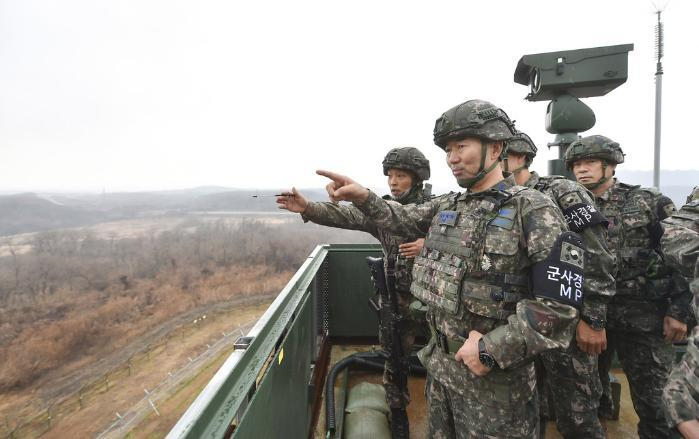
South Korean Defense Ministry's Proposal for Inter-Korean Military Talks and Peace and Stability on the Korean Peninsula Moon Sung-mookDirectorUnification Strategy Center Korea National Strategy InstituteThe Republic of Korea’s Ministry of National Defense formally proposed inter-Korean military talks to North Korean authorities on November 17. The Ministry issued a statement entitled “Proposal for Talks Concerning the Military Demarcation Line in the Demilitarized Zone,” under the authority of Policy Director Kim Hong-chul, officially putting forward the proposal for inter-Korean military dialogue.Given the current severance of all communication channels between the two Koreas, the proposal was necessarily delivered in the form of a public statement. This marks the first official initiative for inter-Korean talks under the Lee Jae-myung administration.In the statement, the Ministry noted, “Recently, while the North Korean military has been installing tactical roads and barbed-wire fences along the Military Demarcation Line (MDL) within the Demilitarized Zone (DMZ) and laying mines, some personnel have repeatedly crossed the MDL and violated our territory.” It further added, “As such incursions by North Korean forces and our military’s procedural responses continue, tensions within the DMZ are rising, raising concerns that this could lead to military clashes between the North and the South.” The North Korean military has continuously carried out activities such as constructing tactical roads near the MDL since April of last year.During this period, incidents in which North Korean troops crossed south of the MDL and then retreated after receiving warnings and warning shots from South Korean forces occurred fewer than ten times last year but have increased to more than ten cases this year.The Ministry of National Defense assessed that the underlying cause of this situation is that “a significant number of MDL markers installed at the time of the 1953 Armistice Agreement have been lost, leading to differences in perception between the South and the North regarding the boundary line in some areas.”The MDL markers were installed in August 1953 under the supervision of the Military Armistice Commission, following the signing of the Armistice Agreement on July 27, 1953. In 1973, during a United Nations Command–led marker repair operation, North Korean forces opened fire, causing the suspension of repair work, a halt that continues to this day.A significant number of markers have since been lost, and many are no longer identifiable due to changes in terrain. Military authorities can currently confirm only approximately 200 markers out of the 1,292 markers along the 248-kilometer MDL. The proposal for talks appears to be a response to the situation in which North Korean troops frequently cross the MDL during operational work, increasing the risk of accidental clashes as they retreat north following warnings and warning shots.To date, North Korean authorities have shown no response to the Ministry of National Defense’s proposal for military talks. It is therefore difficult to anticipate a positive reaction from North Korea in the near term. This article analyzes the significance of the military talks proposal in the context of President Lee Jae-myung’s END peace initiative.In doing so, it examines the motivations behind North Korean military actions along the MDL. Furthermore, it outlines why dialogue and cooperative exchanges remain essential for sustainable peace on the Korean Peninsula, regardless of whether North Korea responds to the proposal, and urges North Korean authorities to engage constructively.The proposal for inter-Korean military talks by the South Korean Ministry of National Defense is timely.< Concerns Over North Korean Forces’ Intent to Violate the MDL and the Risk of Accidental Armed Conflict >The North Korean military’s activities along the Military Demarcation Line (MDL), including reinforcing fences and laying mines, reflect an intent to strengthen barriers between the two Koreas. These actions are closely linked to the so-called “two-state policy” articulated by Kim Jong-un at the Workers’ Party Plenary Meeting in late 2023.At that time, Kim Jong-un escalated threats by declaring that inter-Korean relations were no longer those of fellow countrymen but of warring states, labeling the South the “main enemy” and “number one enemy,” and pledging to mobilize all means to achieve “scorched earth” and “territorial subjugation.”In October 2024, North Korea demolished the inter-Korean connection sections of the Gyeongui Line railway and National Highway No. 1, as well as the Donghae Line railway and National Highway No. 7, which had been established under inter-Korean agreements, and constructed higher barriers. North Korea communicated this action through a report titled “Complete Closure of Roads and Railways Connecting to the Republic of Korea in the Eastern and Western Regions of the Southern Border of the Democratic People’s Republic of Korea.”The report asserted that these measures were grounded in North Korea’s Constitution, which designates the Republic of Korea as a hostile enemy state, and emphasized that the policy of two hostile states is explicitly enshrined in the Constitution. The barriers along the MDL are clearly intended for internal control purposes rather than conventional defense.North Korea is fully aware that the Republic of Korea has not once invaded the North since the Armistice Agreement was signed. Incidents in which North Korean soldiers cross the MDL during construction work are more likely the result of limited visibility in the MDL area rather than deliberate military provocations. Nevertheless, there may be an intent to test South Korea’s responses.The fact that North Korean troops retreat without significant engagement after warnings and warning shots reinforces the view that these are largely accidental incursions. Yet, given that there have already been more than ten incursions this year, following a similar number last year, the potential for accidental clashes is increasing.President Lee Jae-myung’s expression of concern regarding possible clashes near the MDL, delivered during an in-flight briefing before his state visit to Turkey in November, underscores the necessity of addressing these issues through direct communication between the military authorities of the two Koreas.< President Lee Jae-myung’s E.N.D Peace Initiative and the Significance of Military Talks >President Lee Jae-myung announced the E.N.D. Initiative during his keynote address at the 80th United Nations General Assembly, held at the UN Headquarters in New York, USA, on September 23 (local time). E.N.D. stands for “Ending,” representing a vision to conclude the Cold War on the Korean Peninsula and pursue a path of peace and coexistence. President Lee proposed comprehensive dialogue aimed at establishing a peace regime on the Korean Peninsula, centered on three pillars: Exchange, Normalization, and Denuclearization.‘Exchange’ refers to resuming cultural, economic, and humanitarian interactions between the North and South to lay the foundation for trust. ‘Normalization of Relations’ encompasses restoring North Korea’s relations not only with the South but also with the broader international community, including the United States. ‘Denuclearization’ proposes a phased approach involving a nuclear freeze, reduction, and eventual abandonment. The practical principles outlined include restoring trust, easing military tensions, respecting political systems, and pursuing international cooperation. This vision embodies the effort to conclude the Cold War and define the final chapter on the international stage. The recent proposal for inter-Korean military talks represents the first step in the Exchange pillar outlined in the E.N.D. vision.Dialogue is essential to initiating this exchange. The proposal for talks appears to be an effort to mitigate North Korea’s hostile posture and establish a foundation for dialogue. Last June, the government implemented preemptive measures, suspending loudspeaker broadcasts toward the North in frontline areas and requesting that civilian groups cease leaflet distribution.However, North Korea’s stance remained unchanged. President Lee has repeatedly emphasized such preemptive measures to promote peace, notably in his Liberation Day address and at the APEC Summit. Reducing military tensions and building confidence constitute the foundation for denuclearization.< Long-Term Perspective Needed to Pursue Peace Efforts for Sustainable Peace >North Korean authorities, which have exhibited little reaction to proposals thus far, appear unlikely to engage in military talks in the near term. This assessment is reinforced by Kim Jong-un’s September policy speech to the Supreme People’s Assembly, in which he stated unequivocally that “there will be no sitting down with South Korea, and we will not engage in anything together.”Having defined inter-Korean relations as strictly hostile, dismantled organizations related to dialogue and exchange, and severed ties completely, North Korea is unlikely to make a positive response. From North Korea’s perspective, inter-Korean dialogue offers no immediate tangible benefits and is perceived as a potential threat to regime stability. Even in prior military talks, North Korea has maintained a consistently passive approach.While the two Koreas reached agreements on confidence-building measures, such as regularized dialogue through a joint military committee or the installation of a direct hotline, follow-through has been limited. Therefore, the recent proposal for talks is also likely to be declined.Nonetheless, for South Korea, peace efforts cannot be abandoned. Peaceful and free unification is its constitutional mandate. Achieving unification requires reducing military tensions, building confidence, and pursuing denuclearization. Given 80 years of division, a subsequent war, and numerous military clashes, restoring inter-Korean relations is a complex endeavor.A long-term perspective is therefore necessary, as impatience risks undermining progress. A calm, measured approach is more likely to elicit a positive response from North Korea. Historically, North Korea has engaged in dialogue when strategic interests demand it, and future shifts in the international security environment may alter its current posture.While North Korea has closed the door on inter-Korean dialogue, it has maintained channels for engagement with the United States. This dynamic could present an opportunity. Through close ROK–US coordination, North Korea must perceive the strategic value of dialogue.North Korean authorities should move beyond rhetorical commitments to peace and actively respond to offers for dialogue. In his October 10th speech commemorating the founding of the Workers’ Party of Korea, Kim Jong-un stated that he would “fulfill his responsibility and role in defending justice and peace.”If there is genuine intent to uphold these responsibilities, it must be demonstrated through actionable steps. In particular, North Korea should respond to the Ministry of National Defense’s proposal for military talks aimed at sustainable peace. Today’s international environment operates with full transparency, with information shared instantly and widely.Attempting to maintain control through isolation is untenable. North Korea is urged to abandon the unsubstantiated claim denying a shared historical heritage spanning half a millennium and to engage in a path toward peaceful reunification, building on the foundation laid by predecessors. This is the only path for North Korea to address its challenges and accelerate the creation of a prosperous society, as emphasized by its own leadership.Prompt engagement in the proposed military talks is essential to fulfill denuclearization obligations, prevent military clashes, ease tensions, and build trust. The international community should actively support the Republic of Korea’s peace initiatives and encourage North Korea to respond wherever possible. This approach represents the path to peace on the Korean Peninsula and globally, while ensuring that North Korean citizens can enjoy lives worthy of human dignity.
25.12.05 -
 [Column]
A Country Where ‘Freedom at 55’ Becomes a Dream – The Hidden Lives of North Korean WomenLee Jong-wooformer North Korean judicial officialOn November 16, North Korea observed its official Mother’s Day, during which Rodong Sinmun, the Workers’ Party newspaper, published multiple articles highlighting Chairman Kim Jong-un’s interest in motherhood and childcare policies. The newspaper emphasized slogans such as “A Mother’s Love” and “The State’s Embrace for Children.” However, testimonies from inside the country reveal that North Korean women are not treated primarily as mothers, but rather as a controlled labor force and as executors of state-assigned tasks.In Pyongyang, Women’s League offices are established at the dong (neighborhood) and ri (village) levels and are responsible for managing residents. Women under the age of 55 who are not formally employed are required to participate in Women’s League activities. These units function as a grassroots system of compulsory mobilization. Among residents, it is widely known that reaching the age of 55 is the only way to be exempted from Women’s League duties, which has led to a common expression that while people elsewhere generally wish to remain young, many North Korean women instead hope to turn 55 as soon as possible.Women affiliated with the Women’s League are assigned a series of annual obligations. These include gathering medicinal materials such as apricot pits and peach seeds, submitting recyclable goods such as scrap metal, glass, and paper, and providing support items for state construction projects, including gloves, clothing, foodstuffs, and other necessities. Although such quotas are formally distributed to all households, Women’s League members are held to stricter standards. Failure to meet these requirements results in mandatory attendance at weekly life review meetings, where individuals are subjected to public criticism. These sessions function as a mechanism of political pressure.In addition to collection quotas, Women’s League members are often mobilized into construction projects under the title of “shock brigades.” It is not uncommon for women to be away from their homes for extended periods of time.Around the anniversary of the founding of the Korean People’s Army, additional assignments are imposed under the name of “supporting the army.” These tasks include providing donations ranging from school supplies to rabbit meat. During agricultural seasons, women are mobilized to participate in rice planting, weeding, and harvesting. Local railway and road maintenance are also assigned to the Women’s League.Testimonies indicate the existence of informal “avoidance fees,” which allow individuals to pay money to avoid mobilization. This practice is reflected in a common saying that states that if one does not have money, labor must be offered instead.Despite these obligations, most women must simultaneously engage in trading or private business activities to support their household income. Residents indicate that life within the Women’s League is busier than formal employment and that the organization functions less as a housewives’ association and more as a labor-oriented system.Daily life for many North Korean women is described as one in which they must manage domestic responsibilities, earn income, and fulfill state-imposed duties until they reach the age of 55, when they may be released from the system.North Korea officially declares that children represent the nation’s future. Yet the reality for mothers who care for those children remains largely unaddressed in state policy. These women hold dual responsibilities as both the center of their households and as state-mobilized labor required to meet ongoing quotas and mobilization schedules. While Mother’s Day may bring flowers and celebratory rhetoric, many women report that their daily lives are instead defined by “gadu,” a term describing the burdens they are forced to bear.For many, the age of 55 is not perceived as a milestone of aging but rather as a symbolic moment of liberation. The question of when that age will become a genuinely celebratory moment remains a pressing issue that North Korea must confront in both policy and practice.
25.11.21 -
 [Thematic Analysis]
North Korea’s Demand for the Withdrawal of ‘Hostile Policy’ as a Precondition for Dialogue with the United States- Current Status and Outlook of U.S.–North Korea Relations - Youngho Parkformer Senior Fellow at Korea Institute for National UnificationNearly one year has passed since President Trump began his second term. In retrospect, the past year has brought profound disruptions to the existing international order. The Trump administration’s approach has transformed not only the global diplomatic and security landscape but has also reshaped global trade and the international economic system. Under the renewed banner of “Make America Great Again” (MAGA), President Trump appears determined to restore the United States to the position of unchallenged superpower that the country enjoyed following the end of the Cold War.Recalling the post–World War II era, when the United States produced more than half of global GDP and American culture and values rapidly spread across the world, President Trump is likely to remain assertive, unpredictable, and at times even destabilizing in pursuing MAGA for the remainder of his term.The MAGA strategy prioritizes U.S. national interests above all else, moving the United States away from its traditional role as global policeman. In economic and trade policy, the Trump administration has embraced protectionist measures aimed at revitalizing U.S. manufacturing and protecting the domestic workforce, particularly in response to China’s rise as a strategic competitor. Socially and culturally, MAGA seeks to reaffirm traditionally conservative values and reassert American identity. Ironically, the pursuit of these aims challenges the very liberal international order the United States has led since the end of World War II.The tariffs and trade conflict with China, initiated during Trump’s first term, have not only intensified but expanded globally, with implications for U.S. allies and partners. In this context, the “America First” approach has compelled countries that relied on the U.S.-led alliance network for security and economic development to reassess their strategic priorities, increase defense spending, and adjust trade policies.South Korea, as a trade-dependent nation and a key U.S. ally, is no exception. The ROK–U.S. tariff agreement announced on November 14 exemplifies this broader realignment. The deal calls for a South Korean investment of $350 billion into the United States, outlines steps for the modernization of the U.S.–ROK alliance, and identifies new areas of bilateral cooperation in maritime policy and nuclear energy. Regarding Korean Peninsula security, the agreement reaffirms the U.S. commitment to extended deterrence, calls for an increase in South Korea’s defense spending to 3.5 percent of GDP, emphasizes the complete denuclearization of North Korea as a shared goal, and reinforces trilateral cooperation among South Korea, the United States, and Japan. It also allows South Korea to enrich uranium for civilian use, reprocess spent nuclear fuel, and construct nuclear-powered submarines.These measures, along with South Korea’s expanded nuclear-related capabilities, have become important variables affecting U.S.–North Korea relations, which have remained stalled since the failure of the 2019 Hanoi summit. At the same time, they have deepened North Korea’s antagonism toward South Korea.Following the failed Hanoi summit, Kim Jong Un, frustrated by his inability to secure sanctions relief, adopted a markedly more confrontational posture toward both Washington and Seoul. In January 2020, Kim launched what he called a “frontal breakthrough campaign,” declaring that “if the United States persists in its hostile policy toward the DPRK, denuclearization of the Korean Peninsula will never occur,” and began accelerating the development of nuclear and missile capabilities, including ICBMs.At the 8th Congress of the Workers’ Party of Korea (WPK) in January 2021, North Korea reaffirmed its commitment to advancing strategic and tactical nuclear weapons programs. Citing U.S. nuclear threats, Pyongyang left open the possibility of preemptive nuclear strikes as part of its operational doctrine. As a result, South Korea became increasingly vulnerable to North Korea’s nuclear coercion, complicating the peninsula’s security environment.The Biden administration adopted a policy of “strategic engagement” toward North Korea and repeatedly offered dialogue. However, Pyongyang responded with what amounted to strategic indifference. North Korea insisted that the withdrawal of Washington’s “hostile policy” toward the DPRK must precede any talks, effectively shutting down U.S.–North Korea dialogue. During this period, the scope and sophistication of North Korea’s nuclear and missile programs expanded significantly. North Korea has seemingly achieved mass production of tactical nuclear weapons, expanded its nuclear warhead stockpile, developed hypersonic missiles, SLBMs, solid-fuel propulsion, and MIRV-capable ICBMs, and advanced reconnaissance satellite and nuclear submarine capabilities. Simultaneously, Pyongyang continued modernizing its conventional forces.By the final months of the Biden administration, during a period of uncertainty ahead of a potential second Trump administration, the strategic direction of the Kim Jong Un regime had become clear: to “consistently uphold the principle of confrontational struggle against the United States, a head-on contest of strength against strength.” Pyongyang maintained that U.S.–North Korea relations would not change regardless of who occupied the White House unless Washington abandoned its “hostile policy.”At the end of 2023, Kim Jong Un warned that the notion of “war” on the Korean Peninsula had become a “realistic reality,” pledging to subdue South Korea by all means, including nuclear weapons, in the event of a crisis. By late 2024, he announced that North Korea would adopt a “maximum hardline counterstrategy” against the United States, characterizing it as a ”nation whose national policy is anti-communism,” labeling the U.S.–ROK–Japan security alignment as an “aggressive nuclear military bloc,” and depicting South Korea as an “anti-communist U.S. outpost.”Following the inauguration of President Trump’s second term, Kim Jong Un articulated North Korea’s security doctrine as “peace through strength, security through strength.” He asserted that nuclear weapons constitute the “guarantee for sovereignty, national interests, developmental rights, and survival,” and therefore must be continually strengthened. For the Kim regime, nuclear weapons are synonymous with sovereignty and treated as a constitutionally legitimate means of self-defense.Kim Yo-jong further declared that North Korea’s nuclear policy had been “formalized as basic law,” emphasizing the need to strengthen “self-defensive deterrence against nuclear war.” Consequently, Pyongyang proclaimed that any external reference to North Korean denuclearization is “unconstitutional” and tantamount to coercion to amend its constitution.In essence, even under the second Trump administration, Pyongyang is likely to maintain, if not harden, its current posture toward Washington, a posture that has intensified since the collapse of the Hanoi summit. While North Korea may refrain from personal criticism of President Trump, it will continue to argue that the U.S. strategy to bring down the North Korean regime and subvert its system remains unchanged. For Kim Jong Un, nuclear weapons are not merely instruments of deterrence but the fundamental guarantor of regime stability, national survival, and strategic identity as a “de facto” nuclear power. Nuclear weapons underpin both Kim’s domestic governance and external statecraft. Understanding this dynamic is essential for grasping the nature of the North Korean system under Kim Jong Un.At the outset of Trump’s second term, some expressed cautious optimism about a possible breakthrough in U.S.–North Korea relations. These expectations stem partly from Trump’s campaign rhetoric, during which he referred to North Korea as a nuclear power, expressed personal goodwill toward Kim Jong Un, and hinted at renewed engagement.Such expectations, however, amount to wishful thinking when measured against North Korea’s strategic calculus and the Trump administration’s broader national strategy. While Trump’s unilateral and personalized leadership style does not entirely preclude a reprise of the Singapore summit, an assessment of his foreign policy over the past year suggests that the likelihood of major diplomatic progress in U.S.–DPRK relations is extremely low. There are three main reasons.First, the Trump administration’s foreign and security doctrine is firmly rooted in “peace through strength,” emphasizing the protection of core U.S. national interests and traditional values. It seeks to preserve peace by maintaining superior power through military rebuilding. Economic security is viewed as national security, with tariffs serving as a central policy tool. Key objectives include: Containing China’s rise as a hegemonic power Defending Taiwan Rebuilding U.S. military capabilities and alliances Defeating terrorism Strengthening U.S. missile defense systems (e.g.Iron Dome) Revitalizing the U.S. defense industrial base Enhancing U.S. economic, military, and diplomatic capacity Curbing illegal mass migration and reinforcing border security Countering information suppression and combating malign propagandaNorth Korea is listed among President Trump’s priority concerns, alongside China, Russia, Iran, and Venezuela, but recent developments indicate it is not a top-tier strategic priority. The administration does not intend to recognize North Korea as a de facto nuclear-weapons state but seeks primarily to deter military conflict. Although North Korea’s ICBMs pose a threat to the U.S. mainland, Trump’s assessment is that the threat is manageable. Unless North Korea offers significant concessions, substantive improvement in U.S.–DPRK relations is unlikely.Second, North Korea has significantly deepened its strategic cooperation with China and Russia. By providing military support to Russia, at the cost of sending North Korean soldiers and civilians to the war in Ukraine, Kim Jong Un has secured economic, military, technological, and diplomatic backing from Moscow, thereby gaining limited leverage vis-à-vis Beijing. Unlike during the Cold War, when Pyongyang balanced between China and the Soviet Union, today Kim is building a stable support platform for a nuclear-armed DPRK by maintaining its traditional alliance with China while forging a new one with Russia.The presence of top-ranking Chinese and Russian representatives at the military parade celebrating the 80th anniversary of the Workers’ Party of Korea symbolized this shift. Pyongyang is now operating within a near-alliance framework with both Beijing and Moscow, as well as within trilateral coordination among North Korea, China, and Russia. As strategic competition intensifies between the United States and China, and as U.S.–ROK and U.S.–ROK–Japan security cooperation expands, the Korean Peninsula is being drawn into a new Cold War–style bloc confrontation. While Washington, Seoul, and Tokyo continue to uphold North Korea’s denuclearization as their common goal, Beijing and Moscow effectively tolerate its nuclear status. Given this geopolitical backdrop, Pyongyang currently has little incentive to engage Washington seriously.Third, North Korea sees no incentive in improving relations with South Korea. The current South Korean administration emphasizes peace and advocates bilateral engagement, calling for the resumption of suspended inter-Korean exchanges and cooperation. Yet the Kim regime no longer views the South as a partner for dialogue or a party to discuss unification. It has shifted to an “offensive” policy toward Seoul, abandoning the unification framework of the Kim Il-sung and Kim Jong-il eras and portraying inter-Korean relations as those between “two hostile states.” Pyongyang instead highlights its readiness for the “complete subjugation of the entire territory of South Korea” using military means, including nuclear weapons.In response to the reference to “complete denuclearization of North Korea” in the South Korea–U.S. tariff negotiations, Pyongyang argued that it “denies the existence of our state” and demonstrates that “U.S. hostile intent toward the DPRK is consistent and enduring across its administrations.” It also denounced what it called the “master–servant relationship” between Washington and Seoul and criticized the expansion of the U.S.–ROK alliance beyond a regional framework. Moreover, North Korea’s current economic situation no longer depends heavily on resources from the South, as it once did.In conclusion, the Kim Jong Un regime views “North Korean denuclearization” as synonymous with the “abandonment of its sovereignty and right to survive” and as an “unconstitutional act.” For Pyongyang, nuclear weapons constitute national law, national policy, sovereignty, and survival. So long as the regime and system maintain their current character, North Korea will not relinquish its nuclear arsenal. Any change in its position appears exceedingly unlikely. The Trump administration’s “peace through strength” strategy and the Kim regime’s own “peace through strength” policy are therefore poised for direct confrontation. North Korea is likely to respond to U.S. pressure with its familiar pattern of tit-for-tat offensive diplomacy.While tensions could rise, both sides are expected to avoid triggering an uncontrollable escalation. China and Russia will act as counterweights to U.S. pressure, and North Korea will continue to leverage that support. Above all, Pyongyang will persist in demanding the withdrawal of Washington’s “hostile policy,” which it regards as the essential prerequisite for any improvement in U.S.–North Korea relations.
25.11.21 -
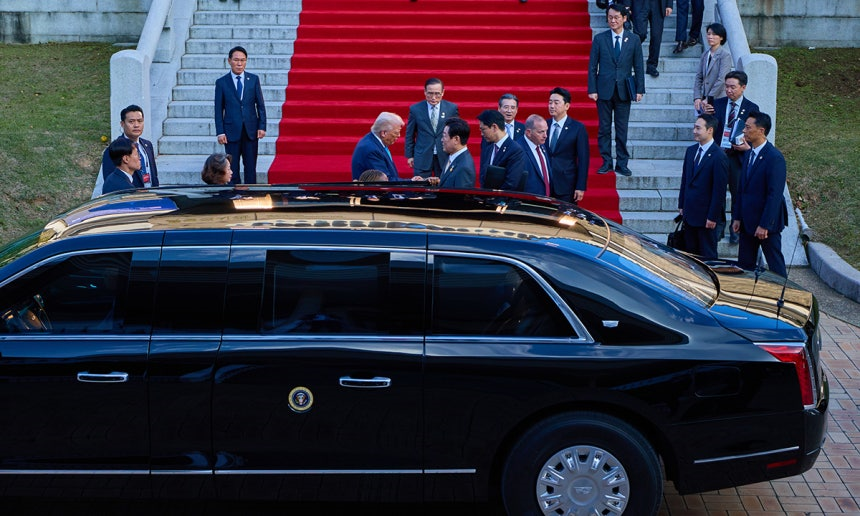 [News&Issue]
Why Kim Jong-un Didn't Shake Trump's HandKim Dong-sooFormer North Korean DiplomatDespite repeated invitations from U.S. President Donald Trump to meet North Korean leader Kim Jong-un during his visit to South Korea, Pyongyang’s response remained conspicuously indifferent. According to Justin Martel, an American filmmaker and manager at Young Pioneer Tours who recently returned from Pyongyang, most North Koreans were unaware of Trump’s visit to Asia and showed virtually no interest in the potential summit with Kim.This detachment cannot be explained solely by information control. Rather, it underscores how the Kim regime strategically calculates its external environment. Kim Jong-un’s decision to ignore Trump’s outreach during the APEC summit in Gyeongju reflects a deliberate and rational foreign policy stance rooted in current geopolitical realities.At present, North Korea sees little incentive—political, economic, or strategic—to engage Washington. The regime is deriving far greater tangible benefits from its deepening alignment with Moscow, which provides critical energy, food, and military technology support. With Russia and China offering Kim both economic relief and diplomatic cover, dialogue with the United States is seen as a liability rather than an opportunity. In Pyongyang’s calculus, premature talks could upset the “favorable balance” it currently enjoys within the emerging anti-U.S. bloc.The fundamental obstacle remains the negotiation agenda itself. As long as Washington insists on denuclearization as the starting point for dialogue, Kim has no interest in participating. North Korea now regards itself as a de facto nuclear state and it will only engage the United States from that position of acknowledged strength.While Pyongyang has occasionally referenced its “friendly relationship with President Trump,” such statements are better understood as instruments of psychological leverage rather than genuine diplomatic overtures. The regime’s intent is to encourage Washington to bypass Seoul and pursue direct, bilateral engagement with Pyongyang. Kim made this orientation clear earlier this year when, during the commissioning ceremony of a new destroyer, he publicly denounced South Korea and redefined inter-Korean relations as “those of hostile states.” This signals a strategic effort to marginalize Seoul in favor of a U.S.–North Korea framework centered on recognition and sanctions relief.Nonetheless, Washington is unlikely to accept such terms. North Korea’s diplomatic apparatus remains cautious following the fallout from the failed 2019 Hanoi summit, which led to the demotion of key North Korean negotiators, including current Foreign Minister Choe Son-hui. Compounding this caution, the recent U.S. airstrike on Iranian nuclear facilities appears to have reinforced Kim’s conviction that nuclear weapons are the only reliable security guarantee for his regime.Kim’s refusal to shake Trump’s hand, therefore, is neither personal nor emotional: it is strategic. It reflects Pyongyang’s doctrine of “strategic disregard,” a posture intended to compel the United States to make the first move, while North Korea positions itself as an equal nuclear power awaiting recognition.In recent weeks, Pyongyang has coupled this stance with escalatory rhetoric. Following the deployment of the U.S. aircraft carrier USS George Washington to South Korea, North Korea’s Foreign Ministry condemned new U.S. sanctions and vowed to “respond accordingly.” Days later, the Ministry of National Defense threatened “more offensive actions” in protest of the carrier’s port call and the annual ROK–U.S. Security Consultative Meeting.This hardline trajectory is expected to persist through the upcoming Worker Party of Korea party congress early next year. Observers anticipate that the regime will focus on consolidating internal unity by sustaining confrontation with both Seoul and Washington, while showcasing military advancements, potentially including the Hwasong-20 ICBM, first unveiled at last month’s parade, or the successful launch of a reconnaissance satellite.Still, if Pyongyang intends to reopen dialogue with Washington after March next year, it may exercise restraint on major provocations such as ICBM tests, signaling that even amid its defiance, North Korea continues to manage escalation on its own terms.
25.11.13 -
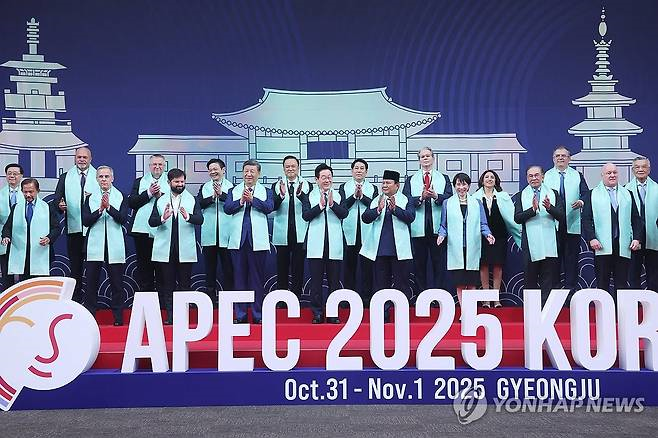 [Feature Article]
Conditions for a U.S.–North Korea Summit and South Korea’s RolePark Jong-cheolVisiting Professor, Daejeon University1. North Korea and the United States: Calculations and the Tug-of-WarFor more than three decades, the North Korean nuclear issue has been at the nexus of U.S.–North Korea relations, peace and stability on the Korean Peninsula and inter-Korean dynamics. The issue has evolved through multiple turning points, most notably during the Trump administration, when three U.S.–North Korea summits dramatically altered the diplomatic landscape.The 2018 Singapore Summit and the 2019 Hanoi Summit drew global attention. The Singapore meeting initiated a personal rapport between President Trump and Chairman Kim Jong-un, outlining broad principles for improving bilateral relations, advancing denuclearization, and building a peace regime. Yet the collapse of the Hanoi Summit laid bare the limitations of a top-down approach to diplomacy.Under President Biden, Washington effectively deprioritized North Korea, while Kim Jong-un focused on expanding his nuclear arsenal and military capabilities. Upon returning to the White House in 2025, President Trump sought to rekindle his earlier personal diplomacy, publicly emphasizing his friendship with Kim and sending overtures of goodwill. Kim, however, offered no acknowledgment.Reports suggest Trump viewed a renewed summit as both a geopolitical opportunity and a personal legacy project—potentially even a pathway toward a Nobel Peace Prize—after promoting himself as a broker of peace in the Middle East, Ukraine, and South Asia. The possibility of a Trump–Kim reunion resurfaced during the APEC Summit in Gyeongju, where Trump’s attendance revived speculation about behind-the-scenes maneuvering.In the lead-up to APEC, Trump repeatedly expressed his willingness to meet Kim Jong-un, reminding the public of their past rapport. His description of North Korea as “a sort of nuclear power” and his acknowledgment of its substantial nuclear arsenal marked a subtle shift in tone.Although the term “nuclear power” stops short of formal recognition under the NPT, it hinted at pragmatic acceptance of North Korea’s de facto status. Trump also floated sanctions relief as a bargaining chip—an offer sure to resonate in Pyongyang, given Kim’s fixation on economic reprieve during the Hanoi negotiations.When North Korea remained unresponsive, Trump doubled down, signaling that he was even prepared to extend his stay in South Korea. Yet Pyongyang’s response was icy. Kim Yo-jong dismissed the prospect of dialogue, declaring that talks were impossible so long as denuclearization remained a U.S. demand. She stipulated that recognition of North Korea as a nuclear state was a prerequisite for any renewed engagement.North Korea then flexed its military muscle—test-firing a hypersonic missile on October 22 and a strategic cruise missile on October 28, on the eve of APEC—underscoring its deterrent posture. Concurrently, Foreign Minister Choe Son-hui’s meeting with Russian President Vladimir Putin in Moscow signaled closer strategic alignment with Russia and disinterest in Washington’s overtures.Kim’s silence appears deliberate—a calculated effort to increase his leverage. He is likely preparing to declare at next year’s 9th Workers’ Party of Korea Congress that North Korea has achieved its long-sought military and nuclear objectives. Stronger ties with Russia and China have reinforced his confidence that North Korea can survive—and even benefit—without sanctions relief. For now, Kim seems content to defer engagement with Trump until conditions allow him to dictate the terms of the encounter, rather than appear as a mere prop at APEC.2. Preconditions and Environment for Renewed U.S.–North Korea TalksAs President Trump departed Seoul, he expressed regret over not meeting Kim but vowed to return. Although a summit did not occur, both sides succeeded in signaling their intentions. From Kim’s perspective, he reaped diplomatic attention equivalent to an actual meeting—without the political risks.At the August U.S.–ROK summit, President Lee Jae-myung asked Trump to act as a “peacemaker” on the Korean Peninsula while pledging to serve as a “pacesetter.” The idea was to create a mutually reinforcing process: U.S.–North Korea talks to break the ice, and inter-Korean dialogue to sustain momentum. Lee assessed that Trump’s outreach, even absent a meeting, injected new energy into the peace process and reaffirmed Seoul’s readiness to build trust with Pyongyang through concrete measures.Looking ahead, the question is when, and under what circumstances, a summit might resume. Trump’s planned visit to China in April 2026 could offer a new window—potentially enabling a meeting in Beijing, Shenyang, or Panmunjom.For such a meeting to yield results, quiet, preparatory diplomacy is essential. Reestablishing the New York channel—or creating new backchannels—would prevent another “photo-op summit” devoid of substance. Progress would hinge on pre-summit negotiations detailing reciprocal steps: phased denuclearization measures, calibrated sanctions relief, improvements in bilateral relations, and humanitarian initiatives such as the repatriation of U.S. service members’ remains.When talks resume, the Singapore commitments should serve as the foundation for rebuilding trust. Drawing from past experience, uncertainty could be minimized by aligning expectations and sequencing deliverables before the leaders meet.As a precedent, the postponement of the 2017 ROK-U.S. joint military drills paved the way for the Singapore Summit. Similarly, recalibrating early 2026 exercises could serve as a goodwill gesture, potentially prompting a positive response from Pyongyang. In return, North Korea would need to refrain from provocative missile or nuclear tests to foster a conducive environment for talks.3. South Korea’s RoleAs host of the Gyeongju APEC Summit, South Korea positioned itself as both a regional convener and a global problem-solver. Seoul led discussions on supply chain resilience, AI and semiconductor cooperation, and inclusive economic frameworks, while reinforcing shared U.S.–ROK commitments to peace and prosperity on the Korean Peninsula. Concurrently, through summits with China and Japan, South Korea strengthened trilateral and regional dialogue frameworks.Building on this momentum, Seoul must continue leveraging multilateral platforms to advance both regional stability and inter-Korean peace. The U.S. and South Korea should closely coordinate to create a roadmap linking renewed U.S.–North Korea engagement with inter-Korean cooperation. A clear division of roles would be prudent: President Trump maintaining high-level diplomatic outreach and President Lee creating conditions that make dialogue politically viable.President Lee’s E.N.D. Initiative, unveiled at the UN General Assembly in September, outlines a path toward peace and coexistence based on Exchange, Normalization, and Denuclearization. It envisions transforming hostility into trust and pursuing practical, phased solutions—halting, reducing, and ultimately abandoning nuclear and missile programs—through mutual, step-by-step actions by all stakeholders.Integrating the E.N.D. framework with summit diplomacy will require tangible trust-building. Inter-Korean exchanges should resume in health, disaster management, and environmental cooperation. Restoring the September 19 Military Agreement should begin with mutual suspension of reconnaissance activities, followed by inter-Korean military talks to prevent incidents and rebuild confidence.Finally, both Koreas should expand humanitarian collaboration—such as health care and disaster relief—within sanctions-exempt frameworks. These civilian-level efforts would not only reduce tensions but also provide the social and moral foundations for sustainable peace on the Korean Peninsula.
25.11.07 -
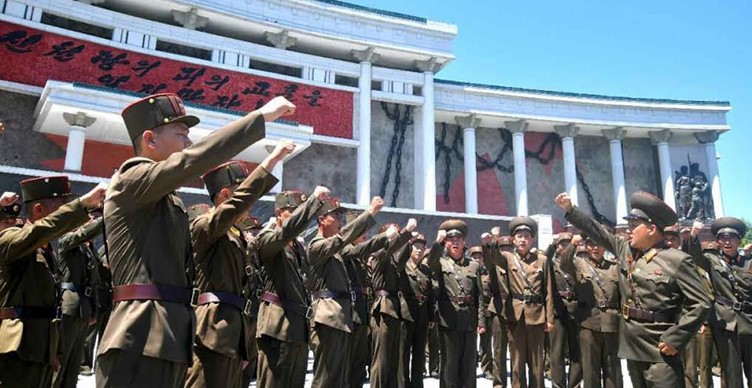 [Thematic Analysis]
When will the Korean War end?Sukjoon YoonCaptain, ROKN retiredSenior fellow, KIMAThe North and South Korean militaries have been building up their capabilities for many decades. But the threat of mutually assured destruction, whether by conventional or nuclear weapons, is inherently unstable, such that a small error or misunderstanding could be disastrous. The legacy of the Cold WarThe Korean War of 1950-3 was effectively a proxy war between the Soviet Union and the United States. It ended with an armistice, not with a real peace, and without any kind of arms control mechanism both sides have remained on a war footing. North Korea has a huge army, though their weapons are mostly obsolescent, but they do have nuclear arms. South Korea retains military service for all young men, which has become socially disruptive, and is belatedly modernizing its military platforms. Confrontations trigger an arms-raceThe threat from North Korea’s large-caliber artillery and Hwasong-7 medium-range ballistic missiles led to South Korea establishing the ROK/US Combined Forces Command in 1978 to deter and, if necessary, defeat North Korean aggression.There have been several serious confrontations between the two Koreas: in 1996 a North Korean submarine landed an infiltration team near Gangneung, in 1999 and 2003 there were naval skirmishes near the Northern Limit Line, in March 2010 the ROKS Cheonan was sunk by a torpedo from a North Korean submarine, and in November 2010 Yeonpyeong Island was bombarded by North Korean artillery.In response, South Korea invested heavily in its defense industries, leveraging its superior economic and technological power to develop advanced and sophisticated weapons. This project has been very successful, to the extent that South Korea is now a major arms exporter, and the balance of conventional weapons has now tilted in South Korea’s favor.North Korea develops nuclear weaponsUnable to compete in conventional weaponry, North Korea went all out to develop nuclear weapons, regarding these as the most cost-effective counter-measure against South Korea and its US ally. North Korea now has a variety of integrated nuclear and conventional weapons, including indigenous nuclear warheads mounted on large, nuclear-capable Intercontinental Ballistic Missiles (ICBMs) like the Hwasong-17 and Hwasong-18, super-large 600mm long-range artillery, KN-23/24 short-range missiles, and Pukguksong-series Submarine-Launched Ballistic Missiles (SLBMs).North Korea is also working on hypersonic glide vehicles, and is developing solid-fuel technology to enable faster launches. South Korea has its own indigenous ballistic and cruise missiles, the Hyunmoo-series, their most powerful strategic weapon and an essential component of the ‘Three-Kill’ mechanism intended to deter and interdict North Korean conventional and nuclear threats.Western military analysts believe that North Korea has about 50 nuclear warheads, and the recently revealed Hwasong-20 appears capable of carrying multiple warheads or perhaps a multiple independently targetable reentry vehicle (MIRV) which allows a single missile to strike several targets.Since 2022, North Korean has participated in the Russia-Ukraine War by providing troops, ammunition, drones and missiles. In return, Russia has supplied technical support of various kinds, with many modernized conventional weapons on display at a military parade in Pyongyang on October 10, 2025, and most significantly, North Korea has produced its first-ever destroyer, the 5,000-ton Aegis-style Choe Hyon, launched April 24, 2025 from Nampo shipyard. The ROK-US alliance respondsThe threat from North Korea has dramatically expanded, including the possibility of nuclear attacks against the ROK and US regional targets, perhaps even against the continental US. South Korea is more dependent than ever on the US nuclear umbrella, but there is widespread skepticism about the US commitment, and strong support for an independent nuclear capability.In response, the ROK-US Nuclear Consultative Group (NCG) was established in April 2023, to reinforce the alliance by providing a mechanism for closer coordination. Given the imbalance between South Korea’s conventional weapons and the US nuclear capabilities, the allies have subsequently held a table top exercise in Conventional-Nuclear Integration, but South Korean domestic opinion remains deeply concerned. ConclusionsSouth Koreans have lived their whole lives under the threat of North Korean attack, and young people especially would like to see a different kind of future. The welfare of the North Korean people has long been sacrificed to militarism, but now that the Kim regime has an effective nuclear deterrent it is surely time to reconsider.The last conflict of the Cold War is still continuing, on the Korean Peninsula, but all wars finally come to an end, and there is now an opportunity for both sides to step away from their inveterate enmity. Enough is enough: it is time to move on from this ever-escalating arm race.
25.10.24 -
 [Thematic Analysis]
The Evolution of the ROK–U.S. Alliance and the Rise of Strategic Complex Alliances J.R. Kim, Ph.D.PresidentKorea Council For Peace and CooperationNortheast Asia represents one of the world’s most intricate security environments, where the strategic calculations of the United States, South Korea, China, Japan, Russia, and North Korea are deeply interwoven. The United States has long relied on its forward-deployed forces in this region to counter China’s growing maritime presence and assertive regional ambitions.Geopolitically, the Korean Peninsula’s position adjacent to China places South Korea on the frontline of great-power competition—making it an indispensable “forward node” within America’s Indo-Pacific strategy.From Military Deterrence to Strategic ComprehensivenessThe 21st-century international order is being reshaped by the fusion of economic security, industrial resilience, and technological hegemony. Against this backdrop, as U.S.–China strategic rivalry deepens, South Korea’s role as a technological and industrial powerhouse in Northeast Asia has gained unprecedented significance.Traditionally, the ROK–U.S. alliance was defined by a singular focus on deterrence and defense. Today, it is evolving into what may be termed a strategic comprehensive alliance—a multidimensional partnership that integrates cooperation across defense, high technology, and key industrial sectors such as semiconductors and shipbuilding.Recent developments—such as enhanced trilateral security coordination among Seoul, Washington, and Tokyo; the establishment of the U.S.–ROK Nuclear Consultative Group (NCG); and Seoul’s participation in the U.S.-led semiconductor alliance (CHIP 4)—illustrate this transition. This reconfiguration of the alliance aligns economic, industrial, and military domains in a mutually reinforcing framework, thereby advancing U.S. interests in supply chain stabilization, technological sovereignty, and regional strategic balance.Economic and Industrial Integration as Strategic AssetsDeeper economic and industrial integration between the United States and South Korea is not only an economic imperative but also a strategic one. As China seeks to reshape the regional order through economic coercion and industrial dominance, the ROK–U.S. alliance must evolve beyond traditional defense cooperation to include strategic industries. South Korea’s technological competitiveness—in semiconductors, shipbuilding, and other high-value manufacturing sectors—constitutes a non-military strategic asset for the United States.For Washington, embracing Seoul as a strategic military-industrial partner—not merely a military ally—is essential. South Korea possesses capabilities that complement U.S. strengths and fill critical gaps in the broader contest with China over industrial capacity and technological supremacy.Semiconductors: The Core of Technological CompetitionIn the competition for technological hegemony, semiconductors occupy a central role. Since the early 2020s, the United States has defined semiconductors as the “oil of the 21st century,” crafting policies to secure supply chain dominance. As of September 2025, South Korea accounts for approximately 22 percent of the global semiconductor market—second only to the United States at 54 percent—and commands more than 56 percent of the global memory chip market.A closer partnership between U.S. firms—leaders in chip design and equipment—and Korea’s world-class memory semiconductor producers would bolster both nations’ supply chain resilience and technological autonomy. In 2024, Korea’s semiconductor exports reached $141.9 billion, up 43.9 percent from the previous year. Following Washington’s export controls on China, Beijing’s share of Korea’s semiconductor exports fell sharply—from 61.1 percent in 2022 to 51.7 percent in 2024—while exports to the United States and Taiwan rose.This realignment illustrates a structural shift toward U.S.-centered semiconductor networks, with Korea emerging as a key enabler of Washington’s efforts to sustain technological leadership vis-à-vis Beijing.Shipbuilding: Revitalizing Allied Maritime PowerSouth Korea’s globally competitive shipbuilding sector presents another avenue for deepened strategic cooperation. According to Clarkson Research (August 2025), South Korea secured 23 percent of global ship orders (560,000 CGT, 8 vessels), ranking second after China’s 57 percent (1.38 million CGT, 57 vessels). However, Korea’s average tonnage per vessel—70,000 CGT—is nearly three times China’s, underscoring Korea’s dominance in high-value, technologically sophisticated shipbuilding.By contrast, the U.S. commercial shipbuilding industry, once the world’s largest, now commands a mere 0.2 percent global market share. Private shipyard employment has fallen by more than 40 percent since the 1980s, eroding America’s capacity to build and maintain both commercial and naval vessels. These industrial deficiencies have contributed to shipbuilding delays and a shrinking margin of maritime superiority vis-à-vis China.China, meanwhile, has aggressively expanded its shipbuilding infrastructure since 2010, constructing dozens of large-scale shipyards and integrating them into its Belt and Road Initiative. As of 2025, the Chinese Navy fields roughly 1,025 vessels—more than double the 471 ships operated by the U.S. Navy. Roughly 70 percent of China’s naval fleet has been built since 2010, demonstrating a direct link between industrial capacity and maritime power.In this context, South Korea’s shipbuilding and maritime technologies can serve as vital strategic assets for U.S. maritime strategy. Bilateral cooperation in shipbuilding, maintenance, and logistics can help offset the U.S. Navy’s capacity shortfalls while countering China’s expanding maritime infrastructure network. The acquisition of a U.S. shipyard by South Korea’s Hanwha Ocean and its participation in U.S. Navy repair and maintenance programs represent promising models of ROK–U.S. military-industrial cooperation.Korea’s Role in the Next Frontier of Technological CompetitionBeyond semiconductors and shipbuilding, South Korea leads in multiple high-tech fields critical to future security and economic competition, including energy storage systems (ESS), all-solid-state batteries, AI semiconductors, high-bandwidth memory (HBM), small modular reactors (SMR), and defense technologies. These capabilities align directly with U.S. strategic priorities in areas such as smart defense innovation, energy security, 6G network development, and advanced supply chain stabilization.Given this broad technological base, South Korea should be recognized as one of the United States’ most strategically valuable allies—a partner capable of reinforcing U.S. leadership in both military and non-military domains of competition with China.Conclusion: Toward a 21st-Century Comprehensive AllianceThe true evolution of the ROK–U.S. alliance lies in transcending its traditional military character to become an alliance of industrial and technological competitiveness. South Korea’s advanced industrial capabilities offer the United States enduring leverage in the strategic rivalry with China.Strengthening institutional frameworks that integrate economic, industrial, and security cooperation will be essential to completing this transformation. The future of the ROK–U.S. partnership thus depends not merely on shared defense commitments, but on building a comprehensive strategic alliance—one that fuses military strength with industrial and technological innovation to shape the balance of power in the 21st century.
25.10.17 -
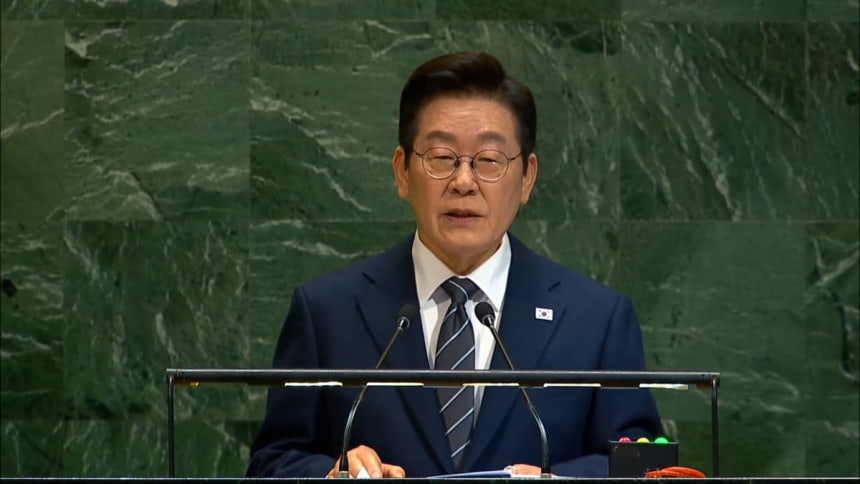 [Feature Article]
The North Korean Nuclear Challenge and the ‘END Initiative’ Koh Yu-hwanProfessor Emeritus, Dongguk University; Former Director, Korea Institute for National UnificationPresident Lee Jae-myung articulated the “END Initiative” at the 80th UN General Assembly, framing it as South Korea’s strategic approach to ending the Cold War on the Korean Peninsula and contributing to global peace and prosperity. The initiative emphasizes restoring trust between North and South Korea, shifting to a posture of mutual respect, and adhering to three principles regarding North Korea: respecting its political system, excluding absorption unification, and prohibiting hostile acts.Central to the END Initiative is the notion that sustainable peace requires conditions under which conflict is unnecessary. The initiative outlines a phased approach to North Korea’s nuclear program—Exchange, Normalization, and Denuclearization—with normalization of inter-Korean relations positioned as the foundational step. This represents a departure from prior “denuclearization-first” strategies, such as the CVID (Complete, Verifiable, and Irreversible Dismantlement) framework, aiming instead to leverage normalized relations to drive progress on denuclearization.The proposed three-stage nuclear approach—suspension, reduction, dismantlement—differs substantively from previous agreements, including the 2007 February 13 Agreement and the September 19 Joint Declaration. Notably, the use of “suspension” rather than “freeze” implies that negotiations on normalization could proceed immediately upon North Korea’s declarative commitment, without initial verification.President Lee Jae-myung delivers a keynote address at the United Nations General Assemblyin New York, USA, on September 23. /2025.09.24/Presidential Office websiteThe second stage, reduction, may involve both a decrease in North Korea’s nuclear capabilities and the potential acknowledgment of its de facto nuclear status, opening the door to arms control or disarmament negotiations with the U.S.Over thirty years of engagement with North Korea’s nuclear program have demonstrated the limitations of path-dependent approaches. The END Initiative emphasizes a “security-for-security exchange” framework that addresses both external concerns and North Korea’s demands. Given the rapid advancement of North Korea’s nuclear capabilities, diplomatic efforts must focus on halting further development while preventing the reemergence of military options on the Peninsula. Prioritizing normalization of relations represents an untested strategy, which may attract criticism for implicitly recognizing North Korea’s nuclear status. Nevertheless, historical lessons, including the Soviet nuclear experience and evidence from the Russia-Ukraine conflict, suggest that nuclear weapons function primarily as deterrents rather than tools for early-stage conflict. Extended deterrence under the ROK-U.S. Nuclear Consultative Group (NCG) and modernization of South Korea’s conventional forces remain essential to maintaining strategic balance.The END Initiative may also serve as a strategic framework for U.S.-North Korea engagement. President Trump, in his second term, has referred to North Korea as a “nuclear power” and indicated willingness to engage with Kim Jong-un.North Korea has stated that dialogue requires recognition of its “irreversible nuclear status” and an acknowledgment of fundamentally changed geopolitical conditions. Should the U.S. deem engagement with North Korea advantageous amid U.S.-China strategic competition, negotiations could involve exchange of nuclear capability reduction and sanctions relief for normalization of relations.In conclusion, the successful implementation of the END Initiative depends critically on close coordination and strategic cooperation between South Korea and the United States. Even as normalization with North Korea is pursued, maintaining peace and stability on the Korean Peninsula requires a unified ROK-U.S. response. Only through synchronized actions, transparent information sharing, and a shared roadmap can the END Initiative move beyond conceptual strategy to a practical pathway for sustainable peace.
25.10.03 -
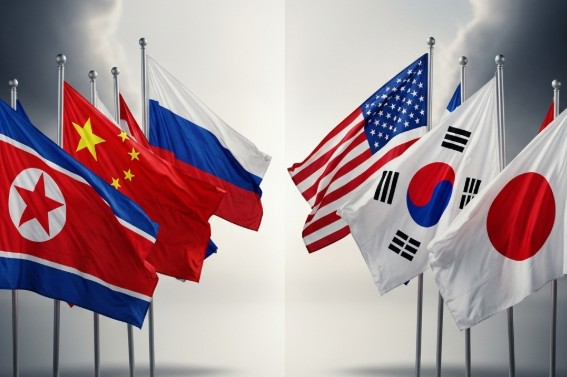 [Thematic Analysis]
North Korea–China–Russia Convergence and Emerging Challenges: Why an Enduring ROK–U.S. Alliance Remains Indispensable Jeong Gu-youngFormer Senior Secretary for Administrative Affairs, Blue HouseOn September 3, North Korean leader Kim Jong-un stood alongside Chinese President Xi Jinping and Russian President Vladimir Putin at the 80th anniversary military parade commemorating China’s victory in the War of Resistance Against Japanese Aggression. This symbolic image underscored what has become increasingly clear: the North Korea–China–Russia alignment is no longer a matter of quiet coordination but has now been openly signaled to the international community. For Pyongyang, participation serves the dual purpose of breaking through its international isolation and reinforcing its regime legitimacy. For Beijing and Moscow, it reflects a willingness to expand strategic solidarity in ways that directly impact the security environment of the Korean Peninsula and Northeast Asia.The absence of any reference to “denuclearization” in the North Korea–China summit statement was especially troubling. This omission not only complicates diplomacy on the Korean Peninsula but also directly challenges U.S. strategic objectives. The trilateral convergence strikes at three pillars of American policy: advancing denuclearization of North Korea, sustaining a favorable balance in U.S.–China competition, and working toward a resolution of the Russia–Ukraine war.Moscow and Beijing have consistently been reluctant to support additional UN Security Council sanctions on Pyongyang, effectively signaling tolerance for its nuclear and missile programs. More recently, indications of Russian military technology transfers to North Korea raise the prospect of accelerated nuclear capabilities, thereby eroding the effectiveness of sanctions as a tool to bring Pyongyang back to negotiations. At the same time, weapons cooperation with North Korea enables Russia to prolong its war effort in Ukraine, complicating Washington’s strategy for conflict resolution. For Beijing, this trilateral dynamic broadens its strategic maneuvering space and advances its longer-term vision of a multipolar world order.In this environment, the credibility and resilience of the ROK–U.S. alliance—anchored by trilateral security and economic cooperation with Japan—become indispensable to U.S. foreign strategy. South Korea plays a critical role in stabilizing supply chains in advanced industries, including semiconductors and batteries, while also sustaining joint defense readiness with U.S. Forces Korea. These contributions ease the security burden on Washington and enhance regional deterrence.Nevertheless, narratives advanced by some U.S. commentators—most notably Gordon Chang’s claim that South Korea is drifting into China’s orbit—have distorted public understanding of the alliance. Such arguments exaggerate Seoul’s economic dependence on China and misrepresent its North Korea policy. The reality is that South Korea has consistently demonstrated both political will and material capacity in support of alliance objectives. Allowing mischaracterizations to undermine confidence in the alliance risks weakening an essential pillar of U.S. strategy in the Indo-Pacific.The tightening cooperation among North Korea, China, and Russia will continue to destabilize the regional security environment. The most effective counterweight remains a strong and adaptive ROK–U.S. alliance, supported by institutionalized trilateral coordination with Japan. This is not only critical for deterring North Korea and maintaining stability on the Korean Peninsula but also for advancing broader U.S. strategic objectives at a time of overlapping global challenges.For South Korea, the imperative is clear: it must position itself not merely as a regional ally but as a global strategic partner of the United States. For Washington, ensuring that the alliance is modernized and resilient—politically, militarily, and economically—remains essential. Together, both governments and their mainstream societies must resist the distortion of fringe narratives and instead focus on reinforcing the alliance’s enduring value.
25.09.19
News Letter
We are leading the global communication via Newsletter.
We will deliver the latest information and proven facts on Korean Peninsula status including North Korea situation.