

-
 [Feature Article]
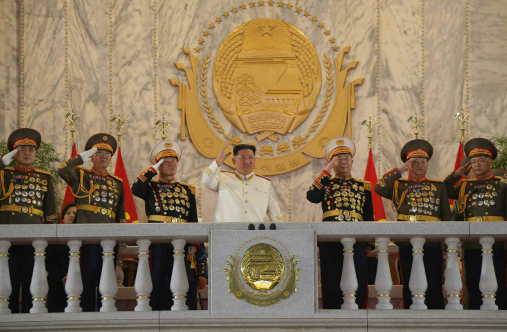
Will the Nuclear-armed North Korea Attack South Korea?Park, Hwee-rhakProfessor in Kookmin University북한 김정은은 2022년 4월 25일 조선인민혁명군 창건 90주년 맞는 열병식 연설에서 대남통일전쟁이라는 ‘제2의 임무’를 강조했다. 출처: 노동신문North Korea emphasized its "second mission," which is a re-unification war against South Korea, on its Armed Forces’ Day in April 2022. It seemed to believe that its first mission, which is blocking the U.S. nuclear extended deterrence or the nuclear umbrella for South Korea, has been almost achieved by possessing hydrogen bombs, intercontinental ballistic missiles (ICBMs), and submarine-launched ballistic missiles (SLBMs) to attack the U.S. mainland. It conducted intensive missile and aircraft attacking drills in October and November and announced plans to mass-produce tactical nuclear weapons to attack South Korea in December 2022. In March 2023, North Korea even detonated its mock nuclear warhead in the air and released the information to intimidate South Korea. North Korea seems to be willing to attack and annex South Korea, if the opportunity comes. Recognizing the seriousness of current situation, the South Korean President Yoon Seok-yul visited the United States and had summit meeting with his US counterpart President Joe Biden in April 2023. The two Presidents announced their "Washinton Declaration" and agreed to establish a new "Nuclear Consultative Group," benchmarking the Nuclear Planning Group (NPG) in the North Atlantic Treaty Organization (NATO), to closely consult the employment of U.S. nuclear weapons in case of North Korea’s nuclear attack. They even declared that the United States would increase the presence of the U.S. strategic assets including the U.S. nuclear armed submarine (SSBN) around the Korean Peninsula to deter North Korea’s nuclear threat. President Biden even threatened to end North Korean regime if it conducts a nuclear attack. On the surface, there seems to be no urgent military confrontation between the US-South Korea alliance versus North Korea. However, below the surface, there are serious competition between North Korea’s threat to attack South Korea with nuclear forces and serious deterrence efforts of the two allies to compel North Korea not to provoke. North Korea’s Current Nuclear CapabilitiesDue to North Korea’s extreme isolation from the outside world, there is no credible way to ascertain the precise strength of its nuclear forces. Although popular estimations refer to 20–60 nuclear weapons of North Korea, these numbers could be smaller than the actual ones, considering North Korea’s ten years’ continuous production of its nuclear weapons since its success in 2013.Actually, a joint report released in April 2021 by two prominent research institutes in the United States and South Korea, Rand and Asan, estimated that North Korea could possess "67–116" nuclear warheads as of 2020 with its capacity to produce "12–18" warheads per year. Using this estimation, North Korea could possess 91–152 nuclear weapons as of 2022. Two South Korean scholars calculated that North Korea could have produced nuclear materials to make 178–447 nuclear weapons using its 18,000–26,000 centrifuges as of the end of 2022.North Korea has also focused on the development of ICBMs and SLBMs to deliver these nuclear weapons to the United States. It managed to make Hwasong-15, 16, 17, and 18 as its ICBMs, which could fly to the United States and conduct at least an EMP (electro-magnetic pulse) attack in the high airspace over the United States. North Korea also has a few SLBMs, such as Puguksong-3, -4, and -5, and was reported to have completed a 3,000-ton submarine to transport and launch them. It even announced to make its nuclear submarine to approach and attack the U.S. mainland with these SLBMs. It has also developed more sophisticated short-range ballistic missiles (SRBMs), such as KN-23, KN-24, and KN-25, to attack the US forces in South Korea (USFK) and South Korea. These missiles can be launched immediately upon arrival at their launch sites and avoid interception of missile defense systems of the USFK and South Korea. North Korea can attack the U.S. mainland and South Korea with nuclear weapons, if it decides to do so.It is true that North Korean nuclear forces cannot be compared to those of the United States. According to the U.S. government, the United States has 1,419 nuclear warheads on 662 deployed ICBMs, SLBMs and heavy bombers as of March 1, 2023. In addition to the deploy nuclear weapons, it holds approximately 2,000 warheads in reserve and 1,500 retired but not dismantled warheads. If the United States employs these weapons, North Korea will be completely annihilated. However, it also is true that most of U.S. nuclear weapons are for the use against Russia and/or China and the number of U.S. tactical or non-strategic nuclear weapons are limited with approximately 100 gravity bombs other than the 100 deployed in Europe. North Korean leaders could think that the United States do not have relevant readiness for controlled escalation of tactical nuclear weapons’ exchange. North Korea’s Nuclear Deterrence Strategy against the United StatesNorth Korea's nuclear strategy against the United States has been the "minimal deterrence," which is to block the U.S.’ implementation of its nuclear umbrella commitment for South Korea by threatening to attack a few U.S. cities while risking its total annihilation by U.S.’ massive retaliations. Actually, North Korea leader, Kim Jong-un, threatened the United States by saying, "The entire U.S. mainland is within our nuclear strike range, and the nuclear button is always on my office desk. This is not a threat but a reality" in his new year’s address in January 1, 2018. The United States, which has a great deal to lose, cannot easily address the suicidal nuclear attack threat of North Korea, which has almost nothing to lose due to its dire economic situation and the regime's desperation. North Korea seems to believe that the United States will not sacrifice New York to protect Seoul. As a result, North Korea evaluates that this mission, in other words, its first mission, is almost completed and shifts its focus to its second mission. North Korea's success in its minimal deterrence strategy against the United States will become more certain if North Korea develops at least a SSBN, which could sail into the Pacific Ocean, approach the U.S. coast, and launch nuclear SLBMs onto U.S. cities before being detected. North Korea is in the process of making its SSBN now. Time seems to be on the side of North Korea. North Korea’s Nuclear Warfighting Strategy against South KoreaIf North Korean leaders are sure that the United States will not implement its nuclear umbrella promise to South Korea, they will launch an attack on South Korea to annex it for reunification of whole Korea through communism. Even North Korean leaders cannot easily decide to use nuclear weapons out of fear of their total demise, but they have been indoctrinated to reunify the whole Korea if opportunity comes. Their current political and economic situations are too desperate to be satisfied with the current status quo. Indeed, North Korean leaders discussed their plan to attack and annex South Korea in a week, called their "Seven-Day War Plan," just after their success in developing its first nuclear weapon in 2013. They revised the plan once again in June 2022, just after Kim Jong-un demanded the preparation for their second mission. They must have learned the nuclear warfighting doctrine from the Soviet Union. The joint report of Rand and Asan that was mentioned before predicted that North Korea would use 40 to 60 nuclear weapons against South Korea from the outset of its attack.North Korean leaders revised their law on their nuclear forces on September 8, 2022, in a way to ease the use of their nuclear weapons. In the law, they introduced five conditions on which their national leader could decide to use nuclear weapons: 1) a launched or imminent hostile forces’ attack by nuclear weapons or other weapons of mass destruction (WMD); 2) a launched or imminent nuclear or non-nuclear attack against the state leadership and the command organization of the state’s nuclear forces; 3) a launched or imminent military attack against important strategic objects of the state; 4) the need for an operation to prevent an expansion and protraction of war and taking an upper hand in a war; 5) a catastrophic crisis that threatens the existence of the state and the safety of the people. These conditions imply that North Korea leaders will use nuclear weapons whenever they think it necessary. For example, North Korean ground forces will initiate a surprise attack supported by special forces and cyberspace warfare. They could use tactical nuclear weapons and/or non-persistent chemical weapons South Korean forces on the front line. In particular, they would use several nuclear weapons against various targets to destroy South Korea’s overall warfighting capabilities and resolve, paralyze South Koreans, and demand the surrender of the South Korean government before, during, or just after the advancement of its ground forces into South Korea. They will probably bypass U.S. military forces and bases in South Korea while threatening to use nuclear weapons against them if the United States takes provocative actions. They will advance quickly to Busan, which is the southernmost strategic city in South Korea and whose occupation could mean their victory in the war. North Korea can begin with a limited attack on Seoul to reduce its risk of an all-out nuclear war and avoid the U.S.’ intervention. Seoul, the capital of South Korea, is an ideal objective for the limited attack. It is just 40 kilometers away from the border and has several well-developed automobile-only roads to be approached from the north. If North Korea is able to neutralize the front-line South Korean forces with tactical nuclear weapons and/or chemical weapons, North Korean ground forces could approach Seoul in a day. After occupying Seoul, they will indoctrinate South Koreans in Seoul, conduct a referendum, and announce the annexation of Seoul, as Russia did in Ukraine. They will threaten to use nuclear weapons if the United States and South Korea try to conduct any offensive military operations. If they succeed regarding Seoul, they will repeat the same process in other South Korean cities.ConclusionNorth Korea’s goal is clear and has never changed: the reunification of the whole Korean Peninsula through communism. To achieve that goal, North Korea had to block the US nuclear umbrella for South Korea. North Korea called it “the first mission.” Seriously enough, North Korea started to emphasize its second mission, the reunification of the whole Korean, since the early 2022, which means that it is sure about the success in its first mission. If North Korean leaders believe that the perfect opportunity comes, they will initiate a combined attack with conventional and nuclear weapons on South Korea in order to achieve their second mission.These conclusions have been common sense to most conservative South Koreans and U.S. citizens who have a balanced view on North Korea. Actually, more than 80% of South Koreans have consistently thought that North Korea would not give up its nuclear weapons no matter what. However, several South Korean progressives have been reluctant to confront the reality and wasted lots of time. North Korea managed to strengthen its strategic nuclear forces during the South Korean progressive administration, the Moon Jae-in Administration. It is time for most progressive South Koreans to rethink their views on North Korea and North Korean nuclear armament. They happened to have a strong misperception of North Korea in the course of their resistance and protests for democracy in the 1970s and 1980s and deceived by North Korea’s deception operations. They should accept South Korean conservative’s view that North Korea developed its nuclear weapons to attack and annex South Korea by force and join the efforts for strong deterrence and defense against North Korean nuclear threat. The USFK and South Korean forces should be fully prepared to defend South Korea from North Korea’s surprise attack using conventional and nuclear forces together. They should develop several probable scenarios of the attack, including an all-out nuclear attack and a limited attack on Seoul, and take necessary precautionary measures to defeat the North Korean force effectively and quickly. They should revise all their operational plans to incorporate the requirements of nuclear warfighting and conduct their combined exercises under the North Korea’s nuclear attack situation. “If you wish for peace, prepare for a war.” 주제어: 북한(North Korea), 핵전쟁(Nuclear War), 핵공격(Nuclear Attack)
23.06.16 -
 [From the Editor-in-chief]
On the night of May 6th, nine members of a North Korean family crossed the Northern Limit Line (NLL) aboard a fishing boat and defected to South Korea. This is the first case of a family using a fishing boat to escape to South Korea since July 2017, marking approximately six years since the last family defection. While it has primarily occurred along the east coast, the fact that they used a wooden boat to defect through Yeonpyeong Island, a highly sensitive area due to the 2010 Bombardment of Yeonpyeong, is quite unusual. The perilous situation, where they risked their lives, including those of young children, demonstrates the urgency they faced. The reasons for their escape from North Korea are known to be related to the severe COVID-19 lockdown measures, strict internal control, food shortages, and longing for South Korea through access to external information.On the night of the 6th, the South Korean military detected unusual movements, including a North Korean fishing boat approaching the NLL, through surveillance equipment. As the boat crossed the NLL and headed south, the authorities immediately dispatched forces to the sea and conducted a search and inspection when they boarded the vessel. They clearly expressed their intention to defect to our soldiers on the boat. After confirming their "intention to defect," the military authorities transferred them to Unit A in the metropolitan area, where they underwent joint interrogations with relevant agencies such as the National Intelligence Service, Ministry of Unification, and the police. With the confirmed intention to defect, it is expected that the interrogation will soon be finished, and they will be moved to a protective center or Hanawon.As per the National Intelligence Service, on May 19th, two families from North Korea chose to defect in response to the increased control measures implemented within the country during the COVID-19 pandemic. The National Intelligence Service revealed that these defectors had developed admiration for South Korea through watching South Korean broadcasts, leading them to make the decision to defect when the social control measures in North Korea became stricter due to COVID-19. It was also noted that the defectors are relatives within their families. As the Yoon Seok-yeol government has emphasized the principle of accepting all defectors, it is expected that domestic settlement support will be provided to them.The recent defection of North Korean families by boat marks the first instance in approximately six years since July 2017. Given the heightened surveillance and control measures by North Korean authorities, this family-based defection using a fishing boat has garnered significant attention. It was reported that the North Korean military's border security near the NLL became more stringent after an incident in April where the North Korean coast guard violated the NLL and subsequently retreated upon warning shots fired by the South Korean navy. North Korea's border closure due to the COVID-19 pandemic remains in effect. The fact that these families chose to defect by boat in an area near Yeonpyeong Island, where previous provocations and battles took place, indicates heightened surveillance and security compared to other regions. The departure point, between Hwanghae-do and Yeonpyeongdo, includes Jangjaedo and Mudo, islands that Kim Jong-un personally visited and led on two occasions in 2013 and 2017. North Korea considers this area to be a strategically important military stronghold, resulting in strict border control.Despite these circumstances, the reason behind risking their lives to escape with their children on a small boat points to the challenging conditions within North Korea. The defection of these families across the NLL signifies the difficult internal situation, including food shortages. North Korea has faced challenges in importing food, fertilizers, and pesticides due to sanctions imposed by other countries and the impact of COVID-19. Additionally, natural disasters such as droughts and typhoons have led to a decrease in food production, exacerbating the food shortage. In June 2021, Kim Jong-un himself acknowledged the difficulties in people's lives due to inadequate food production during a meeting of the Central Committee of the Workers' Party of Korea. International organizations such as the Food and Agriculture Organization of the United Nations (FAO) and the World Food Program (WFP), which have continuously monitored North Korea's food situation, have also expressed concerns based on their own investigations. According to the Ministry of Unification, North Korea's food production was 4.51 million tons in 2022, a 3.8% decrease compared to 4.69 million tons in 2021. The prohibition of private grain distribution in local markets, enforced by North Korea's policy of promoting "food sales outlets" to strengthen state control, has also contributed to the food shortage. Furthermore, the shift from corn to wheat cultivation in 2022 led to a significant decline in corn production. According to Professor Kim Byung-yeon from Seoul National University (December 2022), North Korean residents' income has decreased by around 40% compared to 2016. In terms of monthly income for a family of four, it was less than $30 in 2022, compared to $40 in 2016. The price of rice has increased by 20%, and corn by 50% compared to early 2016.The food shortage has resulted in considerable suffering among the North Korean population. Reports have surfaced that North Korea reduced the daily grain ration per soldier from 620g to 580g, and cases of malnutrition have been reported, with dozens of deaths occurring daily in the Kaesong region. Numerous cases of theft, such as stealing potato and soybean seeds planted in May from farms, have been observed in the Yanggang Province, leading to the organization of armed guards to protect the farmlands in the region.Even in the worst economic conditions, North Korea prioritizes spending on military development, such as missile programs, rather than the economy. Last year, North Korea conducted 71 missile launches, and in the current year, it has already carried out nine ballistic missile tests. According to the Korea Institute for Defense Analyses (KIDA), the total cost of all types of ballistic missile launches conducted by North Korea last year amounted to a maximum of $530 million (689 billion KRW). Furthermore, it has been reported that when North Korea resumed trade with Russia, it initially imported luxury items for the ruling family, such as horses for riding. Last November, when the North Korean-Russian train service resumed after a two-year hiatus, dozens of horses were imported for Kim Jong-un's family and high-ranking officials, prioritizing their needs over the well-being of the general population. Kim has visited missile launch sites this year but has not visited any sites related to the livelihood of the people.North Korea has enacted various oppressive laws that restrict its citizens' freedom, such as the "COVID-19 Restriction Law" that imposes the death penalty for violating quarantine measures, the "Law on Rejecting Reactionary Ideology and Culture" aimed at blocking external information, the "Pyongyang Cultural Language Protection Law," and the "Youth Cultural Education Guarantee Law." These laws aim to control the population to the extent that people have no freedom.In addition, Kim Jong-un's project, the construction of 50,000 apartments in Pyongyang, forces the mobilization of labor from rural areas, and requisitions construction materials from residents. The combination of oppressive laws, border closures, Kim Jong-un's pursuit of nuclear weapons and missiles, and failed food policies has resulted in a deteriorating quality of life for North Korean citizens. For them, defection may be the only path to survival. This symbolic event demonstrates that no oppression or suppression can defeat the hearts and minds of North Korean citizens as they strive to reach South Korea. We urge North Korea to lift the irrational "COVID-19 lockdown" that intensifies the suffering of its citizens in line with other nations easing COVID-19 restrictions. It is necessary to immediately abolish various oppressive laws that violate the human rights of the population, such as the "COVID-19 Restriction Law" and the "Law on Rejecting Reactionary Ideology and Culture." Furthermore, North Korea should accept international recommendations to halt nuclear and missile development and redirect related budgets towards economic development and improving the lives of the people.
23.06.01 -
 [Academic article]
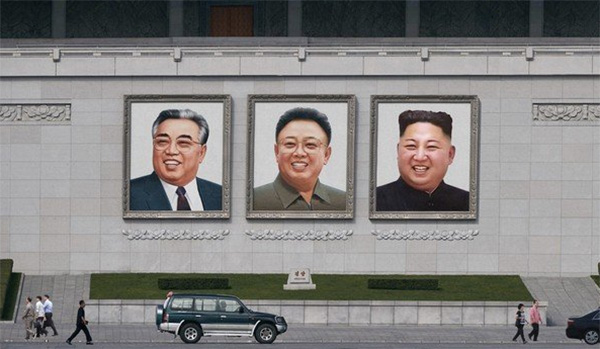
The Mechanisms of False Consciousness in North Korea's Political Systemㅡ The Governance Mechanism of the Ruling Class and the Formation Structure of Political Consciousness in the Governed Class Lee Seung-hyunPh.D in Public Administration (Research Fellow at the SAND Institute)The downfall of socialist states in the Eastern Bloc during the 1990s, the dissolution of the Soviet Union in 1991, the "Arduous March" from 1995 to 1998, which led to the starvation and death of over a million people, the passing of Kim Il-sung in 1994, and Kim Jong-il's death in 2011 all posed significant challenges to North Korea's political system. These political events have sparked discussions of "regime collapse" in democratic countries, including South Korea and some Western nations. Despite the hopes for such crises, North Korea has managed to navigate through them and sustain its political system across three generations of succession.One of the key reasons for North Korea's ability to maintain its regime despite political threats lies in the robust hegemony and governance mechanisms centered around the supreme leader. Another vital factor is the political acquiescence of the governed class, primarily influenced by the governance mechanisms employed by the ruling class. In particular, the long-established cyclical mechanism of political acquiescence within the governed class strengthens the ruling class's hegemony and consolidates its governance. This "false consciousness" within North Korea plays a pivotal role in preventing regime collapse even during times of political crisis.To understand the formation mechanism of the "false consciousness" that upholds North Korea's political system, it is essential to grasp the political acquiescence resulting from the psychological dominance exerted by the ruling class and the governance mechanisms that drive it. <표>Following Japan's surrender to the United States in 1945, Kim Il-sung and the Partisans seized hegemony with the support of the Soviet Union and established a system to consolidate and strengthen their power within the socialist regime. Under Kim Jong-il's leadership, the governance mechanisms of the ruling class were systematized for the dictatorship. As depicted in Figure 1, the supreme leader, the ruling class, and the hegemony became social norms through the "Juche Idea." Through surveillance and punishment, education and culture, and information asymmetry, these governance mechanisms effectively control and monitor North Korean society. As shown in Figure 1, these mechanisms differ based on loyalty to the supreme leader and the regime, thereby exerting control over the environment and shaping consciousness according to social class "strata." Within North Korea's political system, this discriminatory control over the environment gives rise to different forms of false consciousness within the subjugated class, leading to varied types of political consent towards the supreme leader's dictatorship and the ruling class's governance.The ruling class and the basic class both possess a voluntary but shallow form of false consciousness, yet their expressions of political consent differ. The ruling class, who shares power with the supreme leader, demonstrates political acquiescence, while the subjugated basic class exhibits a characteristic of political tolerance(허용). On the other hand, the complex class and the antagonistic class, lacking influence over political decisions, develop coerced false consciousness and engage in political acceptance(수용) through the mechanism of false consciousness.The ruling class and the basic class both possess a voluntary but shallow form of false consciousness, yet their expressions of political consent differ. The ruling class, who shares power with the supreme leader, demonstrates political acquiescence, while the subjugated basic class exhibits a characteristic of political tolerance(허용). On the other hand, the complex class and the antagonistic class, lacking influence over political decisions, develop coerced false consciousness and engage in political acceptance(수용) through the mechanism of false consciousness.
23.06.01 -
 [Feature Article]
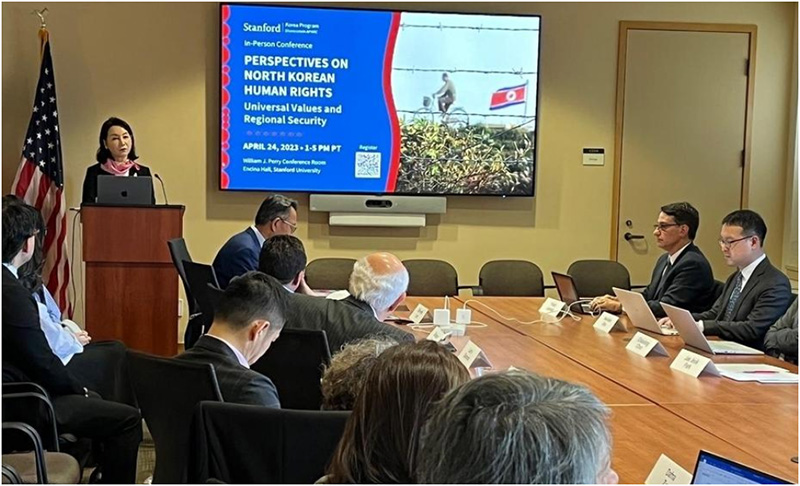
Shin-wha LeeAmbassador for International Cooperation on North Korean Human RightsHuman rights, a universal value intrinsic to all individuals, should ideally exist beyond the realm of political disputes. However, the grim reality is that human rights issues in North Korea often become subject of political controversy. Undeniably, Kim Jong Un regime stands as one of the most oppressive, having committed some of the most egregious human rights violations compared to other dictatorships and authoritarian systems. Primarily, there are three key areas of concern related to Human rights in North Korea. First is the gross human rights abuses committed against the North Korean people by the Kim regime. Second, the dire circumstances faced by North Korean defectors and workers overseas, particularly those who have experienced significant human rights infringements such as forced repatriation and trafficking in countries like China. Lastly, the kidnapping and detention of foreigners, including South Koreans and Prisoners of War(POWs), undertaken by the North Korean regime during and post-conflict.In North Korea, the human rights condition is distressing. The ruling Kim family and a select few elites luxuriate in what they label "the ills of capitalism," whilst the vast majority of the population struggles with severe food shortages, lack of information, and restrictions on mobility and freedom of expression. Despite North Korea’s signature on multiple UN human rights conventions, it continues to rank among the worst countries for basic human rights, scoring a mere score of 3 out of 100 in a Freedom House survey. It is important to highlight the connection between North Korea's military aggression and its human rights violations. North Korea require roughly 5.8 million tons of food annually, but habitually experiences a shortfall of about 800,000 to 850,000 tons each year. Despite this, the country has launched almost 100 missiles in the span of less than two years. These resources, spent on military weaponry, could have been allocated to alleviate the food scarcity. As stated by the Korean Ministry of Unification, the 71 missiles fired by North Korea last year could have been exchanged for 1 million tons of food. The food crisis in North Korea underscores the fact that the Kim regime is prioritizing ‘regime security’ over the ‘human security’ of its citizens.The COVID-19 pandemic has further facilitated the Kim regime’s tightening grip on the population, the implementation of severe punishments, and an increase in isolationist policies. By portraying the U.S. and South Korea as external threats, the regime justifies its military aggression. The approach has resulted in worsened economic conditions, exacerbated food shortages, and increased human rights abuses.The regime has implemented what can be referred to as the "Three Evil Laws," devised to restrict external influences and control information dissemination. These laws, namely the Law on Prohibiting Reactionary Thought, the Law on Ensuring Youth Education, and the Pyongyang Culture and Language Protection Law, represent grave human rights abuses that oppress the populace. Illicit content distribution or speaking non-official language can lead to severe punishments, including imprisonment or execution. Nevertheless, younger North Koreans, often referred to as the 'Jangmadang generation' or ‘MZ’ generation, continue to resist. They question the media and language restrictions, wondering aloud, “What is the harm in movies or words?” They express their struggling saying, “If we can’t gather with friends and discuss South Korean movies or dramas, and if we are not allowed to speak in the South Korean-language style, we have nothing to do. We are now more cautious than ever to evade severe crackdown,” as they simultaneously adapt their behavior to avoid such stringent enforcement measures. This reaction against the regime’s control highlights the embedded capitalist culture and Kim Jung Un’s fear of external influences that could jeopardize his rule. Second, North Koreans who have escaped, particularly to China, face the potential risks of forced repatriation, human trafficking, labor exploitation, and sexual violence. Under an undisclosed agreement with North Korea signed in the early 1960s and the 1998 Jilin Provincial Border Management Ordinance, China classifies North Korean defectors as illegal immigrants who are guilty of border violations. Thus, hundreds to thousands of defectors were apprehended and deported back to the North annually before the Covid-19 outbreak. With borders currently closed due to the pandemic, over 2,000 North Koreans are poised for deportation when the border reopens, according to the United Nations. These repatriated North Koreans would face the imminent threat of torture, imprisonment, and even execution upon return.Prior to the Covid-19 blockade, it is estimated that between 50,000 and 100,000 North Korean laborers were sent to nine countries, including China and Russia, serving as ‘foreign currency earners.’ With little knowledge of labor laws, these overseas workers often suffer from wage theft and excessive labor conditions, akin to modern-day slavery. However, recent reports of North Koreans bribing officials to work abroad when the border reopens may reflect the harsh living conditions within North Korea.Third, during the Korean War, estimates suggest that between 80,000 and 90,000 South Koreans were abducted. Moreover, as of 2016, there were reports of 516 cases of abduction occurring after the war. As recently as July 2021, it was estimated that about 170 of these abductees were still alive in North Korea. However, due to aging, the number of surviving abductees is likely to be minimal. For comparison, Japan officially recognizes 17 of its citizens as abductees. Five of these individuals were able to return home following the Koizumi-Kim Jong-il summit. Since then, successive Japanese Prime Ministers and cabinet ministers have made the repatriation of abductees a top priority, publicly wearing ‘blue ribbons’ to signify their commitment. Contrastingly, South Korea, despite having a substantially larger number of abductees and prisoners of war, has only recently begun to formally address these issues at a government level. There is a pressing need for increased empathy towards the victims and their families, and proactive efforts to find solutions.This summary of North Korean human rights issues is by no means exhaustive, but the importance of addressing them is clear for several reasons. Firstly, basic human rights are universal values that extend to all human beings, including North Korean citizens. As we mark the 75th anniversary of the Universal Declaration of Human Rights, it is our responsibility as global citizens to reassess the North Korean’s human rights situation in North Korea and actively pursue viable solutions.Secondly, for a South Korean, a North Korean is not just any individual. The prolonged division between North and South has inflicted suffering on countless Koreans, most of whom are either no longer alive or in the twilight years. As South Koreans, we must acknowledge our shared humanity with North Koreans and prioritize their basic rights. Reuniting separated families, repatriating abductees, and resolving illegal detentions are not be considered ‘gifts’ or ‘favors’ that can be acquired by appeasing the Kim regime. Instead, these are fundamental individual rights. If the Kim regime denies family reunions, it should be held accountable under international law, which forbids forced family separation. It is worth noting that South Korea's progressive parties often stress the idea of ‘uri minjok kkiri, or ‘among our own people,’ urging peace and cooperation with the North Korean government. Their focus is on providing humanitarian aid from South Korea and the international community. Yet, most of these resources end up serving the luxuries of the Kim family and a few elites, If North Korean people are not just ‘anyone,’ and if ‘we are one people,’ then prioritizing the protection of their basic rights and human rights, which the Kim regime infringes up, is essential. Thirdly, North Korea’s nuclear program and human rights issues have often been treated as separate matters, leading to the neglect of the latter. It is critical to understand nuclear and missile provocations, economic difficulties, food shortages, information control, diplomatic isolation, and emergencies are all intertwined with North Korea’s human rights situation. Both the Kim regime’s reckless military threats and their strong-handed population control and repression serve the purpose of ‘regime maintenance.’ While nuclear provocations are externally motivated, human rights abuses ensure internal control through fear and repression. Lately, there has been a growing consensus in the international community, including South Korea, the United States, and European countries, to address North Korea’s human rights and nuclear issues concurrently.Approaching human rights from the perspective of universal human rights associated with freedom, democracy, and basic individual rights poses a challenge to the Kim regime, striking at its Achilles heel. While Kim Jong-un has remained indifferent to international condemnation of his nuclear tests and missile launches, he tends to react more defensively when human rights issues come before the international community, as evidenced by the release of the UN Commission of Inquiry in 2014. Yet it is essential for the international community to understand that improving human rights is not merely a means to an end but an end in itself. This calls for a careful and deliberate approach, along with consistent, principled, and cooperative efforts from the international community.Fourth, some have argued that the Yoon Seokyeol administration's focus on North Korean human rights detracts from the discourse and strategy of ‘peace’ in inter-Korean relations. However, addressing North Korean human rights is an integral component of achieving the ultimate goals of freedom, democracy, and reunification, and should not be considered as separate from these objectives. The North Korean human rights situation, characterized by a regime that prioritizes ‘regime security’ through dictatorship, population control, and military adventurism, stands in clear violation of international norms. Advancing the human rights of ordinary North Korean citizens serve as the vanguard for achieving peace and unification grounded in the principles of freedom and democracy.It is important to acknowledge that the prior administration's policy of engaging North Korea, which emphasized peace on the Korean Peninsula and the declaration of the end of the Korean War, resulted in emboldening and benefiting the Kim regime. This outcome led to the strengthening of its nuclear capabilities, the deterioration of inter-Korean relations, and pushed peace on the Korean Peninsula further out of reach.In summary, two key points must be understood. First, as long as Kim Jong Un holds power, it is improbable that North Korea will relinquish its nuclear and missile programs. The nation will persist in its demands for recognition as a nuclear-armed state from the United States. This scenario will contribute to escalating volatility and instability on the Korean Peninsula and the region, moving further away from peace. Second, the root cause of both North Korea’s nuclear program and its severe human rights abuses is the lack of accountability for the regime’s actions and crimes. North Korea seeks exceptionalism, undermining international norms and hindering global accountability efforts.So, what should the international community do in response? Firstly, we must prioritize holding the North Korean regime accountable by diligently and systematically documenting and preserving evidence of human rights violations. This effort will establish a legal foundation for punitive measures and deter further abuses by reinforcing the principle of 'no impunity.'Second, we must recognize that the North Korean nuclear program and human rights abuses are interconnected. Kim Jong-un relies on both these elements to maintain his regime. Faced with challenge such as economic and food shortages, he is likely to increase control and repression. We must acknowledge the failure of isolated denuclearization negotiations and take into account the relationship between missile expenditure, food shortages, and potential radioactive contamination near the Punggye-ri nuclear test site. This connection underlines that Kim’s military adventurism and human rights violations are interlinked, and we should incorporate human rights issues into North Korean policy, independent of regime or leadership changes.Third, we must acknowledge that despite various UN efforts to address North Korean human rights, structural limitations persist due to North Korea’s membership and China's growing influence within the United Nations. For example, a 1995 special agreement between the United Nations and China stipulated that the UN High Commissioner for Refugees (UNHCR) should be granted access to North Korean defectors, but Chinese sanctions have impeded the full implementation of this agreement. Despite UNHCR’s right to request mediation from a third party in such cases, China has not done so. Although the UNHCR included some North Korean defectors as refugees in its annual report on refugee numbers a few times in the late 1990s and early 2000s, no North Korean refugees have been listed in the past two decades. This is partly because the UNHCR, dealing with tens of millions of global refugees, is not immune to Chinese influence, including financial power. To overcome this predicament, it is vital to strengthen the unity among like-minded nations, enabling them to act collectively and vocally in defense of human rights. Simultaneously, we should strive to persuade countries with differing viewpoints. Initiating human rights dialogue with China is key to ensuring North Korea’s compliance with treaty obligations and international human rights protection mechanisms, especially by engaging with countries that can be seen as middle ground or swing states.Forth, since 2018, only informal discussions regarding human rights in North Korea have taken place in the UN Security Council. To facilitate formal, open discussions, support from nine out of 15 permanent and non-permanent members is necessary. Fifth, recent discussions during the COI+10 conferences have emphasized the need for political will and international pressure for implementation, rather than producing another COI report or new reports. While I concur with this sentiment, there is also a need to update reports or documents that expose human rights abuses under Kim Jong-un regime. The COI report was conducted in 2013 and released in early 2014, while Kim Jong-un assumed power in 2012. This timing could enable Kim Jong-un to argue that the content of the COI report does not pertain to his regime. Hence, it is critical to disclose the human rights abuses that have occurred during his reign, which have been even more egregious than those under his father or grandfather have, over the past decade.Sixth, we should express our profound appreciation to both domestic and international NGOs that are working relentlessly to ameliorate the human rights situation in North Korea. Their invaluable, tireless efforts have stopped the situation from worsening further. While these NGOs have recently received increased recognition and support, apprehensions regarding future challenges persist. We call upon governments and the international community to persist in supporting and sponsoring these NGOs, thus ensuring their effectiveness even amidst political and leadership transitions. In this endeavor, it is essential to support not only globally active NGOs and a handful of well-known defectors, but also local, non-English speaking NGOs and defectors seeking to help their country and people, but struggling with limited knowledge, resources, and networks. Both government and non-governmental backing is crucial. To conclude, as the Ambassador for International Cooperation on Human Rights in North Korea, I want to assure the North Korean people: “We stand beside you, working relentlessly to assist you in reclaiming your rights to food, information, mobility, and freedom of speech. Equally important, we are here to remind you that you are not merely victims of the Kim regime's atrocities, but individuals capable of bringing about meaningful change. We stand firmly beside you in this endeavor.” Indeed, the people of North Korea, particularly the younger generation, are not just victims of the regime’s human rights abuses. They are individuals who possess the capability to shape their own destiny and the future of their country, and they should be empowered to do so.
23.06.01 -
 [ISSUE Disaster of Punggye-ri]
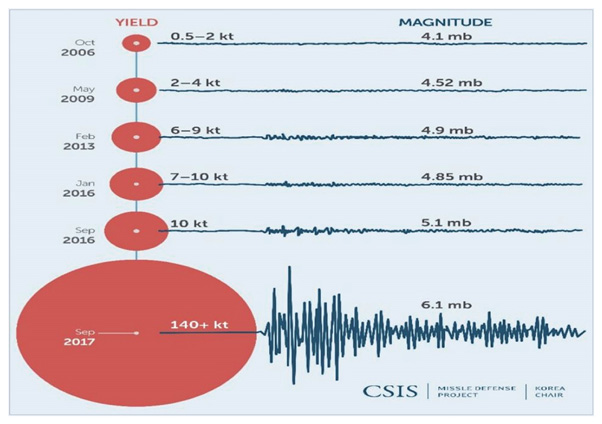
Kune Y. SuhProf. Emeritus of Nuclear Engineering Seoul National UniversityFigure 1. North Korean nuclear tests and their seismic impact, October 2006 to September 2017(Yield in 1,000 tonnes (kt) TNT equivalent. Magnitude (mb)=Strength of the seismic waves)Groundwater may contain radioactive substances that can be hazardous to human health. Concentrations of radionuclides Po, Th, U, and Ra were measured in groundwater samples collected from different locations in the area of the Waste Isolation Pilot Plant (WIPP) site in Carlsbad, New Mexico, United States.In 1979, Congress authorized WIPP, and the facility was constructed during the 1980s. Congress limited WIPP to the disposal of defense-generated transuranic (TRU) wastes in the 1992 Land Withdrawal Act. In 1998, the US Environmental Protection Agency (EPA) certified WIPP for safe, long-term disposal of TRU wastes.[1]The average values of gross activity concentrations of Po-210, Th-228, U-238, U-234, Ra-226 and Ra-228 were determined to be 1.62 Bq/L in shallow groundwater and 5.88 Bq/L in deep groundwater, respectively. The total radioactivity in deep groundwater was higher than that in shallow groundwater, and most of the radioactivity resulted from Ra-226.Furthermore, the effective doses for ingestion of radionuclides were ~0.333 mSv/y for shallow groundwater and ~1.338 mSv/y for deep groundwater samples, which are higher than the World Health Organization (WHO) guideline level of 0.1 mSv/y for drinking water. Ra dominated the total ingestion dose, contributing 93 % and 75 % of the total effective doses to the deep and shallow groundwater, respectively.The ingrowth and decay of natural radionuclides suggested that Ra-228/Ra-226 ratio can be a useful indicator of the source of radioactive contamination. The radioactivity data obtained from the investigated groundwater samples was used to establish a baseline for radioactivity levels in groundwater.As the Cold War began to heat up, the US wanted a testing site for observing nuclear weapon usage, effect, and strategic implementation. They selected a site ~160 km southeast of the Nye County seat of Tonopah, and ~100 km northwest of the greater Las Vegas area.The Nevada Test Site (NTS) was home to 100 atmospheric and 828 underground tests. It was located in an extremely rural, flat area that offered security and secrecy. The area was not heavily populated by animals, nor was there a major river nearby, which mitigated environmental impacts.However, the extremely rural nature of the site made it difficult to locate all families that might be living nearby. Without the knowledge that they were there, the government failed to adequately warn people who may have been affected by radioactive fallout from the nuclear tests.[2]In 1950, Enrico Fermi and Edward Teller discussed the NTS location. Both concluded there was risk in the site’s location. However, if a maximum yield quantity was observed and if test dates were chosen by meteorologists to limit radioactive fallout dispersion, it was determined the NTS would work. Neither of these recommendations were strictly adhered to in subsequent years.[3]Furthermore, many of the communities in the surrounding ranch towns were subsistence farmers, and consumed locally produced milk, beef, and vegetables, all of which were exposed to fallout from the tests. The combination of these factors made the Nevada downwinders especially vulnerable to radiation exposure.Many of these soldiers became known as ‘atomic veterans.’ Some of the civilian population exposed themselves by going to designated areas to watch the blasts. Many brought their breakfasts for the early morning blasts and conversed with their neighbors excitedly. Other civilians were more cautious, staying indoors for hours at a time following the blasts.Anger mounted throughout downwinder communities as various government documents came to light and cancer rates continued to soar into the 1970s. Leukemia rates in downwind Utah Mormon communities exceeded their non-downwind counterparts by five times. Pockets of thyroid cancer, especially in young children, spiked in areas which had never experienced childhood cancers.Unlike some other downwinder communities, the first generation survivors in the Nevada range have received compensation for their illnesses. Second and third generation downwinders, however, continue their legal struggle to be recognized as an impacted community. To date, none of these individuals have received reparations, even though many of them suffer pre-existing diseases and conditions they believe are associated with their residency near the NTS.[2,3]Now, back to Mt. Mantap finally. A multidisciplinary approach is required to identify how North Korea’s nuclear tests have affected the environment and inhabitants in the vicinity of the Punggye-ri Test Site (PTS). Their nuclear tests summarized in Figure 1[4] and ensuing environmental destruction appear to be surfacing as a palpable threat to the environment of the Korean Peninsula at this time. Thus, quantifying environmental damage and taking countermeasures in advance are crucial to minimize their potential threats to humans, flora and fauna. Note that the sixth test with 140+ kt yield is underestimated, though.Primarily, there is a pressing need to study the environmental impact of North Korea’s nuclear tests using Google Earth image analysis. We need to be able to compare Google Earth images taken before and after each nuclear test. We need to cross-check the results with those of previous scientific research available in the literature.[5]Forests were already found to be sizably reduced after the first through third tests. In particular, when comparing the Google Earth images before and after the second nuclear test, some ground subsidences were observed. Such subsidences can cause tunnels on the mountainsides and cracks in rocks around the mountains, leading to the release of radioactive materials and contaminating groundwater.[5]Moreover, decay and deforestation were observed not in the PTS, but in their surrounding areas after the fourth through sixth tests. Particularly after the fifth and sixth tests, the topography and the forests of the surrounding areas were severely damaged.In relation to North Korea’s nuclear tests and their impact on the environment, there is a need to prepare various policy measures to reduce North Korea’s environmental pollution and destruction. The policy measures shall include the establishment of various cooperative governance between the Korean government, the private sector, the academia, nongovernment organizations (NGOs), and multinational as well as multilateral organizations.Recently, the Transitional Justice Working Group (TJWG) based in Seoul, has brought to our attention that the PTS is located in an area with a lot of rain and groundwater.[6] The report reveals that out of ~1.08 million inhabitants thereabout, those affected by irradiation is estimated to be 540,000 assuming 50%, and 270,000 assuming 25% of the total population. The report also said that radioactive materials could contaminate agricultural and marine products as well. It appears probable that North Korea’s agricultural and marine products manage to find ways to neighboring markets such as in South Korea, China and Japan.Meanwhile the South And North Development (SAND) has conducted interviews with three North Korean defectors who went through the sixth test at Gilju County.[7] As a result, statements were made that the earth shaking was particularly sizable during the sixth test in 2017. Since 2013, right after the third test, there was a significant increase in patients with low white blood cells and respiratory infections at Gilju Hospital. It was also argued that North Korean authorities provided bottled water only to the elite class due to concerns about radioactive contamination in drinking water after the sixth test.Now that groundwater, surface soils, and test facilities are contaminated surrounding the PTS, there is a need to set up a so-called Korean-Peninsula Atoms Management Program (KAMP). KAMP is slated to be responsible for survey and monitoring of the radioactive PTS, as well as for future cleanup and waste disposal for both on- and off-site generators. KAMP shall be responsible for environmental corrective actions and inhabitants’ health care programs with a particular mission to treat groundwater contaminated by nuclear tests. Cleanup has to be done at all surface soils as well.For groundwater contamination, KAMP shall be working to identify contaminant boundaries, restrict access to contaminated groundwater, and to implement a long-term monitoring program. Because of the complex yet not well known, geology of the PTS, groundwater contamination shall be grouped into characterization areas based on location and similar geology.Literature Cited1. “U.S. Department of Energy's Waste Isolation Pilot Plant - WIPP Site,” 8 November 2022.2. S.A. Fox, “Downwind: A People's History of the Nuclear West,” Lincoln, Nebraska: University of Nebraska Press, Bison Books, 2014.3. C. Gallagher, “American Ground Zero: The Secret Nuclear War,” New York: Random House, 1994.4. H.G. Hilpert, O. Meier (Eds.), “Facets of the North Korea conflict: Actors, problems and Europe’s interests,” SWP Research Paper, German Institute for International and Security Affairs, 2018.5. J.H. Ki, M.K. Sung, C.I. Choi, “Impact of Nuclear Tests on Deforestation in North Korea using Google Earth-Based Spatial Images,” Journal of People, Plants, and Environment, Vol. 22, No. 6, pp. 563~573, 31 December 2019, doi: https://doi.org/10.11628/ksppe.2019.22.6.563.6. Transitional Justice Working Group, “Mapping the Risk and Effect of Radioactive Contamination of Groundwater Sources from the Punggye-ri Nuclear Test Site in North Korea,” Special Report, February 2023.7. https://sand.or.kr/kr/index.php.
23.05.16 -
 [Feature Article]
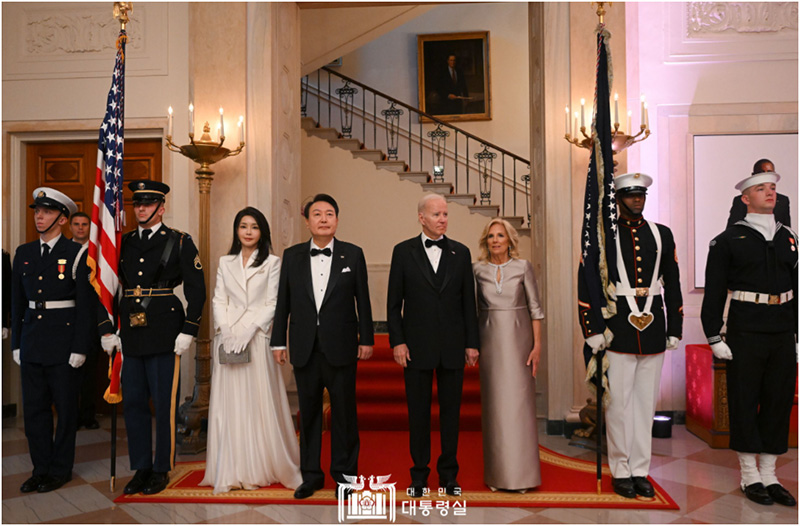
Nam Sung-wookChief of Convergence Institute of National Unification at Korea University"The Washington Declaration is a heinous embodiment of a policy aimed at hostility and aggression towards North Korea, reflecting the most hostile and aggressive intentions. It has convinced us that 'our second mission to nuclear deterrence, must be complete.' And it has created an environment in which North Korea must take more decisive action. The delusions of the United States and South Korea will face an even stronger reality of power in the future." Kim Yo-jong, Deputy Director of the Workers' Party of Korea (WPK), responded strongly to the ROK-US summit's "Washington Declaration" for strengthened containment. She also had harsh words for the ROK-US summit. She referred to US President Joe Biden's comments about the "end of regime" as "the words of an old man with no future.", criticizing South Korean President Yoon Suk-Yeol as "a miserable person who blindly supports the meaningless declaration." The parliamentary opposition has criticized the Washington Declaration as a mere symbolic gesture that appears impressive but lacks actual power in response to North Korea's nuclear threat. Some media outlets have criticized the White House for its response to the explanation given by the Office of National Security, which suggested that the operation of the Nuclear Consultative Group (NCG) could be interpreted as "nuclear sharing."However, if the Washington Declaration is truly an empty gesture in response to North Korea's threats, then why is North Korea claiming that they will take "decisive action" against it?Meanwhile, there are some nuclear proponents who have criticized South Korea for relinquishing its right to nuclear development by committing to non-proliferation. They express regret that South Korea's nuclear armament is hindered at its source due to the country's commitment to international obligations under the Treaty on the Non-Proliferation of Nuclear Weapons (NPT) and the Cooperation Agreement between the Republic of Korea and the United States for the Peaceful Uses of Nuclear Energy. Some proponents even express skepticism about the trustworthiness of the US nuclear umbrella, arguing that nuclear armament should be the ultimate security strategy. They often refer to a question posed by French President Charles André Joseph Marie de Gaulle to US President John Fitzgerald Kennedy in 1961: "Can you give up New York to save Paris?"While some evaluate the Washington Declaration as a significant document as the "first nuclear pledge," others point out that it does not reach the level of NATO's nuclear sharing.The National Security Office in Yongsan and the ruling party evaluate it as the second Mutual Defense Treaty Between the United States and the Republic of Korea.According to them, while the 1953 Mutual Defense Treaty between the United States and the Republic of Korea was based on conventional weapons, the Washington Declaration is founded on nuclear weapons.An objective and logical analysis of the security implications of the Washington Declaration reveals that its core lies in the NCG, which is the first permanent consultative body that specializes in nuclear-related discussions. The NCG comprises assistant secretaries from both the South Korean and US defense ministries.The NCG established by the Washington Declaration is different from existing bodies such as the Extended Deterrence Strategy Consultation Group (EDSCG), which are not regular communication channels. The NCG holds meetings four times a year, with two to three meetings scheduled for this year. Through tabletop exercise (TTX), South Korea and the US will discuss various scenarios, leading to the emergence of concrete plans for nuclear operation.Next, the question arises whether or not the situation can be considered as actual nuclear sharing. Kim Tae-hyo, the first Office of National Security, stated that "As we have established information sharing and joint planning mechanisms for US nuclear weapon operations, citizens may feel as if we are practically sharing nuclear weapons with the US."The NCG, created by South Korea and the US, shares similar intentions with NATO's Nuclear Planning Group (NPG). However, the key difference is that NATO currently has over 150 tactical nuclear weapons (such as the Tactical Nuclear Weapon B61 nuclear bomb) deployed, while South Korea does not. In addition to the difference in actual deployment of tactical nuclear weapons, NATO conducts training exercises in which member states' combat aircraft fly simulated tactical nuclear bombs, while South Korea and the US have only conducted TTXs so far. However, the symbolic significance of the NCG is comparable to that of NATO.The Mutual Defense Treaty between the United States and the Republic of Korea was a reflection of the security situation in the 1950s, whereas the Washington Declaration is tailored to reflect the current security characteristics of the Korean peninsula in 2023, and is referred to as a "Korean-tailored nuclear sharing" approach. However, comparing the NPG with the NCG is like comparing apples to oranges.President Yoon stated in a press conference that "in the event of a nuclear attack by North Korea, we have promised to take an overwhelming response using all of our alliance's power, including US nuclear weapons." President Biden did not mention nuclear weapons specifically, but stated that "if North Korea carries out a nuclear attack, it will bring about the end of its regime." The Washington Declaration explicitly addresses the current security situation on the Korean Peninsula by stating that the US will support Korea's extended deterrence with its capabilities, including nuclear weapons and precision conventional weapons. However, the declaration emphasizes a defensive posture and will not conduct preemptive strikes unless provoked by North Korea.Amid ongoing debates about the effectiveness of the Washington Declaration, the US Department of Defense announced on May 4 that submarine commanders from South Korea, the United States, and Japan had boarded a US strategic nuclear submarine (SSBN) carrying tactical nuclear warheads.For the first time, a South Korean submarine commander boarded a US SSBN during a mission, marking a historic event. The joint boarding by the commanding officers of the three countries is also a first. The decision to allow South Korean commanders access to the highly secretive and critical US nuclear asset, the SSBN, is seen as a demonstration of the strong alliance between South Korea and the US, as well as a powerful warning message to North Korea.The Washington Declaration has been put forward as a secondary defense strategy for South Korea, providing relief to the country's security concerns while operating within the constraints of the NPT. As the next presidential election approaches in South Korea, it is in the national interest for political parties to avoid engaging in strife. Instead of being fixated on criticism for its own sake, creating specific scenarios to effectively enforce the joint South Korea-US policy of extended deterrence against North Korean provocation is the path that aligns with national interest diplomacy.
23.05.16 -
 [Feature Article]
SAND Newsletter Editorial TeamThe third newsletter of the South and North Development (SAND), which focuses on "North Korean human rights," provides brief insights into the world's leading think tanks and experts' diagnoses on various areas of North Korea, covering politics, economy, and society. It aims to shed light on how serious the current situation in North Korea is and how the international community perceives and evaluates it.Politics: Global experts have identified the lack of a political system to curb Kim Jong-un's absolute power as the most significant challenge facing North Korea. The Economist Intelligence Unit (EIU), a subsidiary of the British weekly, The Economist, specializing in current affairs, has categorized North Korea as an authoritarian regime without an independent judiciary, ranking its democratic level 165th out of 167 countries. The EIU has pointed out that the North Korean government censors constructive criticism from its citizens and does not ensure free and fair elections. The situation is comparable to Afghanistan, which has undergone years of civil war. Transparency International, an NGO that releases the annual Corruption Perceptions Index (CPI), has ranked North Korea as the most corrupt country in the world. It has also stated that North Korea lacks the legal and administrative framework to combat corruption and suppresses individuals who voice their opposition to corruption. Additionally, Freedom House, an international human rights organization, has identified the North Korean authorities' violations of human rights against its residents as the primary issue in the Freedom in the World report. This report highlights a class society based on “Sungbun ,” which discriminates against individuals based on their background, isolation and expulsion of individuals with disabilities, and violence against women.Society: North Korean society is highly controlled, and information is strictly prohibited. The country is known for its strict information control policies, including censorship of independent media. According to the Press Freedom Index by "Reporters Without Borders (RSF)," North Korea ranks the lowest among 180 countries. RSF pointed out that the North Korean regime forces its citizens to listen and watch only propaganda content to maintain the regime and thoroughly controls external information, indicating that there is no freedom of the press in North Korea. In addition, there is no freedom of religion in the country. Open Doors, an international Christian mission organization, has highlighted that North Korea is an "extremely hostile place for Christians to reside," despite not being reflected in the aforementioned indices. If discovered by the authorities, Christians face severe consequences such as forced labor under harsh conditions or immediate execution, and their families also share the same fate. Open Doors has ranked North Korea as the worst country for Christian. Under North Korea's new "Law on rejecting reactionary ideology and culture," being a Christian or possessing a Bible is considered a severe offense that results in cruel punishment. Reports have surfaced of several underground churches being discovered, and many North Korean believers being executed as a result.Economy: North Korea is recognized for maintaining the most oppressive and isolated economic system in the world. The country's economic structure is identified by a centralized and planned economy, where the means of production are under socialist ownership. The Heritage Foundation, headquartered in Washington D.C., has published the "2023 Index of Economic Freedom," which evaluates a total of 12 areas across four categories, including the rule of law, regulatory efficiency, government intervention, and market openness. North Korea ranked last at 176th place with a score of 2.9 out of 100, and it has held the lowest position for 29 years. A report by the Bertelsmann Stiftung reveals that North Korea ranks 133rd out of 137 countries in terms of democratic market economy development, with only four countries - Somalia, Syria, Yemen, and one other - ranked lower. The report highlights that North Korea's class system, called "Sungbun," hinders economic activities and is the primary cause of poverty and social inequality among its citizens. Additionally, the report notes that corruption for the benefit of the privileged is rampant in the country. Summary: Global think tanks have harshly criticized North Korea. Experts point out that there are no legal mechanisms to restrain internal power in North Korea, and the authoritarian regime inherent in the ruling class' efforts to maintain power actually suppresses freedom and democracy, controlling the citizens ideologically. Furthermore, it is evaluated that the political and economic activities of North Korean citizens are severely suppressed due to the class society called "Sungbun," ultimately perpetuating poverty and inequality in North Korea. There is also no media to point out these problems. The information circulated in North Korea is produced by the government for propaganda purposes and agitation, creating an environment where constructive criticism cannot be voiced. Ultimately, the internal situation in North Korea continues to be characterized by control, repression, and a vicious cycle of accepting these conditions as normal.
23.05.01 -
 [Issue: North Korea's Worldview ①]
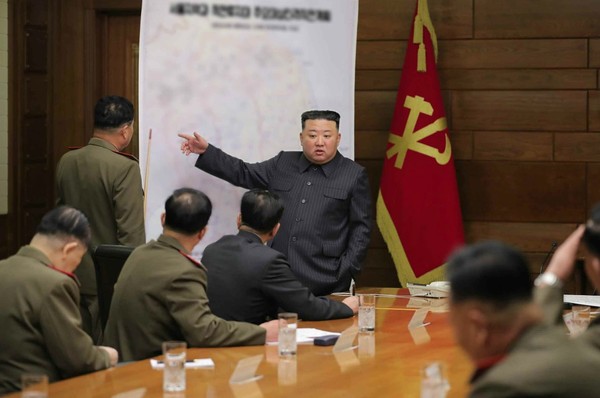
Professor, Philo KimThe Institute for Peace and Unification Studies, Seoul National University, IPUS New Cold War, Multipolar WorldIn the report released on January 1, 2023, at the Sixth Plenary Session of the 8th Central Committee of the Workers' Party of Korea, North Korea emphasized that "our Party and Republic government must be steadfast in safeguarding national sovereignty, national dignity, and national interests, and strictly observe regional peace and security, as the international order transitions to a 'new cold war' system and the trend towards multipolarity accelerates." North Korea evaluates the current international situation, where the competition between the US and China is accelerating, as a 'new cold war' and a trend towards multipolarity, and responds actively. Facing difficulties in external exchanges and cooperation due to the failure of North Korea-US dialogue, sanctions against North Korea, and the prolonged COVID-19 pandemic, North Korea has declared a "strong confrontation and struggle" towards South Korea and the United States with a heightened tone. North Korea shares a perspective on the world that aligns with that of other socialist countries. According to this worldview, the world is fundamentally shaped by a capitalist international order, referred to as imperialism, and North Korea views socialist countries as new orders that oppose this world order. Since the collapse of the socialist international order, North Korea believes that the world is transitioning to a multipolar system, and it is now thought that a 'new cold war' order has emerged. Since the division, North Korea has viewed the international order and relations within the framework of the Cold War and the New Cold War for over 70 years. As a country that experienced the devastating destruction of the Korean War, North Korea believes that imperialist powers like the United States aim to completely isolate and annihilate North Korea and are a threatening presence that could topple the North Korean regime. Due to their harsh experiences with imperialist powers during the war, North Korea harbors a profound distrust of imperialism and the outside world. Therefore, for the past 70 years, North Korea has pursued an extremely closed-off route, cutting off exchanges with the international community, constructing its own ideology, and judging the world and international order through its own unique worldview. North Korea's perception of South KoreaNorth Korea has been responding with hostile behavior towards South Korea and the United States with an intensified tone since 2023. In the report on the results of the 6th Plenary Session of the 8th Central Committee of the Workers' Party of Korea released on January 1, 2023, North Korea declared that it would pursue a "strong confrontation and struggle" against South Korea and the United States. In May 2022, the new conservative government of South Korea mentioned preemptive strikes against North Korea based on "Operational Plan 5015 (OPLAN 5015)" and the joint military exercise with the United States. This led to North Korea's comprehensive reversal of its strategy towards South Korea. North Korea has ordered the production of tactical nuclear weapons (TNW) in large quantities and to increase the possession of nuclear weapons exponentially, in case they are needed for preemptive use in the confrontation with South Korea and the United States. North Korea also showed that it would continue to develop intercontinental ballistic missiles (ICBMs) while announcing that military satellites would be launched in the near future. North Korea's hostility towards South Korea dates back to the second half of 2019 and culminated in the ruthless destruction of the Kaesong Inter-Korean Joint Liaison Office in June 2020. Despite this, during a military parade in October 2020 commemorating the founding of the Workers' Party of Korea, Kim Jong-un expressed friendly remarks towards South Korea, hoping to overcome the public health crisis and hold hands. North Korea showcased new intercontinental and submarine-launched ballistic missiles, but stated that they wouldn't use them preemptively. However, since the conservative government's emergence in 2022, North Korea's attitude towards South Korea has changed completely. The country is now emotionally charged towards South Korea to the point that some believe South Korea's anti-North propaganda caused North Korea's desperate situation during the COVID-19 outbreak. North Korean citizens have varying views on their southern neighbor, apart from the national-level perception of South Korea. As of 2019, approximately 50% of North Korean citizens viewed South Korea as a potential cooperation partner, while 30.2% regarded it as an enemy and 11.2% saw it as a threat, as shown in the table below. North Korean government's approach of presenting South Korea as a cooperation partner or adversary during times of conflict contributes to the different perceptions of South Korea held by North Korean citizens. Consequently, approximately 50% of North Korean citizens consider South Korea a partner for cooperation, while 30-40% perceive it as an enemy or threat.A notable fact is that despite the hostile and cautious attitude towards South Korea, there is also a curiosity and affection for South Korean culture among North Korean citizens. In fact, a considerable portion of North Koreans, 43%, frequently encounter Hallyu (Korean wave) content, such as music, movies, and dramas. The Institute for Peace and Unification Studies at Seoul National University (IPUS) conducted a 10-year trend survey and found that the more North Koreans are exposed to Hallyu content such as music, movies, and dramas, the weaker their political consciousness becomes. This finding is supported by North Korea's enactment of the "Reactionary Ideology and Culture" and the "Youth Moral Education Law," along with their strong enforcement and education. It highlights the significant impact of the Korean Wave on North Korean citizens.
23.04.17 -
 [Issue]
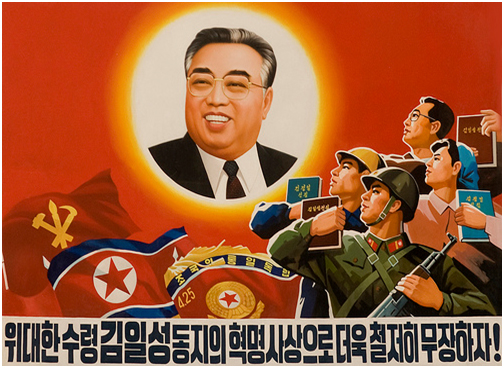
The Dilemma of the Juche Idea: The Pillar of North Korea's Regime Sustaining Power - Hegemony through Kim Il-sung's Political Immortality -Lee Seung-hyun, Researcher(Ph.D. in Public Administration) (Source : Rodong Sinmun)In 2023, North Korea's primary goal is to sustain its regime by adopting a confrontational stance towards the United States, banking on nuclear weapons even with long-term sanctions and economic hardships caused by the COVID-19 pandemic. The country is making threats of a 7th nuclear test and announcing plans to launch a military satellite, highlighting its emphasis on military might. It is noteworthy that the cost of the 71 missiles launched by North Korea in 2022 was roughly 260 billion won (equivalent to around 200 million dollars), which could have been used to feed North Korean citizens for 46 days. A 2022 study by the Korea Institute for Defense Analyses (KIDA) revealed that the cost of North Korea's nuclear program ranges from a minimum of 1.1 billion dollars to a maximum of 1.6 billion dollars (equivalent to 2 trillion won), which could buy 1.41 to 2.05 million tons of rice or 2.82 to 4.1 million tons of corn. It is evident that the North Korean regime prioritizes the development of military capabilities centered around nuclear weapons and missiles for regime survival over ensuring its citizens' access to food.Maintaining the power that a regime holds is essential for its survival, as numerous studies on power have shown. For authoritarian regimes like North Korea, the ruler's survival is closely linked to the regime's survival, and the people are the fundamental means by which the ruler maintains power. John Locke's "Two Treatises of Government", published in 1689, argue that individuals have the right to resist political power by force when a minority exercises tyranny and violates the rights to life and property. However, the fall of communism in Eastern Europe that occurred in the 1990s was primarily due to economic problems, which aligns with this argument. A 2022 study by the Korea Institute for Defense Analyses (KIDA) revealed that the cost of North Korea's nuclear program ranges from a minimum of 1.1 billion dollars to a maximum of 1.6 billion dollars (equivalent to 2 trillion won), which could buy 1.41 to 2.05 million tons of rice or 2.82 to 4.1 million tons of corn. It is evident that the North Korean regime prioritizes the development of military capabilities centered around nuclear weapons and missiles for regime survival over ensuring its citizens' access to food. The fall of communism was limited to Eastern Europe and some Latin American communist countries, while communist countries in the Asian region, such as China, North Korea, and Vietnam, maintained socialist systems based on nationalistic and feudal societal structures and perceptions. In particular, North Korea has established the idea of 'Juche’ as an 'ideological system' in domestic and international situations, as well as developing the 'Juche ideology' into its unique ideological system of 'our-style socialism.' This has allowed North Korea to establish its own political ideology that differs from traditional socialism based on Marx's concept, Vladimir Lenin and Joseph Stalin's Real Socialism, and Antonio Gramsci's ‘revisionism in socialism’.In the face of the Arduous March from 1995 to 1998, during which over a million North Koreans died from starvation, many expected the regime to collapse. However, there was no political resistance within North Korea. Instead, the regime implemented a "military-first" policy, prioritizing military power over securing food for its people. The regime has also relied on the ideology of 'Juche' to maintain its power and overcome crises, including the death of its supreme leader, long-term sanctions caused by nuclear development, and the COVID-19 pandemic. The Juche idea, first introduced by Kim Il-ung, was institutionalized as an ideology during the Kim Jong-il era, shaping the North Korean society's governance structure and political system, and creating a distorted consciousness among the oppressed class. This political inertia reinforces the regime's hegemony, and the dominant ideology is further entrenched during the succession process to Kim Jong-un, allowing the regime to sustain and prolong its rule. North Korea's dominant ideology is based on the Juche idea, which was formed by Kim Il-sung and became the foundation of the nation's political system. This ideology structures the mechanisms of governance, including the surveillance and punishment of the subjugated class, education and culture, information control, and institutionalized power relations. These mechanisms create a form of "non-voluntary consent" to the regime's power through political inertia and the perpetuation of false consciousness. Despite the absence of Kim Il-sung, his ideology continues to serve as the basis of North Korean society and governance as the “supreme leader” with "hegemony" that sustains the country.
23.04.17 -
 [Feature Article]
[Jo is a meticulous and logical thinker with a background in science and engineering.][His strong ambition has made him use women as a pawn for his own success.][He has built close ties with Kim Jong-un in Gangwon Province, which has created a strong foothold for his success.][He sponsored Kim Yo-jong for her membership in the party as a guarantor][Jo's family has been the subject of gossip, with his younger sister being witnessed driving an expensive car, while his son has been rumored to be a heavy drinker.][How will Jo's political behavior impact North Korean power structure?] (Source : Rodong Sinmun)"Kim Jong-un's right-hand man," "a proficient flatterer with ambitious goals," "a person who meticulously self-manages without any record of punishment." Jo Yong-won, the closest aide to North Korea's Kim Jong-un, is known by those titles within the Workers' Party of Korea (WPK). Jo holds multiple positions, including Member of Standing Committee of the WPK General Political Bureau (GPB), Organizational Secretary of the Central Committee of the Workers' Party of Korea, Member of the Central Military Commission of WPK, and Member of the State Affairs Commission (SAC). He is Kim Jong-un's right-hand man and confidant, and is a key figure in North Korea's power structure, following in the footsteps of Kim Jong-un and Kim Yo-jong. Jo, the current Organizational Secretary of the WPK, has taken over a position previously held by Kim Jong-il in the 1980s. At that time, Kim Jong-il co-governed North Korea with Kim Il-sung while serving as the Organizational Secretary. The Organization and Guidance Department (OGD) of the WPK, which is one department within the secretariat of the Central Committee of the Workers' Party of Korea, wields considerable power due to its size, function, and authority. The OGD is often referred to as the "Party within the Party," and it holds power over personnel, policies, and censorship within the WPK. Currently, Jo holds both the position of Organizational Secretary and Director of the OGD, which consists of four First Deputy Directors, 10 deputy directors, and approximately 300 members. Hwang Jang-yop, a former WPK secretary who defected to South Korea in 1997, once stated that "the power succession was practically completed when Kim Jong-il took the position of party organizational secretary in February 1974." Jo Yong-won, who inherited this position from Kim Jong-un, is a key figure among North Korean leadership. Jo, born in October 1957, is believed to have come from Hwanghae Province, despite various claims about his birthplace, including Jagang Province and Gangwon Province. He attended Kim Il-sung University, where he studied physics and developed a reputation for being highly intelligent, capable, and ambitious. According to a high-ranking North Korean defector A, "Jo may appear calm and quiet, but he has a stronger desire for power than anyone else, and from a young age, he tried to use his friends' lovers as tools for his own success." There are also rumors that during his university days, he betrayed his lover for career success and intentionally approached the daughter of a high-ranking official but failed to marry her. Kim Jong-un and Jo Yong-won (Source : KNCA)In the political landscape of North Korea, Jo is regarded as a fortunate figure. In the 1980s, when Jo was about to graduate from university, Kim Jong-il instructed the OGD to prioritize graduates who are smart, have a keen sense of logic, and specialize in science and engineering. Jo was selected as one of the top candidates for the OGD even before his graduation, and he started walking on the tightrope of party politics. Jo's career path took a significant turn when he met Kim Jong-un while working for the Gangwon Provincial Party. As a child, Kim Jong-un spent his childhood at a villa in Gangwon Province, and Jo had a working relationship with the Gangwon Provincial Party at the time, which allowed him to build a close relationship with Kim Jong-un. In 2009, Jo was promoted to the position of Deputy Director of the OGD. In April 2012, during his first year in power, Kim Jong-un awarded Jo with the highest medal in North Korea, the "Order of Kim Il-sung," which shows how much trust Kim has in him. Following this, Jo went through a series of events, including the purge of Chief of Staff Ri Yong-ho in July 2012, the execution of Jang Song-thaek (Kim Jong-un's uncle) in December 2013, and the execution of Hyon Yong-chol (the Minister of National Defense) in March 2015, which helped him gain more experience and a good reputation. In May 2014, when hundreds of people died due to the collapse of a newly constructed 23-story apartment building in Pyongyang, North Korean authorities made an unprecedented public apology, and there is talk that it was Jo Yong-won's idea. Jo has been a close aide of Kim Jong-un since 2015, but his public debut with the leader of North Korea was in 2014. According to some reports, Jo even visited a senior's home to deliver a special mission on behalf of Kim. He is also known for taking responsibility when things go wrong, even scolding one of Kim's aides. In August 2021, while observing the typhoon-affected areas, Jo was seen in a conversation with Kim, with his hands in his pockets. It is believed that Jo plays a key role in receiving and reporting Kim's instructions and reports in the OGD or the Secretariat. Jo accompanied Kim to important events such as the 2018 Pyongyang Inter-Korean Summit, the 2018 DPRK-USA Singapore Summits, and the 2019 DPRK-USA Hanoi Summit, showcasing his role as a key advisor to Kim. However, his influence also drew the attention of the United States Department of State, which imposed individual sanctions on him for his alleged involvement in human rights abuses in North Korea. In January 2021, during the 8th Party Congress military parade, Jo appeared as one of members in the "Three in Leather Coats." In the 2022 public appearance of Kim's horse riding, he was seen sitting right beside him, solidifying his position as a key aide. On June 7th, 2022, Jo presided over a meeting of the Political Bureau in place of Kim, using the power of the Political Bureau's presider as written in the party regulations. The next day, at the enlarged meeting of the 8th Central Committee, he took over as the Director of the OGD from Kim Jae-ryong, further consolidating his powerful authority. According to a high-level source in North Korea, Jo has been attending "the secretive party hosted by il-ho(Kim jong-un)", since a relatively young age, which is only open to the highest-ranking aides of Kim. Jo's self-discipline and natural talent for flattery are also highly regarded, as he has never been punished even once. His strongest point is his tendency to not go overboard in anything. Unlike other officials who strive to stay close to Kim for reporting and communication, Jo simply observes from a distance. A high-level North Korean defector said that Jo's calm personality and ability to flatter helped him rise to power. Jo goes to great lengths to maintain his political power, putting in extra effort to cultivate a relationship with Kim Jong-un's sister, Kim Yo-jong. Jo has reportedly earned a high level of trust from Kim Yo-jong, to the point where he was even her guarantor when she joined the party. It is also rumored that Jo acts as a protector to impress Kim Yo-jong. However, it is important to note that despite this, Jo wields more power and decision-making authority than Kim Yo-jong. While Jo is considered skillful in using tactics, there are criticisms about his excessive use of them. In North Korea, when someone is referred to as a "master of tactics", it often carries a negative connotation of insincerity and opportunism. Specifically, due to the anti-marketization policy and the policy of reverting to a planned economy led by Jo, there is a growing sense of exhaustion among not only North Korean citizens but also officials. Jo continued push for "reactionary ideology and culture" and other unjust laws is causing frustration and resentment within North Korea. Despite his adeptness in using tactics, Jo is facing criticism from many people. Despite his impeccable self-management skills, Jo appears to overlook corruption within his own family. It is rumored that his younger sister, residing in Gangwon Province, suddenly rose to success by leveraging her brother's power and influence, owning a foreign-made car and living in a luxurious apartment. Furthermore, Jo Yong-won's son reportedly has a drinking problem and causes trouble but is believed to have avoided punishment with the support of his father. Jo Yong-won, who rose to the top ruling class through opportunism rather than his abilities, is currently displaying his political experience, high-profile status, and great confidence. There is a possibility that his thirst for power, combined with external expectations, may lead to strong opposition.
23.04.17 -
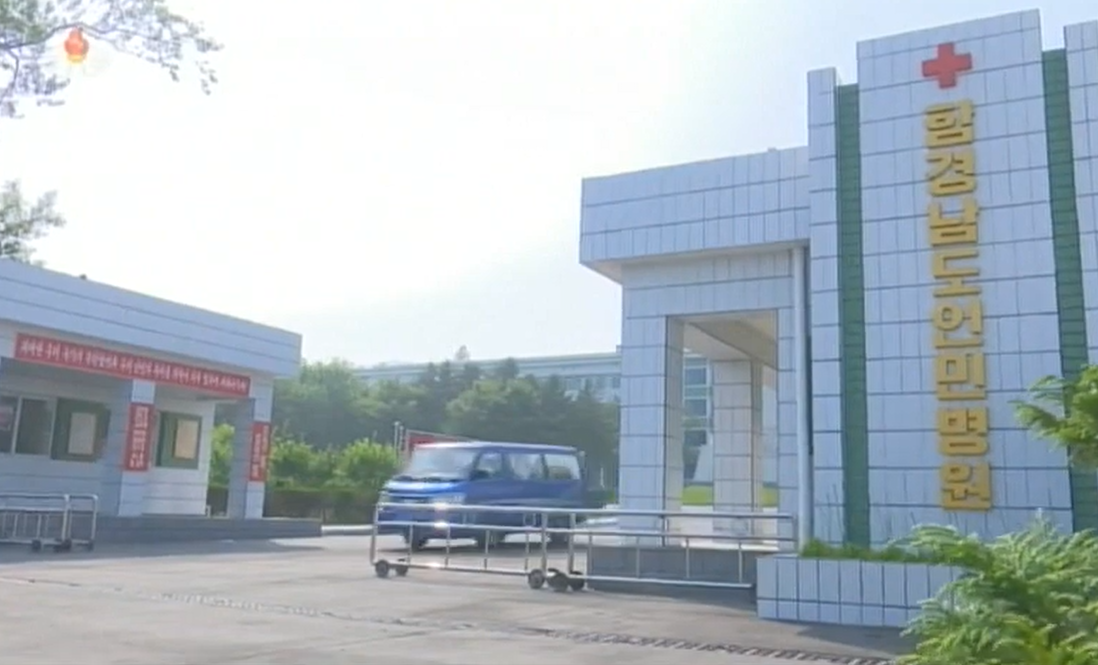 [ISSUE]
The risk of radioactive contamination from the Punggye-ri nuclear test site comprehensively mappedSince Dr. Choi Kyong-Hui of SAND Institute first raised the issue in 2016, the risk of radioactive contamination from the Punggye-ri nuclear test site has been an ongiong concern. However, it has been difficult to present a comprehensive picture because of political and bureaucratic hurdles. In February 2023, Transitional Justice Working Group released a special report “Mapping the Risk and Effect of Radioactive Contamination of Groundwater Sources from the Punggye-ri Nuclear Test Site in North Korea”. TJWG mapped the possible dissemination of radioactive materials to the hundreds of thousands of North Koreans living in the vicinity of Punggye-ri and explored the ways in which smuggling and distribution of the agricultural and marine products as well as local specialties like pine mushrooms from the area may leave not only the North Korean people but also the population in neighboring China, South Korea and Japan at risk. In response, the South Korean government announced that it will offer radiation testing to 881 North Korean escapees who had resided in areas near the nuclear test site. TJWG thanks the SAND Institute for its pioneering efforts, which served as the starting point for the Punggye-ri report, and looks forward to continuing collaboration in research and advocacy for change.Lee Younghwan/TJWG Executive Director
23.04.01 -
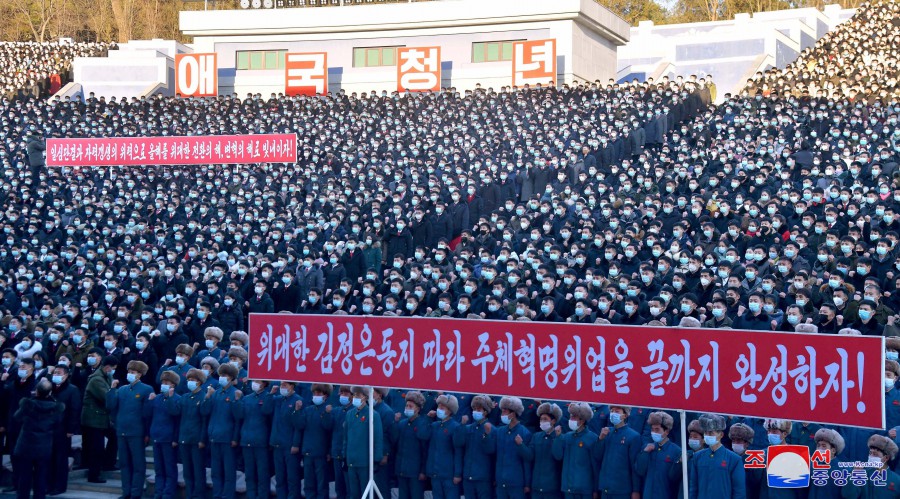 [ISSUE]
What is the “ghost disease” that North Korean defectors are talking about?In Gilju County of North Hamgyong Province, where North Korea's nuclear test site is located, local residents are haunted by a "ghost disease." Nuclear tests have caused abnormalities in the health of people living near the test site, but the exact cause is unknown. As many as six nuclear tests were conducted at the Punggye-ri test site between 2006 and 2017. The North Korean authorities have never warned or evacuated local residents in advance of these tests. Residents of Punggye-ri and the surrounding area have reported unexplained pain, vomiting, low white blood cells, nosebleeds, cancer, respiratory problems, and even death. “Radiation destroys the body's immune system, which is why it cannot be diagnosed in regular hospitals,” medical experts said. In fact, according to defectors, local North Koreans in Gilju often visit shamans because although they are in severe pain, doctors can not find the cause. “In Gilju, if you get sick, you go to a shaman who refers it to a ghost disease,” said a female defector who had lived through three nuclear tests before she left Gilju. "I was frustrating that although I had a pain all over my body as if it was poked with a knife and I suffered from insomnia, I couldn’t find out the cause from the hospital," said another North Korean defector from Gilju County who had lived through three nuclear tests. "When I was in Gilju, I heard doctors at the hospital saying that they didn’t know why there were so many liver and stomach cancer patients in Gilju," said a North Korean defector from Gilju who had lived through all six nuclear tests in the area before she defected from the country in 2019. "I, too, suffered from palpitations of the heart and headache and still take sleeping pills because I can't get sleep." North Korean soldiers who had served at the test site also testified that they were exposed to radiation. "When I was hospitalized in Gilju in 2014, a friend of mine, who was lying next to me, told me that his son-in-law had worked at the nuclear test site in Punggye-ri as a private first class and was given a special promotion to a second lieutenant and honorary military certificate upon discharging from the army, but he was not “able to leave his posterity.” "I suffer from depression, teary eyes, headache, bone pain, and pain in the chest. But, I can't be diagnosed with anything at the hospital," Kim Eul-jin from Gilju, who experienced up to the sixth nuclear test and defected in 2019, complained. In particular, some defectors testify that tuberculosis, which used to be called the ‘voracious disease’ because it was easily cured when one eats well, has led to death after the nuclear tests no matter how well one ate. "My son died of melted lungs due to tuberculosis in 2017 in Gilju," said Lee Young-ran. "I heard that several friends of his with the similar ages in Gilju also died of melted lungs," she said. "I also have gas in my stomach, and I am out of breath when I have a meal," she added. “I had a headache and took a blood test twice. My doctor was surprised to find out that my white blood cell count was so low.” Another native of Gilju who left North Korea in 2019 said, "Since 2013 when the third nuclear test was conducted, every one in two households in Gilju suffered from indigestion." "I felt bad for no reason, sometimes I had a headache, my heart fluttered, and I felt like being poked with needles," she added. "The same symptoms have continued even after I arrived in South Korea." One who was born in Punggye-ri and lived through the third nuclear test before defecting in 2014 said, "I have a headache to start with and my nose bleeds anytime." "Especially in the evening, I can't even lift a finger because I feel dead tired, and I collapse," he added.Kim Myungsung/SAND Secretary General
23.04.01 -
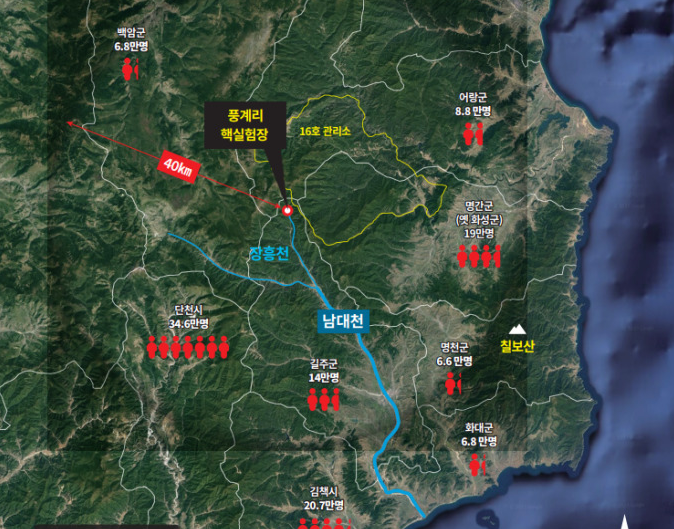 [ISSUE]
Measures against radioactive contamination needed at the nuclear test site in Punggye-ri There are growing concerns over radioactive contamination and exposure to radiation by local villagers close to the nuclear test site at Punggye-ri located on the northern tip of the Korean peninsula. SAND has long addressed this issue, and the Transitional Justice Working Group (TJWG) has conducted related researches and investigations for years. Our combined efforts have finally yielded results: the South Korean government announced that it will make a full investigation over North Korean defectors from the area. For more than a decade, people residing in the Gilju area in North Hamgyong province, where the Punggye-ri nuclear test site is located, are reported to suffer from lingering illness. They would break out in sweats and get headaches, but all that the villagers were able to hear from medical doctors at local hospitals was that no diagnosis could be made about the illness. The villagers were overcome with fear. After they have resettled in South Korea, North Korean defectors from this region were belatedly told that their illness might be related to radiation from the nuclear test site. There were six nuclear tests altogether at the site since the first one in October 2006, so the possibility of exposure to radiation and contamination of groundwater is hardly insignificant. In an investigation of 40 refugees who had lived in the Gilju area between 2017 and 2018, the South Korean government found abnormalities in nine people, but the findings were swept under the rug for unexplained reasons. Suspicions were raised that the Moon Jae-in administration covered up the case in the consideration of its relations with North Korea. TJWG, an organization that tracks and monitors human rights conditions in North Korea, however, said in a report last month that "540,000 people in the Punggye-ri area may have suffered direct or indirect radiation damages, and local agricultural products are also at risk of contamination." The group called for an examination for radiation be made on all 881 North Korean refugees who had lived in eight counties surrounding Punggye-ri before they left North Korea, and the results to be made public. The Punggye-ri test site, located at 2205 meters above sea level on Mantap Mountain, is built in a solid granite area. However, repeated nuclear tests accompanied by earthquakes that shake the ground are likely to have caused a tired mountain syndrome, according to Seo Kyun-ryeol, professor of nuclear engineering at Seoul National University. Namdaecheon, a stream that originates from Mantap Mountain, runs across the village of Gilju and flows into the East Sea passing the area between the city of Kimchaek and the county of Hwadae. The problem lies in that radiation emitted from the nuclear tests can be leaked into and spread through across the area by groundwater. Experts and international organizations express similar concerns. On March 1, a U.S. organization, the Union of Concerned Scientists, said, "Access to the geological and architectural details of the underground test sites is critical to understanding the possible pathways of radiation leakage through air and groundwater that could endanger lives of the local residents." The American scientists emphasized the role of the Comprehensive Nuclear-Test-Ban Treaty Organization (CTBTO) and similar agencies on this matter. The South Korean society is, however, lukewarm in their response to the issue. The risk arises from nuclear tests and radioactive contamination in the Korean peninsula, but South Koreans view it as if it were a problem for other countries. Their response to North Korean radiation is different from the sensitive response they showed to the release of radioactive contaminated water by Japan after an accident in Fukushima nuclear plants. The radiation leakage from North Korea is bound to be much more serious than that from Japan and the damage to be caused by contaminated water is inevitably greater, but South Koreans have applied different standards and responded complacently to the former. Radioactive contamination at North Korean test sites directly affects South Koreans’ lives as well. Mushrooms and other agricultural products from North Korea imported to the South under the guise of Chinese products are likely to pass lax customs procedures and end up on South Koreans’ plates. In fact, in 2015, the South Korean government revealed that more than nine times the allowed amount of radioactive cesium isotopes were detected in the mushrooms imported from North Korea under the guise of Chinese products. There are concerns that the smuggling and distributing mushrooms and other agricultural products and specialties from the contaminated regions could put not only North Koreans at risk, but also the people in the neighboring China, South Korea, and Japan. It is necessary to take measures, including thorough medical examination and treatment, for North Korean defectors from this region and convey to the North Korean authorities the danger of nuclear tests on the Korean peninsula and concerns of the South Korean and international community on it. The observation of Kim Jong-un fiddling with the button for his county’s seventh nuclear test calls for a more meticulous strategy for response.
23.04.01
News Letter
We are leading the global communication via Newsletter.
We will deliver the latest information and proven facts on Korean Peninsula status including North Korea situation.