


Kim Myungsung
◇ Severe Food Shortages Lead to 3 Murders in Ryanggang Province in May: Family of 3 Killed, 15-Year-Old Boy Murders Liquor Store Owner and More
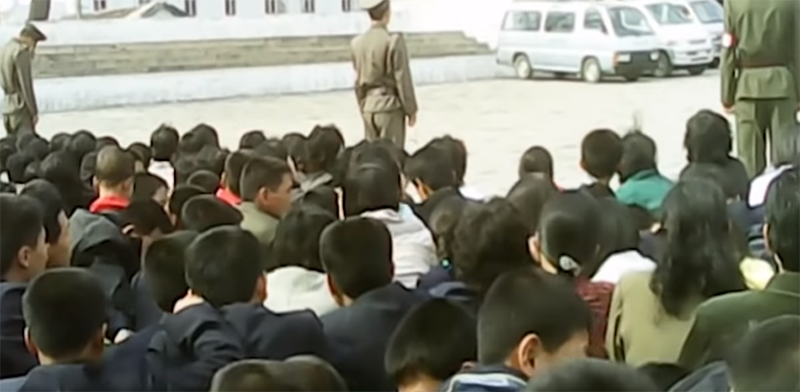
It has been revealed that North Korea is experiencing an increase in violent crimes, including murder, due to severe food shortages. According to North Korean sources, Ryanggang Province, a border region with China, specifically Hyesan City, witnessed three consecutive murder cases in May, plunging residents into fear. The local police and detention centers in Ryanggang Province are reportedly overflowing with prisoners involved in these murders.
On May 24, a family of three in Hyesan City fell victim to a robbery and was brutally murdered. The family members included a high-ranking official from the Hyesan paper mill, his wife, who was involved in loan sharking at the Jangmadang (North Korea's Free Market), and their 13-year-old daughter. On the fateful night, two burglars broke into their home, killed them with an axe while they were asleep, and stole 20,000 Chinese yuan from the safe. Despite ongoing investigations by North Korean authorities, the perpetrator of the crime remains at large.
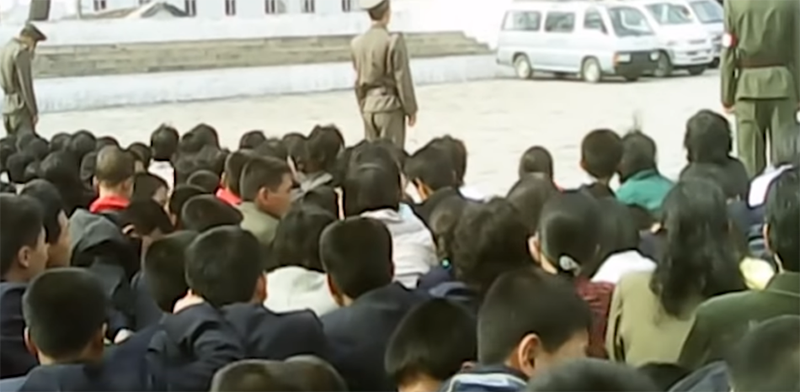
Another incident occurred on May 30 in Pochon, Ryanggang Province, where a 15-year-old boy murdered the owner of a liquor store. Moonshine production and distribution using corn and other grains from private homes is thriving in North Korea. According to sources in Pochon, the boy, went to the local liquor store on the afternoon of the 30th at his father's request. When he arrived, he found the store door open but the owner was nowhere to be seen. He stole 6,000 North Korean won and 8 kilograms of corn, and attempted to leave with them. However, he encountered the owner who had just returned from the restroom. Startled, he grabbed a kitchen knife, stabbed the woman six times, put the body in the fireplace, and fled. Upon discovering his wife's deceased body, the husband immediately contacted the police, who proceeded to gather witness testimonies and successfully apprehended him, who had been concealing himself in the house. It has been reported that he is presently under investigation at the detention center in Ryanggang Province, where several individuals involved in murder cases are being held.
On May 31, an additional incident unfolded in Chundong, Hyesan City. Motivated by hunger, two brothers in their 20s attempted to rob the residence of a military officer. The officer managed to apprehend the brothers, restraining and subjecting them to severe physical abuse before eventually releasing them. Tragically, the younger brother died the following day due to liver rupture. The officer denied any responsibility for the death, and it has been reported that the North Korean authorities remain silent about the incident. Believing that the young man died while involved in the robbery, the family chose to quietly lay him to rest in the hills behind their house without conducting a funeral ceremony.
These consecutive crimes are a result of the challenging food situation in North Korea. In Ryanggang Province, the food shortage has reached such a severe level that people are expressing, "Even mice are starving to death." According to the National Intelligence Service, as of May 31, "North Korea's corn prices have risen by approximately 60% compared to the first quarter of the previous year, and rice prices have increased by nearly 30%, reaching their highest point since Kim Jong-un assumed power. Consequently, it is estimated that the number of deaths from starvation is three times higher than usual.
◇ Ongoing Defections of North Koreans Working Overseas
There has been a notable increase in defections among North Korean overseas workers. One recent case involves , Park, a staff member of the trade representative office dispatched to the North Korean Consulate General in Vladivostok, and his wife, Kim Kum-sun (43), and their son, Park Kwon-ju (15), have gone missing, raising the possibility of their defection. Furthermore, there have been reports of defections of North Korean diplomats who were stationed in Europe. The growing dissatisfaction among North Korea's elite class is fueling a series of defections, indicating a potential chain of defections.
On the 9th, a North Korean diplomat who was working in Europe defected a few weeks ago. The specific country of employment and the number of defectors accompanying the diplomat have not been confirmed. While North Korean diplomats stationed in Europe belong to the country's elite class, they have fallen into economic hardship and live in impoverished conditions.
Thae Yong-ho, a defector and member of the People Power Party, recently shared on social media, "There is a notable trend of North Korean diplomats and overseas workers defecting. I frequently encounter acquaintances whom I believed were still in Pyongyang suddenly appearing in Seoul."
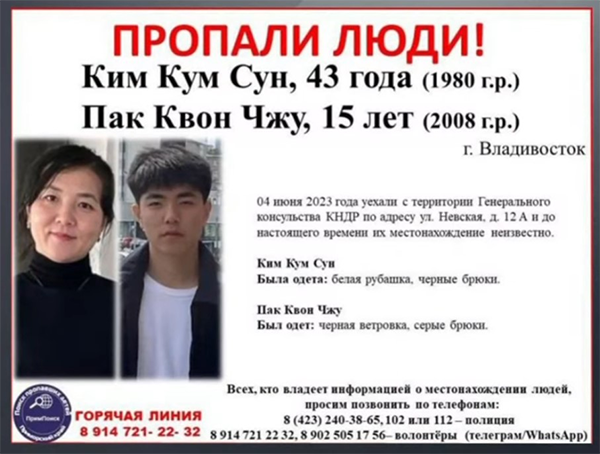
The case of the family members of a North Korean consulate employee in Vladivostok who went missing is also regarded as a sign of another chain of defections. It is said that the mother among the missing North Koreans was held captive at the consulate and managed a North Korean restaurant on behalf of her husband. Previously, the assistant manager of the restaurant had attempted defection and was caught, resulting in restrictions on their movements.
It is anticipated that defections will accelerate until the reopening of North Korea's borders following the relaxation of COVID-19 restrictions. A significant turnover of overseas personnel is expected, and there is a likelihood of additional defections among diplomats and individuals who are unwilling to return to their home country.
◇ Kim Jong-un's Military Activities Show Doubled Frequency in the First Five Months of This Year Compared to Last Year
Kim Jong-un's military activities in the first five months of this year were twice as frequent as the total number of activities from last year. According to the Korea Institute for National Unification's "Kim Jong-un Public Activities Database," by the end of April, out of the 27 public appearances by Kim Jong-un, 12 were related to military activities. This represents a doubling in frequency compared to the military activities of Kim Jong-un in the same period last year (7 times) and in 2021 (6 times).
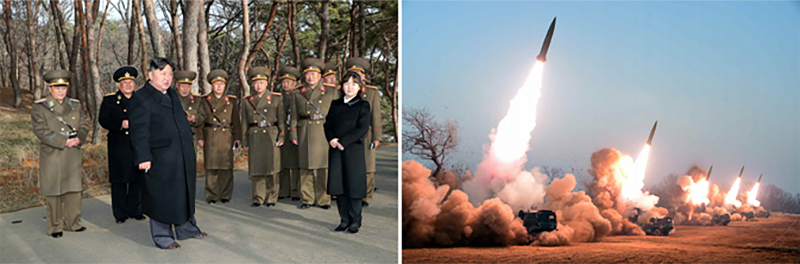
Kim Jong-un engaged in 7 weapon inspections, attended military events, and convened the Central Military Commission of the WPK 3 times this year. In January, he oversaw the production ceremony of the 600mm multiple launch rocket system. February witnessed his presence at the 75th-anniversary military parade. In March, he participated in military exercises, observed firepower training, and supervised the launch of an Hwasong-17 ICBM. In April, he led the test launch of the solid-fueled Hwasong-18 ICBM and provided guidance to the NADA.
Kim Jong-un's military activities reached a peak in 2014, totaling 50 occurrences since he assumed power. The number of military activities hit a low point in 2018 during inter-Korean dialogue, with only 3 instances. However, it rose significantly to 23 in 2019, coinciding with the DPRK-USA Hanoi Summit. The recent increase in Kim Jong-un's military activities is seen as a deliberate attempt to demonstrate tangible progress in the five-year plan aimed at strengthening the country's defense capabilities, as presented during the 8th Congress of the Workers' Party of Korea.
-
PREV [NK Focus]
-
NEXT [Defectors' Podium]