

Kim Jong-un: The Primary Perpetrator of North Korea's Human Rights Abuses Who Should Face the ICC
• Theoretically Possible, Yet Practical Challenges Abound
• A Detailed Examination of Crime Elements and Continuous Evidence Collection Are Imperative
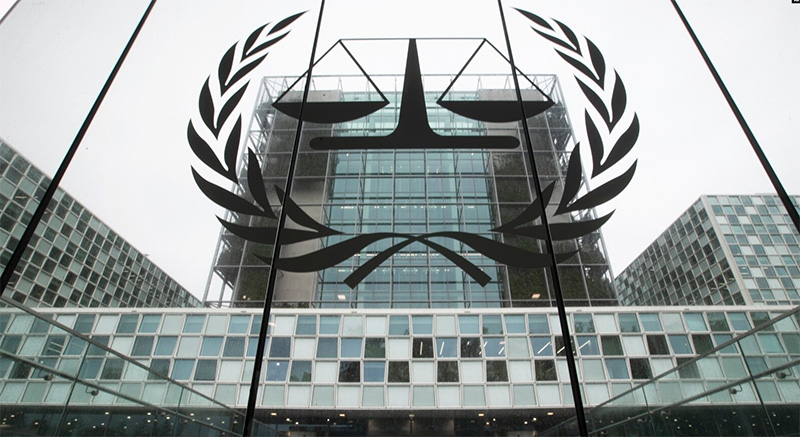
International Criminal Court (ICC) in The Hague, Netherlands
The Ministry of Unification's 'Report on North Korean Human Rights', which revealed the dire state of human rights in North Korea, was publicly disclosed for the first time this year on March 31st. The South Korean government, which had abstained from participating in the UN North Korean Human Rights resolution in recent years, has taken a noteworthy step by publishing this report. Public sentiment is increasingly demanding justice for North Korea's human rights abuses and calling for accountability, particularly targeting Kim Jong-un, who is speculated to face international legal action.
Bringing Kim Jong-un before the International Criminal Court (ICC) is regarded as one of the most effective means to legally hold dictators accountable for violating their citizens' human rights and committing war crimes and crimes against humanity. The ICC stands as the first permanent international tribunal established to prosecute individuals responsible for grave crimes against humanity. It was founded in July 2002, based on the Rome Statute signed in 1998.
In March of this year, the ICC issued an arrest warrant against Russian President Vladimir Putin for war crimes committed in Ukraine. Since the early 2000s, politicians from eight countries, including Congo, Sudan, Kenya, Libya, and Côte d'Ivoire, have found themselves facing ICC charges for war crimes and crimes against humanity. Notably, Sudan's former president, al-Bashir, and the head of Libyan military intelligence, Senussi, were brought before the court through UN Security Council resolutions, while Kenya's Deputy Prime Minister Kenyatta and former Côte d'Ivoire President Koudou Laurent Gbagbo were subjected to trials under the ICC's jurisdiction.
With the South Korean government's release of the Report on North Korean Human Rights, calls for Kim Jong-un's ICC trial are growing louder. A consensus has already emerged within the international community that Kim Jong-un should be brought to face justice. In 2014, the international community adopted the UN COI report on North Korean human rights, leading to the United Nations General Assembly adopting the North Korean Human Rights resolution for three consecutive years, from 2014 to 2015. There is a prevailing recognition in the international community that silence regarding North Korea's human rights tragedy can no longer be tolerated.
Various methods are under discussion for bringing Kim Jong-un to the International Criminal Court (ICC). One proposal suggests initiating an ICC indictment through the UN Security Council, labeling Kim Jong-un as an international criminal. However, this approach faces the potential obstacle of being blocked by veto-wielding permanent Security Council members, China and Russia.
For this reason, some advocate for directly initiating ICC investigations. This approach mirrors the recent issuance of an ICC arrest warrant for Russian President Vladimir Putin, suggesting that the ICC should directly investigate Kim Jong-un. However, for Kim Jong-un to be prosecuted as the main instigator of human rights abuses, there needs to be an initiating entity. The ICC issued an arrest warrant for Putin as the Ukrainian government submitted evidence of Russian war crimes to the ICC. In contrast, there is currently no entity (country) that has submitted evidence of Kim Jong-un's crimes against humanity, making a direct indictment challenging. South Korea, as an ICC member state, houses over 36,000 North Korean defectors, abductees, and prisoners of war, all of whom are victims of Kim Jong-un's crimes against humanity. Consequently, some argue that South Korea should take the lead in pressing charges.
Claims have also arisen that South Korea could potentially prosecute North Korea, given that the human rights abuses occurred on Korean territory. Article 3 of the South Korean Constitution defines Korea's territory as the Korean Peninsula and its adjacent islands. Therefore, it is argued that South Korea possesses criminal jurisdiction to prosecute crimes committed by Kim Jong-un and high-ranking North Korean officials.
Nevertheless, it is pointed out that while theoretically, South Korea could bring charges against North Korea for human rights crimes, practical challenges abound. North Korea is not a signatory to the Rome Statute, which serves as the foundation for the ICC's establishment. Even if the South Korean government decides to prosecute, it would be difficult for the ICC prosecutor to enter North Korea to verify the alleged crimes.
Nevertheless, if there is an intention to indict Kim Jong-un at the ICC, a thorough examination of the crime's elements and continuous evidence collection are essential. Indictment hinges on the presence of concrete evidence. Equally crucial is maintaining international interest. The international community must place the issue of Kim Jong-un's indictment at the ICC on the negotiation table and address it as a recurring international agenda.
From the perspective of actual improvement effects on North Korean human rights, bringing charges against Kim Jong-un at the ICC is essential. In response to international demands for human rights improvements, North Korea outwardly mentions a hardline response, but behind the scenes, they reduce the number of public executions and have modified certain provisions in their criminal judicial system, appeasing the international community. In particular, publicizing the potential ICC indictment can exert psychological pressure on Kim Jong-un.