

Analyzing Prime Minister Kim Tok-hun's Resilience Despite Kim Jong-un's Criticism
In the aftermath of North Korean leader Kim Jong-un's public criticism, there has been considerable intrigue surrounding Prime Minister Kim Tok-hun's unwavering presence in his official role. Following Kim Jong-un's return from his trip to Russia on the 19th, the media captured the Prime Minister's visibly flushed face as he greeted the leader. On September 20th, North Korea's official newspaper, Rodong Sinmun, described the scene at Pyongyang station as "brimming with fervent passion," featuring Prime Minister Kim engaging in a handshake with Kim Jong-un. Despite earlier speculations of his possible purge or demotion, Kim Tok-hun appeared robust. However, since the criticism, he seems more cautious, even showing signs of tension during Kim Jong-un's reception at the Pyongyang station.
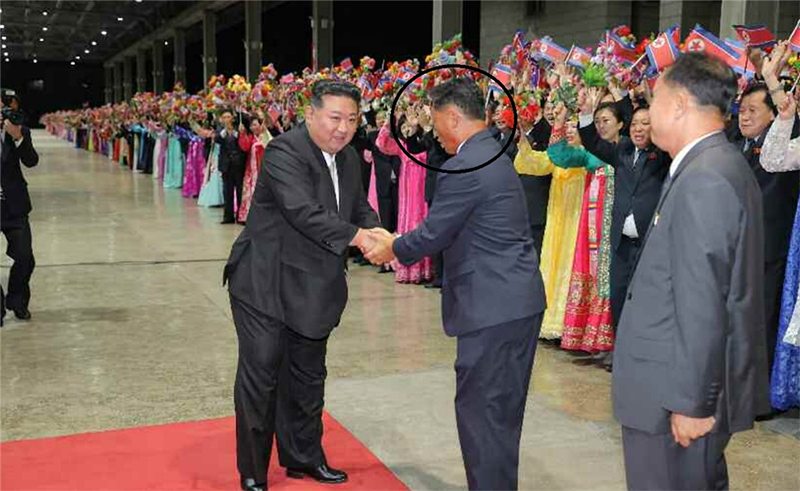
<Photo> On the 19th, upon returning from Russia to Pyongyang, North Korean leader Kim Jong-un is welcomed by Prime Minister Kim Tok-hun (highlighted). The Prime Minister's face displays tension and flushness. /Rodong Sinmun
On August 21, during his visit to flood-affected areas in South Phyongan Province, Kim Jong-un squarely attributed the damage to embankments and farmland to Prime Minister Kim Tok-hun. Kim Jong-un criticized, stating, "Over the past few years, under Prime Minister Kim Tok-hun's leadership, administrative and economic discipline has deteriorated significantly, leading to the disruption of national economic projects due to the irresponsible actions of certain individuals."
He also highlighted grave issues with the Prime Minister's lackadaisical approach to business, vowing to hold him accountable both within the party and under the law. Emphasizing that "those who neglect their duties cannot be pardoned," he convened a collaborative task force involving the Organization and Guidance Department of WPK, the Discipline Inspection Department, the National Inspection Commission, and the Central Prosecutor's Office to identify culpable organizations and individuals. Their mandate: "rigorously critique and profoundly penalize them," both from a party and legal standpoint. In essence, Kim Jong-un mobilized all North Korean investigative agencies to jointly probe the cabinet and entities linked to the flood damage.
The unusual aspect of this situation is that North Korean media featured an article in which Kim Jong-un explicitly criticized and named a specific official. Many had predicted that such criticism might signal Kim Tok-hun's imminent dismissal or demotion. Surprisingly, Kim Tok-hun was not removed from office and continued to fulfill his duties, albeit with a noticeable reduction in the scope of his responsibilities, including provincial inspections. Nevertheless, he retained his position as Prime Minister.
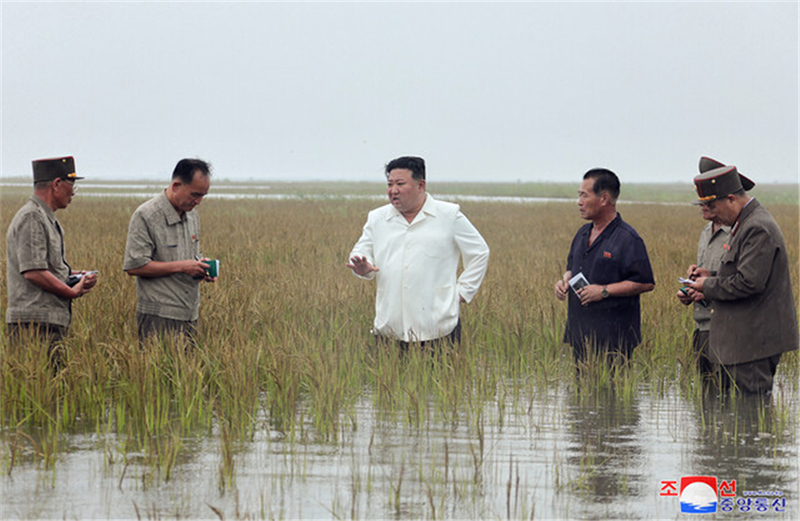
<Photo> Kim Jong-un criticized Prime Minister Kim Tok-hun's irresponsible business attitude during his visit to the disaster recovery site in South Phyongan Province on August 21, as per the Korean Central News Agency report on the 22nd. / Yonhap News Agency
Merely three days following Kim Jong-un's public criticism, on August 25, the Korean Central News Agency briefly announced that Prime Minister Kim had sent congratulations to the Thai Prime Minister. Subsequently, as the 75th anniversary of the regime's establishment approached, Kim Tok-hun's activities surged, and his standing appeared to strengthen. In commemoration of this milestone, he met with Liú Guózhōng, the Chinese vice premier leading a delegation to North Korea. During the central reporting meeting, which Kim Jong-un attended, Kim Tok-hun took the stage as the presenter, affirming, "We have embarked on an era that marks the end of unilateral nuclear threats from the U.S." On September 9th, the Rodong Sinmun newspaper introduced him as 'Comrade Kim Tok-hun, among the distinguished officials of the Party and the government' in the key attendee lineup during the parade. Furthermore, on the 12th, the newspaper reported that 'Comrade Kim Tok-hun, among the esteemed officials of the Party, the government, and the armed forces,' was present at Kim Jong-un's farewell event for his visit to Russia.
Kim Tok-hun's status appears to have been elevated, contrary to what was expected after such explicit criticism from Kim Jong-un. It is unprecedented for a Prime Minister, who was harshly criticized by the leader, not to be immediately dismissed or purged but to lead significant government events. This suggests that Kim Tok-hun may have been given another opportunity due to a lack of suitable replacements and the potential for intensified economic cooperation with China and Russia, as well as the possibility of lifting border lockdown measures.
The upcoming 75th anniversary of the regime's establishment likely played a significant role in the decision to retain Kim Tok-hun. Changing Prime Ministers at such a critical juncture could have been perceived as a risk, especially when facing the seemingly insurmountable task of economic revitalization. It may have been a strategic move to avoid internal dissent and divert responsibility from the regime and the WPK. Notably, both North Korean elites and citizens recognize that Kim Tok-hun and his cabinet had limited influence from the beginning, which raises concerns about the potential consequences of following the past practice of sacrificing economic officials during crises.
Despite surviving Kim Jong-un's public rebuke, Kim Tok-hun's behavior has notably shifted towards caution and restraint. During Kim Jong-un's reception at Pyongyang station, he appeared excessively tense, with his face and neck visibly flushed. His demeanor contrasts sharply with previous events, such as the inauguration of a tactical nuclear submarine, where cameras captured him keeping his legs tightly together, reflecting an unusual level of tension.
At the central reporting meeting, just before he stepped up to the podium to deliver his speech, Kim Tok-hun made a deep, respectful bow to Kim Jong-un. This was quite different from his previous behavior in February when, during a sports event attended by Kim Jong-un, he either abruptly stood up or displayed clear emotions. On this occasion, he presented himself with a noticeably composed and cautious demeanor.
While Kim Tok-hun remains in his role for now, some observers believe that the strong public criticism by Kim Jong-un in the Rodong Sinmun may lead to further scrutiny and official censures in the near future. North Korean defectors, who were former high-ranking officials, speculate that the Prime Minister's public criticism might have been intended to serve as an example for the renewal of cabinet officials. They also suggest that, even if Kim Tok-hun is not dismissed, other officials in the cabinet and those responsible for core tasks may face legal accountability.