


Kim Myungsung
SAND's Secretary
General Editor for the SAND Newsletter
⦁ Putin Gifts Luxury Russian 'Aurus' Car to Kim Jong-un
⦁ North Korean Workers' Collective Strike in China Suggests Regime's Diminishing Control
⦁ North Korea Faces Unprecedented Industrial Downturn Under Kim Jong-un
Putin Gifts Luxury Russian 'Aurus' Car to Kim Jong-un
Vladimir Putin, the President of Russia, confirmed on the 20th that he has gifted the luxurious Russian-made sedan, 'Aurus', to North Korea's Leader, Kim Jong-un.
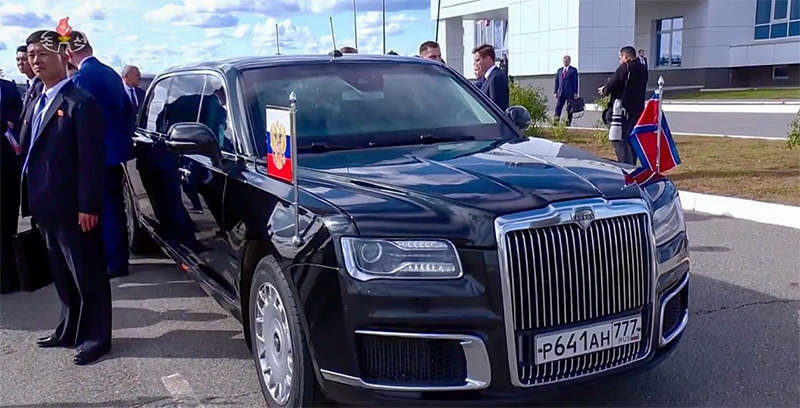
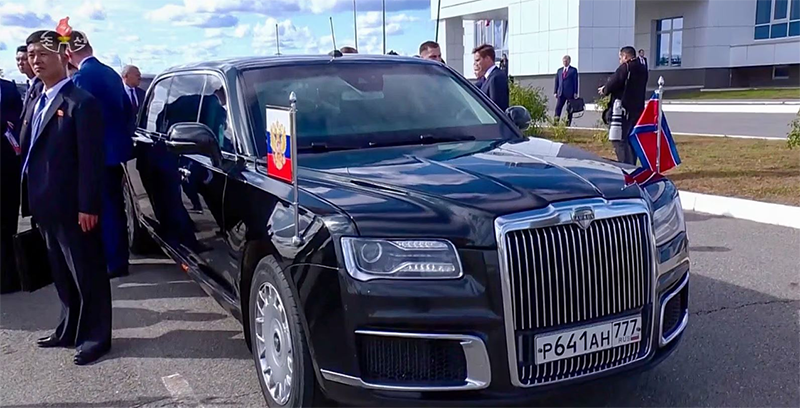
Kim Jong-un in Putin's presidential Aurus during a visit to the Vostochny Cosmodrome in Amur Oblast, Russia, last year. / Photo by Yonhap News Agency
As per the Russian International News Agency (RIA Novosti), Dmitry Peskov, the Kremlin's spokesperson, verified the gift's details, stating, "It is indeed the Aurus car." He explained that the gesture stemmed from Kim Jong-un's admiration for the vehicle, which Putin had showcased to him at their summit at the Vostochny Cosmodrome in September of the previous year.
Dubbed the 'Russian Rolls-Royce,' the 'Aurus' is a symbol of luxury, often used by foreign dignitaries and leaders. The Aurus Senat model, known for its opulence, retails between 40 to 80 million rubles (approximately 500million to 1.1 billion KRW) in Russia, depending on the configuration. President Putin himself uses this model for official engagements, including his inauguration.
Earlier that day, North Korea's state-run Korean Central News Agency reported that Kim had received a Russian-made sedan as a gift on the 18th, though it withheld specific details or photographs of the car.
Kim Yo-jong, the Deputy Director of the WPK, who accepted the gift on behalf of Kim Jong-un, expressed profound gratitude towards President Putin. She relayed Kim Jong-un's heartfelt thanks to the Russian leader, emphasizing the respectful and sincere appreciation from North Korea.
The South Korean government has criticized Russia's gift of the Aurus to North Korea, arguing it breaches United Nations Security Council (UNSC) sanctions imposed on the North.
North Korean Workers' Collective Strike in China Suggests Regime's Diminishing Control
Recent reports of collective action by North Korean workers in China signal a potential weakening of control by the North Korean regime. Tak Min-ji, a researcher at the Korea Institute for National Unification (KINU), shared findings in an online report titled "Implications of the Mass Strike Incident of North Korean Overseas Workers in Jilin Province, China: Crisis of Overseas Slave Labor" on the 20th. She suggests that this strike might mark the beginning of a labor movement within North Korea.
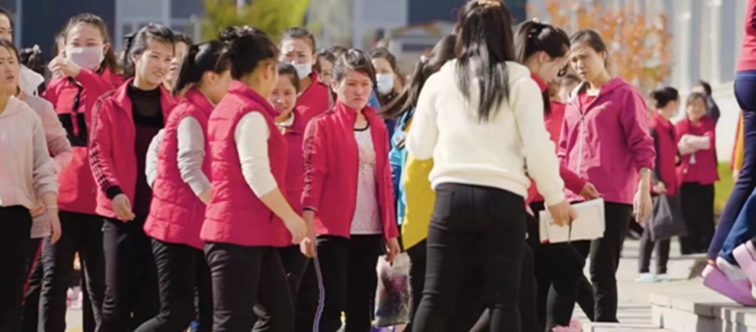
North Korean female workers at a factory in Helong, Jilin Province, China, in autumn 2022 / Photo by SAND Institute
On the 17th, The Yomiuri Shimbun reported that 2,000 North Korean workers took over a medical manufacturing and seafood processing factory in Helong City, China, staging a riot from the 11th to the 14th of the previous month.
Driven by unpaid wages, the workers initiated a strike. Despite North Korean authorities' attempts to manage the situation with consular and State Security Department agents, an incident occurred where a North Korean management team member reportedly died after an assault.
Tak remarked, "While this may seem like a natural reaction to the human rights abuses and wage theft by North Korean authorities, it was distinct from past incidents." She found the organized and collective nature of the protest particularly remarkable, given North Korea's strict restrictions on freedom of assembly and expression. "The act of rallying together to voice a unified demand signifies a remarkable shift in a society as repressed as North Korea," she added.
Moreover, she pointed out that the direct confrontation with North Korean authorities by the striking workers signifies a shift in perception. North Koreans, disillusioned since the hardships of the Arduous March, are now framing the state not as a protector but as a violator of their rights, openly voicing their complaints.
She speculated that the skilled nature of the workers involved might have prevented the North Korean authorities from responding with force, prioritizing foreign currency income over suppression. This incident, according to Tak, is a telling example of the regime's loosening grip, diverging from the usual narrative of exploitation and human rights violations.
North Korea Faces Unprecedented Industrial Downturn Under Kim Jong-un
Recent analyses reveal that North Korea's industrial operation rate has plummeted to its lowest since Kim Jong-un became Supreme Leader in 2012. This downturn is attributed to a combination of chronic power shortages, outdated infrastructure, a failing distribution network, and the persistent economic sanctions imposed on the country.
Despite Kim Jong-un's claims of significant advancements in the national economy at last year's end-of-year plenary meeting, where he boasted about achieving milestones across all 12 objectives of his "12-point plan for the development of the people's economy," skepticism remains.

Pukchang Power Station, a key facility in North Korea's power generation efforts / Photo by Rodong Sinmun
Contrary to North Korea's official claims of surpassing economic targets, with specific achievements touted, external assessments cast doubt on these assertions.
The NIS indicates that North Korea's industrial sector is struggling due to power shortages, aging assets, sanctions, and COVID-19. As a result, industrial operations are at their lowest since Kim Jong-un's tenure began, with the Kim Chaek Iron and Steel Complex running at just 10-20% capacity.
Reports also highlight those significant national endeavors, such as the Sunchon Phosphate Fertilizer Plant—a project personally inspected by Kim Jong-un—have been underperforming for years. Recent developments include Kim's harsh criticism of industrial leaders in certain regions for their shortcomings.
Further insights from a Ministry of Unification report on North Korea's socio-economic conditions reveal that, although the regime mandated an average of 10.6 hours of operation daily for industrial entities since Kim Jong-un's rise, the actual average has scarcely reached 8.5 hours.
Despite introducing a 10-year "20×10 regional development policy" aimed at narrowing the development disparity between Pyongyang and other regions, the initiative's effectiveness is questionable. The prevailing lack of resources, materials, and sufficient power supply continues to hinder progress, casting doubt on the feasibility of such long-term development plans.
-
PREV [Stray Thoughts]
-
NEXT [News & Issues]