


Kim Yo-jong: Fluent in Japanese?
The Kim Family's Fondness for Japan
Kim Yo-jong, Deputy Director of the WPK and sister of North Korean leader Kim Jong-un, recently expressed a willingness to improve relations between North Korea and Japan. On the 15th, she stated, "There's no reason why the two countries cannot draw closer. Hence, the day when Japanese Prime Minister Fumio Kishida visits Pyongyang may not be far off," subtly indicating a desire for enhanced relations. Kim Yo-jong's remarks on North Korea-Japan ties emerged just a day after South Korea announced diplomatic ties with Cuba. Observers speculate that North Korea, shocked by Cuba's betrayal, seeks diplomatic isolation through improved relations with Japan.
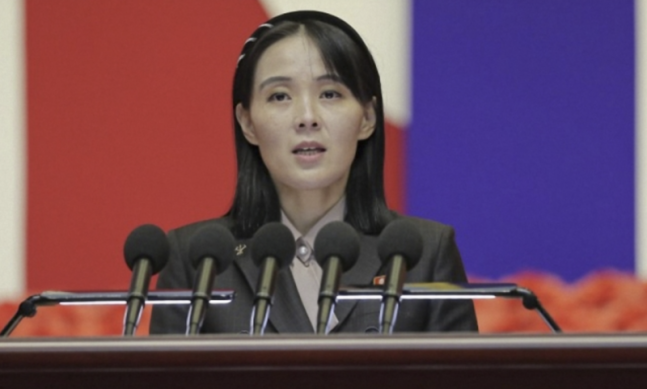
Kim Yo-jong, Deputy Director of the WPK / Photo by Korean Central Television
If North Korea embark on improving relations with Japan, there's a possibility that Kim Yo-jong, acting as Kim Jong-un's spokesperson, may assume a prominent role. She previously took center stage during the improvement of inter-Korean relations in 2018. Now, attention turns to whether Kim Yo-jong will showcase her Japanese language skills during North Korea-Japan negotiations.
Japanese scholars engaged in academic exchanges with North Korea state that Kim Yo-jong is proficient in Japanese, capable of interpreting for Japanese guests. Testimony from Kenji Fujimoto, a former chef for Kim Jong-il, indicates that Kim Jong-un and his brother Kim Jong-chul had basic Japanese skills, likely influenced by their mother, Ko Yong-hui, who was of Japanese descent.This background explains their positive attitude toward Japanese culture.
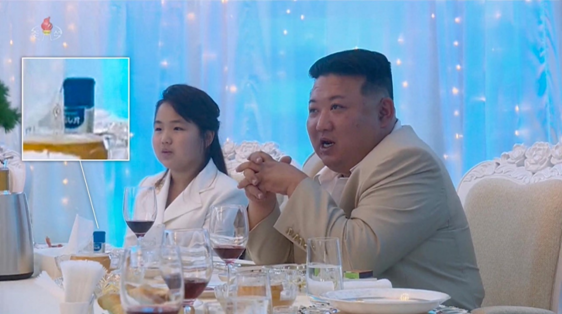
Kim Jong-un and his daughter Kim Ju-ae attended the North Korean Navy Day celebration in August 2023. A blue salt bottle, confirmed to be a Japanese product called Aji-Shio, is seen in front of Kim Ju-ae / Photo by Korean Central Television
Kenji Fujimoto recalls that around the age of 7, Kim Jong-un would sing Japanese nursery rhymes and songs like "Red Shoes" and "Seven-Year-Old Child" with his attendants. Allegedly, Kim Jong-un would ask them to sing these songs and then verify with Fujimoto if the Japanese lyrics were correct.
Reportedly, around the age of 8 in 1991, Kim Jong-un visited Tokyo Disneyland multiple times with his mother, Ko Yong-hui, using forged passports. According to the Japanese magazine 'Bungeishunju,' Kim Jong-un developed a fondness for Japanese comics ’Dragon Ball’ during his study abroad, particularly enjoying popular basketball manga 'Slam Dunk.'
Evidence of Kim Jong-un's affinity for Japanese products has surfaced recently. Last August, during the North Korean Navy Day celebration, a salt bottle made by a Japanese food company was observed on the table in front of Kim Ju-ae. It was identified as Aji-Shio salt, produced by the renowned Japanese company Ajinomoto, which gained fame in Japan in the 1980s.

In August 2020, Kim Jong-un visited flood-damaged areas in Unpa County, North Hwanghae Province, driving a black SUV.*This vehicle is estimated to be a Lexus LX570 model from Toyota / Photo by Korean Central Television
Kim Jong-un's preference for Japanese products is evident in various instances. He presented Seiko watches to around 10,000 youth in January last year. Scenes of Kim Jong-un personally driving a Lexus SUV to visit flood-damaged areas or observing missile launches using Nikon binoculars have also been confirmed through North Korean state media.
According to a defected North Korean woman who worked as a caretaker in Pyongyang, in the late 1970s and early 1980s, the appliances used by Kim Jong-il and Ko Yong-hui inside their residence were Japanese, including shampoo.
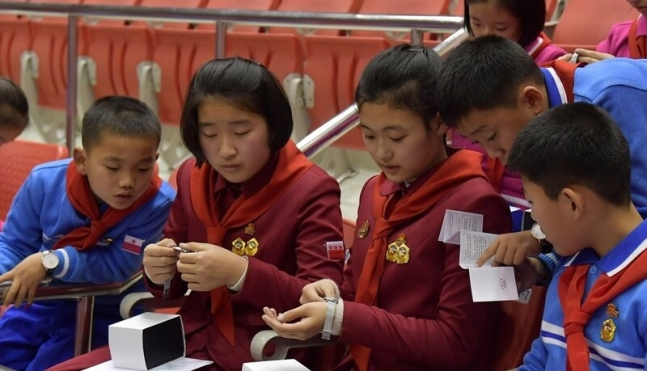
KCU members of the 9th WPK looking at Seiko watches gifted by Kim Jong-un in January 2023 / Photo by Korean Central Television.
Kim Jong-un grew up familiar with Japanese culture, but he hasn't openly acknowledged his mother due to her Korean Japanese background and her grandfather's collaboration with the Japanese under Japanese rule. Kim's maternal grandfather, Ko Gyon-tek, worked in a managerial role at the Hirota Military Clothing Factory during this period, highlighting a significant contradiction in the Kim family's anti-Japanese stance, which emphasizes resistance against Japanese imperialism.1)
Despite avoiding the topic of Japanese abductions, Kim Yo-jong's mention of a potential North Korea-Japan summit is seen as a favorable move, especially given Kishida's low approval ratings. It's viewed as an opportunity for Kim Jong-un to potentially escape diplomatic isolation and secure the settlement of property and claims and economic cooperation.
Some argue that this could be a response on the part of North Korea to South Korea's sudden establishment of diplomatic ties with its socialist ally Cuba. Kim Jong-un and the leadership seem to be aiming to mitigate the shock of Cuba's betrayal and break out of diplomatic isolation.
Choi Kyong-hui, director of the SAND Institute, commented, "The shock North Korea experienced when South Korea established diplomatic relations with the Soviet Union in 1991 seems to be repeating itself." She added, "China had already initiated reform and opening up in 1978 and established relations with the United States the following year, consistently following the path of capitalist development, so the shock would have been less compared to the establishment of relations with South Korea and the Soviet Union."
1) https://en.wikipedia.org/wiki/Ko_Yong_Hui
-
PREV [News & Issues]
-
NEXT [SAND Exclusive]