

Kim Myongsung’s Inside North Korea
· North Korea Silent on Syrian Collapse, Highlights South Korea's Martial Law and Impeachment
· North Korea May Escalate Anti-Government Campaigns in South Korea
· North Koreans Struggle Amid Severe Currency Devaluation: 1 USD Hits 30,000 KPW

Kim Myong-sung
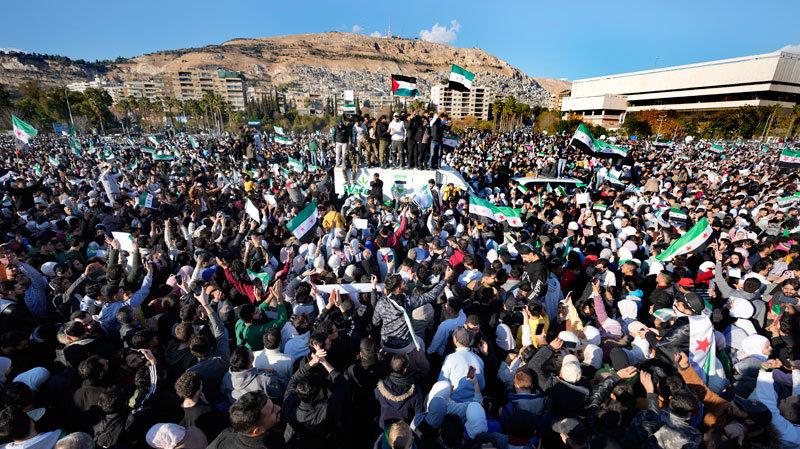
The bond between the two nations was evident, with landmarks such as Kim Il-sung Park in Damascus symbolizing their relationship. Leaders Kim Jong-un and Bashar al-Assad frequently exchanged congratulatory messages to commemorate important events, with 34 such exchanges occurring between 2022 and early 2023.
Analysts believe the frequent correspondence between the two leaders was driven by both mutual friendship and arms trade. Syria served as one of North Korea’s exclusive diplomatic partners, refusing to establish ties with South Korea. North Korea used Syria as a conduit for arms sales to neighboring regions, with its weapons experts reportedly involved in building factories and providing technical consultations there. A 2019 UN report confirmed North Korea’s arms trade activities with Syria, extending to the Middle East and Africa.
The collapse of Assad’s regime is a significant blow to North Korea's Middle Eastern policy, leaving it without a key ally in the region. Furthermore, the fall of the regime deeply dependent on Russian support likely rattles North Korea’s leadership, which also leans heavily on Russia. This could explain why Pyongyang has chosen to withhold news of Assad’s downfall from its citizens.
In contrast, North Korean media has actively reported on South Korea's internal political issues, including martial law declarations and impeachment. After an initial eight-day silence, coverage on these topics began on December 11 and continued on the 12th.
Coverage included details of President Yoon Suk-yeol being named a suspect in a treason investigation and placed under a travel ban, as well as the detention of former Defense Minister Kim Yong-hyun.
On the 16th, the media also reported the passage of the impeachment motion against Yoon. Experts believe this coverage is intended to diminish any positive perceptions North Korean citizens may hold about South Korea while strengthening loyalty to their own regime.
Recent analyses indicate that North Korea is likely to mobilize its intelligence agencies to fuel anti-government sentiment in South Korea, particularly in relation to President Yoon’s impeachment.
A report by the Institute for National Security Strategy (INSS), titled "2024 Political Analysis and 2025 Outlook" predicts that North Korea will maintain its hostile stance toward South Korea, escalating military provocations and covert operations.

The report highlights North Korea’s plans for military drills targeting South Korean government facilities, including the Yongsan Presidential Office, while operationalizing advanced rocket launchers and strategic weapons.
The INSS predicts that during the Workers' Party of Korea’s upcoming plenary meeting, North Korea will reaffirm its adversarial stance toward South Korea, likely warning that any engagement with the South could provoke nuclear retaliation, justified as protecting the regime’s "supreme dignity."
While observing the second-term Donald Trump administration for potential changes in U.S.-North Korea relations, North Korea is expected to uphold its stance of excluding South Korea from diplomatic negotiations.
The report also warns of an increased cyber threat, predicting that North Korea may ramp up attacks on South Korean institutions, government figures, and defense contractors.
Led by the Reconnaissance General Bureau, these attacks could extend to cyber-terrorism targeting South Korea’s legislature, financial organizations, and other critical sectors.
North Korea may also expand its intelligence activities abroad, focusing on South Korean nationals in China's northeastern provinces and Russia’s Primorsky Krai. Efforts to bolster pro-North Korean groups for anti-government protests in South Korea are also anticipated.
The report highlights the need for strong countermeasures against North Korea's provocations, urging collaboration between the Ministry of State Security, Reconnaissance General Bureau, and Enemy Operations Bureau.
North Koreans Struggle Amid Severe Currency Devaluation: 1 USD Hits 30,000 KPW
The North Korean won has lost three-quarters of its value since the start of the year, triggering widespread panic among citizens. The exchange rate soared from 8,000 KPW per USD in October to 32,000 KPW per USD by late November, deepening economic instability and public unrest.
Experts attribute the crisis to a surge in foreign currency demand following the reopening of borders post-COVID-19.
The situation has worsened due to rumors of a currency exchange and war preparations announced in October, increasing tension, market instability, and exchange rates. North Korean authorities' strict control over the exchange rate, including recent crackdowns on money changers, has also contributed to the instability.
Criticism within North Korea highlights the adverse effects of the government’s anti-market policies on the economy. Sources report that judicial measures targeting market activity and individual money changers have stifled economic operations, leading to soaring prices and worsening living conditions.
The ongoing currency instability, which began in the summer, briefly stabilized in September before spiraling again in October. Observers suggest this could be due to public distrust in the regime's policies, which restrict goods distribution outside government oversight.

According to Choi Kyong-hui, president of the SAND Institute, North Korea’s economic woes stem from sanctions, pandemic repercussions, and impractical development policies like the forced return to socialist commerce, extensive apartment and rural housing projects, and the 20x10 Regional Development Policy. Choi emphasized that market-friendly reforms and structural economic changes are crucial to stabilizing the country’s economy.
-
PREV [NK Focus]
-
NEXT [Current Affairs Analysis]