

Kim Jong-un’s Birthday and Idolization Efforts in 2025

Lee Seung-hyun
Research Fellow at SAND Institute
Ph.D. in Public Administration
drharacearthur@gmail.com
On January 8, 2025, North Korea observed the birthday of its leader, Kim Jong-un, though it was not specifically marked on the calendar, nor were there large-scale events. Unlike the national holidays celebrating Kim Il-sung (April 15, Day of the Sun) and Kim Jong-il (February 16, Day of the Shining Star), Kim Jong-un's birthday remains unofficial.
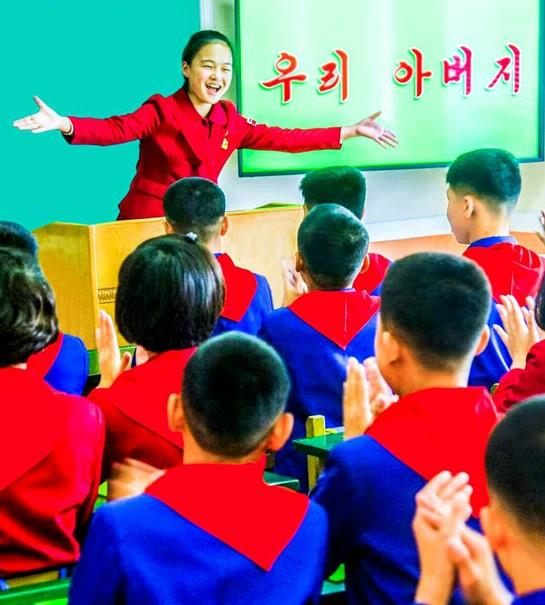
Nevertheless, loyalty oath ceremonies for Kim Jong-un were held across various institutions and workplaces, as in previous years. This reflects a gradual idolization strategy that considers both domestic and international perspectives.
North Korea has historically used the leader’s birthday for provocative actions, such as nuclear tests, to showcase achievements. This year, however, such measures were absent, likely due to troop deployments to Russia and the U.S. presidential inauguration. Instead, a short-range ballistic missile (SRBM) launch served as a lower-scale demonstration, reflecting a dual strategy to commemorate Kim’s birthday while bolstering internal unity and international bargaining power.
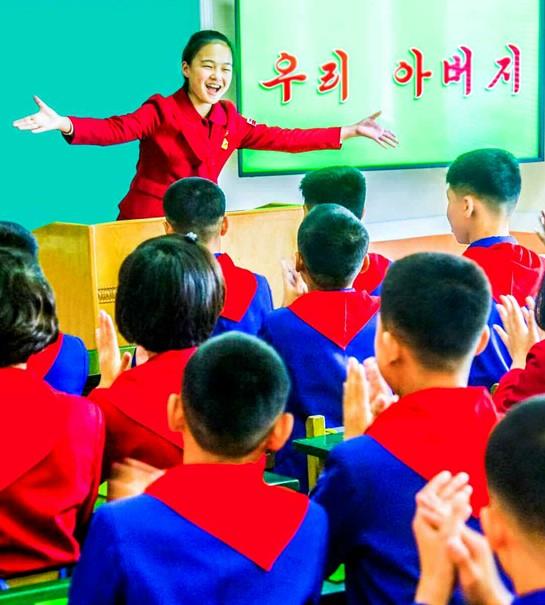
North Korean students hold a recent gathering to praise Chairman Kim Jong-un/Rodong Sinmun
Although no formal celebrations were held for Kim Jong-un’s birthday this year, and it was omitted from the calendar, other significant dates like his leadership anniversaries were noted, indicating ongoing idolization efforts. Informal events, such as New Year’s pledge ceremonies continued, along with increased reports emphasizing his achievements in agriculture, self-reliant economics, and military advancements like nuclear and missile programs.
It is also likely that unofficial events such as cultural performances, study sessions, and additional loyalty pledge ceremonies were held to honor Kim Jong-un. While his birthday is not yet a formal public holiday, various internal measures to elevate his status are clearly underway.
On the leader’s birthday, citizens are mobilized to participate in loyalty ceremonies, New Year pledges, and study sessions, serving as opportunities to reinforce allegiance to the leader. In the past, authorities distributed gifts and special rations to officials and residents on this occasion to cultivate the image of a “benevolent leader.”
This year, however, economic difficulties meant that no gifts were distributed to the general population. Instead, only kindergarten and elementary school children received small packets of candy and snacks. Institutions and enterprises were instructed to arrange birthday-related gifts on their own, but most were unable to do so due to financial constraints. Only a few trade-linked companies managed to distribute fruit. Reports from within the country suggest that the economic situation is dire, with many claiming it is even worse than during the COVID-19 lockdown period.
In summary, Kim Jong-un’s birthday in 2025 remains unofficial, though idolization efforts are steadily increasing as part of a broader strategy to reinforce regime stability and consolidate power. Speculation suggests that his birthday might be formalized as a holiday during the 9th Congress of the Workers’ Party of Korea next year, depending on domestic political stability and international circumstances. Meanwhile, the regime is expected to continue leveraging this period for military provocations and strong external messaging to strengthen internal unity and reinforce its position.