

Lee Jae-myung’s Inauguration and the Future of Inter-Korean Relations

Chae Su-lan
Senior Research Fellow, Marine Security and Strategy Research Division,
Global Strategy Research Department, Korea Maritime Institute (KMI)
1. The Lee Jae‑myung Administration’s North Korea Policy: The Philosophy of a Peace Economy
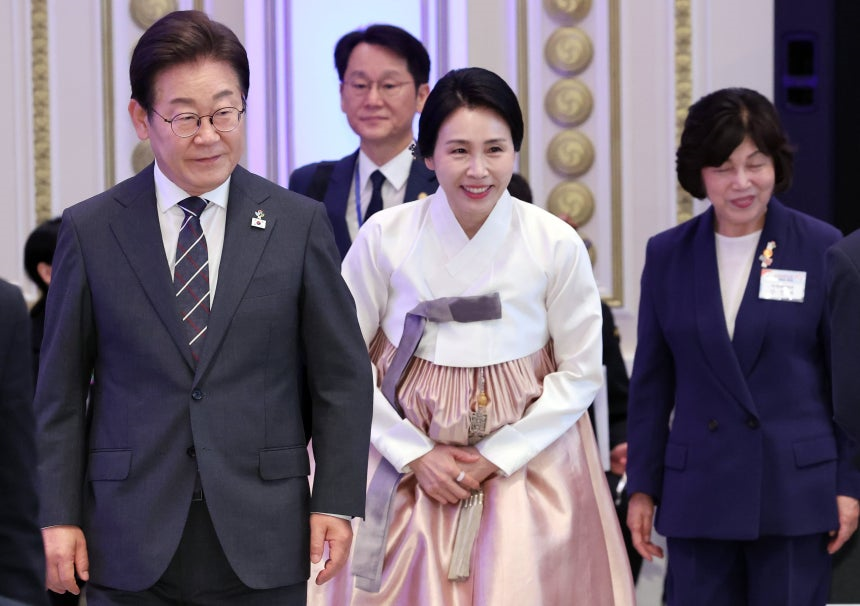
The Lee Jae‑myung administration, inaugurated in 2025, heralds a fresh chapter in inter‑Korean relations. During his campaign, President Lee emphasized the mantra “peace is economy,” framing ties with North Korea not merely as a security concern, but as an economic‑security issue. His vision seeks to harness practical economic gains and stability through sustained exchanges and cooperation, well beyond conventional defense strategies.
Almost immediately after taking office, he stopped loudspeaker broadcasts toward North Korea, prompting a reciprocal pause in the North’s transmissions.
He also directed preventive and punitive measures against leaflets launched by civilians, citing “public safety and border-area calm” as priorities. Viewed by analysts as utilitarian and tension‑reducing, these steps signal a drive to lower military friction and foster dialogue.
The Lee administration has positioned “firm economic security” at the heart of its national agenda, redefining inter-Korean relations as a strategic pillar. It seeks to build “sustainable peace on the peninsula” through steps like reinstating the 9/19 Comprehensive Military Agreement, resuming family reunions, and reopening the liaison office.
On security, it aims for balance, combining extended deterrence with self-reliant defense. By merging its predecessor’s progressive spirit with pragmatic economic goals, the administration is pursuing gradual trust-building and a positive interplay between economics and security.
2. Key Appointments and Negotiation Strategy: Reviving the Sunshine Policy Line and Ensuring Policy Continuity
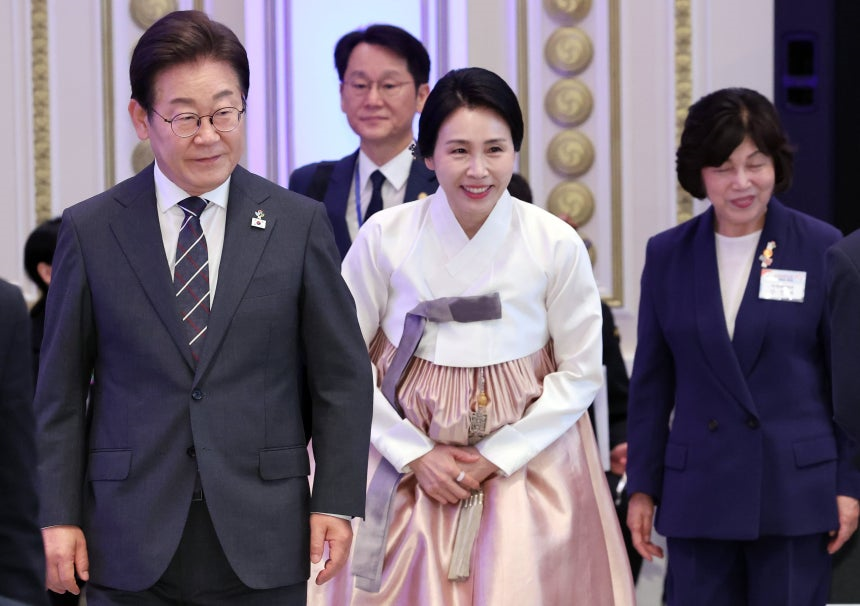
Lee’s North Korea policy is more than rhetoric—it’s backed by strategic appointments designed for execution. Key figures in diplomacy, security, and unification are veterans of inter‑Korean dialogue and nuclear talks under Roh Moo‑hyun (2003–2008), reflecting a view of this policy as a long‑term process.
Lee Jong-seok, newly appointed as Director of the National Intelligence Service (NIS), previously served as Unification Minister and Deputy Director of the National Security Council, where he helped lead the 2007 inter-Korean summit.
He is expected to play a key role in behind-the-scenes talks with the North, signaling a shift in the NIS from enforcing hardline policies to facilitating diplomatic dialogue.
Wi Sung-lac, appointed as Director of National Security, is a seasoned diplomat who led South Korea’s delegation in the Six-Party Talks and headed nuclear policy planning at the Foreign Ministry.
With expertise in balancing dialogue and deterrence, he is expected to help rebuild multilateral negotiations with powers like the U.S. and China. His selection underscores the administration’s focus on international coordination over domestic political optics.
Chung Dong-young, now Minister of Unification, led key inter-Korean talks in the early 2000s, advancing projects like the Kaesong Industrial Complex and Mount Kumgang tourism. Though a politician, he is known for practical policy leadership. His return is seen as a strategic move to restore structured cooperation based on prior experience.
Kim Nam-jung, the newly appointed Vice Minister of Unification, is a career official with direct experience managing inter-Korean committees, including those for Kaesong and civil exchanges. He is expected to lead renewed engagement at local and civilian levels. His role reflects the administration’s emphasis on practical, field-driven policy.
This lineup shows that the Lee Jae-myung administration values experience over ideology and action over symbolism. Rather than returning to the past, it aims to adapt mid-2000s inter-Korean cooperation to today’s realities through a pragmatic approach led by seasoned experts.
These officials tend to avoid confrontational tactics, favoring conditional cooperation over unconditional engagement. Their focus is on creating viable conditions for dialogue. In doing so, the administration has built a skilled team capable of maintaining policy continuity while allowing for strategic flexibility—an asset in navigating future talks with the North.
3. North Korea’s Response and Prospects: A Three‑Scenario Outlook
Pyongyang responded faster than anticipated: within ten hours of South Korea’s broadcast suspension, the North halted its loudspeaker messages too. The Joint Chiefs of Staff confirmed there were no North Korean emissions. By the evening of June 11, the broadcasts switched to soft music, and by the next morning, volumes dropped significantly—signs of a phased, reciprocal response.
Scenario ①: Optimistic
In the best case, North Korea views these moves as trust‑building, reciprocating with measures such as restoring military hotlines and liaison channels, and reopening the joint liaison office. Humanitarian aid, family reunions, and civilian exchanges would set the stage for political dialogue.
Pilot projects like a mini‑Kaesong Industrial Complex and joint disaster relief might follow, easing regional tension. A diplomatic boost—such as a summit similar to one between Kim Jong‑un and Donald Trump—would further accelerate this positive momentum.
Scenario ②: Status Quo
In this case, North Korea shows limited trust in the South’s conciliatory moves but avoids making major strategic shifts. Its growing alignment with Russia has expanded its diplomatic options, potentially reducing the urgency or value it places on engaging with Seoul.
Pyongyang continues to push a “two hostile states” narrative, treating South Korea as a separate, adversarial regime, while official communication channels remain closed. This could lead to a prolonged state of hostile coexistence—avoiding direct conflict but marked by persistent tension and mistrust.
Still, minimal engagement may persist in non-political areas such as humanitarian aid, disaster response, and small-scale civilian exchanges. Topics like virtual family reunions or health cooperation may offer openings, though these are likely to be limited and short-term without deeper trust-building efforts.
Scenario ③: Pessimistic
There’s also the risk North Korea rejects dialogue, opting to escalate tensions. As military ties with Russia deepen, Pyongyang may feel emboldened to engage in West Sea provocations near the Northern Limit Line, deploy tactical nuclear weapons, or test medium‑ and long‑range missiles, destabilizing the peninsula and broader Northeast Asia.
To navigate these scenarios, the Lee Jae-myung administration needs a more structured, multilayered strategy. While preserving trilateral cooperation with the U.S. and Japan, it must also engage China and Russia, whose roles are crucial given their deepening ties with North Korea.
Without their involvement, progress on denuclearization and peace will be limited. To counter these geopolitical constraints, South Korea should also broaden its international support. Expanding cooperation with the Global South, including countries like India, Brazil, and South Africa can help build a wider consensus.
Leveraging multilateral platforms such as the G20 to link North Korea issues with economic development could also offer new diplomatic pathways.
Inter‑Korean improvement must be treated as a marathon, not a sprint. A phased approach is key: Phase 1—restore humanitarian cooperation and civilian exchanges; Phase 2—expand economic ties gradually; Phase 3—build political and military trust through institutionalization.
The Lee Jae-myung administration must turn its “peace economy” vision into concrete action, creating a win-win framework that brings real benefits to both sides.
While building on the legacy of past progressive governments, the Lee administration is also crafting a new approach suited to today’s realities. Key challenges persist, namely, North Korea’s “two-state hostility” stance and its growing ties with Russia.
Rather than aiming for quick gains, the focus should be on gradually building trust. As it works toward denuclearization and a lasting peace regime, the administration must recognize practical limits and adopt a step-by-step strategy for a durable inter-Korean framework.