


Kim Myongsung’s Inside North Korea
· Chinese Civilian Injured by North Korean Landmine: Growing Risk of Cross-Border Spillover
· Surprise Inspections Ahead of Major Party Anniversary Spark Anxiety Among Local Officials
· North Korea Reaffirms Self-Reliance Amid Calls for Recognition as a Nuclear Power
Kim Myong-sung

The incident has provoked anger among local residents, who have expressed growing frustration with North Korea’s continued militarization of the border. Reportedly, local sentiment includes remarks such as, “How long must we continue to suffer damage caused by North Korea?” and, “How can they still call themselves allies?”
In response, Chinese public security and border authorities have stepped up patrols and issued warnings to civilians, urging them to avoid riverside areas amid concerns that additional landmines may have reached other parts of the border region.
This is not the first such incident. Similar episodes were reported in 2024, when flooding near Sinuiju dislodged landmines, resulting in casualties inside North Korea. The recurrence of these incidents underscores the transboundary hazards posed by North Korea’s border defense policies, which under Kim Jong-un have included landmines, electric fences, surveillance cameras, traps, and reinforced patrol posts along the entire China–North Korea frontier.
While Pyongyang’s intent is to curb defections, the unintended consequences of its border fortification strategy are increasingly spilling over into neighboring countries—raising concerns about civilian safety, regional stability, and bilateral trust, particularly at the subnational level.
In late July, North Korea launched a sweeping series of unannounced inspections targeting local-level preparations for the 80th anniversary of the founding of the Workers’ Party of Korea, scheduled for October 10. The inspections—led by Kim Yo-jong, vice department director of the Central Committee—are reportedly aimed at ensuring both ideological and administrative alignment with central directives ahead of the regime’s most important political celebration of the year.
According to multiple sources, the inspections began following a policy order from Kim Jong-un issued on July 15 and are being carried out by two Central Party task forces. These teams are conducting surprise visits to provincial, city, and county-level Propaganda and Agitation Departments. Inspections reportedly start as early as 5:00 a.m., during which officials seal off offices, collect internal records, and cross-examine meeting minutes, resident mobilization data, and propaganda materials for alignment with the party guidelines.
While some localities—such as Jagang Province—received relatively favorable evaluations, others, including Onchon County in Nampo, were sharply criticized for failures in policy implementation, misreporting, and the use of unauthorized slogans. Areas deemed noncompliant may be placed under “special guidance,” with the potential for disciplinary action or public naming of underperforming officials.
On July 17, the Central Committee issued an internal directive outlining twelve specific tasks to be completed by August 15 in preparation for the anniversary. These tasks include refining local policy implementation plans, producing new propaganda content, organizing community-level discussions, and conducting full event rehearsals.

Local officials reportedly view the inspections as punitive and unpredictable, referring to them as “manhunt-style” operations. The abrupt and invasive nature of the oversight reflects the regime’s emphasis on control, conformity, and elite discipline as it seeks to project internal strength amid a challenging external environment.
North Korea Reaffirms Self-Reliance Amid Calls for Recognition as a Nuclear Power
On August 4, North Korea issued a strongly worded statement reaffirming its policy of self-reliance (juche) and rejecting the notion of economic transformation at the expense of national sovereignty and dignity. The statement, published in the Rodong Sinmun under the title “Self-Reliance Is the Revolutionary Spirit of a Strong Nation,” emphasized that while a favorable external environment is necessary for development, the country would not “sell the dignity we have protected with our lives” in pursuit of prosperity.
This declaration reinforces the regime’s consistent position that negotiations with the United States—particularly regarding sanctions relief or economic normalization—will not be possible without explicit recognition of its status as a nuclear-armed state and guarantees for regime survival. The statement follows recent remarks by Kim Yo-jong, who publicly dismissed the idea of denuclearization talks under the current terms, arguing that any future dialogue must be predicated on recognition of North Korea’s “irreversible” nuclear deterrent.
While acknowledging the challenges posed by international sanctions, the regime continues to portray its economic development agenda—including the construction of 10,000 housing units annually in Pyongyang and the revitalization of local industries—as achievable through domestic means.
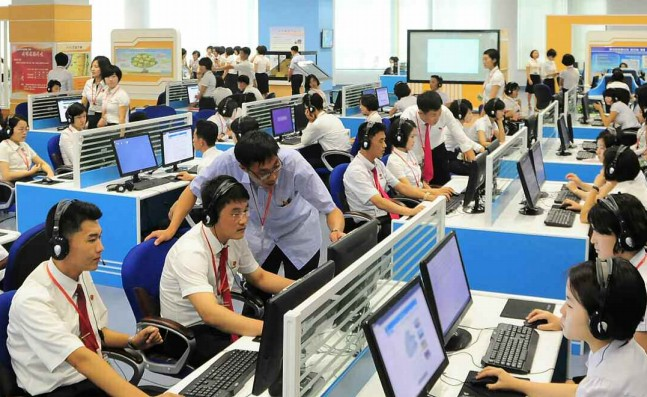
The Rodong Sinmun editorial asserted that “self-reliance is the root that sustains dignity,” adding that North Korea will continue to “raise national defense capabilities to an unparalleled level.”
The renewed emphasis on juche is widely seen as a preemptive strategy to dampen public expectations of renewed diplomacy with the United States or sanctions relief, similar to the atmosphere that emerged following the collapse of the 2019 Hanoi summit.
Furthermore, the regime appears to be reframing self-reliance not only as a survival imperative but also as a long-term strategic doctrine to be passed down across generations. The editorial called on youth to “internalize the spirit of self-reliance” and claimed that this ideological legacy is more valuable than any material inheritance.
A researcher at a state-affiliated think tank assessed the statement as a calculated move: “North Korea is signaling that its nuclear status is non-negotiable. By aligning more closely with Russia and emphasizing strategic autonomy, the regime is attempting to increase its leverage ahead of any potential diplomatic reengagement.”
The regime’s messaging comes amid renewed affirmations by the United States and South Korea of their commitment to the complete denuclearization of the Korean Peninsula, a stance that Pyongyang continues to reject. The divergence in strategic objectives suggests that the diplomatic deadlock is likely to persist, barring a major shift in regional or international dynamics.
-
PREV [Feature Article]
-
NEXT [News&Issue]