

North Korea Elevates Science, Technology, and Education as Pillars of “National Dignity”
Institutionalized Talent Management and Emerging Local “Scouting” Competition
North Korea has increasingly framed science, technology, and education as the principal drivers of “national dignity” and “national prestige,” presenting them as central to both regime legitimacy and long-term economic development. In reviewing achievements over the past five years, Pyongyang has designated scientific and technical personnel as a strategic national resource and formalized a tiered, centralized management system grounded in law and regulation.
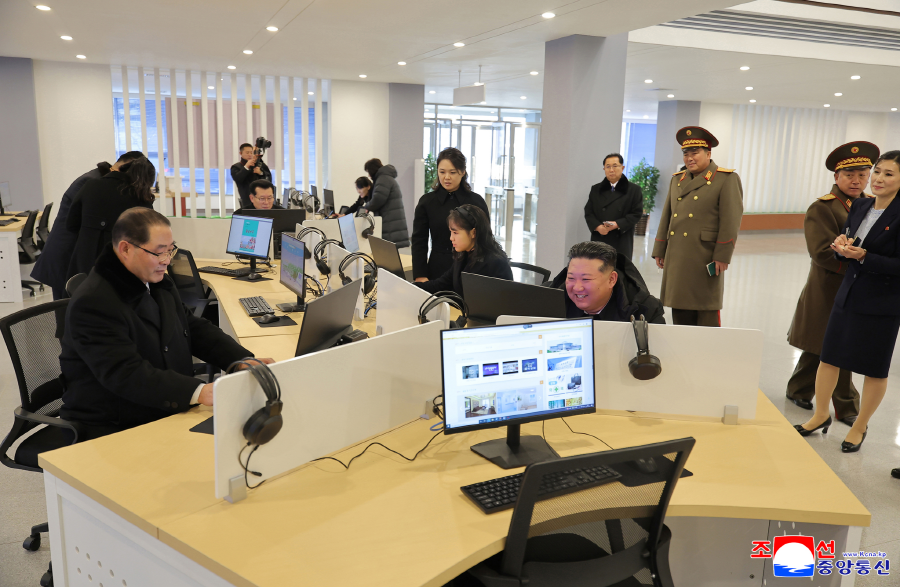
Concurrently, local governments appear to be competing to secure high-performing students and technical specialists, by providing material support for students admitted to elite institutions in Pyongyang. Taken together, these measures suggest a coordinated effort to reinforce regime stability while pursuing incremental economic modernization through human capital development.
On February 11, Rodong Sinmun, the official newspaper of the Workers’ Party of Korea (WPK), published a front-page article titled, “The Sacred Five Years That Unfolded a New Era of Comprehensive Development: A New Turning Point in Building a Scientific and Technological Powerhouse and an Educational Powerhouse.”
The article asserted that national prestige has been elevated through advances in science and technology and through what it described as “revolutionary education.” It characterized science and technology as the “core task” and an “infinite strategic asset” of socialist construction, framing the past five years as a decisive policy inflection point.
Centralized, Problem-Oriented Researches and Strategic Talent Management
The newspaper emphasized a shift toward “problem-solving-oriented” researches—prioritizing applied outcomes that directly support economic production and living standards over purely academic output. To that end, Pyongyang has reportedly strengthened centralized coordination mechanisms under the State Committee for Science and Technology and related institutions, consolidating oversight of research plans across universities, research institutes, and state-owned enterprises.
Cited examples of applied achievements include import substitution efforts in the metal and chemical sectors, the introduction of energy-efficient blast furnaces, process improvements in soda ash production, and agricultural modernization initiatives such as mechanization, regenerative rice cultivation techniques, and the development of specialized agricultural materials. While independent verification remains limited, the messaging underscores a consistent focus on technological self-reliance and incremental productivity gains.
North Korea is understood to operate a four-tier classification system for scientific and technical personnel under its Scientific and Technological Talent Management Law. Talent is categorized as: (1) outstanding scientific and technological talent, (2) provincial/central agency level, (3) county Level, and (4) city/county level.
Individuals designated as “outstanding” are assessed through both quantitative indicators—such as academic credentials, professional achievements, and certification levels—and qualitative criteria, including analytical capability, innovation potential, and project leadership. Those selected are registered under a centralized national database and assigned to priority research tasks deemed of strategic significance.
Mobility controls appear stringent. High-ranking talent and leading university graduates are preferentially assigned to research institutes and major industrial enterprises. Transfers reportedly require cabinet-level approval, suggesting that the state seeks to restrict lateral movement and allocate expertise in accordance with national priorities.
Incentives include preferential housing allocations, enhanced access to information and communications infrastructure, medical services, transportation, research funding, and state honors. Public recognition—including state awards and media coverage—reinforces the elevated social status of scientists and engineers within the system.
Education Reform and Local Competition for Human Capital
The emphasis on science and technology extends into structural reforms in education. Rodong Sinmun reported the introduction of a “full credit system” at leading institutions such as Kim Il Sung University, signaling a shift—at least rhetorically—from rote memorization toward more research- and discussion-based pedagogy.
Additional measures reportedly include the modernization of laboratory facilities, expansion of digital infrastructure, establishment of specialized education research institutes, and development of a national education information network. The WPK has also pledged to increase the budgetary share allocated to education and reduce disparities between urban and rural schools.
Parallel to these central initiatives, local governments appear to be intensifying efforts to secure and retain talent. In a February 10 article titled “Let Us Continuously Strengthen Talent Resources in Cities and Counties,” Rodong Sinmun highlighted growing local demand for skilled personnel amid expanded regional development initiatives.
Some county-level party committees are reportedly providing financial assistance to students from their jurisdictions who are enrolled in central universities, covering living expenses such as dormitory fees, meals, textbooks, and heating costs. Although tuition is nominally free nationwide, such targeted subsidies represent a notable intervention by local authorities.
This local “talent scouting” dynamic is closely linked to Kim Jong Un’s “20×10 Local Development Policy,” under which dozens of regional industrial facilities have been established. Operational responsibility for these facilities rests largely with local authorities, heightening pressure to secure competent technical managers and engineers. Rodong Sinmun explicitly acknowledged that the performance of local factories depends on the “caliber of regional officials,” implicitly recognizing persistent constraints in power supply, logistics, raw materials, and skilled labor.
In some coastal areas, including Sinpo City in South Hamgyong Province, local development plans reportedly extend to marine aquaculture and tourism. However, existing personnel in traditional sectors such as fisheries are deemed insufficient to support these initiatives, further intensifying competition for technically trained workers.
Strategic Implications
Collectively, these developments suggest that Pyongyang is institutionalizing a model in which scientific and technical expertise is treated as a controlled national asset. Through tiered classification, mobility restrictions, targeted incentives, and localized patronage, the regime seeks to align human capital development with strategic economic objectives and political control.
Whether this five-year effort—framed domestically as elevating science and education to the level of “national dignity”—will generate measurable economic transformation remains uncertain. Nonetheless, the policy trajectory indicates that North Korea views technological capability and talent management as central instruments for strengthening its self-reliant development model under conditions of sustained sanctions and geopolitical isolation.
-
PREV [North Korea Inside]
-
NEXT [NK Focus]