

North Korea Inside
· Anticipated Messaging to the United States and South Korea at the Ninth Party Congress
· North Koreans Mark Kim Jong-il’s Birthday Amid Lunar New Year in a Muted Political Climate
· As the Ninth Party Congress Nears, Prospects for a Supreme People’s Assembly Session in Its Aftermath

Kim Myong-sung
Choe’s Absence from Kumsusan: Symbolism and Hierarchy
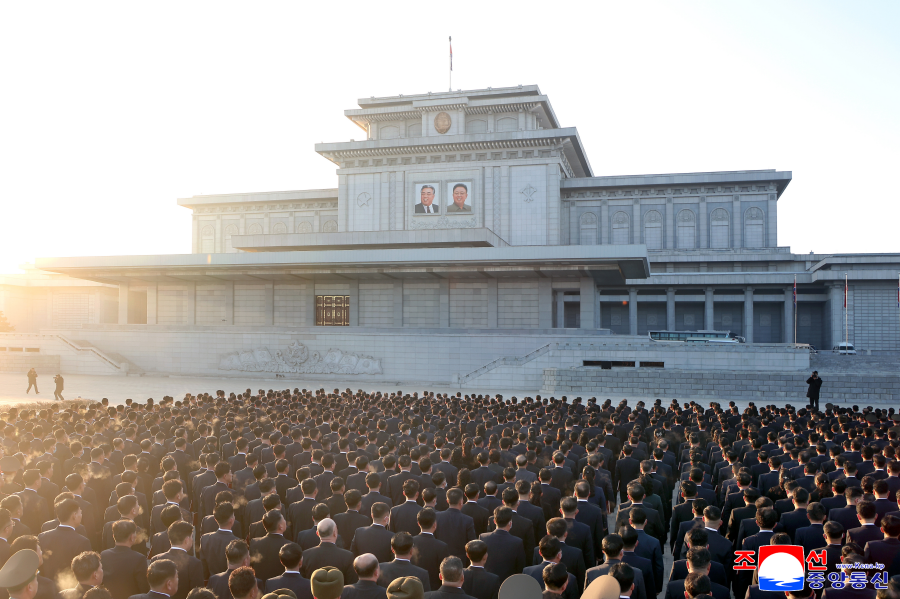
On February 16, marking the birth anniversary of former leader Kim Jong-il—known domestically as the “Day of the Shining Star”—senior party and government officials paid their respects at the Kumsusan Palace of the Sun. Photographs published the following day by Rodong Sinmun showed several key figures in attendance, including WPK Secretary for Organization and Guidance Jo Yong-won, Premier of the Cabinet Kim Tok-hun, Secretary for Military Industry Pak Jong-chon, Secretary for Agitation and Propaganda Ri Il-hwan, and Vice Chairman of State Affaires Commission Ri Hyo-yong. Notably, Foreign Minister Choe Son-hui’s presence was not visible in the published images.
Participation in Kumsusan commemorations carries significance beyond ceremony. Such events serve as visible indicators of rank, loyalty, and proximity to the supreme leadership within North Korea’s political hierarchy. The foreign minister’s absence—particularly at an event marking the 83rd birth anniversary Kim Jong-il—is therefore notable, especially given her position as the regime’s chief diplomatic official.
The contrast with recent precedent is striking. In January, Choe accompanied Kim Jong Un during a Kumsusan visit alongside his daughter, Ju-ae, and his wife, Ri Sol-ju, standing prominently at the front of the official procession. She was similarly visible during commemorations of Kim Jong-il’s death anniversary in December. Her absence from the February 16 ceremony, following months of high-profile proximity, represents a deviation from established patterns.
Coordinated Appearance at the Hwasong District Ceremony
Crucially, Choe’s absence from the Kumsusan ceremony does not appear to have been attributable to travel or personal circumstances. According to reports from Rodong Sinmun and Korean Central Television, she attended the completion ceremony for the fourth phase of a 10,000-unit housing project in Pyongyang’s Hwasong District on the same day, accompanying Kim Jong Un. Photographs showed her standing alongside other senior officials at the event.
Kim Jong Un himself did not attend the Kumsusan Palace ceremony that day, instead presiding over the Hwasong completion event. Given the tradition of the supreme leader personally marking Kim Jong-il’s birthday at Kumsusan, this scheduling decision appears deliberate. The shared alternative itinerary of Kim and the foreign minister suggests coordinated prioritization rather than incidental overlap.
From an analytical standpoint, the simultaneous absence of both the supreme leader and the foreign minister from a major symbolic event—particularly in the days immediately preceding the Party Congress—raises the possibility of focused consultations on foreign policy direction. In highly centralized systems such as North Korea’s, symbolic departures from protocol often reflect substantive political calculations.
The Ninth Party Congress and Foreign Policy Codification
North Korea is expected to convene the Ninth Party Congress later this month. As the WPK’s highest decision-making body, the congress establishes policy direction for the ensuing five-year period. Although the party charter formally mandates quinquennial meetings, historical precedent demonstrates that timing remains subject to political discretion; the seventh Congress in 2016, for example, was convened 36 years after the Sixth Congress in 1980.
Party congresses have historically served as venues for formalizing shifts in economic strategy, military doctrine, and external posture. In the current geopolitical context—marked by sustained tensions with the United States, strained inter-Korean relations, and deepening strategic coordination with Russia—attention is focused on whether Pyongyang will recalibrate its messaging toward Washington and Seoul.
Any articulated “foreign policy line” at the Ninth Party Congress is likely to codify existing strategic trends while signaling future priorities. Toward the United States, messaging may emphasize deterrence and strategic parity, potentially coupled with conditional references to dialogue. With respect to South Korea, the regime could reaffirm its characterization of inter-Korean relations in state-to-state terms or adjust its rhetoric in accordance with its broader security calculus.
Assessment of the Signals
While definitive conclusions must await formal pronouncements at the Congress, the overlapping movements of Kim Jong Un and Choe Son-hui at a moment of high symbolic importance suggest deliberate agenda-setting. In North Korea’s political system, personnel positioning and event prioritization often serve as indirect indicators of policy emphasis.
Accordingly, the forthcoming Ninth Party Congress will provide a critical reference point for assessing whether Pyongyang intends to entrench its current confrontational posture or introduce calibrated adjustments in its approach toward the United States and South Korea.
This year, the February 16 birth anniversary of Kim Jong-il coincided with the Lunar New Year holiday, producing a hybrid observance in which North Korean citizens balanced mandated political commemorations with traditional festivities. While the state organized a range of celebratory events, the overall tone appeared more restrained than in previous years, with subtle but notable shifts in official messaging.

Although commemorative performances and competitions were held to mark Kim Jong-il’s birthday, the use of the term “Day of the Shining Star”—the formal designation of the holiday—was less prominent than in past coverage.
The term has not been formally abandoned; however, its frequency and rhetorical emphasis in state media appear to have diminished. In parallel, reporting prominently highlighted the policy achievements and public activities of Kim Jong Un, reinforcing a narrative centered on the contemporary leadership era rather than solely on the legacy of prior leaders.
On February 16, Rodong Sinmun reported that members of the North Korean Children’s Union welcomed new student inductees “on the occasion of the Day of the Shining Star,” encouraging them to develop into “pillars of the nation with ardent patriotism.” While the holiday’s formal name appeared in the article, it was not accompanied by the extensive laudatory formulations characteristic of earlier years.
Commemorative activities were also reported in the agricultural sector. According to the newspaper, agricultural workers staged the “Third Celebration of February 16 People’s Art Festival,” featuring performances highlighting Kim Jong-il’s purported contributions to addressing agricultural challenges. Youth groups were said to have visited the Baekdu Mountain Secret Camp, which North Korea identifies as Kim Jong-il’s birthplace, where they toured historical exhibits and pledged to carry forward what state media described as the “spirit of Baekdu.”
Across the February 14–16 editions, the term “Day of the Shining Star” reportedly appeared four times—noticeably fewer than in prior years. A February 14 article described a performance by the Mangyongdae Students’ and Children’s Palace art troupe as commemorating the holiday, while a February 15 report on the General Association of Korean Residents in Japan referenced the occasion in connection with a floral tribute. The designation was therefore retained, albeit with comparatively reduced repetition and prominence.
This pattern parallels a broader trend observed in recent years with respect to April 15, the birth anniversary of Kim Il-sung. Since 2024, the regime has reportedly reduced overt use of the term “Day of the Sun” in official discourse. Both anniversaries remain among North Korea’s most important political holidays; however, this year’s observances appeared comparatively subdued in tone, pending the possibility of follow-on coverage.
Notably, in 2025 state media reported, on the day after the event, that Kim Jong Un had paid respects at the Kumsusan Palace of the Sun on Kim Jong-il’s birthday. No such report was issued this year, and Kim did not publicly attend the Kumsusan commemoration.
Instead, Rodong Sinmun devoted four of its six pages to coverage of the completion ceremony for the Saebyeol Street residential complex, described as having been constructed under Kim Jong Un’s direction for the families of fallen soldiers. The newspaper published extensive photographic documentation of Kim attending the ceremony with his daughter, Ju-ae, and provided detailed accounts of the event’s atmosphere.
According to the report, attendees included commanders and personnel from overseas operational units, engineering corps officers and soldiers, senior officials from the Ministry of National Defense, and representatives of Korean People’s Army units at multiple echelons.
Alongside political coverage, the newspaper emphasized nationwide Lunar New Year celebrations. On February 18, Rodong Sinmun reported that citizens from “all walks of life” paid respects at statues of Kim Il-sung and Kim Jong-il at the Kumsusan Palace of the Sun and on Mansu Hill during the holiday period.
Cultural programming was also highlighted. The Pyongyang National Theater staged the one-act play The Person I Seek, while the Pyongyang Circus Theater hosted a comprehensive performance by the National Circus Troupe. Additional performances were reported in North Pyongan Province, North Hwanghae Province, South Hamgyong Province, and Nampo. Students and children were described as participating in traditional folk games—such as kite flying, spinning tops, and jump rope—at Arch of Triumph Square in Pyongyang and in regional localities.
The newspaper further reported that major catering establishments nationwide were operating at full capacity during the holiday period and that numerous citizens visited the Central Zoo and the Natural History Museum. Decorative lighting displays were installed along Pyongyang’s Saebyeol Street, Hwasong Street, and Jeonwi Street.
In addition, the National Ski Enthusiasts Competition 2026 was held from February 15 to 17 at Masikryong Ski Resort. According to state media, more than 140 participants selected from across the country competed in gender-segregated youth, young adult, middle-aged, and senior categories in giant slalom and slalom events. Party and government officials, personnel from the Ministry of Physical Culture and Sports, representatives of Kangwon Province, and members of the public reportedly attended the competition.
Taken together, this year’s overlapping observances suggest a calibrated messaging approach: maintaining ritual reverence for prior leaders while foregrounding contemporary policy achievements and civic normalcy. The relative reduction in rhetorical emphasis on legacy designations, coupled with the prioritization of current leadership initiatives, may indicate an ongoing effort to recalibrate symbolic focus within North Korea’s political narrative.
As the Ninth Party Congress Nears, Prospects for a Supreme People’s Assembly Session in Its Aftermath
North Korea is intensifying preparations for the forthcoming Ninth WPK Congress, widely regarded as the regime’s highest political forum and principal mechanism for setting national strategy.
According to the Korean Central News Agency (KCNA), party delegates participating in the congress paid tribute on February 17 at the Kumsusan Palace of the Sun, where the embalmed bodies of Kim Il-sung and Kim Jong-il lie in state.
KCNA further reported that a formal certificate presentation ceremony for delegates was convened at the same venue. During the ceremony, the two deceased leaders were symbolically proclaimed delegates to the Ninth Party Congress—an act consistent with the regime’s longstanding practice of reinforcing dynastic legitimacy through ritualized political symbolism.
For reference, the analogous certificate presentation ceremony preceding the Eighth Party Congress in 2021 occurred six days prior to its opening, suggesting that the current timeline may indicate the congress is imminent.
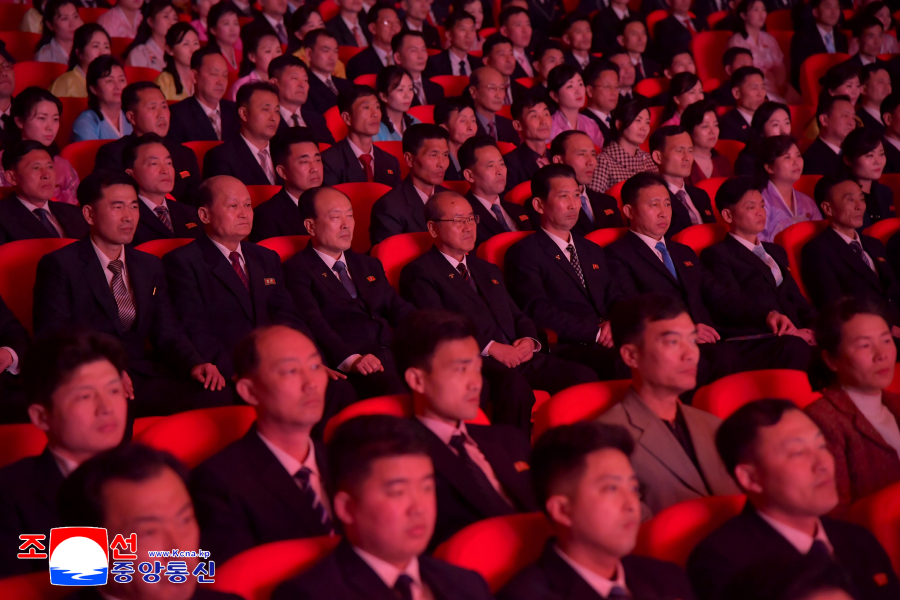
Party and government officials characterized the upcoming congress as “a significant milestone for our party and the development of the revolution,” emphasizing that it will establish new strategic objectives and guidelines intended to advance what state media describe as an era of “relentless creation and transformation.” Such language suggests that the leadership intends to frame the congress not merely as a routine quinquennial review, but as a forward-looking inflection point in policy direction.
Delegates began assembling in Pyongyang on February 16, where they were welcomed by senior party secretaries, including Ri Hyo-yong, Kim Tok-hun, and Choe Dong-myong. Earlier, on February 8, North Korea announced that the Ninth WKP Congress—tasked with setting the state’s policy line for the next five years—would convene in “late February.”
In North Korea’s political system, where the WPK exercises supremacy over all state institutions, the party congress represents the highest decision-making authority. The Ninth WKP Congress is expected to evaluate policy implementation over the past five-year cycle and articulate strategic priorities for domestic governance, economic management, defense policy, and external relations for the next planning period.
Anticipated Convening of the Supreme People’s Assembly
Attention is now turning to the likelihood that the Supreme People's Assembly (SPA) will convene shortly after the congress concludes. Historically, SPA sessions have followed WPK congresses in relatively short order to formalize and codify party decisions into state law.
Under the North Korean constitution, the SPA is designated the “highest organ of state power,” vested with the authority to amend the constitution, enact legislation, and appoint or elect key state officials, including the cabinet premier and members of the State Affairs Commission. In practice, however, the SPA functions primarily to institutionalize decisions already determined by the WPK leadership.
Precedent supports expectations of sequential convening. In 2021, the SPA met five days after the Eighth Party Congress adjourned. In 2016, the SPA convened approximately 50 days following the Seventh Party Congress. Given this pattern, a similar procedural sequence following the Ninth Congress would be consistent with past practice.
A complicating factor is that delegates to the 14th SPA were elected in March 2019, and their formal five-year term has technically expired. Observers assess that elections for the 15th SPA may have been deferred to synchronize institutional cycles between party and state organs. Consequently, elections for new SPA deputies could precede—or coincide with—the first SPA session following the congress.
Should this occur, the inaugural session of the 15th SPA would likely ratify the policy decisions adopted at the Ninth Party Congress and proceed with appointments and personnel adjustments within state organs, including the cabinet, to ensure policy implementation.
Leadership Titles and Constitutional Status
One focal point of analysis concerns whether the SPA might further elevate the formal status of Kim Jong Un, Chairman of the State Affairs Commission (SAC). Speculation has emerged regarding the potential revival of the title “chairman” in a form analogous to that historically associated with Kim Il-sung.
Following Kim Il-sung’s death, North Korea designated him “Eternal President” and eliminated the presidency as an active office. Kim Jong-il subsequently led state affairs as Chairman of the National Defense Commission, while Kim Jong Un has served as Chairman of the State Affairs Commission since institutional reforms in 2016.
Since September 2024, North Korean state media have increasingly referred to Kim Jong Un as the “head of state,” prompting debate over whether additional constitutional revisions might formalize or expand this designation. Proponents note that the constitutional definition of “head of state” substantially overlaps with the authority historically associated with the chairman position.
Counterarguments emphasize that constitutional amendments in 2019 already transferred the state-representative function from the Chairman of the SPA Standing Committee to the Chairman of the State Affairs Commission, explicitly stipulating that the latter “represents the state.” From this perspective, the legal framework already consolidates head-of-state authority in the SAC chairman, rendering titular revisions unnecessary.
Supporting this interpretation, the December 2024 issue of The Worker, North Korea’s leading journal on political theory, asserts that the SAC chairman exercises “sole leadership over the entire state apparatus and all state affairs,” including supreme command authority over the armed forces. This language reinforces the view that Kim Jong Un’s head-of-state role has already been institutionally consolidated.
Institutionalization of the “Hostile Two-State” Policy
Another significant issue concerns the potential constitutional codification of North Korea’s recently articulated “hostile two-state” policy toward South Korea.
In December 2023, Pyongyang declared a fundamental shift in inter-Korean policy, defining South Korea as an “enemy state” rather than a partner in national reunification. The leadership subsequently signaled its intention to institutionalize this policy shift in law. However, despite constitutional amendments adopted in October 2024, the revised preamble and related provisions have not been publicly released in full, leaving the precise legal changes unclear.
It remains possible that the Ninth Party Congress will first incorporate the hostile two-state doctrine into party regulations, after which the SPA could formalize corresponding constitutional revisions. Such changes might include the modification or removal of longstanding references to “national reunification” and the Korean “nation,” as well as the introduction of new provisions clarifying territorial jurisdiction, airspace, and maritime claims in a manner consistent with a hardened inter-Korean posture.
According to one official from a state-affiliated research institute, the process may unfold sequentially: justification in the party congress work report, consolidation in the WPK charter, and subsequent enactment through constitutional amendment at the SPA. If so, the period immediately following the Ninth Party Congress could mark a consequential phase in North Korea’s institutional restructuring of both leadership authority and inter-Korean policy.
-
PREV [NK Focus]
-
NEXT [North Korea Inside]