

North Korea Inside
· Kim Jong-un Attends Tree-Planting Event and Observes 600mm Multiple Rocket Launcher Test with Daughter Ju-ae
· Can North Korea-China Tourism Take Off?
· Kim Jong-un Visits Construction Site of Memorial Hall for Russian Soldiers

Kim Myong-sung
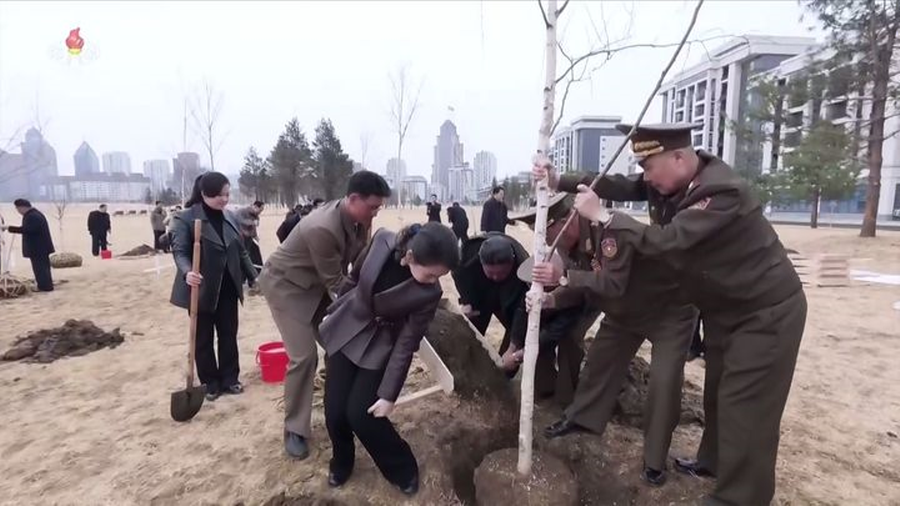
North Korea appears to be emphasizing its treatment of, and support for, troops deployed to the war in Ukraine as a means of underscoring the legitimacy of its involvement and reinforcing internal cohesion.
North Korean media further reported that Chairman Kim Jong-un, accompanied by his daughter Ju-ae, observed a live-fire drill involving 600mm ultra-precision multiple rocket launchers on the same day. KCNA stated that the long-range artillery units of the Korean People’s Army’s Western District conducted the drill the previous day, mobilizing twelve 600mm ultra-precision multiple rocket launchers and two artillery companies. This activity has been interpreted as a response to the ongoing “Freedom Shield” (FS) joint military exercises between South Korea and the United States, which commenced on March 9.
Following the recent resumption of passenger train services between North Korea and China after a hiatus of approximately six years, Chinese travel agencies have begun marketing group tour packages to North Korea.
While there are expectations that tourism may resume amid signs of expanding bilateral exchanges, North Korean authorities have not indicated any intention to reopen the sector, resulting in divergent assessments regarding the viability of these packages. Ultimately, observers note that the final decision rests with Pyongyang.
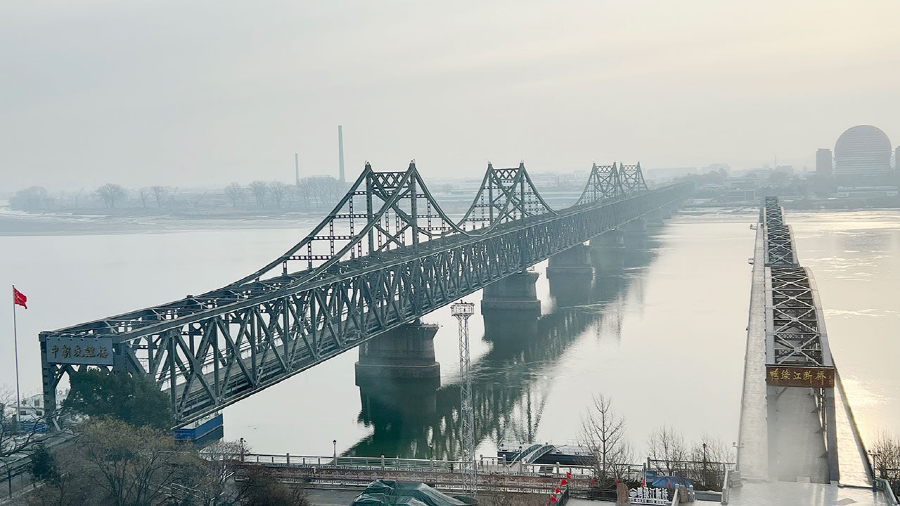
According to the Chinese travel industry on March 18, agencies in major cities, including Beijing, have recently promoted North Korean tour packages on social media platforms such as Douyin, the Chinese version of TikTok, and have begun accepting deposit payments.
One such package includes departure from Beijing, rail entry into North Korea, and visits to Pyongyang, Kaesong, the Demilitarized Zone (DMZ), and Mount Kumgang. Most itineraries span seven nights and eight days, with prices ranging from 4,680 to 9,380 yuan (approximately 1.01 million to 2.02 million won).
However, travel agencies note that departure dates remain “subject to confirmation following approval by North Korean authorities,” underscoring the uncertainty surrounding the actual resumption of tourism. While reservations are being accepted, implementation remains contingent on Pyongyang’s decision.
This development has drawn attention as it coincides with indications of resumed passenger rail services between North Korea and China. International passenger trains connecting Pyongyang and Beijing, as well as Dandong and Pyongyang, resumed operations on March 12.
Although the resumption of rail services is seen as a signal of expanding people-to-people exchanges and increases the prospects for tourism reopening, North Korea continues to maintain a cautious posture.
Notably, North Korea abruptly canceled the Pyongyang International Marathon, scheduled for April 5, despite completing participant recruitment and collecting participation fees last year. Since the Pyongyang Marathon has served as a flagship tourism event—attracting hundreds of foreign participants annually and generating significant foreign currency revenue—the cancellation underscores North Korea’s continued reluctance to fully reopen to international tourism.
At the same time, signs of a broader restoration in North Korea–China relations are emerging. North Korea has taken steps to strengthen ties with China, including reinstating the position of KWP International Secretary at the Ninth Party Congress last month and appointing Kim Song-nam to the Political Bureau. On March 15, it also hosted a friendship event at the Wonsan-Kalma Coastal Tourist Zone, inviting Chinese Ambassador Wang Yajin and other officials, signaling its intent to enhance bilateral relations.
North Korea–China relations, which had cooled somewhat amid Pyongyang’s closer alignment with Russia, appeared to recover following Chairman Kim’s attendance at China’s Victory Day commemorations last September. Nevertheless, subtle tensions have persisted. The publication of Chairman Kim’s reply letter to General Secretary Xi Jinping on the front page of Rodong Sinmun on March 10, immediately after the Ninth Party Congress, has prompted speculation that bilateral relations may be entering a renewed phase of stabilization.
Kim Jong-un Visits Construction Site of Memorial Hall for Russian Soldiers
North Korean State Affairs Commission Chairman Kim Jong-un has once again visited the construction site of a memorial hall dedicated to Russian soldiers, marking his third inspection of the facility this year.
The memorial hall, currently under construction in North Korea, is nearing completion and is scheduled for inauguration next month.
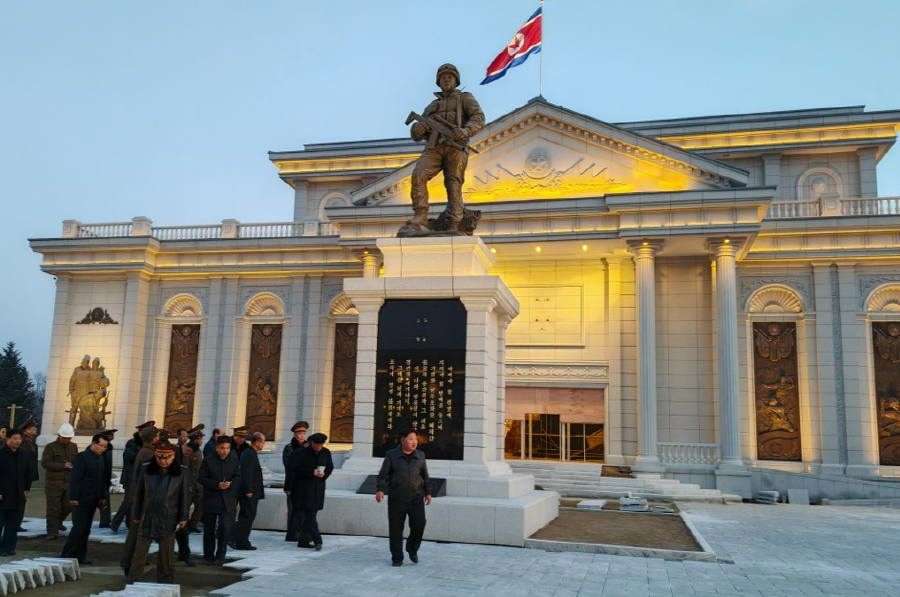
The Korean Central News Agency reported on March 17 that Chairman Kim, while providing on-site guidance at the construction site of the Memorial Hall for Military Merits in Overseas Operations the previous day, stated, “The Memorial Hall will be completed to mark the first anniversary of the liberation of Kursk.”
According to the report, construction is approximately 93 percent complete.
On April 27 of last year, the Central Military Commission of the Workers’ Party announced in a statement transmitted through North Korean media that “the operation to liberate the Kursk region has been victoriously concluded.” In light of this timeline, the memorial’s completion ceremony is expected to take place at the end of next month.
North Korean forces deployed abroad participated in the Kursk liberation operation. Kursk, located in southwestern Russia near the Ukrainian border, was partially occupied by Ukrainian forces in August 2024 before being recaptured by Russian troops. North Korean forces are assessed to have played a significant role in Russia’s recapture of the region last April.
The scale of casualties remains a key concern. Reports indicate that approximately 6,000 North Korean soldiers were killed or wounded during the Kursk operation. The North Korean leadership belatedly disclosed the deployment last April and subsequently undertook measures to manage domestic sentiment, including holding a state funeral. Chairman Kim’s repeated visits to the memorial site and to the residences of bereaved families are widely interpreted as efforts to underscore that the leadership continues to recognize and commemorate these sacrifices.
-
PREV [NK Focus]
-
NEXT [NK Focus]