

North Korea Inside
· Kim Il-sung University Renames Its “Department of Information Science” as the “Department of Artificial Intelligence”
· Kim Jong-un Oversees Test of Carbon-Fiber Solid-Fuel Engine for ICBMs
· North Korea–China Air Route Resumes After Six-Year Suspension

Kim Myong-sung
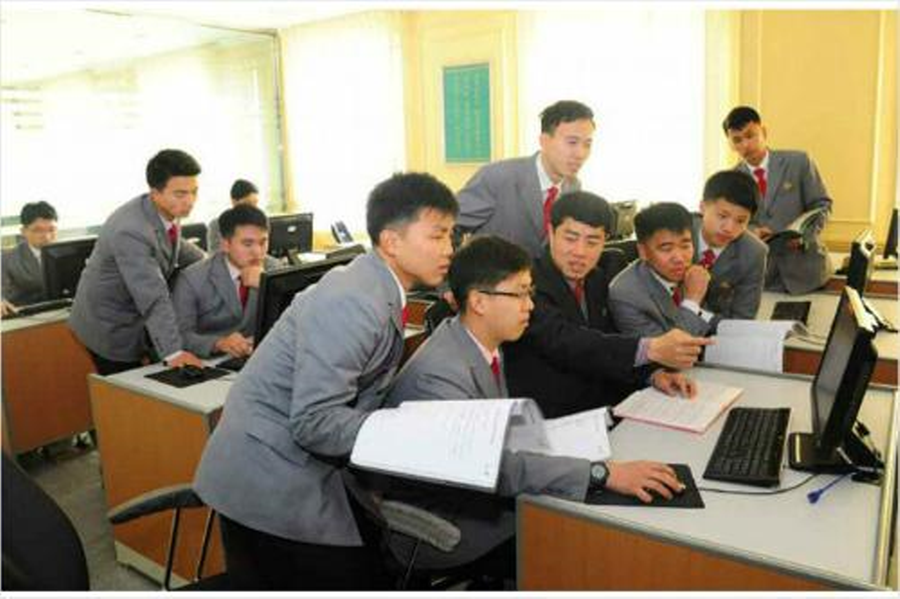
According to the university’s official website, the reorganization took place in July of last year. The newly restructured Faculty of Artificial Intelligence comprises departments specializing in artificial intelligence, information science, information and communications, and programming.
The university states that the faculty’s core mission is to support the country’s information industry and AI sector by training highly qualified specialists capable of designing and developing operating systems, AI software, and a wide range of applications. It also aims to play a leading role in advancing cutting-edge software development and promoting the informatization and intelligentization of key sectors of the national economy.
To support these objectives, the faculty oversees seven affiliated research institutes, specializing in intelligent science, visual information processing, natural language processing, Internet of Things (IoT) technologies, information security, information management, and AI technologies.
The curriculum prominently features courses such as “Deep Learning Applications,” “Machine Learning,” “Data Mining,” and “Cloud Computing,” reflecting a deliberate effort to align with global technological trends, albeit expressed in localized terminology.
North Korea has also been expanding AI education at earlier levels. In January, an “integrated elementary–middle–high school” reportedly established an AI education laboratory equipped with educational robots and modern instructional facilities, with plans to provide phased training in AI technologies. In November of the previous year, Kim Myong-il, a senior researcher affiliated with the university’s AI faculty, was recognized as an “Outstanding Information Technologist” for developing an intelligent medical service system.
North Korea’s engagement with AI dates back to the 1990s. The Go-playing AI program “Eunbyeol,” developed beginning in 1997, won multiple World Computer Go Championships. More recently, the “Ryongnam-san 5.1” translation program, unveiled in 2017, demonstrated the ability to translate specialized English texts across more than 30 academic disciplines into Korean. Since then, AI applications have expanded into education, exhibitions, and public services, including 24-hour pharmacy operations in Pyongyang.
At the same time, North Korea’s AI development appears closely linked to military applications, particularly in the nuclear domain. Academic publications by North Korean researchers have highlighted the use of reinforcement learning in war-gaming simulations and AI-based optimization techniques for nuclear reactor management.
External assessments, including those by the Stockholm International Peace Research Institute and the James Martin Center for Nonproliferation Studies, indicate that North Korea is applying AI across a broad spectrum of areas, including cyber operations, unmanned systems, surveillance, and nuclear infrastructure management.
Given these developments, South Korea has begun pursuing countermeasures, including the advancement of AI-enabled manned–unmanned integrated operational concepts and the redesign of military systems to incorporate AI-based combat capabilities.
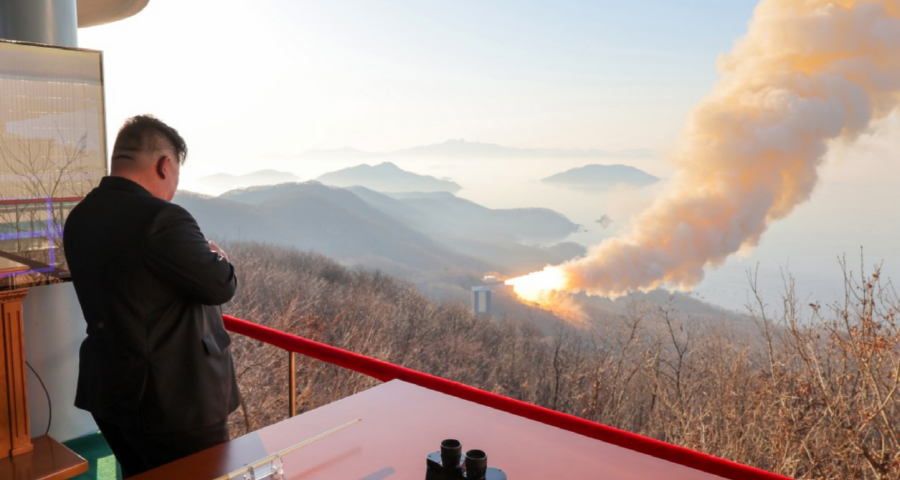
North Korea has conducted a test of a carbon-fiber-based solid-fuel engine designed for intercontinental ballistic missiles (ICBMs), in the presence of Kim Jong-un, highlighting ongoing efforts to modernize its strategic strike capabilities.
According to the Korean Central News Agency, Kim observed a ground-based static firing test of a high-thrust solid-fuel engine incorporating carbon composite materials. The engine reportedly achieved a maximum thrust of 2,500 kilonewtons, representing a significant improvement over previous models.
The system is believed to be intended for integration into the Hwasong-20 ICBM currently under development, and forms part of a broader five-year defense development plan focused on enhancing strategic deterrence capabilities.
Kim characterized the test as a major step forward in strengthening national defense, emphasizing the importance of advancing both the qualitative and quantitative aspects of strategic forces. He also indicated that weapons development would accelerate further through the adoption of technologically advanced and cost-effective components.
In parallel, Kim inspected the performance of a new main battle tank’s active protection system, which reportedly demonstrated full interception capability against anti-tank weapons during testing. He also observed training activities of special operations forces, including the public unveiling of female personnel—an unusual development that may carry both military and symbolic significance.
Taken together, these developments reflect North Korea’s ongoing emphasis on modernizing military capabilities across multiple domains, while simultaneously leveraging technological advancements—including AI—to enhance operational effectiveness and strengthen strategic deterrence.
North Korea–China Air Route Resumes After Six-Year Suspension
Direct commercial air service between China and North Korea has resumed after an approximately six-year hiatus, signaling a gradual normalization of bilateral transportation links. According to China Central Television, an Air China flight (CA121) departed Beijing Capital International Airport on March 30 en route to Pyongyang, marking the first such service since operations were suspended in early 2020 due to the COVID-19 pandemic.
The Beijing–Pyongyang route (CA121/CA122) is scheduled to operate once weekly. Flight CA121 departs Beijing at 8:05 a.m. (China Standard Time) and arrives at Sunan International Airport at approximately 11:00 a.m. (North Korean Standard Time), with a flight duration of roughly 1 hour and 55 minutes. The return flight, CA122, departs Pyongyang at 12:00 p.m. and arrives in Beijing at 12:55 p.m. Ticket prices are reported to be around 2,000–2,100 yuan for economy class and 5,800–5,900 yuan for business class.
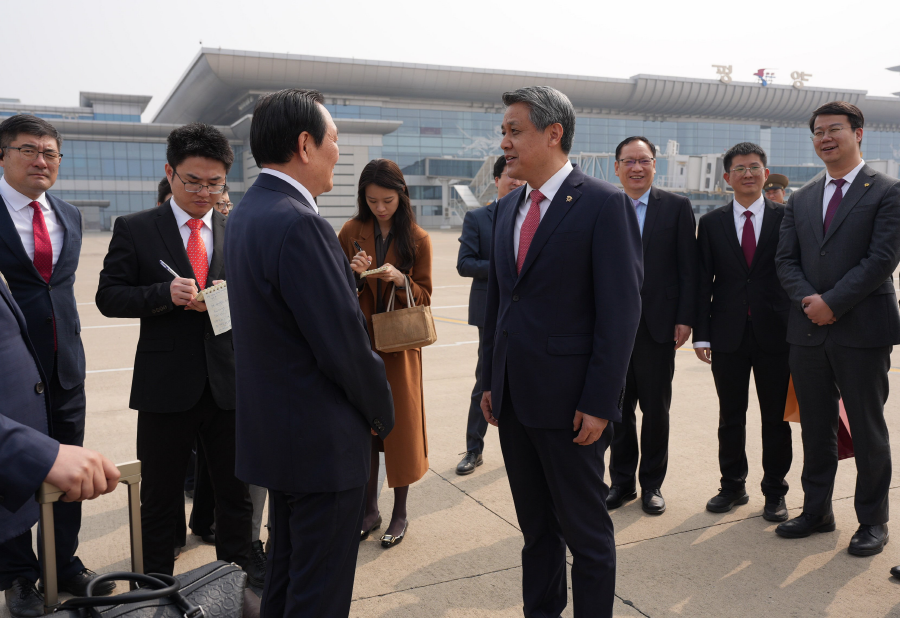
China Central Television (CCTV) described the resumption as a “restoration of air connectivity” between the two countries. The move follows the reopening of cross-border rail service on March 12, signaling a broader trend toward the phased normalization of transportation links and limited people-to-people exchanges between Beijing and Pyongyang.
The reopening was accompanied by a diplomatic gesture. According to the Chinese Embassy in Pyongyang, Ambassador Wang Yajun was present at Sunan Airport to greet arriving passengers, alongside North Korean aviation officials. Wang described the resumption of flights as a “symbolic milestone” in bilateral aviation cooperation, highlighting its potential to facilitate exchanges in trade, culture, and personnel movement. He further noted that land, rail, and air routes between the two countries have now all been restored.
Despite these developments, uncertainties remain regarding the sustainability of regular operations. Reports indicate that bookings for upcoming flights are not yet fully available through airline channels, raising questions about passenger demand. It also remains unclear whether additional Chinese carriers will resume service to Pyongyang.
Meanwhile, the Ministry of Foreign Affairs of the People’s Republic of China offered only a general response when asked whether the resumption of flights would lead to the lifting of restrictions on Chinese tourism to North Korea. At a regular press briefing, spokesperson Mao Ning reiterated that China and North Korea are “friendly neighbors,” noting that the restoration of passenger flights would help promote people-to-people exchanges, but provided no further specifics.
Overall, the resumption of direct air service represents a cautious yet symbolically significant step toward restoring pre-pandemic connectivity between China and North Korea. However, broader normalization will remain contingent on passenger demand and policy decisions regarding cross-border movement.
-
PREV [NK Focus]
-
NEXT [North Korea Inside]