


North Korean Trends, October 2026
Defense Modernization, Renewed Engagement with China, and Persistent Inter-Korean Tensions Along the Border

Seung-hyun Lee
Ph.D. in Public Administration
Research Fellow
SAND Research Institute
In October 2026, North Korea continued to modernize its military capabilities and strengthen operational readiness while reinforcing regime cohesion under the leadership of the Workers’ Party of Korea (WPK), particularly in connection with the Party’s 81st founding anniversary. On the diplomatic and economic fronts, the opening of the New Yalu River Bridge and Kim Jong-un’s visit to Dandong, China, signaled renewed efforts to strengthen the transportation, logistics, and economic infrastructure supporting North Korea–China relations.
Military developments during the month included intermediate-range ballistic missile launch drills, the inauguration of the Museum of the Defense Revolution, a conference of military company commanders, and demonstrations involving unmanned aerial systems and 600mm multiple rocket launchers. Meanwhile, inter-Korean relations remained strained, as Kim Yo-jong issued a series of strongly worded statements criticizing South Korea and Pyongyang continued to reinforce its border fortifications.
Six major developments characterized North Korea’s activities in October: (1) increased emphasis on military affairs in Kim Jong-un’s public engagements; (2) the expansion of defense modernization efforts beyond weapons development to include operational deployment, military readiness, and combat effectiveness; (3) efforts to strengthen command effectiveness and organizational discipline through the military company commanders’ conference; (4) renewed development of transportation and logistics infrastructure to support North Korea–China relations; (5) efforts to reinforce regime cohesion and highlight defense-industrial achievements in conjunction with the WPK’s 81st founding anniversary; and (6) continued confrontational rhetoric toward South Korea and heightened tensions along the inter-Korean border.
1. Kim Jong-un’s Public Activities: A Growing Emphasis on Military Affairs
Preliminary assessments indicate that Kim Jong-un made ten public appearances in October, compared with nine in September. Of these, two were political engagements (20 percent), four were military-related activities (40 percent), two concerned economic affairs (20 percent), and two involved social or public events (20 percent).
In September, Kim’s military-related engagements included the commissioning of the destroyer Kang Gon, inspections of defense-industrial production facilities, and tests of major new weapons systems. This emphasis continued in October, with activities involving intermediate-range ballistic missile launch exercises, the inauguration of the Museum of the Defense Revolution, the military company commanders’ conference, and demonstrations of unmanned aerial technologies and 600mm multiple rocket launchers.
A notable feature of October was the close timing of the museum’s inauguration and the company commanders’ conference. The former highlighted North Korea’s defense-industrial accomplishments, while the latter focused on strengthening operational readiness at the unit level.
Taken together, these developments suggest a shift in emphasis from September’s focus on defense production and weapons testing toward a broader effort in October to showcase military achievements, reinforce command structures, and enhance the operational effectiveness of frontline units.
2. Defense Modernization: From Weapons Development to Operational Deployment and Combat Readiness
The central feature of North Korea’s military activities in October was the simultaneous promotion of strategic weapons capabilities, defense-industrial achievements, and improvements in operational readiness, particularly through the integration of unmanned systems and artificial intelligence into military planning.
On October 3, North Korea conducted an intermediate-range ballistic missile launch exercise in the eastern part of the country. During the exercise, Kim Jong-un emphasized the reliability and destructive potential of the country’s strategic strike capabilities.
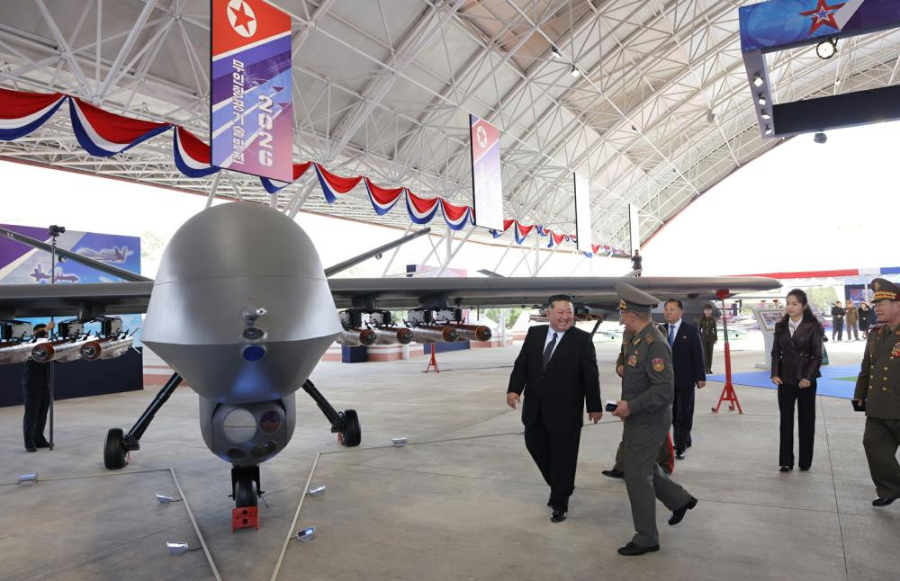
At the October 11 inauguration of the Museum of the Defense Revolution, Pyongyang showcased various strategic weapons systems and highlighted what it described as major achievements in indigenous defense technology and production.
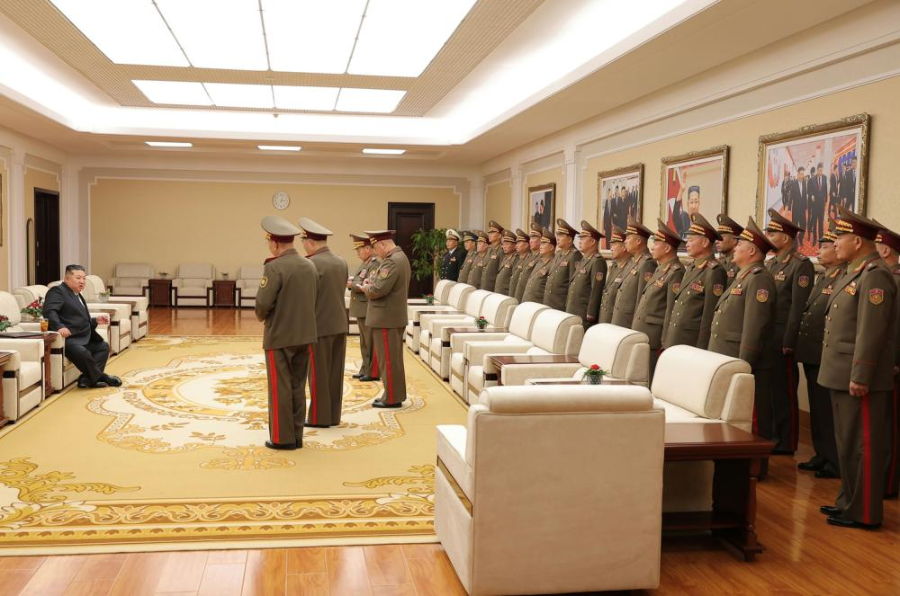
On October 24, the military held its Third Company Commanders’ Conference, at which Kim emphasized the responsibilities of company-level commanders and the importance of maintaining combat readiness at the tactical level.
These activities were followed on October 29 by the Unmanned Aerial Technology Development–2026 exhibition and demonstrations involving 600mm multiple rocket launchers. The events highlighted North Korea’s growing emphasis on integrating artificial intelligence into unmanned weapons systems and enhancing their operational capabilities.
Taken together, these developments point to a broader sequence of military modernization: inspections of defense-industrial production facilities in September, testing of new weapons systems, public displays of military capabilities in October, and renewed emphasis on command effectiveness and combat readiness.
This pattern suggests that North Korea’s defense modernization efforts are extending beyond the development of individual weapons systems to encompass industrial production capacity, operational integration, the incorporation of unmanned and AI-enabled technologies, and improvements in unit-level combat effectiveness.
3. Military Company Commanders’ Conference: Strengthening Command Effectiveness and Operational Readiness
On October 24, North Korea convened the Third Korean People’s Army Company Commanders’ Conference in Pyongyang. Kim Jong-un attended the gathering and emphasized the responsibilities of company commanders in strengthening discipline, improving training, and maintaining combat readiness. On October 27, he took part in a commemorative photo session with the conference participants.
The conference appears to have served several purposes: communicating the military leadership’s strategic priorities to lower-level command structures, reinforcing accountability among company commanders, and enhancing the ability of tactical units to implement operational directives.
Its significance is particularly evident in the context of Pyongyang’s broader efforts to translate the military modernization objectives articulated following the Ninth Congress of the WPK into tangible improvements in operational readiness.
In September, following changes in the military leadership, Kim conducted a series of inspections of defense-industrial facilities and observed tests of newly developed weapons systems.
His subsequent emphasis in October on company-level leadership and unit readiness suggests that Pyongyang is seeking to align advances in military technology with improvements in organizational effectiveness, command discipline, and combat capabilities.
The conference thus represents an important organizational component of North Korea’s defense modernization strategy, complementing its continued investment in advanced weapons systems.
4. North Korea–China Relations: Expanding Transportation and Logistics Connectivity
On October 15, the New Yalu River Bridge connecting North Korea and China opened to traffic, an event officially reported by North Korean media the following day.
The bridge provides an additional road link between Sinuiju and Dandong, complementing existing rail connections and potentially expanding the capacity for cross-border trade, logistics, and people-to-people exchanges.
On October 24, Kim Jong-un visited Dandong, where he toured the Memorial Hall of the War to Resist U.S. Aggression and Aid Korea and met with Wang Huning, Chairman of the Chinese People’s Political Consultative Conference. Kim also visited a local bus manufacturing facility and inspected the New Yalu River Bridge.
Taken together, these developments suggest that North Korea and China are seeking to strengthen the physical infrastructure underpinning bilateral economic engagement.
A comparable pattern has emerged in North Korea’s relations with Russia, where the opening of a cross-border road bridge in September marked a further step toward institutionalizing transportation and logistics cooperation.
Against this backdrop, the opening of the New Yalu River Bridge may signal a shift from the diplomatic reaffirmation of North Korea–China ties toward more tangible economic and logistical cooperation.
Nevertheless, the bridge’s broader economic significance remains uncertain. Its actual impact will depend on developments in freight volumes, customs procedures, cross-border transportation, and the extent to which bilateral trade expands in practice.
The coming months will therefore be critical in determining whether improved infrastructure translates into a sustained expansion of economic exchanges between the two countries.
5. The Workers’ Party’s 81st Founding Anniversary: Reinforcing Regime Cohesion and Highlighting Defense Achievements
On October 10, North Korea held a commemorative performance marking the 81st anniversary of the founding of the WPK. Kim Jong-un attended the event with his wife, Ri Sol-ju, and his daughter, Kim Ju-ae.
The following day, Pyongyang inaugurated the Museum of the Defense Revolution, showcasing domestically developed weapons systems and what the regime portrayed as major achievements in strengthening the country’s defense capabilities.
The close timing of these events suggests an effort to link the Party’s political leadership with advances in military technology and defense-industrial production.
By linking the Party’s founding anniversary with the public presentation of military achievements, the leadership appears to be reinforcing a narrative in which defense modernization serves as evidence of the Party’s effectiveness and the legitimacy of its rule.
The Museum of the Defense Revolution is also likely to serve as a permanent institutional platform for showcasing defense-industrial achievements and reinforcing the regime’s political and ideological messaging.
Another noteworthy development was Kim Ju-ae’s continued presence alongside her father at major public events, including those associated with the military and the Party’s founding anniversary.
Her repeated public appearances have drawn attention to the possibility that she may eventually succeed her father. However, participation in public events alone does not provide sufficient evidence to establish a definitive succession arrangement.
A more reliable assessment will require continued monitoring of the frequency and nature of her public appearances, any formal titles or institutional responsibilities she may assume, and changes in how North Korean state media portray her political status.
6. Kim Yo-jong’s Confrontational Rhetoric Toward South Korea and Persistent Border Tensions
Inter-Korean tensions remained elevated in October following a September 21 landmine explosion in the western sector of the Demilitarized Zone that injured three South Korean soldiers.
North Korea continued to emphasize the fortification of what it describes as its southern border, while the two Koreas maintained sharply divergent accounts of developments along the Military Demarcation Line.
On October 8 and 9, Kim Yo-jong issued statements criticizing South Korea’s proposed humanitarian assistance to the North. She subsequently addressed developments along the border in statements released on October 19 and 21.
These statements reflected Pyongyang’s continued rejection of engagement with Seoul and its determination to maintain a confrontational posture toward South Korea.
The combination of physical border fortifications, heightened military activity, and increasingly hostile rhetoric suggests that tensions stemming from the September landmine incident remained unresolved throughout October.
More significant than any individual statement, however, is the broader sequence of developments: the reinforcement of physical barriers along the border, increased activity near the MDL, the landmine incident and competing claims of responsibility, and subsequent confrontational statements and warnings of potential retaliation.
This pattern raises concerns about the risk of miscalculation and unintended military escalation, particularly in areas where the two militaries operate in close proximity.
Accordingly, continued monitoring of border construction, troop movements, warning measures, and changes in military posture will be essential to assessing the risk of further incidents.
The absence of effective military communication channels further underscores the need for crisis-management mechanisms to prevent localized incidents from escalating into broader military confrontations.
North Korea’s activities in October 2026 reflected a continued emphasis on military modernization, operational readiness, and the consolidation of political authority, alongside efforts to strengthen economic and logistical connectivity with China.
Whereas September was characterized primarily by defense-industrial production, weapons testing, and tighter control over border areas, October saw a broader approach encompassing the public showcasing of military achievements, improvements in tactical command and operational readiness, and the advancement of unmanned and AI-enabled military capabilities.
Conclusion: Defense Modernization, Renewed External Connectivity, and Continued Inter-Korean Confrontation
North Korea’s activities in October 2026 reflected a continued emphasis on military modernization, operational readiness, and the consolidation of political authority, alongside efforts to strengthen economic and logistical connectivity with China.
Whereas September was characterized primarily by defense-industrial production, weapons testing, and tighter control over border areas, October saw a broader approach encompassing the public showcasing of military achievements, improvements in tactical command and operational readiness, and the advancement of unmanned and AI-enabled military capabilities.
On the external front, the opening of the New Yalu River Bridge and Kim Jong-un’s visit to Dandong signaled renewed efforts to strengthen the transportation and logistics infrastructure underpinning North Korea–China relations. Whether these developments translate into a substantial expansion of bilateral economic cooperation will depend on their practical implementation.
At the same time, Pyongyang maintained its confrontational posture toward South Korea, reinforcing border fortifications and issuing statements that further narrowed the prospects for renewed inter-Korean engagement.
Taken together, these developments point to three mutually reinforcing priorities in North Korea’s current strategy: modernizing military capabilities and enhancing operational effectiveness; strengthening external economic connectivity, particularly with China; and maintaining a hardline stance toward South Korea.
Looking ahead to November, several developments warrant close attention: the operational performance of the newly established North Korea–China transportation links; further testing, deployment, and integration of unmanned and AI-enabled military systems; changes in military activities along the inter-Korean border; and the potential for further escalation in rhetoric or military responses by either side.
These indicators will be important in determining whether North Korea’s recent activities represent incremental adjustments within its existing strategic framework or signal a more consequential shift in its military, economic, and inter-Korean policies.