

NK Inside
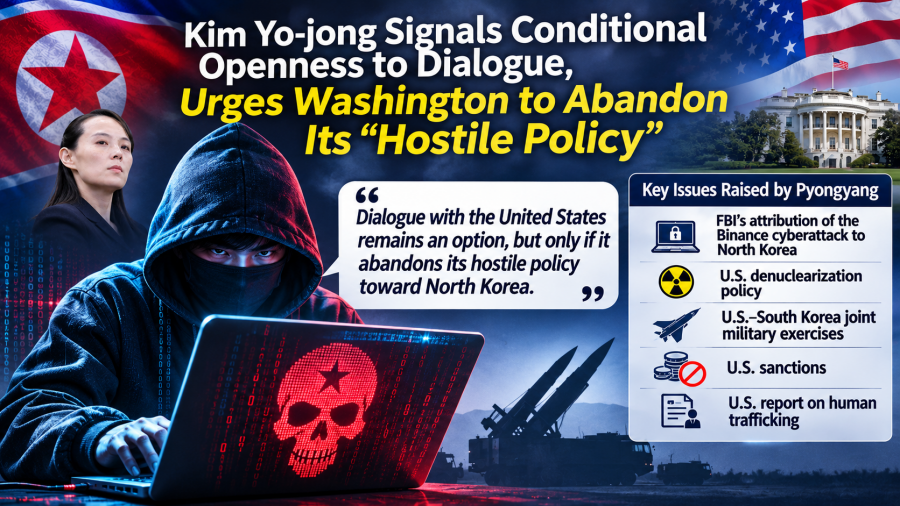
· Kim Yo-jong Signals Conditional Openness to Dialogue, Urges Washington to Abandon Its “Hostile Policy”
· Kim Jong-un Inspects Construction of 10,000-Ton Warship, Calls for Expanded Naval Capabilities
· North Korean Missile Official Warns of “More Powerful Nuclear Capabilities” in Response to U.S.–ROK Iron Mace Exercise

Myongsung Kim
Kim Jong-un, chairman of North Korea’s State Affairs Commission, visited the Nampo Shipyard in South Pyongan Province to inspect the construction of a new large warship and underscore the importance of strengthening the country’s naval capabilities.
The visit comes amid indications that North Korea is pursuing the construction of a 10,000-ton-class cruiser, following the development of its 5,000-ton-class destroyers. Kim’s reported expression of satisfaction with the new vessel, which is believed to be substantially larger than the previously developed destroyers, suggests that Pyongyang is seeking to expand and modernize its surface fleet.
According to the Korean Central News Agency (KCNA), Kim conducted an on-site inspection of the shipyard on November 2, reviewing both its modernization program and progress in the construction of the new warship. Jo Chun-ryong, the Workers’ Party secretary responsible for military-industrial affairs, accompanied him.
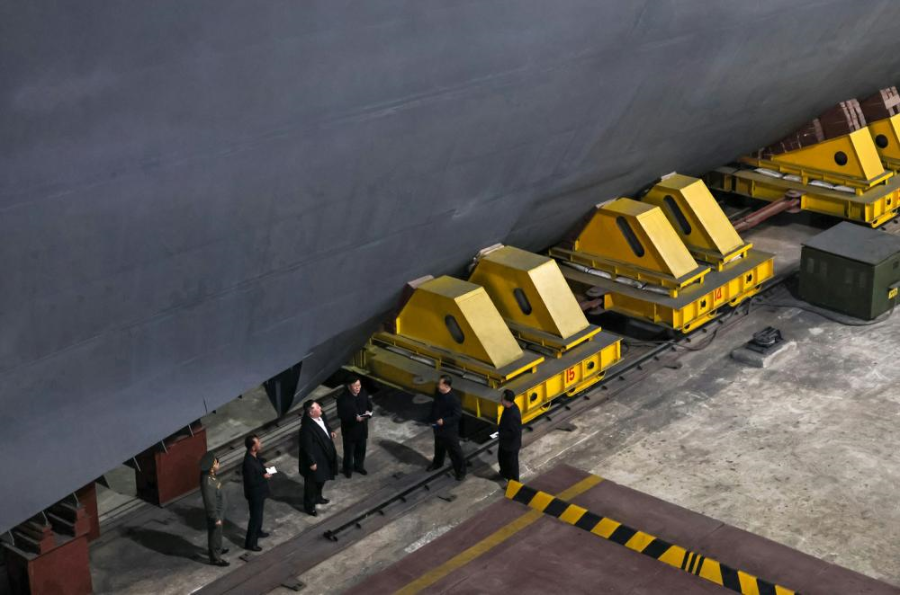
KCNA reported that Kim expressed satisfaction with the vessel’s size and appearance, describing it as significantly more imposing than the destroyer constructed the previous year.
Kim stated that the warship had been designed to carry out complex operational missions, taking into account the history of naval warfare, contemporary military requirements, international trends, and North Korea’s specific strategic circumstances.
He further claimed that the vessel was being developed as a combat platform with operational capabilities unmatched by those of any other country.
North Korea is reportedly constructing both an additional 5,000-ton-class destroyer and a new 10,000-ton-class cruiser at Nampo.
Although North Korean state media did not disclose the vessel’s precise displacement, classification, or weapons configuration, its emphasis on the ship’s substantially larger size has fueled speculation that it may be the anticipated 10,000-ton-class cruiser.
During the inspection, Kim identified naval modernization as a central national security priority. He argued that the rapid expansion of both surface and submarine forces was essential to defending North Korea’s maritime sovereignty amid what Pyongyang perceives as growing regional threats.
He further asserted that the need to overhaul the Navy’s combat capabilities stemmed from changes in the geopolitical environment and the perceived necessity of countering nuclear threats and military pressure from regional adversaries.
These remarks appear intended to frame North Korea’s naval expansion as a response to the military capabilities of the United States and South Korea, as well as broader shifts in the regional security environment.
Kim also reviewed plans to modernize the Nampo Shipyard, directing officials to expand production facilities, increase shipbuilding capacity, and strengthen the industrial infrastructure needed to support a more capable navy.
He emphasized that building a powerful naval force would require advanced shipbuilding facilities and a highly skilled technical workforce. In particular, Kim called for greater automation across the shipbuilding process and the construction of an additional dry dock to facilitate the simultaneous construction and maintenance of warships. He also stressed the importance of recruiting and training specialized technical personnel.
Located near Nampo Port, one of North Korea’s principal commercial ports and a major military-industrial center, the shipyard plays an important role in the country’s efforts to develop larger surface combatants.
North Korea previously announced the deployment of two newly built 5,000-ton-class destroyers, the Choe Hyon and the Kang Gon, to its western and eastern maritime areas, respectively.
The reported development of a 10,000-ton-class warship would mark a further step in Pyongyang’s transition from a navy historically dominated by smaller coastal vessels toward a force equipped with larger, more heavily armed surface combatants.
Nevertheless, the operational significance of these developments will depend not only on the construction of larger vessels but also on the integration of weapons systems, sensor capabilities, crew proficiency, maintenance infrastructure, and the ability to sustain prolonged operations at sea.
North Korean Missile Official Warns of “More Powerful Nuclear Capabilities” in Response to U.S.–ROK Iron Mace Exercise
North Korea has reaffirmed its commitment to expanding its nuclear capabilities in response to Iron Mace, a combined U.S.–ROK nuclear-conventional integration (CNI) tabletop exercise.
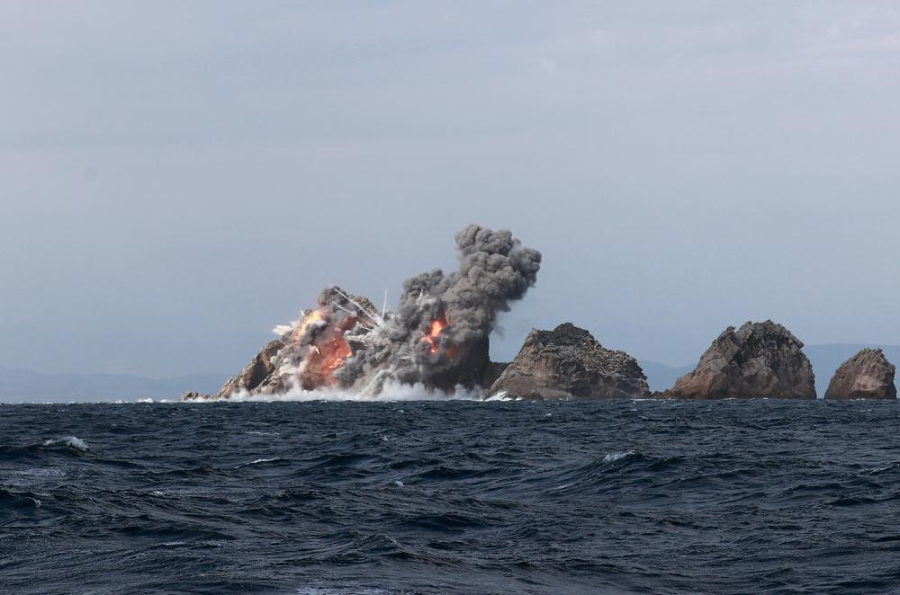
A senior North Korean official characterized the exercise as preparation for nuclear war and warned that Pyongyang would respond by further strengthening its nuclear deterrent.
The statement comes amid a series of North Korean demonstrations involving unmanned attack systems, tactical missiles, and large-caliber multiple rocket launchers, underscoring Pyongyang’s continued efforts to modernize both its nuclear and conventional military capabilities.
On November 2, the Korean Central News Agency (KCNA) reported that Kim Jong-sik, first deputy director of the Military Industry Department of the Workers’ Party of Korea Central Committee and a senior official closely associated with North Korea’s missile development programs, had issued a statement condemning the allied exercise.
Kim characterized Iron Mace as an overt demonstration of preparations for nuclear war against North Korea. He argued that the exercise reflected the persistence of what Pyongyang regards as Washington’s hostile intentions and an increasingly dangerous regional security environment.
According to Kim, U.S. nuclear capabilities and allied military planning reinforced the need for North Korea to expand its own nuclear forces. He maintained that Pyongyang’s efforts to strengthen its nuclear arsenal were justified by what it perceives as the need to counter U.S. nuclear threats.
Kim further warned that North Korea would seek to deter and constrain its adversaries through the development of increasingly powerful nuclear capabilities. The statement also criticized several recent U.S. and South Korean military activities, including South Korea’s annual Hoguk field training exercise and the bilateral Freedom Flag air exercise.
Kim asserted that North Korea would continue to strengthen its nuclear deterrent to protect what it regards as its sovereignty and national security and to safeguard regional stability. He emphasized that Pyongyang had no intention of changing course on its policy of accelerating nuclear force development.
Iron Mace is a bilateral U.S.–ROK tabletop exercise focused on CNI, designed to strengthen coordination between U.S. nuclear capabilities and South Korean conventional forces.
The exercise addresses consultation mechanisms, operational coordination, and potential responses to various crisis scenarios, including the possible use of nuclear weapons by North Korea.
According to South Korea’s Joint Chiefs of Staff, the latest Iron Mace exercise was conducted behind closed doors over four days, from September 29 to October 2. The exercise forms part of broader efforts to implement the guidelines developed through the U.S.–ROK Nuclear Consultative Group in 2024.
Its principal objectives are to strengthen the credibility and operational effectiveness of U.S. extended deterrence commitments, improve bilateral consultation and planning procedures, and clarify the role of South Korean conventional forces in supporting U.S. nuclear operations.
Under the Lee Jae-myung administration, the exercise was not publicly announced in advance, reportedly reflecting sensitivity to North Korea’s likely reaction and the broader security environment on the Korean Peninsula. Nevertheless, Pyongyang’s subsequent condemnation highlights its continued concern over the institutionalization of U.S.–ROK nuclear-conventional integration and the development of more coordinated allied deterrence capabilities.
The statement also came amid a series of North Korean military demonstrations showcasing advances in both strategic and conventional weapons systems. On October 28, during the Unmanned Aerial Technology Development–2026 exhibition attended by Kim Jong-un, North Korea conducted demonstrations involving one-way attack drones, tactical cruise missiles, and 600mm multiple rocket launchers.
These activities reflect Pyongyang’s broader military modernization strategy, which increasingly combines nuclear force development with advances in conventional strike capabilities, unmanned systems, and naval platforms.
The fact that the latest warning was issued by a senior official responsible for military-industrial affairs is particularly noteworthy. Rather than limiting its response to diplomatic condemnation, Pyongyang appears to be linking its criticism of allied military exercises directly to its ongoing efforts to expand its nuclear weapons development and production capabilities.
This approach reinforces North Korea’s longstanding argument that external military pressure necessitates continued investment in its nuclear deterrent. At the same time, the expansion of nuclear-conventional integration within the U.S.–ROK alliance, alongside North Korea’s emphasis on nuclear modernization, underscores the increasingly complex deterrence environment on the Korean Peninsula.
The interaction between allied defense planning and North Korea’s military responses could further complicate efforts to reduce tensions and restore diplomatic engagement.
-
PREV [NK Focus] Defense, China, and Border Tensions
-
NEXT 다음 글이 없습니다.