


Kim Myungsung
◇ Resumption of Nanping-Musan Customs between North Korea and China & a border security guard in Wonjeong-ri seen without quarantine suits
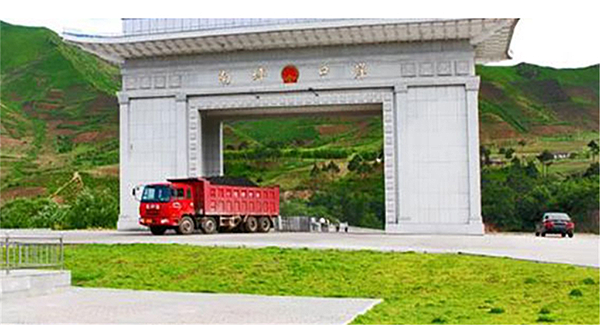
According to North Korean sources on June 22nd, the Nanping-Musan Customs, which connect Nanping in Jilin Province, China, and Musan in North Hamgyong Province, North Korea, reopened on June 20th after a closure of three years and five months. The Nanping-Musan Customs, situated across the Tuman River, had been shut down since the early stages of the COVID-19 pandemic in 2020. As efforts to reopen the border between North Korea and China progress, there are concerns about the potential forced repatriation of over 2,000 North Korean defectors currently held in China.
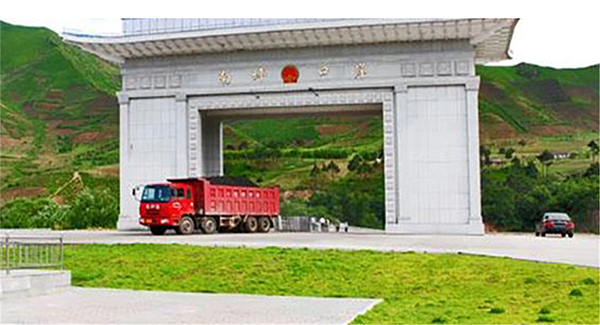
A view of the Jilin Province Helong Nanping Customs in China during the summer of 2019, prior to the outbreak of COVID-19 / Cornerstone Ministries International
According to reliable sources, starting from the 20th of June, freight vehicles transporting essential goods and other commodities have been entering North Korea through the Nanping-Musan Customs. Additionally, there have been reports of freight vehicles observed coming from North Korea and entering China. This development comes after the reopening of the Dandong-Sinŭiju Customs and the resumption of train operations between North Korea and China in March. It seems that land trade has now been resumed through the Nanping-Musan Customs as well.
There have been observations suggesting a possible connection between China's decision to open the Nanping-Musan Customs before the Changbai-Hyesan Customs, Hunchun-Wonjeongri Customs, and Tumen-Onsŏng Customs, and the issue of North Korean defectors. According to a reliable North Korean source, the Nanping-Musan Customs is situated in a relatively secluded area compared to other regions, making it an ideal location for secret defections. The source mentioned that detecting North Korean defectors being transported on buses from the nearby border guard station in Helong is challenging. Reports from the Database Center for North Korean Human Rights and other human rights organizations focused on North Korea indicate that the border guard station in Helong has undergone significant expansion of detention and confinement facilities. Satellite imagery reveals the construction of new fences and buildings in an area that previously only housed a guard post in 2019. During the COVID-19 pandemic, it is estimated that around 2,000 North Korean defectors were held in Chinese facilities, and there are concerns that they could potentially be repatriated gradually through the Nanping-Musan Customs.
There is a potential for a significant increase in the export of iron ore from Bukhansan through the Nanping-Musan Customs. The iron ore deposit at Mount Musan is renowned as the largest open-pit mine in Asia. As per information from a reliable North Korean source, there is a possibility of a complete restoration of trade activities, including the export of iron ore and tourism.
On June 26th, Yonhap News Agency reported an unusual sight at the trade zone in Wonjeong-ri, North Hamgyong Province, near the border with Hunchun, China. Sentinels stationed in the area were observed without wearing quarantine suits. This observation has raised speculation about a potential significant development, particularly regarding the reopening of the North Korean border with China and the resumption of cross-border traffic of individuals.
◇ Following a failed military satellite launch, Kim Jong-un's recent appearance has revealed a puffy face, noticeable pimples, and dark circles.
In a photo released by the Korean Central News Agency on June 19th, North Korea's General Secretary Kim Jong-un was depicted with a noticeably puffy face, dark circles, and prominent pimples on his cheeks. Experts have speculated that these physical manifestations may indicate health issues for Kim Jong-un, possibly linked to stress, sleep deprivation, and excessive alcohol consumption. The Korean Central News Agency shared multiple photos from the Plenary Meeting of the Central Committee of the Workers' Party of Korea, which took place at the Office Building of the Central Committee of the WPK from the 16th to the 18th of the same month. This marked Kim Jong-un's first public appearance since the unsuccessful military satellite launch on May 31st. In the released photos, Kim Jong-un is seen consistently seated, with a slightly lowered head. Notably, a distinct pimple, approximately 1cm in diameter, is visible on his left cheek, while his eye area displays swelling and dark circles.
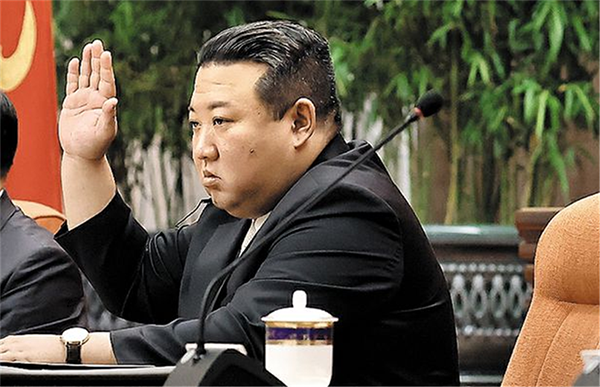
The North Korean Rodong Sinmun published a photograph on the 19th depicting Kim Jong-un, the General Secretary, in attendance at the Plenary Meeting of the Central Committee of the Workers' Party of Korea held in Pyongyang from the 16th to the 18th. In the image, his face appears visibly puffy, with noticeable pimples on his cheeks. /Rodong Sinmun
According to a reliable source, despite the media agency's efforts to carefully select a favorable photo of Kim Jong-un looking active and in good health, the noticeable physical changes still suggest that his well-being is not in a good state. Additionally, the National Intelligence Service recently reported in the National Assembly that Kim Jong-un has been suffering from worsening insomnia and relying on heavy alcohol consumption, including whiskey, due to work-related stress. His estimated weight is believed to be around 140kg.
After analyzing the enlarged facial photo of Kim Jong-un, a dermatology professor at a university hospital in Seoul offered insights into the observed features. The appearance of facial pimples in a man of Kim Jong-un's age, around 39, is typically associated with the exacerbation of existing acne. However, considering that Kim Jong-un did not previously have acne, it is likely caused by an increase in stress hormones. As for the dark circles, the professor mentioned that they can be a temporary condition resulting from compromised liver function, fatigue and lack of sleep, which can lead to impaired blood circulation and dilated blood vessels.
Following the failure of the military satellite, which Kim Jong-un had emphasized as a crucial project, there has been speculation about the increased stress he may be experiencing due to the impact on his prestige. The second stage engine's failure to function properly after the first stage separation likely contributed to this heightened stress. While Kim Jong-un did attend the Plenary Meeting of the Central Committee of the Workers' Party of Korea, it was noteworthy that he did not deliver a direct speech, which is a departure from his usual practice.
◇ Kim Jong-un pushes for reckless missile development, resulting in accidents: TEL for ICBMs burns, military satellite crashes
In the wake of North Korea's unsuccessful military reconnaissance satellite launch on May 31st, reports have emerged of previous accidents, including the burning of the Transporter Erector Launcher (TEL) during the launch of the 'Hwasong-17' intercontinental ballistic missile (ICBM) in November of last year. These incidents shed light on North Korea's persistent and misguided pursuit of its nuclear and missile capabilities since last year.
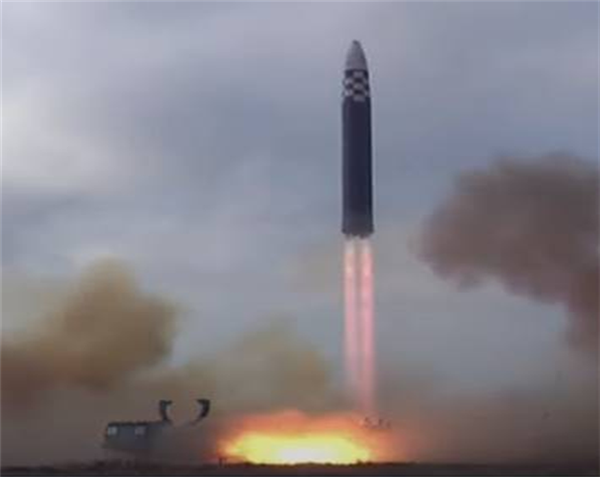
The image depicts a vehicle, identified as the TEL (Transporter Erector Launcher), engulfed in flames during the launch of the 'Hwasong-17' ICBM on November 18th, 2022 / by Korean Central Television.
In a video released by Korean Central Television on November 19th of last year, flames can be seen engulfing the rear portion of the TEL, marked as 'No. 321', during the test launch of the 'Hwasong-17' intercontinental ballistic missile. The flames from the missile launch entered beneath the TEL, resulting in the majority of the vehicle being consumed by fire. Speculation suggests that insufficient fire protection measures may have contributed to the burning of the TEL.
Ten days later, on November 27th of last year, Kim Jong-un awarded the title of "Hero of the Republic" to the TEL marked as 'No. 321' used for the 'Hwasong-17' missile launch. A commemorative photo was taken with officials and the TEL receiving the title. However, in Kim Jong-un's photo, the TEL with the caption 'No. 322' can be seen, suggesting that the original 'No. 321' TEL suffered a malfunction during the ICBM launch and was replaced by the 'No. 322' TEL.
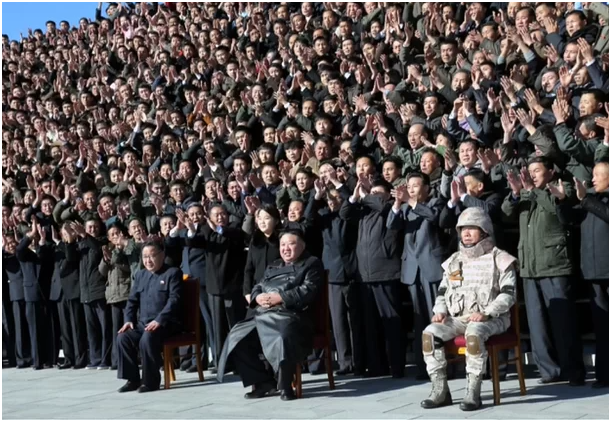
Kim Jong-un, Chairman of the State Affairs Commission of North Korea, posing for a commemorative photo with the individuals who contributed to the 'Hwasong-17' ICBM launch on November 27th, 2022. Interestingly, the photo features the TEL marked as 'No. 322' instead of the expected 'No. 321'. / Korean Central Television, Yonhap News Agency
After a three-month repair period, the TEL 'No. 321' made a reappearance on February 8th of this year during the Military parade held to commemorate the 75th anniversary of the Military Foundation Day.
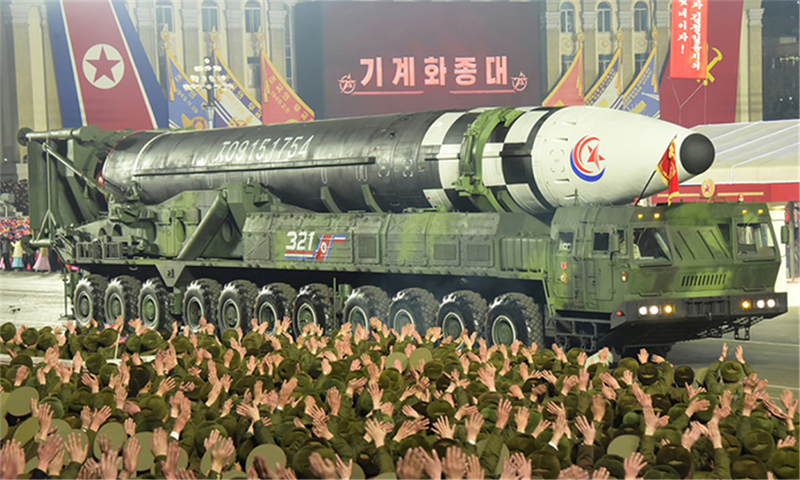
The TEL 'No. 321', which previously launched the 'Hwasong-17' ICBM, made a prominent reappearance during the Military parade commemorating the 75th anniversary of the Military Foundation Day on February 8th, 2023. The TEL was seen with the ICBM loaded, showcasing its capabilities. / Rodong Sinmun
Cho Han-bum, Senior Research Fellow at the Korea Institute of National Unification, stated, "Even during last year's flight training, North Korea experienced multiple crashes and accidents, such as TELs catching fire." He added, "Due to Kim Jong-un's impatience, accidents occurred as they pushed forward recklessly in a situation with technical limitations."
The fact that North Korea awarded the title of Hero of the Republic to the TEL is believed to be due to the successful improvement in the mobility of ICBMs, which were previously launched only from Pyongyang International Airport with an asphalt runway. The launch on November 18th last year also took place in the Sunan District, but the location was slightly different from previous launches. There is speculation that it was launched near the Pyongyang-Nampho highway to demonstrate greater mobility capabilities
-
PREV [Analysis]
-
NEXT [NK Focus]