

Fair Play:
Ban North Korea, a Non-Compliant Anti-Doping Nation, from Asian Games
The 19th Asian Games are scheduled to take place from September 23 to October 8, 2023, in Hangzhou, Zhejiang Province, China. This marks North Korea's return to the international sports stage after the COVID-19 pandemic-induced break. However, their participation has raised concerns about their compliance with anti-doping regulations. Criticism has emerged, questioning the decision to allow North Korea, a country in violation of anti-doping rules, to showcase its flag during the games.
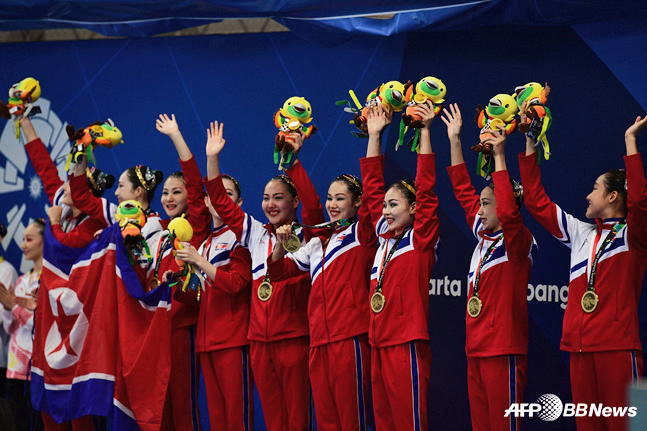
<Photo> The North Korean team at the XVIII Asian Games Jakarta-Palembang 2018 /AFPBBNews>
According to the official Olympic Council of Asia website, North Korea has confirmed the participation of 191 athletes in the XIX Asian Games. The North Korean delegation arrived in China in multiple groups, with around 60 athletes traveling to Dandong, China, on the 15th and then flying to Hangzhou. On the 18th, another group of around 20 athletes boarded a bus from Sinŭiju to Dandong, China. It is expected that North Korea will send additional athletes using the same route before the games' opening. North Korea is reportedly competing in football (soccer), swimming, and dragon boat racing events.
This marks North Korea's return to the international sports stage after closing its borders during the COVID-19 pandemic. Previously, North Korea refrained from participating in the Games of the XXXII Olympiad™ Tokyo 2020, citing 'COVID-19' as the reason. Consequently, the International Olympic Committee (IOC) suspended the National Olympic Committee (NOC) qualifications of North Korea until 2022, and their participation in the Olympic Winter Games Beijing 2022 was canceled. However, this year, with the suspension lifted and North Korea's active interest in participating, they expressed their intent to join.
Nevertheless, North Korea's participation in the Asian Games has been receiving mixed reactions from the international sports community and South Korea. Critics argue that North Korea's designation as non-compliant with anti-doping regulations undermines the spirit of international sports. The World Anti-Doping Agency (WADA) designated North Korea as non-compliant in October 2021, citing the DPRK National Anti-Doping Organization's (NADO) failure to testing athletes for banned substances.
North Korea has a notorious reputation in the international sports community for chronic doping offenses. Notable instances include North Korean shooter Kim Jong-su, who won bronze and silver medals at the Games of the XXIX Olympiad Beijing 2008 but was disqualified and expelled due to a positive doping test. The North Korean women's soccer team faced doping suspicions at the 2011 FIFA Women's World Cup Germany. Flagship weightlifter Kim Un-guk, who won gold and silver medals at the 2015 World Championships, also had his medals revoked due to a positive doping test.
As a result of these doping violations, North Korea faced restrictions under the World Anti-Doping Code. Although they briefly regained compliance status in July 2019, they were once again designated as non-compliant within two years.
Nations labeled as frequent doping offenders encounter various limitations when participating in international sports competitions. They become ineligible for financial support from WADA, and with the exception of the Olympics and Paralympic Games, they could face restrictions on their participation in sporting events.
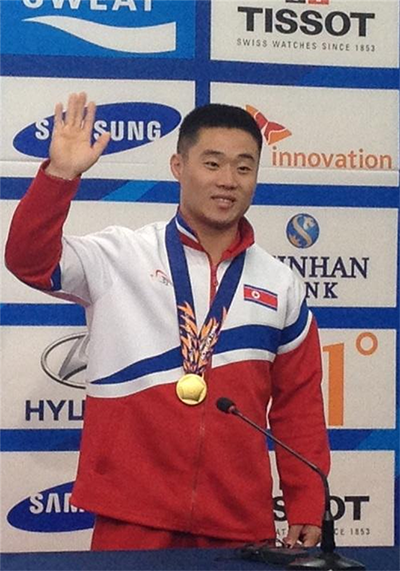
<Photo> Kim Un-guk, North Korea's celebrated weightlifter, clinched one gold and two silver medals at the 2015 World Championships. However, these honors were revoked following a positive doping test.
North Korea's participation in the Hangzhou Asian Games is seen as primarily for propaganda purposes, using flag-raising on the international sports stage. International sports events provide North Korea, a nation stigmatized by the international community due to nuclear development and human rights issues, with official opportunities to display its national flag.
Doping, involving the use of prohibited substances, constitutes a serious violation of the fundamental principles of fair play in sports. It tarnishes the dedication and relentless training of diligent athletes. Allowing North Korea, a country that doesn't adhere to anti-doping standards, to display its flag at the Hangzhou Asian Games could be viewed as an 'unjust decision' within the realm of international anti-doping standards, potentially establishing a worrisome precedent for future situations.