


North Koreans Immersed in Smartphone Games... Rise of 'Smombies' in the North

Jung Chung-sin
Senior Reporter at Munhwa Ilbo
○ KDB Future Strategy Research Institute's Report on "Current Smartphone Game Usage in North Korea"
○ Emergence of "Smombies" (Smartphone + Zombie) Phenomenon in North Korea

'Imjin War 1.0,' a strategic mobile game developed by North Korea's Daeyoung Information Technology Exchange Center. (Photo by Yonhap News)
It has come to light that smartphone and tablet-based games are gaining popularity in North Korea. While smartphone gaming is expected to expand further, especially among North Korean youth, there are anticipated limitations due to regulatory constraints and technological challenges within the country.
According to a report titled "Recent Trends in Smartphone Game Usage in North Korea," released by KDB Future Strategy Research Institute's Development Finance Research Center on the 2nd, the number of smartphone and tablet PC users in North Korea has been steadily increasing since the 2010s. Recently, residents have been enjoying a variety of games, starting with the pre-installed games on these devices.
Statistics show that 28% of North Korea's total population, and over 70% in major cities, are now using mobile phones. Tablet PCs, assembled within North Korea using imported parts from China, have gained popularity, particularly among residents in cities like Pyongyang, for their easy charging and portability.
In North Korea, games are distributed by smartphone and tablet PC manufacturers, who pre-install applications on these devices. The majority of these games are puzzle-based or simple arcade games such as chess and checkers. While North Korea does produce some games domestically, most of them are actually unauthorized adaptations of popular foreign games.
Several game development companies are also actively engaged in game production. They sell apps through "Information Technology Exchange Centers," and North Korea's own app store called "Naui Gildongmu," and on their own websites, offering paid content.
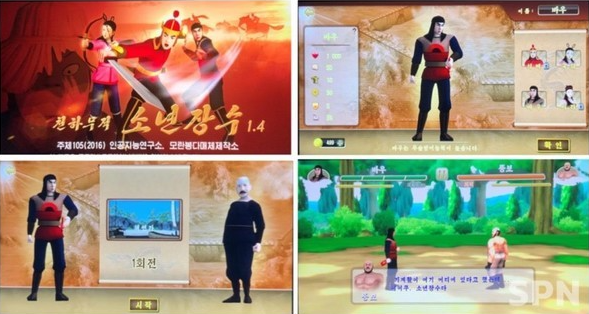
An action game titled 'Invincible Boy Jangsu 1.4.' (Photo by Seoul Pyeogyang News, SPN)
While North Korea had previously prohibited games involving multiple players, Bluetooth-based games and games that allow multiple users to participate directly through websites have become increasingly common. With the continued growth in smartphone and tablet PC usage among residents, and a rising generation that is increasingly comfortable with technology, the proliferation of smartphone gaming in North Korea seems inevitable.
Qualitative development of locally produced games in North Korea faces limitations due to technological constraints, copyright awareness gaps, and online gaming restrictions. According to KDB Future Strategy Research Institute, North Korea's smartphone game development is unlikely to see significant improvement as it does not align with the global trend of allowing games with unspecified multiple participants online.
On the other hand, it's been reported that North Korean residents engage in multiplayer gaming using Bluetooth functionality on their mobile phones. There are dozens of game genres available, and some residents are known to enjoy games with paid downloadable content (DLC).
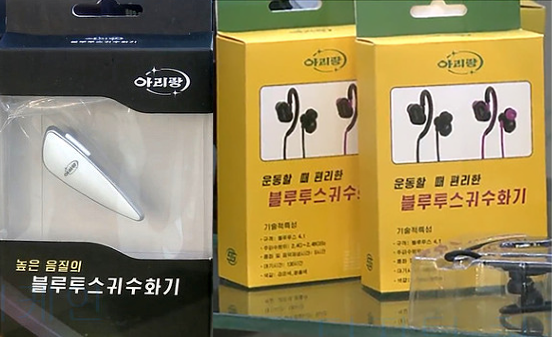
Arirang Bluetooth earphones – They use Bluetooth 4.1, operate on the 2.4GHz band, and provide 5 hours of playback time with 130 hours of standby time.
Daily NK, quoting a Pyongyang insider from last September, stated, "There are around 30 collective entertainment options using Bluetooth, including horse racing, car racing, Tetris, fishing, shooting, space exploration, and school trip." They also mentioned that it's possible to have group games within a single classroom or a room within a 10-15 meter radius. Notably, among North Koreans, car racing is popular among teenagers, space exploration among those in their twenties, horse racing among those in their thirties, and fishing games among those in their forties.
North Korea is actively promoting smartphone adoption and is focusing on developing a variety of applications, particularly in the gaming sector. These gaming apps are reportedly gaining significant popularity among North Korean residents who use smartphones. Some residents are willing to pay for additional downloadable content (DLC) to enjoy a broader range of games. DLC refers to items, clothing, episodes, and more that can be installed separately from the base game. The gaming industry uses DLC to generate additional revenue, and North Korean authorities are also seen capitalizing on this through DLC sales.
Amid the growing popularity of smartphone games in North Korea, social issues have emerged.
According to reports, North Korean teenagers are constantly engrossed in their phones, even when crossing roads, riding buses to visit historic sites, or attending lectures at these sites. Their phone obsession often leads them to overlook adults they encounter. This phenomenon, known as "Smombies" (a portmanteau of the words "smartphone" and "zombie"), has also emerged in North Korea. Insiders have noted that women in their thirties and forties sit in Jangmadang, playing phone games when their merchandise isn't selling or during their free time. They frequently discuss their gaming preferences, and the trend is to adopt the latest entertainment as hobbies.