

Facing Currency Shortfalls, North Korea Still Funds Espionage Against the South
"Remember when North Korea's payouts to spies were generous, often reaching figures like $20,000 or $50,000? Now, it's a mere $7,000. What's behind this drastic drop?"
"The word on the street is that North's espionage division is feeling the pinch too. They're seemingly skimming off the top of the funds they receive from central authorities and handing over only the remnants to their agents."
On October 6th, at a seminar commemorating the 27th anniversary of the diplomat Choe Deok-geun, jointly organized by the Korea University College of Political Science and Economics, the Korea Association of National Intelligence Studies (KANIS), and the National Spirit Preservation Propagation Association, former National Intelligence Service (NIS) investigators who investigated spies and North Korean operatives sat together for a discussion. The key figures were Dr. Jang Seok-guang, the Secretary-General of KANIS, who had served as a former NIS investigator, and Dr. Kim Dong-sik, a former North Korean operative.
The seminar served as a poignant tribute to diplomat Choe Deok-geun's unwavering patriotism and dedication to his nation. Assassinated in Vladivostok, Russia, in 1996, he fell victim to North Korea's covert operations. Beyond the commemoration, the event sought to pull back the curtain on North Korea's clandestine espionage activities directed at the South. At the time of his tragic demise, Choe wasn't just any diplomat; he played a dual role, collecting intelligence for North Korea while stationed at the Russian Far East Consulate General. Additionally, he held a significant position with the National Security Planning Agency, which would later evolve into the National Intelligence Service (NIS).
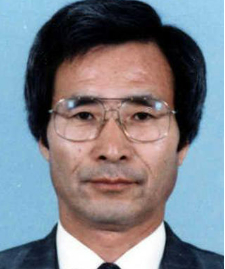
Diplomat Choe Deok-geun
Diplomat Choe Deok-geun stands out as one of the rare figures publicly acknowledged on the 'Unsung Heroes' memorial, a tribute to martyrs of the National Intelligence Service (NIS). On the night of October 1, 1996, after a quiet dinner out, Choe met his tragic end on the stairwell of his own apartment building. Despite the untouched money and passport at the scene, which led Russian police initially to suspect personal vendettas or political terrorism, the subsequent autopsy told a more sinister story. Traces of 'Neostigmine bromide', a chemical synonymous with the poison-tipped pens wielded by North Korean agents, were discovered in his system. This alarming finding shifted suspicions towards North Korean foul play. It's believed by South Korean intelligence that at the time of his demise, Choe was delving into North Korea's illicit activities, specifically counterfeiting of US dollars and drug operations, potentially marking him as a prime target for North Korean spy agencies.
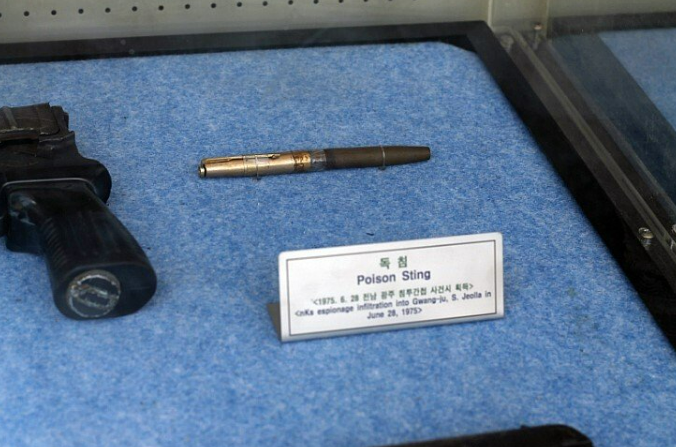
Jang Seok-guang, Secretary-General of the Korea Association of National Intelligence Studies (KANIS), voiced a heartfelt tribute, remarking, "We will eternally honor the unwavering patriotism and commitment of those who dedicated themselves to the nation and its citizens." The discussion took a chilling turn when Dr. Kim Dong-sik, once a North Korean operative, disclosed that during his 1995 operations in South Korea, he was armed with three poison-tipped pens and a handgun. Dr. Kim highlighted the lethal potential of these instruments, stating, "Such pens can take down a target from as far as 5 meters." While he admitted to using the handgun during his tenure, he noted that he never found occasion to deploy the poison-tipped pens, which were reserved for specific assassination assignments.
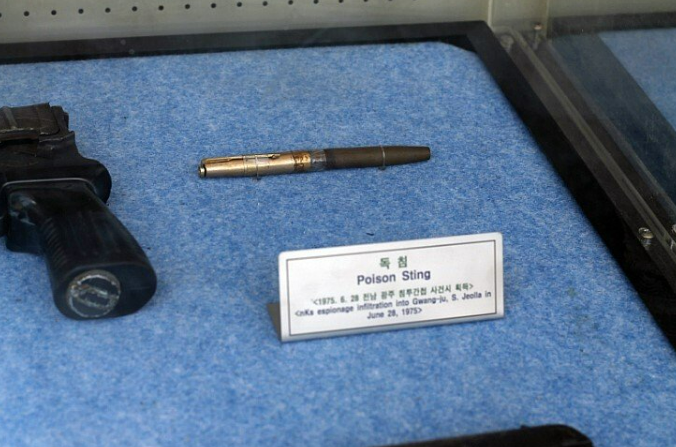
Poison Sting, a poison-tipped pen used by North Korean spies
He graduated from the 'Kim Jong Il Political Military University,' a North Korean espionage training institution, and was sent to South Korea on multiple occasions. From 1981 until the year just before his assassination in 1995, Choe Deok-geun conducted espionage activities in South Korea.
In May 1991, he was tasked with intercepting and repatriating a key South Korean spy, Lee Sun-sil, during the first wave of South-North repatriations. He was also responsible for capturing and recruiting activist figures who were active within the country, subsequently forming an underground organization within the WPK. He succeeded in recruiting some activist figures into the WPK, and he returned to North Korea along with Lee Sun-sil. For these achievements, he was awarded North Korea's highest honor, the title of "Hero of the Republic."
Five years later, in September 1995, he was sent back to South Korea during the second wave of South-North repatriations. His mission included safely repatriating the already-infiltrated South Korean spy, codenamed 'Bonghwa 1,' and recruiting key figures from the pro-South Korean faction to build an underground organization. He attempted to contact and recruit seven activist figures in South Korea, but he failed to convince them to join the WPK. On October 24th, while attempting to intercept 'Bonghwa 1,' he engaged in a shootout with undercover police and NIS investigators at the 'Jeonggak Temple' in Buyeo County, Chungcheongnam-do, and was subsequently arrested.
During the height of the Cold War, North Korea often dispatched specially trained operatives directly from Pyongyang to spy on South Korea. Nowadays, the narrative has shifted: it's believed North Korea is more inclined to nurture sympathizers within South Korea. Their spy network strategy has transitioned from the overt 'direct infiltration and stationary spies' model to a more discreet 'global espionage' approach, orchestrating covert groups within South Korea from far-flung locales like China and Southeast Asia. The United Front Department of the WPK keeps a close eye on anti-government and left-leaning forces in South Korea and focuses on recruiting them in third countries. The Cultural Exchange Bureau of the United Front Department is responsible for these operations, operating independently but still under the umbrella of the United Front Department, and receiving direct guidance from Kim Jong-un. Their primary mission involves recruiting South Korean individuals under the guise of 'cultural exchange' for the purpose of restoring ethnic solidarity.
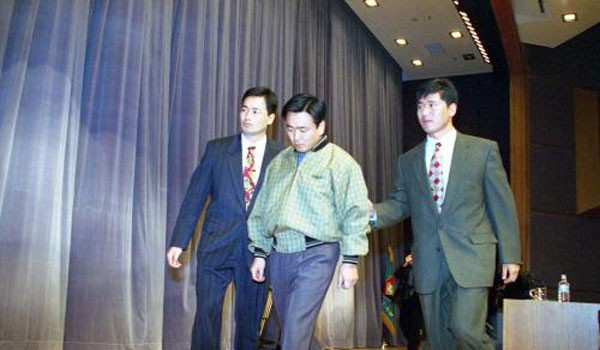
North Korean spy Kim Dong-sik (center), who was arrested in Buyeo, Chungcheongnam-do in 1995, leaving a press conference with NIS officials. / Source: the Government Archives
In March, the South Korean Public Prosecutor's Office revealed that members of a spy ring in Changwon had been recruited by North Korea's Cultural Exchange Bureau of the United Front Department (UFD). These individuals had engaged in espionage activities from March 2016 to November 2022 in Cambodia and other locations, meeting with UFD-affiliated operatives five times during that period. After pledging allegiance and submitting loyalty oaths, they received espionage funds totaling $7,000 (approximately 9.2 million KRW) and carried out activities related to regime change and other objectives. They received more than 20 directives from North Korea between August 2018 and 2022.
Lee Do-geon, a North Korean defector who had previously worked for North Korea's Ministry of State Security and entered South Korea in 2020, stated in a lecture that "North Korea's espionage against South Korea is becoming increasingly sophisticated." He mentioned that espionage funds can now be paid in either US dollars or cryptocurrencies. North Korean espionage agencies are known to establish cryptocurrency accounts in foreign countries like China and Russia to transfer espionage funds to their agents. He explained that North Korea continues to provide espionage funds to its agents even in the midst of a foreign currency shortage because their overseas espionage aims at destabilizing the Republic of Korea.
He also revealed that North Korea's espionage efforts against South Korea are increasingly taking the form of psychological warfare in the cyber space. He stated, "Four North Korean agencies, including the UFD, Cultural Exchange Bureau of UFD, Reconnaissance General Bureau, and Naval Reconnaissance Bureau, conduct psychological warfare against South Korea both online and offline under the goal of 'Complete Victory on the Korean Peninsula.'" He added, "They produce articles strongly critical of South Korea's conservative forces, the United States, Japan, and other Western countries, while thoroughly reflecting the assertions of the North Korean regime, including Kim Jong-un."
In 2020, Kim Jong-un directed an enhancement of external propaganda through new media channels. Lee Do-geon analyzed this as an attempt to manipulate public opinion and steer South Korea's political situation in North Korea's favor by distorting public sentiment. Recently, to maximize the effects of propaganda, North Korea has been aggressively using global platforms such as Twitter and YouTube, which are more accessible to younger generations, to fuel internal conservative factionalism and boost anti-Japanese sentiment.
Participants at the seminar highlighted the importance of remaining vigilant. Given Kim Jong-un's aggressive pursuit of nuclear and missile development, they anticipate a range of espionage activities targeting both domestic and overseas South Korean communities.