

What North Korean Women Mean to North Korean Leaders
November 16th is celebrated as 'Mother's Day' in North Korea. While South Korea observes 'Parents' Day' to honor both parents, North Korea specifically dedicates a day to mothers. This tradition was established in 2012 during Kim Jong-un's first year in power, and this year marks the 11th celebration of 'Mother's Day.' Interestingly, North Korea now has two holidays dedicated to women, with International Women's Day on March 8th being the other one.
However, despite appearances, North Korea's treatment of women does not necessarily reflect genuine respect. Women in North Korea hold minimal political status and are often burdened with substantial responsibilities and sacrifices. They may be tasked with supporting their households or mobilized for labor on construction sites, especially during times of economic hardship. This discrepancy between the holiday's image and the reality has led North Korean women to refer to Mother's Day as the 'Day of Tears' and describe themselves as 'slaves' due to these challenges.
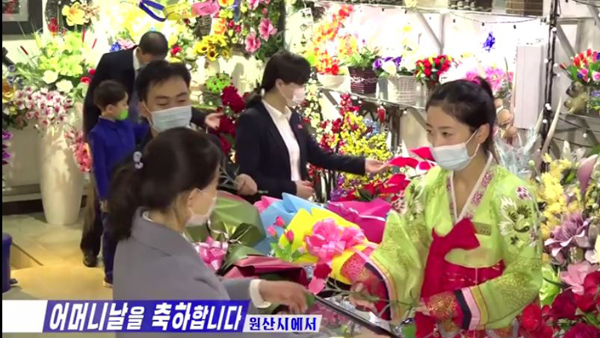
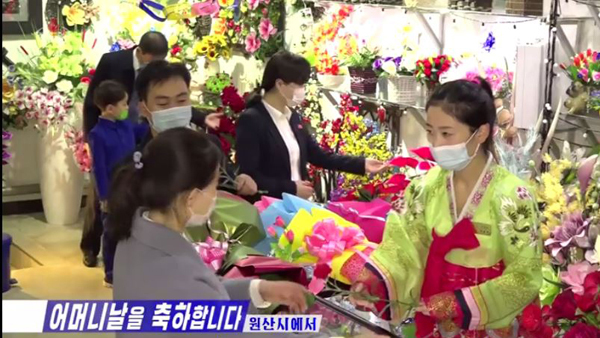
On November 16, 2022, North Korean women were photographed purchasing flowers to celebrate Mother's Day. (Photo by Korean Central Television)
What is the "real" reason North Korea portrays itself as caring for women by creating national holidays dedicated to them? Since the inception of Mother's Day in 2012, it has been used to promote Kim Jong-un's policies, ostensibly showcasing his respect for women. North Korean media publishes articles emphasizing the happiness of North Korean women on International Women's Day or Mother's Day. Through these narratives, North Korea aims to deflect external criticism regarding the actual state of women's rights within the country, often highlighting alleged violations of women's rights in capitalist countries to promote anti-capitalist propaganda.
North Korea's efforts to showcase respect for women serve multiple purposes. One objective is to bring women engaged in livelihood activities in Jangmadang (markets) under government control and encourage them to contribute to public life. Another motivation is to address the declining birthrate issue. According to the U.S. Central Intelligence Agency (CIA), North Korea is facing challenges related to low birthrates and an aging population, and the situation is deteriorating. Data from the 'World Factbook' in March revealed that North Korea's total fertility rate, which indicates the number of births per woman over her lifetime, dropped from 1.9 births in 2022 to 1.89 births, ranking 126th in the world. The crude birth rate, representing the number of births per 1,000 women, also decreased by 0.15 births compared to the previous year, reaching 14.06 births and positioning North Korea among the countries with the lowest birth rates, ranking 120th globally.
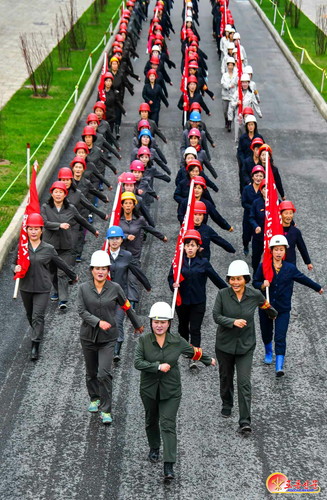
On November 8, 2023, the North Korean newspaper Rodong Sinmun featured a report on women construction workers who were mobilized for apartment construction in Pyongyang City. These women, numbering in the hundreds, have been organized into 20 work teams and are actively participating in construction activities. (Photo by Rodong Sinmun)
North Korea has given the designation of "Mother Heroine" to women with multiple children, actively promoting childbirth. However, North Korean media seldom addresses the role of men in relation to childbirth and child-rearing, indicating a lack of awareness about gender equality.
While North Korea's Socialist Constitution of the Democratic People's Republic of Korea (Article 77) emphasizes that "women have equal rights and status as men," discrimination against women exists in all aspects of North Korean politics, society, education, and even within households. According to the Ministry of Unification's "2023 White Paper on Human Rights in North Korea," North Korean women have lower university enrollment rates compared to men, and there is a prevailing social atmosphere where men are prioritized in terms of party membership, promotions, and job placements.
In photos from North Korea's 8th Congress of the Workers' Party of Korea and the Supreme People's Assembly held in January 2021, women are scarcely visible. In photos from the 1st City and County Party Secretaries' Training Session held in March of the same year, women are entirely absent.
Violence against women is also a serious issue in North Korea. One North Korean defector stated, "My husband used to beat me when he drank, and I reported it once, but they said there were no regulations for such cases and told us to resolve it within the family. In North Korea, many men use violence against women, with approximately 70-80% of households experiencing such violence."
Sexual violence is a disturbingly common issue in North Korea, occurring in schools, the military, storm trooper units, and detention facilities. Within the military, reports of sexual assault cases involving senior officers or fellow soldiers are distressingly frequent. One account highlights the prevalence of sexual assault by male superiors on female soldiers, emphasizing that female soldiers often feel compelled to comply with the sexual demands of their superiors due to fear of facing difficulties or suffering disadvantages if they refuse.
Additionally, North Korean women are frequently mobilized for manual labor. On November 8, the Rodong Sinmun published a special article titled "Women Construction Workers Contributing Significantly to the Prosperity of the New Pyongyang Era." According to the Rodong Sinmun, hundreds of women are actively engaged in 20 work teams dedicated to the construction of 10,000 households' living quarters in Pyongyang. These female construction workers come from diverse backgrounds, including bank and welfare workers, plasterers, party members, members of the Socialist Patriotic Youth League, and members of workers' unions. They range from young women to middle-aged women. Housewives who moved into the newly built apartments during Kim Jong-un's reign are also among those mobilized for this labor force.
The Rodong Sinmun claims that these women volunteer to work on construction sites to express their gratitude to their leader Kim Jong-un and the WPK. They reportedly organize female construction teams to coincide with July 30, which is the foundation date of the "Day of the Announcement of the Law on Gender Equality." However, defectors have contradicted North Korean media claims, stating that women were forcibly mobilized by the authorities to address labor shortages.
They mentioned that women were actively involved in labor-intensive construction tasks alongside men at the apartment construction site. This included duties such as concrete mixing, carrying various construction materials, and other physically demanding construction work. Lee Si-won, a defector who escaped from Pyongyang in 2020, provided insight, stating, "Women who were mobilized for construction work in Pyongyang were tasked with activities like mixing cement, gravel, and sand for concrete mortar, as well as transporting various construction materials. After completing their work, they would return home in the evening to prepare meals and handle laundry for their husbands and children."
While North Korea emphasizes gender equality and some argue that women's influence has increased due to the activation of Jangmadang and vibrant economic activities, deep-seated structural factors hindering women's human rights persist. These include a long-standing male-centric power structure and a strict bureaucratic system. Moreover, despite referring to women as needing to be cared for and beautiful like flowers, North Korea regulates every aspect of women's lives, from their appearance and clothing to their makeup. This underscores the dire state of women's rights in North Korea.