

● Kim Jong-un Ramps Up Military Exercises in March, Stirring Tensions on Korean Peninsula
● Testimony from a North Korean Defector: “I Fled as I Heard I'd be Sent to Nuclear Bases for Labor”
● North Korea Steps Up Actions to Dismantle Unification Efforts, Designating the DMZ as Its Border
Kim Jong-un Ramps Up Military Exercises in March, Stirring Tensions on Korean Peninsula
North Korean leader Kim Jong-un has been making headlines with his consecutive visits to military firing ranges and strategic training bases since March. With each visit, accompanied by vivid imagery of Kim Jong-un personally handling firearms and overseeing artillery drills, tensions in the region have heightened. This surge in military activity is widely seen as a direct response to the ongoing joint military exercise 'Freedom Shield', conducted by the United States and South Korea since the 4th of this month.
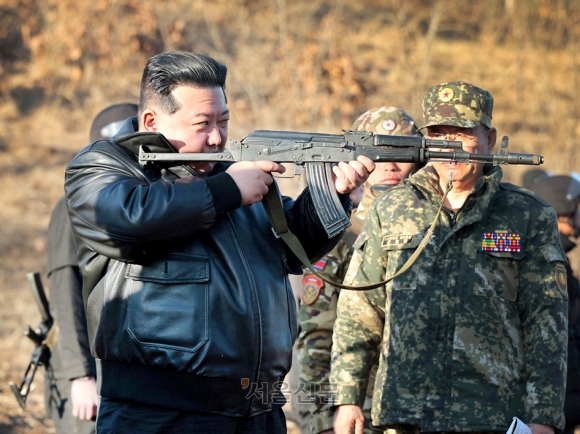
<North Korean leader Kim Jong-un holds a rifle and assumes shooting positions during his visit to a strategic training base in the western region of North Korea on the 6th. /Photo by Korean Central News Agency>
On the 7th, North Korea further intensified its military maneuvers by conducting firing exercises featuring multiple launch rocket systems and self-propelled artillery (SPA) in the vicinity of Nampho City. According to reports from the South Korean Joint Chiefs of Staff, these exercises targeted maritime locations, underscoring the seriousness of North Korea's military posture.
The Rodong Sinmun detailed Kim's personal supervision of these exercises, particularly highlighting the involvement of joint units at the corps level. The newspaper stated, "The training began with a demonstration of power shooting by long-range artillery units near the border line, tasked with a significant military mission to deter war by putting the enemy's capital within striking distance."
The Rodong Sinmun also documented Kim Jong-un's satisfaction with the preparedness and combat readiness displayed by the artillery units involved in the exercises.

<North Korean leader Kim Jong-un supervises joint units' firing exercises as reported by the Korean Central News Agency on the 8th /photo by Korean Central News Agency, Yonhap News Agency>
Kim Jong-un articulated the strategic objectives behind these exercises, emphasizing the importance of setting realistic training goals to empower artillery units to seize initiative swiftly and decisively in potential conflicts. He underscored the need for dynamic and effective training to bolster North Korea's military capabilities and maintain the efficacy of its fundamental nuclear deterrent — its artillery.
Earlier in the month, on the 6th, Kim Jong-un made a visit to a significant operational training base located in North Korea's western region. As reported by Rodong Sinmun, Kim Jong-un emphasized the importance of enhancing practical training to significantly bolster combat capabilities.
He further stressed the importance of vigorously ushering in a new era of strengthening 'war readiness', aligning it with the evolving strategic landscape.
Rodong Sinmun's coverage included images of Kim Jong-un engaging in shooting exercises, followed by depictions of soldiers participating in training activities and commemorative photographs.
North Korea has persistently opposed joint US-South Korean military exercises, denouncing them as "war rehearsals" and reacting strongly, often by launching missiles during exercise periods.
The Republic of Korea Joint Chiefs of Staff affirmed their commitment to combined defense, closely monitoring North Korea's actions during ongoing exercises. They pledged a swift, strong, and definitive response to any provocation.
Testimony from a North Korean Defector: “I Fled as I Heard I'd be Sent to Nuclear Bases for Labor”
A North Korean defector revealed that political prisoners are sent to work in nuclear facilities, facing high radiation risks, rather than typical camps.
Research from the Korea Institute for National Unification (KINU), detailed in "North Korean Residents' Domestic Lives," reveals a woman in her 40s from Pyongyang, identified as A, disclosed that North Korea forces political prisoners to work at nuclear sites.
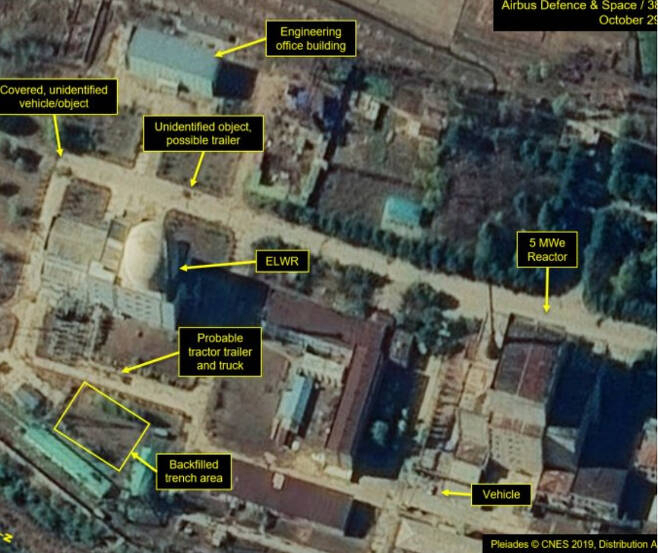
<Nyongbyon Nuclear Scientific Research Center /Photo by 38 North>
North Korean military-run nuclear bases, feared for radiation risks, often see young people dodging conscription despite offered privileges. The woman likened these bases to prisons, noting the universal avoidance due to the harmful effects of radiation on health.
She added that despite parents' reluctance to send their children to such bases, serving five years there—compared to ten in a regular unit—offers university admission and Communist Party membership. However, it's rumored that service leads to death within three years.
The woman, once a doctor leading a stable life in North Korea, chose defection to protect her daughter from being sent to a nuclear base. Following her husband's defection, she and her two daughters faced intense surveillance and after a while, there was the tragic loss of the eldest daughter in an accident. Threatened with her daughter's conscription into the base's harsh conditions, she saw defection as the only way to save her.
In October, the US NGO Human Rights in North Korea (HRNK) indicated that political prisoners might be forced into building and maintaining nuclear test sites. They highlighted satellite images of a 5.2 km dirt road connecting Punggye-ri Nuclear Test Site in Kilju County to Myonggan 16th Concentration Camp as supporting evidence.
HRNK posited that given the sensitive nature of the nuclear test site and the 16th Camp, which held over 20,000 detainees, North Korea may have employed political prisoners for tunnel construction due to their controllability. They further analyzed that the road might serve dual purposes: transporting forced laborers to the site or moving observation equipment there.
North Korea Steps Up Actions to Dismantle Unification Efforts, Designating the DMZ as Its Border
On the 4th, it was confirmed that North Korea, which labels South Korea as its "principal adversary" and the DMZ as the border, has removed articles mentioning unification from its state media, indicating a shift in stance.
The Korean Central News Agency (KCNA) of North Korea removed articles featuring terms like "peaceful unification," "national unification," and "ethnic unity" from its website. Despite being considered taboo now, numerous articles under each term were once accessible.
A report by Kim Yo-jong criticizing President Yoon Suk-yeol’s New Year's address, particularly calling "peaceful unification" a fantasy, was removed from North Korean media.
Articles on the WPK Central Committee's Enlarged Plenary Meeting in December, which mentioned "national unification," disappeared. Previously searchable, their recent deletion this month is evident.
The removal of unification articles follows Kim Jong-un's pivot to hostility towards South Korea, declaring "Unification can never be achieved with South Korea."
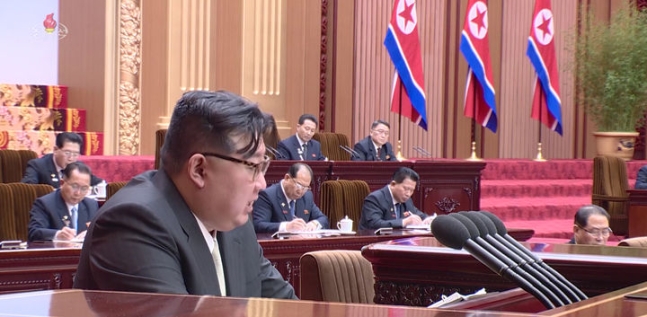
<Kim Jong-un, addressing the 14th Supreme People's Assembly on January 15th, 2024, in Pyongyang, emphasizes the need for education that views South Korea as the ultimate foe, suggesting possible constitutional changes. /photo by Photo by Korean Central Television>
During the WPK Plenary Meeting at the close of last year, Kim Jong-un emphatically declared "unification impossible," articulating that the dynamics between North and South Korea have evolved from familial ties to adversarial relations, positioning them as nations at war with each other.
In his January Supreme People's Assembly speech, he advised against referring to the North and South as kin.
Since then, North Korea has been actively "erasing unification." Searches on the KCNA’s website yield few articles on "unification," some quoting Kim Jong-un's directive to "completely remove the concepts of unification, reconciliation, and kinship" from the Supreme People's Assembly.
Recently, a section detailing the North Korean Constitution on the state media's website was made private, following Kim Jong-un's announcement at last month's Supreme People's Assembly to remove unification-related terms from the constitution.
-
PREV [SAND Exclusive]
-
NEXT [NK Focus]