

Kim Myongsung’s Inside North Korea
· Furious Kim Jong-un Demotes Military Brass — Director of Political Bureau Among Those Penalized
· North Korea Sees Sharp Rise in Prices and Exchange Rates — Declining Confidence in the Won Blamed
· North Korea Rolls Out ‘Self-Assessment System’ for Party Cadres — Officials Say It Feels Like Standing Trial

Kim Myong-sung

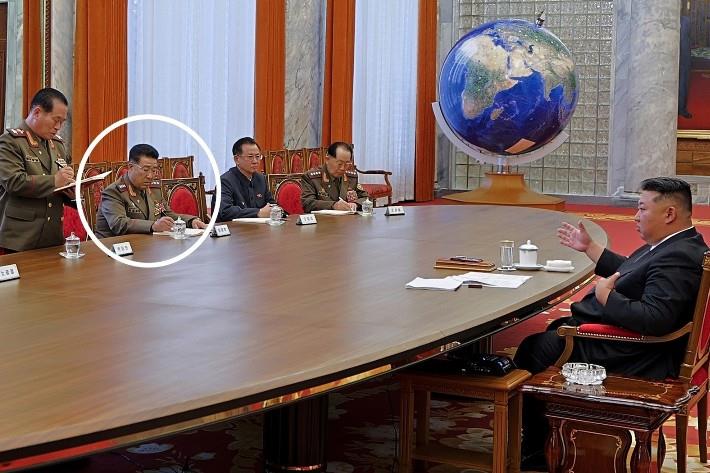
After witnessing the destroyer accident at Chongjin Shipyard, Kim Jong-un condemned it as a disgrace to national pride. Following the arrest of a deputy from the Munitions Industry Department, he’s now targeting senior military leaders to reinforce discipline.
On May 30, KCNA reported that Kim led the 8th Enlarged Meeting of the WPK’s 8th Central Military Commission on May 28. Held in Pyongyang at the Central Committee’s headquarters, it was the first such meeting in nearly 22 months.
At the meeting, six corps commanders were newly appointed, along with new leaders for the Artillery Bureau and Defense Security Bureau. Several political commissars were also reassigned, though specific names were not disclosed.
Jong Kyong-thaek, who oversees the military’s ideological control, was demoted from General to Colonel General. Though he wore a General’s insignia on May 28, photos from the next day’s artillery event showed him in the lower rank.
Jo Kyong-chol, head of the Defense Security Bureau since 2009—North Korea’s counterpart to South Korea’s counterintelligence command—was replaced after 16 years. Observers see this as part of Kim’s continued crackdown following the shipyard failure.
Prices in North Korea are rising sharply once again, with grain costs and exchange rates hitting record highs. The falling value of the won and soaring prices are reinforcing each other, creating a worsening economic cycle.
According to internal sources, as of May 28, a kilogram of rice was trading for 14,000 to 15,000 won in North Korean markets. That’s a 66% jump from 9,000 won on May 10—marking the largest rice price increase ever recorded in Pyongyang.
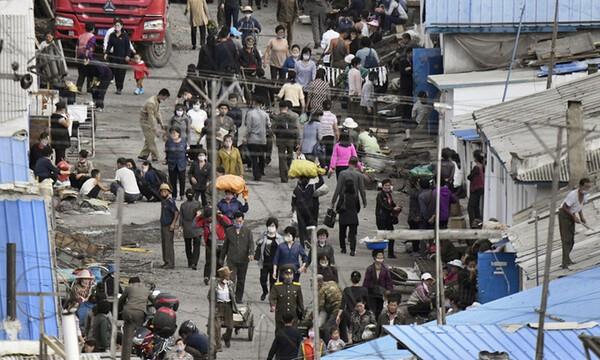
Corn prices have also surged. On May 25, one Pyongyang market recorded corn at 4,000 won per kilogram, an 11.1% rise compared to prices just two weeks earlier, on May 10.
The sharpest corn price hike was in Hyesan, Ryanggang Province. There, as of May 25, a kilogram of corn was selling for 4,200 won—up 13.5% from previous levels.
In February, pork in Sinuiju City sold for 30,000 to 31,000 won per kilo. Now it’s around 35,000 won. Sources say demand spiked with the conscription season, as pork is given to new military recruits. The surge in demand outpaced supply, driving up prices.
While multiple factors have driven up agricultural prices, the biggest cause appears to be declining and unstable crop yields. Harsh weather, poor infrastructure, shortages of seeds and know-how, import restrictions due to sanctions, and inefficiencies in collective farming have all played a part.
During peak farming seasons, authorities mobilize all available rural labor, which disrupts the logistics and flow of produce—another factor contributing to the price surge.
Rapid increases in exchange rates are also pushing prices up. In North Korea today, foreign currency is preferred over the won for paying production costs and trading farm goods.
North Korea’s foreign exchange rate is now at an all-time high. As of May 28, the won-dollar rate was 29,000. Earlier this year, it peaked at 22,200, dipped slightly, and seemed stable around the low 20,000s—until it suddenly surged by nearly 50% in May.
The yuan exchange rate also climbed steeply, though less than the dollar. As of May 28, the won-yuan rate reached 4,000—up 33% from 3,010 on May 10.
Contributing factors include higher demand for foreign currency after trade resumed post-COVID, along with greater fiscal spending on large projects like the “20x10 Regional Development Policy”—which expanded the money supply.
Policy instability and tighter state control over foreign currency also play a role. Authorities have banned private foreign exchange dealings and are cracking down on such transactions.
International sanctions remain a key factor. As sanctions make it harder for North Korea to obtain foreign currency, the supply in domestic markets dries up, further fueling the exchange rate surge.
North Korea Rolls Out ‘Self-Assessment System’ for Party Cadres — Officials Say It Feels Like Standing Trial
North Korea has, for the first time, introduced a "self-evaluation system" targeting senior officials within the Central Committee of the Workers’ Party of Korea.
A senior source in Pyongyang said the system was developed by the WPK’s Organization and Guidance Department and Central Auditing Commission after Kim Jong-un ordered new measures to "boost official competency" on May 6.
The pilot program reportedly began on May 19, targeting department heads and their deputies within the Central Committee for initial implementation.
This new format replaces traditional yearly goal-setting and summary reports. Now, officials must submit monthly Q&A-style performance reviews, showing with data how their self-set goals align with Party Plenary policies. They’re required to explain not just achievements but also the policy impact and measurable outcomes.
The source explained that each month’s evaluation consists of 10 to 20 rotating questions. Sample questions include the following:
What goal did you set this month, and how does it align with Party Plenary directives?
What specific initiatives did the department lead to fulfill those directives, and what results were achieved?
What proof and documentation link these numbers to real policy outcomes, and what follow-up plans exist?
The system reflects Kim Jong-un’s philosophy of "demonstrating loyalty through competence." Reports will be jointly reviewed by the Organization and Guidance Department and the Central Auditing Commission, with results leading to retraining or personnel changes.
Those rated poorly will be sent to cadre training institutions for retraining. High performers may be promoted or reassigned based on the “talent-based placement” policy.
Still, backlash within the Central Committee is brewing. One official complained, “Are we running the Party like a school homework check? Every word and number now feels like it’s being judged.”
Another cadre said, “Policies keep changing overnight—things we never saw under Kim Il-sung or Kim Jong-il. It’s exhausting.” He added, “It’s nerve-wracking knowing you could be humiliated or removed, no matter your rank or seniority.”
Some officials suspect Kim Yo-jong, the WPK’s Deputy Director, played a role in introducing the system. Phrases like “Wasn’t this Kim Yo-jong’s idea again?” are reportedly circulating openly.
The rollout is being seen as a move to institutionalize cadre inspections ahead of next year’s 9th Party Congress—a signal that a major shake-up in the Party leadership may be on the horizon.
-
PREV [Feature Article]
-
NEXT [News&Issue]