

Kim Myongsung’s Inside North Korea
· Over 20 Students from Pyongyang’s Elite Universities Face Public Trial for Disseminating South Korean Dramas and K-Pop
· Kim Jong Un Orders Establishment of Sniper Training Centers at the Corps Level, Heightening Military Threat to South Korea
· North Korea Commences Rice and Potato Harvests, Prioritizing “Projected Yields = Actual Yields”
· Pyongyang’s Relative Affluence Contrasts with Provincial Hardship and Rising Vagrancy
Kim Myong-sung

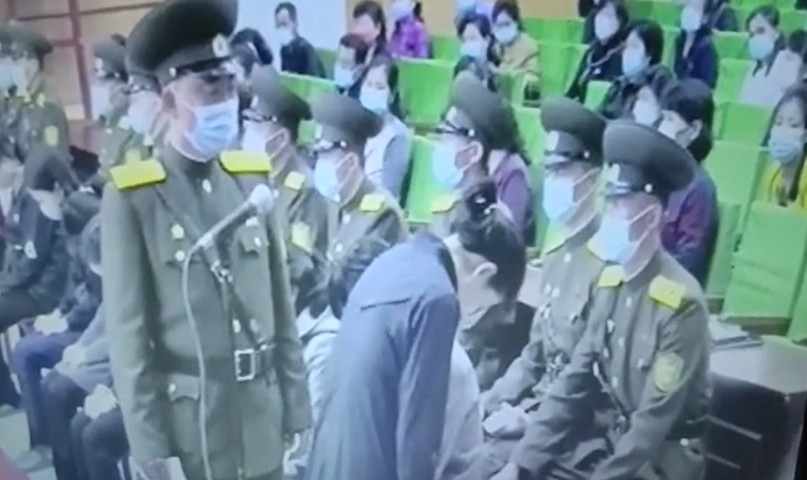
According to sources in Pyongyang, on September 6 at 5:00 p.m., over 20 students were brought onto the stage of the Pyongyang Youth Hall during a session jointly organized by the State Security Department and the Youth League.
The accused were said to be enrolled at leading North Korean universities, including Kim Il Sung University, Kim Chaek University of Technology, the University of Science, Kim Hyong Jik University of Education, Chang Chol Ku University of Commerce, Pyongyang Computer University, Pyongyang University of Foreign Studies, Pyongyang Medical University, Kim Won Kyun Pyongyang University of Music and Dance, and the University of Theatre and Film.
Roughly 150 individuals—including the accused students, their families, university officials, Party secretaries, professors, and student representatives—were compelled to attend. Witnesses reported that the atmosphere was tense and silent as security officials publicly enumerated each student’s alleged offenses, reading them aloud as though issuing formal warning notices.
All students were detained for distributing South Korean films, foreign music, and other prohibited media. During the investigation, specific titles were reportedly cited, including The King’s Affection, Reborn Rich (The Youngest Son of a Chaebol Family), The Lady Ok, Trauma Center, Great Moments in World Soccer and Screen Music, and South Korean Dance and Song Contest / Song Memory.
Although the students expressed contrition, authorities rejected these statements as inadequate, signaling potential expulsion and permanent exclusion from higher education. Given prolonged interrogations and resulting class absences, many face the prospect of forced leave or dismissal from their universities.
Later that same day, more than ten artists—including actors, directors, and screenwriters from the Pyongyang Art Film Studio—were similarly subjected to public criticism for violating the Anti-Reactionary Ideology and Culture Rejection Law.
Immediately afterward, they were transferred in shackles to the Pyongyang City Security Bureau for preliminary investigation. Officials declared that, depending on the severity of the charges, penalties could range from eight to fifteen years’ imprisonment—or even life sentences.
One source suggested that the timing of the proceedings had been delayed until after Kim Jong Un’s return from China, underscoring that the event functioned not merely as law enforcement but as a deliberate act of political intimidation aimed at universities and the broader capital.
Despite such efforts, discontent is reportedly simmering among residents. One individual observed: “There is a saying: hate the sin, not the sinner. Even if we oppose the United States, treating South Korea—our own blood—as if it were a foreign state is fundamentally wrong. Who would quietly accept such a policy?”
Kim Jong Un, Chairman of the State Affairs Commission of North Korea, has reportedly issued a directive mandating the establishment of sniper training centers in every corps-level unit of the Korean People’s Army. The order, delivered immediately following his inspection of a special operations training base, represents an institutionalization of sniper training on a scale not previously observed in the North Korean military. Analysts assess that this move could further intensify the threat environment facing South Korea.
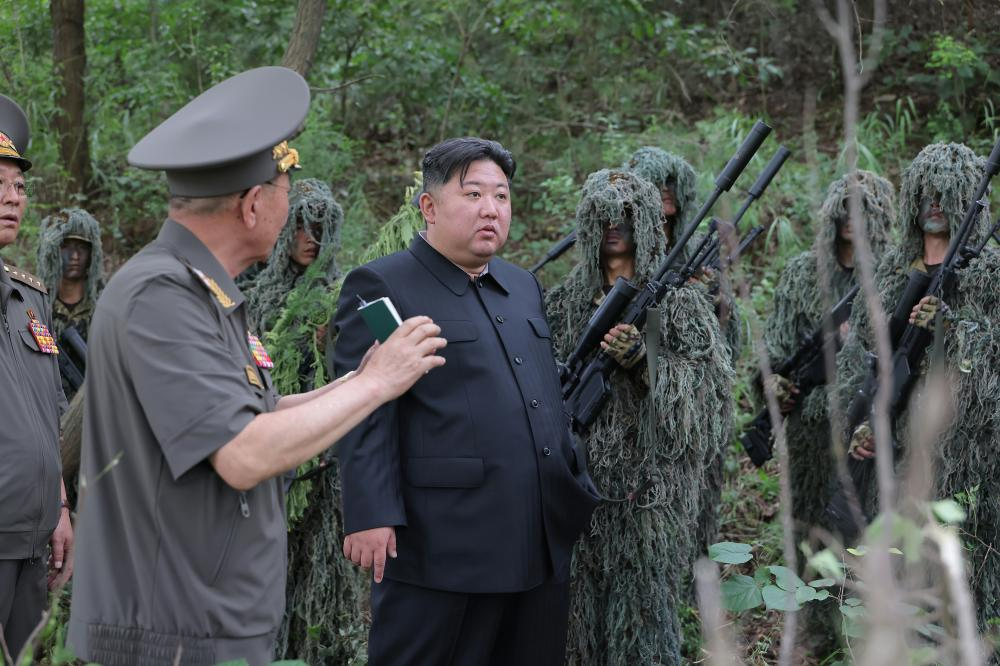
According to sources in Pyongyang, the directive was issued on August 30, just three days after Kim’s visit to the Special Operations Training Base under the General Staff. North Korean state media reported that Kim personally observed sniper exercises featuring upgraded rifles and camouflage equipment.
He reportedly emphasized that “snipers play a decisive role in paralyzing enemy command posts and strategic targets in modern warfare” and stated that the Party Central Military Commission would consider the creation of a central sniper training institution. Sources note that the initiative was subsequently broadened to encompass corps-level implementation.
Under the directive, each corps is required to establish a dedicated sniper training center. Assigned tasks include: Issuing new camouflage uniforms and optical equipment,Expanding training for mountain, urban, and nighttime environments, Specializing in target detection, concealment, and mobility, and Integrating sniper operations with intelligence-gathering missions.
Corps units have been instructed to expand firing ranges and training grounds, with direct oversight by corps headquarters. Commanders have reportedly begun drafting implementation plans, though shortages of rifles, ammunition, optical equipment, and uniforms pose significant challenges. In some cases, reserve personnel are being retrained as snipers to accelerate the program.
Observers assess that this initiative reflects both the shifting security dynamics on the Korean Peninsula and Kim’s intent to demonstrate enhanced special operations capabilities, particularly in the context of strategic cooperation with Russia.
While presented as a military modernization measure, the order also carries political and ideological weight. It signals Kim’s determination to reorient corps-level operations around special operations, while simultaneously fostering internal competition and loyalty within the ranks.
Nonetheless, questions remain regarding the program’s near-term feasibility given the regime’s resource constraints. Experts generally agree, however, that institutionalizing sniper training across all corps represents a qualitative adjustment in North Korea’s military posture. If implemented effectively, it would add a new dimension to the threat calculus for South Korea, U.S. forces, and regional stability.
North Korea Commences Rice and Potato Harvests, Prioritizing “Projected Yields = Actual Yields”
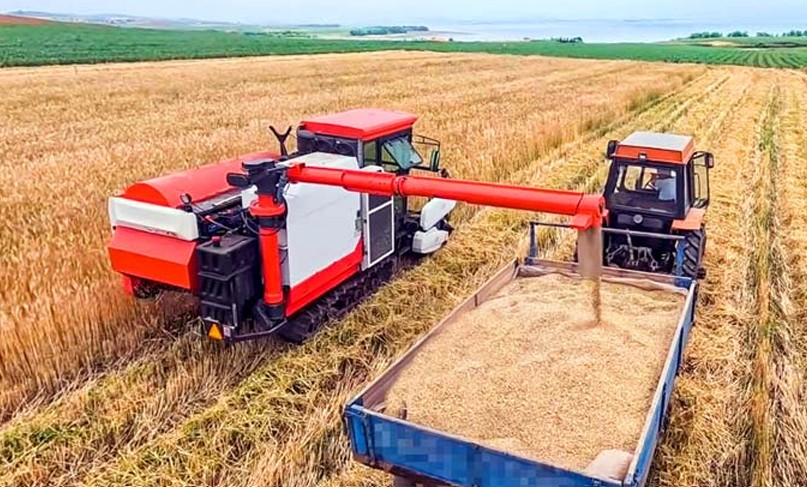
North Korea has announced the nationwide start of rice harvesting, with particular emphasis on ensuring that “projected yields directly translate into actual yields.” The campaign is being highlighted in South Hwanghae Province, the country’s largest grain-producing region, and appears designed to prevent underreporting of harvest volumes or diversion of crops at the farm level.
The cabinet-affiliated newspaper Minju Joson reported on September 16 that the Agricultural Committee, along with Party and state cadres at all levels, is intensifying oversight. Officials have been instructed to mobilize farmers through “frontline-style political work” and to ensure timely and high-quality completion of the harvest. South Hwanghae Province was singled out as strictly sequencing the order of harvests and generating momentum from the outset.
The report noted that in Anak, Jaeryong, and Bongchon counties, local authorities are timing harvests precisely according to crop type and field conditions. Other provinces, including North Hwanghae, South Pyongan, and Kangwon, as well as Kaesong City, are concentrating labor and equipment, with an emphasis on mechanization to reduce losses. Separately, potato harvesting has begun in Daehongdan County, Yanggang Province.
North Korea’s sensitivity regarding yield management reflects chronic problems with mid-harvest losses. Farms frequently underreport production in order to reduce state collection requirements, as government allocations for military rations and public distribution are prioritized over local use or farm retention. Farmers, who often rely on springtime loans of seed and supplies from individuals, must repay in grain after the harvest, but state requisitioning typically leaves them unable to meet these obligations.
Grain theft is also a recurring problem during the harvest season. Farm workers and residents frequently divert crops, prompting authorities to increase surveillance and deploy additional security personnel. Yet with market prices for rice and corn continuing to rise sharply, such measures may have limited deterrent effect.
The UN Food and Agriculture Organization (FAO), however, has offered a comparatively positive outlook. In a September 16 statement, the FAO assessed that “as of late August, crop conditions are favorable in most parts of North Korea,” citing above-average rainfall in western provinces—including South and North Pyongan and Hwanghae—that has improved harvest prospects. While localized flooding was observed in low-lying areas, the FAO noted that impacts on overall yields appear limited.
Domestically, the regime is emphasizing increased grain output as a key economic achievement in advance of the 80th anniversary of the Workers’ Party of Korea next month. A North Korean research institute official stated that the policy focus on “projected yields equaling actual yields” reflects an effort to tighten control over theft and mid-harvest losses, thereby maximizing state procurement volumes.
Pyongyang’s Relative Affluence Contrasts with Provincial Hardship and Rising Vagrancy
Recent reporting highlights deepening social polarization within North Korea. While residents of Pyongyang increasingly enjoy consumer luxuries such as fruit and coffee, conditions in the provinces remain dire, with evidence of worsening food insecurity and a resurgence of vagrancy. Despite the central government’s 20×10 Policy for Local Industrial Development, provincial economies show little indication of recovery.
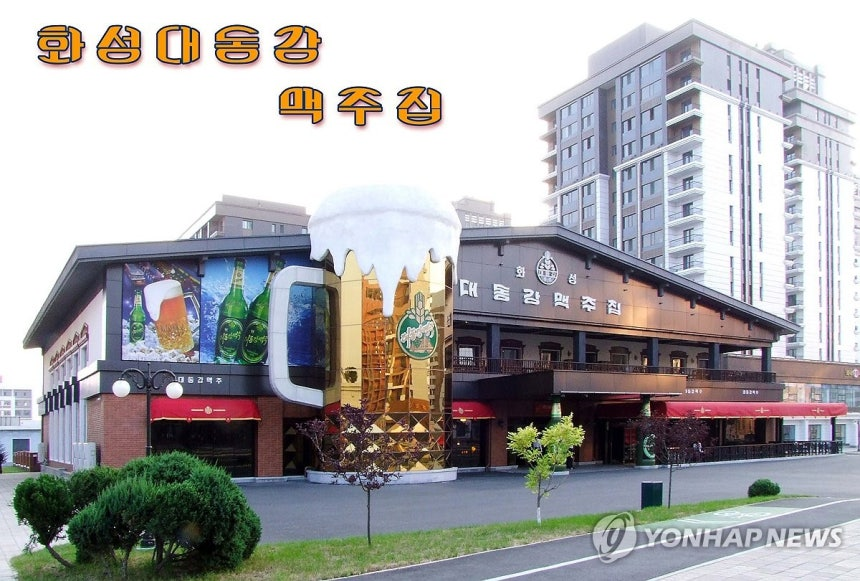
Alexander Vorontsov, head of the Korean and Mongolian Studies Department at the Russian Academy of Sciences’ Institute of Oriental Studies, shared observations during the Samcheong Forum in Seoul on September 15. Vorontsov, who visited Pyongyang last month as part of a Liberation Day delegation, reported that urban residents were consuming a variety of fruits, including strawberries, apples, and mangoes—items virtually inaccessible outside the capital.
He further noted that while a decade ago Pyongyang reportedly had only a single coffee machine, cafes are now widespread, signaling improved living standards for the capital’s residents. At the same time, he observed that restrictions on foreigners’ mobility inside North Korea appear to have tightened.
In stark contrast, conditions in rural areas remain severe. The outlet Daily NK reported on September 16 that children begging or stealing food have reappeared in markets and train stations, indicating a rise in so-called “flower beggars”—a term used for street children displaced by food insecurity.
Witness accounts suggest that many provincial households survive on only a few potatoes per day, with rice and corn increasingly unobtainable due to surging prices. Children orphaned or abandoned by guardians unable to provide support are being pushed onto the streets. Although authorities periodically send them to shelters, those facilities reportedly lack sufficient food and clothing, prompting many children to return to vagrancy.
Central authorities continue to rely on crackdowns rather than structural solutions, but these measures are widely regarded as cosmetic. Despite the regime’s 20×10 Policy intended to stimulate local industry and improve regional economies, provincial hardship appears to be worsening.
One source warned: “Unless the underlying food shortage is resolved, children will inevitably continue to be forced into the streets. Crackdowns alone cannot address the survival needs of the population.”
The widening disparity between Pyongyang’s relative affluence and the provinces’ deepening poverty is likely to fuel further discontent and social instability inside North Korea.
-
PREV [News&Issue]
-
NEXT [NK Focus]