

North Korea’s Claim to Great Power Status: Image and Reality
Kim Dong-soo
Former North Korean Diplomat
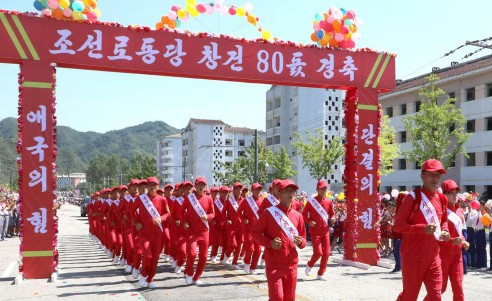
North Korea has sought to present itself as a peer of China and Russia, highlighting imagery of Chairman Kim Jong-un standing alongside Presidents Xi Jinping and Vladimir Putin during the Beijing Victory Day parade on September 3.
This imagery was followed by a front-page editorial in the Rodong Sinmun on September 16, which proclaimed North Korea to be “a great power exerting enormous influence on the world political landscape and the flow of international affairs.” The paper further asserted that the country’s “unrivaled self-defense capabilities” have elevated national pride “a hundredfold.”
Strategic Alignment with China and Russia
Pyongyang has intensified efforts to align itself with Beijing and Moscow, consistently citing Chinese and Russian positions on global issues through its state media.
This has included reprinting the statements of Russian and Chinese ambassadors at the United Nations on issues ranging from Ukraine to the Middle East. North Korea is also preparing for an elevated presence at the upcoming UN General Assembly, consistent with Kim Jong-un’s pledge during his recent summit with Xi Jinping to “strengthen cooperation on multilateral platforms.”
This posture has coincided with an assertive declaration of nuclear permanence. On September 15, North Korea’s mission in Vienna stated: “The nuclear weapons state status of the Democratic People’s Republic of Korea is permanently enshrined in the country’s supreme law and is irreversible. We will thoroughly oppose and reject any arbitrary attempt to alter our current status.”
Fragile Foundations Behind the Rhetoric
While Kim Jong-un’s appearance with Xi and Putin is designed to symbolize elevated international standing, it simultaneously underscores Pyongyang’s reliance on its alignment with China and Russia. Nuclear development and military buildup have been central to the regime’s strategy of survival, but the resulting sanctions have devastated the broader economy.
Food insecurity remains acute, electricity is available only for limited hours in provincial areas, and heating shortages are endemic during winter. According to the United Nations, 20 percent of North Korean children under the age of five suffer from malnutrition.
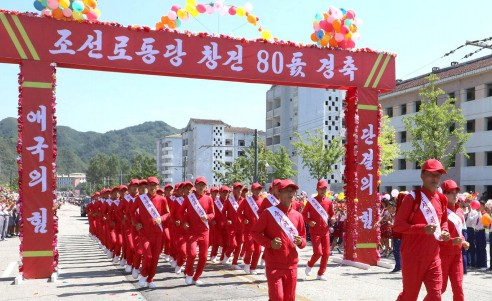
Shortages of medicine and educational supplies further erode living conditions, forcing families to turn to informal markets to meet basic needs. Even as the regime invests heavily in weapons development and propaganda, the population bears the brunt of deprivation.
The Paradox of “Self-Reliance”
Pyongyang’s rhetoric of juche—self-reliance and self-sufficiency—stands in stark contrast to its actual dependency on external partners. As of 2024, over 95 percent of North Korea’s trade is conducted with China, and both China and Russia supply the bulk of its energy, food, and military materials.
This reality renders North Korea’s invocation of self-reliance more rhetorical than substantive. Genuine national dignity cannot be achieved through proclamations of independence while remaining structurally dependent on external powers and allowing the population to endure persistent hardship. True self-reliance would require greater openness, innovation, and cooperation with neighbors in ways that materially improve living standards.
Conclusion
North Korea’s attempt to elevate itself into the ranks of great powers must be assessed critically against its underlying vulnerabilities. Its strategic alignment with China and Russia and its emphasis on nuclear permanence project an image of strength, yet the regime remains dependent externally and constrained internally by economic fragility and widespread social hardship.
If Pyongyang continues to equate legitimacy with military capability while neglecting the basic well-being of its people, its future trajectory will remain uncertain at best. For policymakers and analysts, the critical task is to distinguish between North Korea’s carefully crafted image of great power status and the stark reality of its internal weaknesses and external dependencies.