

North Korea Inside
· North Korea’s Expanding East Coast Tourism Belt: From Wonsan-Kalma to North Hamgyong Province
· Performance-Based Distribution in Agriculture
· Party Discipline and the “Blue Carpet” System
· Corruption and Patronage in North Korea’s Food Supply System
Kim Myong-sung
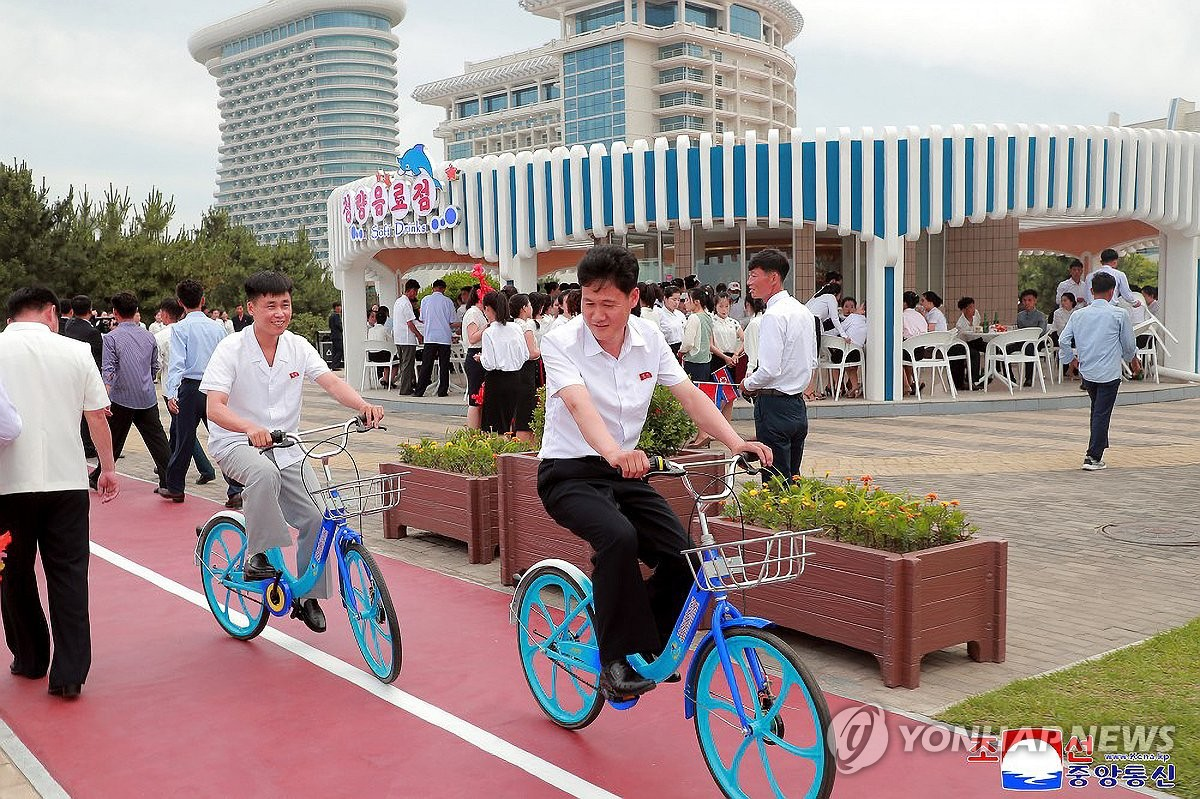
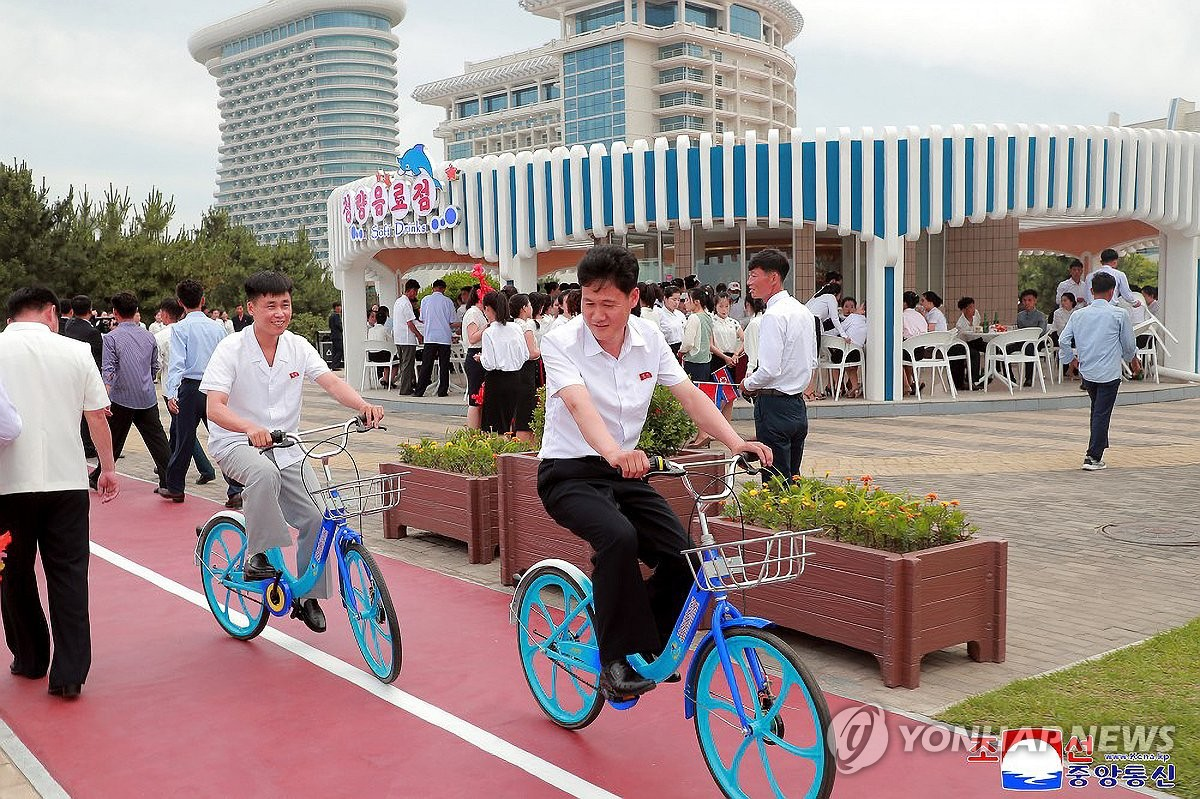
The broader strategy envisions a continuous tourism corridor running the length of North Korea’s east coast, centered on Wonsan–Kalma and extending northward through Majeon, Geumya, and Yeombunjin. During an inspection of the Wonsan–Kalma project in July, Kim stressed that “tourism resources at scenic sites such as Mount Kumgang, Mount Chilbo, Majeon, Geumya, Riwon, and Yeombunjin must be rationally developed.”
This vision appears to be materializing. In September, a senior official from the State Tourism Administration announced plans to construct “large-scale tourism and cultural districts in multiple regions,” based on lessons from the Kalma peninsula development. Analysts interpret these moves as forming a “North Korean East Coast Tourism Belt,” designed to form a tourism backbone spanning from Wonsan to Mount Chilbo.
According to a May report by the Hyundai Economic Research Institute, North Korea has redefined tourism since the 2020s—not merely as a means of earning foreign currency, but as a strategic industry for improving resident welfare and regional development. Supporting this shift, Pyongyang enacted the Tourism Law (2023) and the Wonsan–Kalma Coastal Tourism Special Zone Law (2025), providing an institutional foundation for new development models.
The report assessed the Wonsan–Kalma zone as a testing ground for “stay-type tourism” centered on recreation and leisure, departing from the state-led, sightseeing-oriented group tours that characterized earlier decades.
Nevertheless, major challenges remain. North Korea has been cautious about reopening to foreign visitors since the COVID-19 pandemic. Limited inbound tourism resumed in 2024, primarily targeting Russian visitors, though the revenue impact has been minimal. Strained relations with China and tight domestic controls further constrain the inflow of Chinese tourists.
As a result, the regime has shifted focus toward “lifestyle tourism” for domestic residents, framing tourism as a form of leisure and balanced local development rather than a hard-currency source. Under the “Local Development ”20-by-10 Policy,” provincial capitals are constructing facilities such as aviation and horseback riding clubs, water parks, and youth theaters.
While legislative and infrastructural progress is visible, experts note that foreign exchange earnings and long-term sustainability remain limited due to sanctions, political isolation, and inadequate infrastructure. The Hyundai report noted that “despite institutional advances, North Korea’s tourism sector struggles to achieve recovery amid political and economic constraints,” emphasizing the need for an autonomous domestic demand base and industrial linkages beyond external tourism revenues.
Ultimately, analysts view Pyongyang’s tourism drive as dual-purpose: an economic initiative intertwined with political control. The regime seeks to allow limited leisure while simultaneously showcasing “the Party’s benevolence” through state-led tourism development. In this sense, the east coast tourism belt serves not only as an economic project but also as a strategic instrument for regime consolidation and image management.
Whether the momentum from Wonsan–Kalma will extend to Yeombunjin and beyond remains to be seen. The current expansion represents more than regional development—it is a testing ground for North Korea’s attempt to construct a self-sustaining, politically functional tourism state model within the boundaries of a closed economy.
Performance-Based Distribution in Agriculture
North Korea has formally adopted a “performance-based distribution” system at the close of the 2025 harvest season, signaling a calibrated shift in the country’s socialist economic management.
In a November 11 editorial, the Rodong Sinmun, the official newspaper of the Workers’ Party of Korea, declared that “those who work more should receive a larger share,” adding that “egalitarianism has no connection to the socialist principle of distribution.” The paper criticized what it called “egalitarian evaluation,” arguing that such practices “dampen workers’ enthusiasm and breed idlers.”
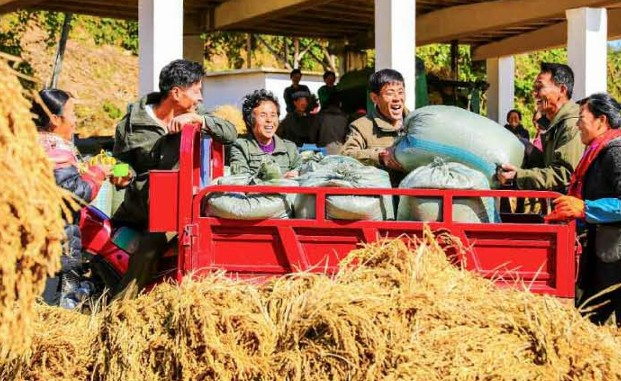
This rhetoric reflects Pyongyang’s growing preference for differential rewards tied to labor output, marking a continued move away from strict collectivism toward quasi-market mechanisms within the socialist framework.
The institutional basis for this shift appears rooted in the Farm Settlement and Distribution Law passed by the Supreme People’s Assembly in August 2025. Although its full text remains undisclosed, the law’s stated objective—“enhancing farm workers’ motivation”—suggests more favorable distribution ratios for producers.
This development builds upon Kim Jong-un’s long-standing field responsibility system (June 28 Measures, 2012), which decentralized production to small work teams and allowed them to retain a share of the harvest after meeting state quotas. The approach effectively introduced incentive-based production within North Korea’s planned economy for the first time.
Agricultural output in 2025 has shown modest improvement. According to the U.S. Department of Agriculture (USDA), paddy rice production is estimated at 2.27 million tons, roughly consistent with last year but 5 percent higher than the five-year average, while corn output rose by 1 percent to 2.3 million tons. The USDA attributed these gains to favorable rainfall and adequate irrigation conditions.
Against this backdrop, Pyongyang appears intent on using improved yields to justify its emphasis on “performance-based distribution,” presenting the policy as both a productivity measure and a symbol of “scientific” economic governance.
However, analysts caution that without structural reforms or improved resource access, these policy adjustments may serve less as genuine economic liberalization and more as an instrument of control—reinforcing state authority under the guise of competition and autonomy.
North Korea’s Agricultural “Performance Distribution” and Internal Party Discipline: Emerging Trends in Regime Management
Performance-Based Distribution: Market-Oriented Adjustments under Central Control
North Korea has formally adopted a performance-based distribution system in its agricultural sector, signaling a continued evolution toward limited market-oriented management within a socialist framework.
In an editorial published on November 11, the Rodong Sinmun, the official newspaper of the Workers’ Party of Korea (WPK), stated that “those who work harder should receive a larger share,” asserting that “egalitarianism has no connection to the socialist principle of distribution.” The newspaper further argued that egalitarian approaches “dampen workers’ enthusiasm for production and breed idlers.”
This rhetoric represents an explicit ideological endorsement of “distribution according to labor,” a concept long present in socialist doctrine but selectively emphasized in times of production stress. The current campaign appears designed to stimulate agricultural productivity and reassert field-level accountability following this year’s relatively favorable harvest.
Under North Korea’s “settlement distribution” system, farm outputs are divided between the state and individual producers following the autumn harvest. Labor contributions are quantified in “work units”, with higher contributors receiving larger shares. Analysts note that distribution has recently shifted back toward in-kind compensation—particularly grain—rather than cash payments, as farmers can profit more by selling grain later at higher market prices.
The newly enacted Farm Settlement and Distribution Law, adopted by the Supreme People’s Assembly in August, appears to codify this performance-based model. While the full text of the law remains undisclosed, its stated objective—“to enhance farm workers’ production motivation”—strongly suggests adjustments favoring greater autonomy and incentive alignment at the cooperative level.
Observers view this shift as a continuation of the 2012 “June 28 Measures,” which introduced the field-responsibility system early in Kim Jong-un’s rule. That system allowed smaller work teams to retain surplus production after repaying the state for inputs such as fertilizer and tools, effectively embedding a rudimentary performance incentive mechanism within the planned economy.
The U.S. Department of Agriculture (USDA) estimates that North Korea’s 2025 paddy rice output reached 2.27 million tons—roughly consistent with 2024 levels but 5 percent above the five-year average—while corn production rose by 1 percent to 2.3 million tons. Favorable weather conditions and stable irrigation contributed to the gains. These conditions have provided Pyongyang with a favorable narrative environment to justify “performance-based distribution” as a policy success and ideological necessity.
Nevertheless, analysts caution that structural deficiencies—including chronic input shortages, state procurement demands, and transport bottlenecks—limit the system’s impact. Absent substantive reform in state procurement pricing or land-use rights, the new approach may primarily serve as a political control mechanism, rewarding loyalty and compliance rather than genuine productivity.
Party Discipline and the “Blue Carpet” System
In parallel with these economic adjustments, North Korea’s Workers’ Party Central Committee has intensified internal discipline, reinforcing a climate of administrative fear and ideological conformity.
Multiple sources report that slogans such as ‘Let’s not stand on the blue carpet’ and ‘Let’s shed our faults’ have gained currency among Central Party officials. These phrases refer to an internal disciplinary practice in which cadres who err in executing Party directives are summoned to stand on a 1-square-meter “blue carpet” placed in the center of the presidium hall, a symbolic space of public criticism and sanction.
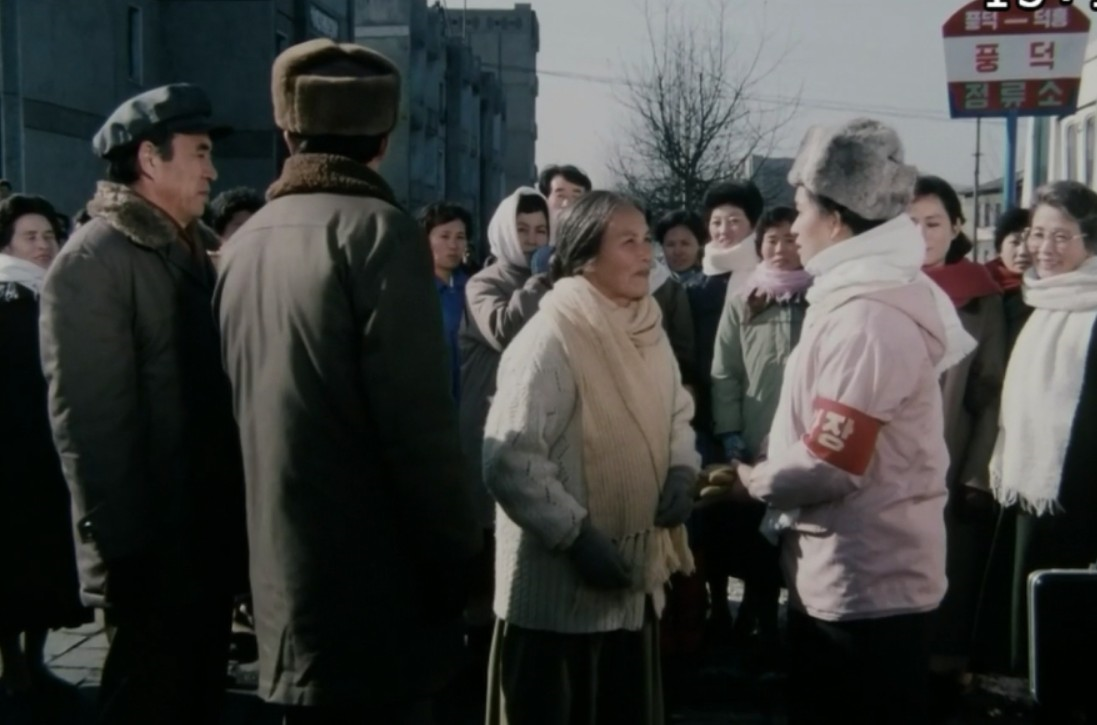
Standing on the blue carpet reportedly symbolizes imminent punishment, which may include demotion, expulsion from the Party, reassignment to provincial posts, or mandatory “revolutionization” re-education lasting up to three years. The Organization and Guidance Department (OGD) monitors those undergoing re-education with high intensity, reportedly tracking even minor aspects of their daily life and ideological conduct.
While younger cadres with elite connections may occasionally be reinstated following successful completion of this process and personal approval from Kim Jong-un, such cases remain rare. Most demoted officials are permanently reassigned to local enterprises, symbolically “shedding their faults” through manual or administrative labor.
Among Central Party staff, fear of “stepping onto the blue carpet” has reportedly produced a culture of hyper vigilance and bureaucratic perfectionism. Officials repeatedly review reports before meetings, emphasizing “timely, error-free reporting” to avoid disciplinary scrutiny. As one source noted, “a single mistake can end not only one’s own career but also affect one’s family’s prospects.”
Analysts interpret this environment as the institutionalization of a “revolutionary management system” under Kim Jong-un, one that combines performance-based economic rhetoric with coercive administrative discipline to maintain elite compliance. Together, these trends reflect a hybrid governance model: economic incentives at the production level paired with psychological control mechanisms at the bureaucratic level.
Assessment
The juxtaposition of performance-based distribution in agriculture and performance-based punishment in Party management reveals a consistent pattern in Kim Jong-un’s governance: incentivizing output while reinforcing control.
While the rhetoric of efficiency and productivity suggests limited technocratic reform, both initiatives ultimately function to strengthen the regime’s vertical power structure. The result is a calibrated system of “managed autonomy,” where conditional freedoms—whether in farming or administration—exist strictly within the parameters of political loyalty and surveillance.
Unless North Korea undertakes deeper structural reforms, the regime’s current approach is unlikely to generate sustainable gains in either agricultural productivity or bureaucratic competence. Instead, it may further entrench the system’s reliance on fear-driven compliance as the primary tool of governance.
Corruption and Patronage in North Korea’s Food Supply System
Recent internal testimonies suggest that North Korea’s state-run food distribution centers, nominally established to ensure food security for ordinary citizens, have effectively devolved into mechanisms of privilege, corruption, and bureaucratic patronage.
Operating under the ideological slogan of “rations for the people,” these so-called ration stations have reportedly served as conduits for officials’ private trade and as tools to cultivate political and personal connections.
A resident source in South Hamgyong Province observed, “Our local distribution center appears to serve residents, but in practice it functions as a supply hub for cadres. High-quality rice is diverted to officials’ households, while residents receive only the inferior grain.”
North Korea’s food supply points are officially managed by grain distribution offices at the gun (county) level, with stations assigned to each ri (village). Rations are typically distributed twice a month, roughly 100 to 300 grams per household, at prices pegged at about half of prevailing market rates. However, residents bear all transportation and handling costs, including fuel and packaging, effectively negating much of the intended benefit.
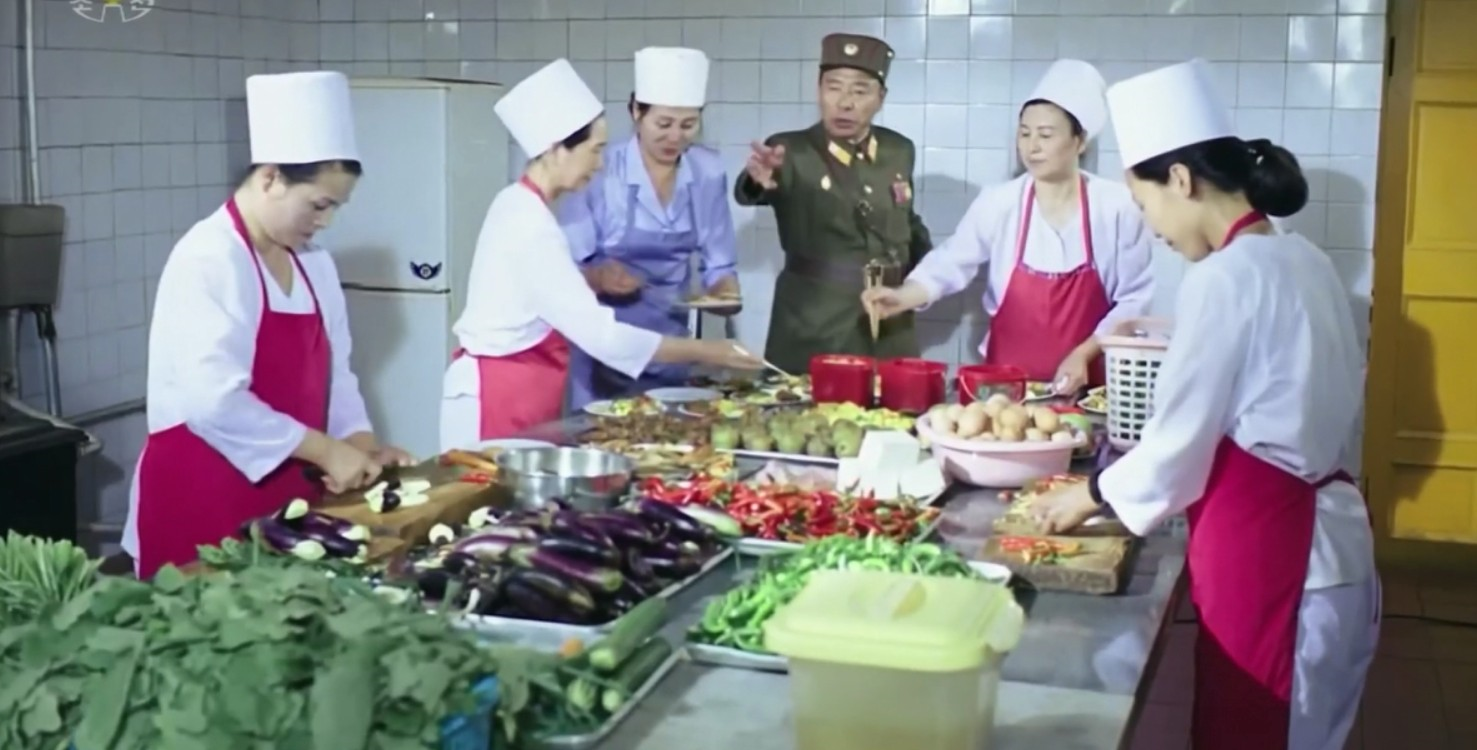
Each distribution center employs three to five staff members, including a manager, cashier, and weighmasters. Yet defectors and residents alike report that these facilities have become “microcosms of corruption.” According to one defector, “The weighmaster routinely manipulates scales to skim extra rice, while managers and cashiers siphon off higher-grade grain for officials’ households or for illicit sale. Connections with cadres determine who gets good rice.”
When premium rice arrives, distribution center staff often exchange it with grain designated for officials as a way to cultivate favor, or sell the surplus for personal profit. Additional schemes include inflating moisture content to justify siphoning off more grain, or speculatively purchasing and reselling grain stockpiled by local work teams. Residents who discover ration shortages, often 200 to 300 grams below the recorded amount, rarely protest, fearing reprisal or blacklisting.
“When inspections occur, they are largely performative,” another resident remarked. “Inspectors are bribed in advance, and the entire system functions through mutual cover-ups.” The corruption reportedly extends up the chain: county-level grain management offices assign fundraising quotas to local distribution centers, prompting employees to divert residents’ rations to fulfill bureaucratic obligations.
Despite these systemic abuses, North Korean authorities continue to promote the food distribution network as a hallmark of the state’s commitment to social welfare. In reality, however, it has morphed into a mechanism of elite privilege and administrative control.
As one defector from Pyongyang concluded, “The rationing system no longer sustains the people: it sustains the powerful. Hunger has become another arena for those with influence to profit and consolidate control.”
-
PREV [News&Issue]
-
NEXT [Thematic Analysis]