

North Korea Inside
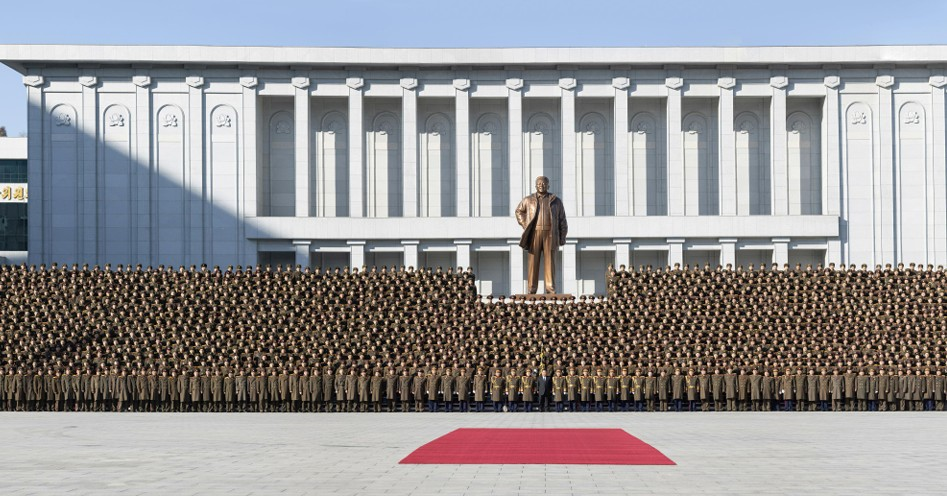
· Kim Jong Un Conducts Inspections of Security and Judicial Agencies Ahead of 9th Party Congress
· North Korea Responds to U.S.-ROK Joint Statements and South Korean Nuclear Submarine Plans
· North Korea-China Border Smuggling Expands, Exploiting Sanctions Loopholes
· Residents of Sinuiju and Uiju Clash Over Administrative Reorganization of "Wihwa Island“
Kim Myong-sung
High-ranking party officials, including Secretary Cho Yong-won, Department Director Kim Hyong-sik, and Supreme People’s Assembly Vice Chairman Kang Yun-suk, accompanied him.
At the Ministry of Social Security, North Korea’s equivalent of a national police agency, Kim underscored the role of social security and armed forces in defending the socialist system and ensuring public welfare through the enforcement of law. He praised the personnel for their “80 years of meritorious service” and took commemorative photographs with the staff.
Kim also visited the Supreme Court and the Supreme People’s Prosecutor’s Office, urging judicial and prosecution organs to strengthen the socialist legal system and ensure law enforcement consistent with the principles of single-party leadership. Reporting to the Supreme People’s Assembly, the Supreme People’s Court oversees judicial administration and trials, while the Supreme People’s Procurator’s Office supervises law enforcement.
Analysts interpret these inspections as part of the North Korean regime’s broader effort to “consolidate the security line,” aimed at solidifying Kim Jong Un’s power base ahead of the final phase of the five-year economic and defense plan launched in 2021 and the upcoming 9th Party Congress. A internal North Korean source reported that education and ideological training for cadres has intensified significantly, noting that loyalty verification within judicial and security organs has expanded.
North Korea issued a formal response to the U.S.–ROK Joint Fact Sheet and the Security Consultative Meeting (SCM) Joint Statement, describing them as institutionalizing “hostile intentions” toward Pyongyang. The response, released four days after the summit, appears intended to deliver a carefully calibrated message domestically while signaling a strategic posture externally.
In a roughly 3,800-character commentary published by KCNA on November 18, North Korea criticized the documents for emphasizing “complete denuclearization of North Korea” instead of “the Korean Peninsula,” framing this as a denial of the country’s sovereignty and existence. It also condemned the Trump administration for referencing previous U.S.–North Korea agreements, calling it the “height of shamelessness.”
Notably, KCNA refrained from explicitly naming President Trump or President Lee Jae-myung, suggesting that the commentary was aimed more at a diplomatic audience than at domestic consumption.
North Korea also bitterly criticized South Korea’s plan to acquire nuclear-powered submarines, portraying it as destabilizing for the Asia-Pacific security environment and as a step toward South Korea’s own nuclear armament. The statement accused the United States of using South Korea as a “quasi-nuclear proxy” and expressed concerns about strengthened trilateral cooperation among the United States, South Korea, and Japan, implicitly linking it to regional efforts to counter China. KCNA asserted that the evolving alliance structure resembles a NATO-style security architecture and called for expanded strategic coordination among China, Russia, and North Korea.
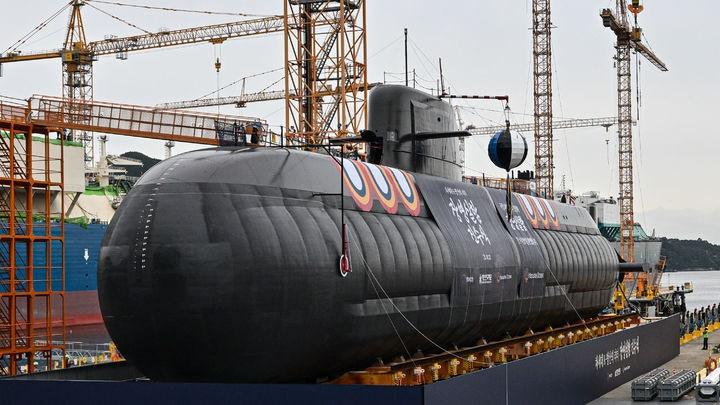
Experts suggest that North Korea’s reaction reflects structural anxiety over the formalization of U.S.–ROK cooperation, which could alter the strategic balance on the Korean Peninsula. In particular, North Korea appears concerned that advances in detection, tracking, and interception capabilities, combined with South Korea’s nuclear-powered submarine, could undermine Pyongyang’s strategic deterrent. A military analyst noted that, from the North Korean perspective, these developments approach a red line threatening the country’s perceived chances of national survival.
Smuggling on the North Korea–China Border Expands, Exploiting Sanctions Loopholes
Since April 2024, smuggling across the North Korea–China border has rapidly expanded in both scale and the diversity of goods exchanged. Initially limited to the light-industry commodities such as medicinal herbs and seafood, recent smuggling reportedly includes items explicitly restricted under UN Security Council sanctions, such as minerals, vehicles, and heavy construction machinery. Analysts suggest that these developments may reflect tacit tolerance by Chinese authorities following the normalization of relations between Beijing and Pyongyang.
According to sources familiar with North Korea, cross-border trade resumed last April after the partial reopening of the border, which had been closed for four years due to COVID-19. Small-scale private transactions initially dominated, but the increased involvement of state-affiliated North Korean trading companies—including entities under the State Security Department and Office 39—has expanded the illegal trade to include strategic commodities and luxury goods. A Korean-Chinese trader confirmed that these companies have transported minerals, ceramics, and artwork to China while importing construction materials and luxury items.
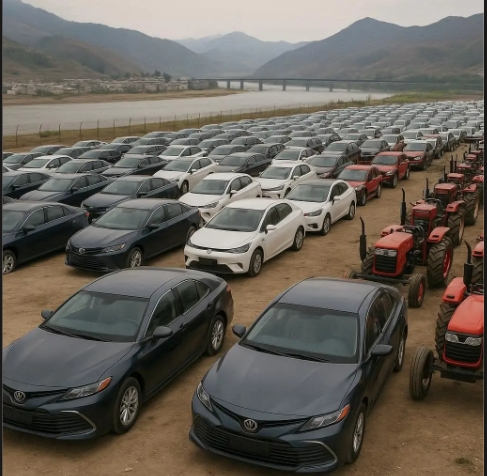
In the border cities of Hyesan, Musan, and Hoeryong, substantial quantities of seafood and medicinal herbs reportedly cross the border at night, with some shipments allegedly concealing illicit drugs. Heavy machinery such as excavators, bulldozers, and tractors is also being moved into North Korea, circumventing UN restrictions on industrial equipment exports. Visual evidence, including satellite imagery and field reporting, corroborates these accounts, with temporary bridges and river crossings facilitating the transactions.
The resurgence of smuggling coincides with the restoration of high-level exchanges between North Korea and China in 2024, including reciprocal visits by senior officials from the International Department of the Workers’ Party of Korea and China’s National People’s Congress. Analysts note that China, while watching North Korea’s deepening engagement with Russia, appears willing to tolerate smuggling of resources critical to its own economic needs, such as zinc and copper.
A border-area source reported that smuggling of heavy equipment increased substantially after Kim Jong Un’s visit to China in September 2024. Temporary infrastructure was built to facilitate the movement of vehicles and machinery across the border. Official trade data confirm a sharp rise in Chinese exports to North Korea, reaching $228.1 million in September 2024, a 30.7% year-on-year and 54.5% month-on-month increase. Experts warn that if China continues to allow these unofficial flows, the effectiveness of UN sanctions will be significantly undermined.
Residents of Sinuiju and Uiju Clash Over Administrative Reorganization of Wihwa Island
Wihwa Island, located in the Yalu River, holds historical significance as the site where Yi Seong-gye, the founder of the Joseon Dynasty, decided to withdraw his troops and launch the coup that ended the Goryeo Dynasty in the late 14th century. It has now emerged as a flashpoint in North Korea’s internal administrative realignment, generating tensions between local authorities.
The North Korean government recently transferred jurisdiction over Wihwa Island from Uiju County, North Pyongan Province, to Seouri District, Sinuiju City. Following the transfer, Sinuiju authorities imposed new access restrictions and commercial controls on the island, fueling friction between Uiju residents and officials in Sinuiju.
Observers report that these changes have disrupted local livelihoods and exposed underlying competition between economic and administrative interests. Sinuiju, North Korea’s largest border city facing Dandong, China, is strategically significant and tightly monitored by central authorities.
After extensive flood damage last summer, Wihwa Island underwent major restoration under the direct oversight of Kim Jong Un. Recent developments include the construction of high-rise apartment buildings and a greenhouse farm spanning approximately 450 hectares. Analysts note, however, that these projects appear intended to showcase border city modernization rather than serve the needs of the local population.
Sources indicate that, after the administrative transfer, Sinuiju authorities restricted access for Uiju residents, effectively granting market rights and commercial control to Sinuiju officials and merchants. As a result, residents of Uiju who historically relied on small-scale trade and informal commerce on the island have lost a key source of livelihood. One source described the reorganization as a mechanism for local elites to secure economic advantages rather than a measure to improve public welfare, highlighting a broader pattern of centralized power prevailing over local interests.
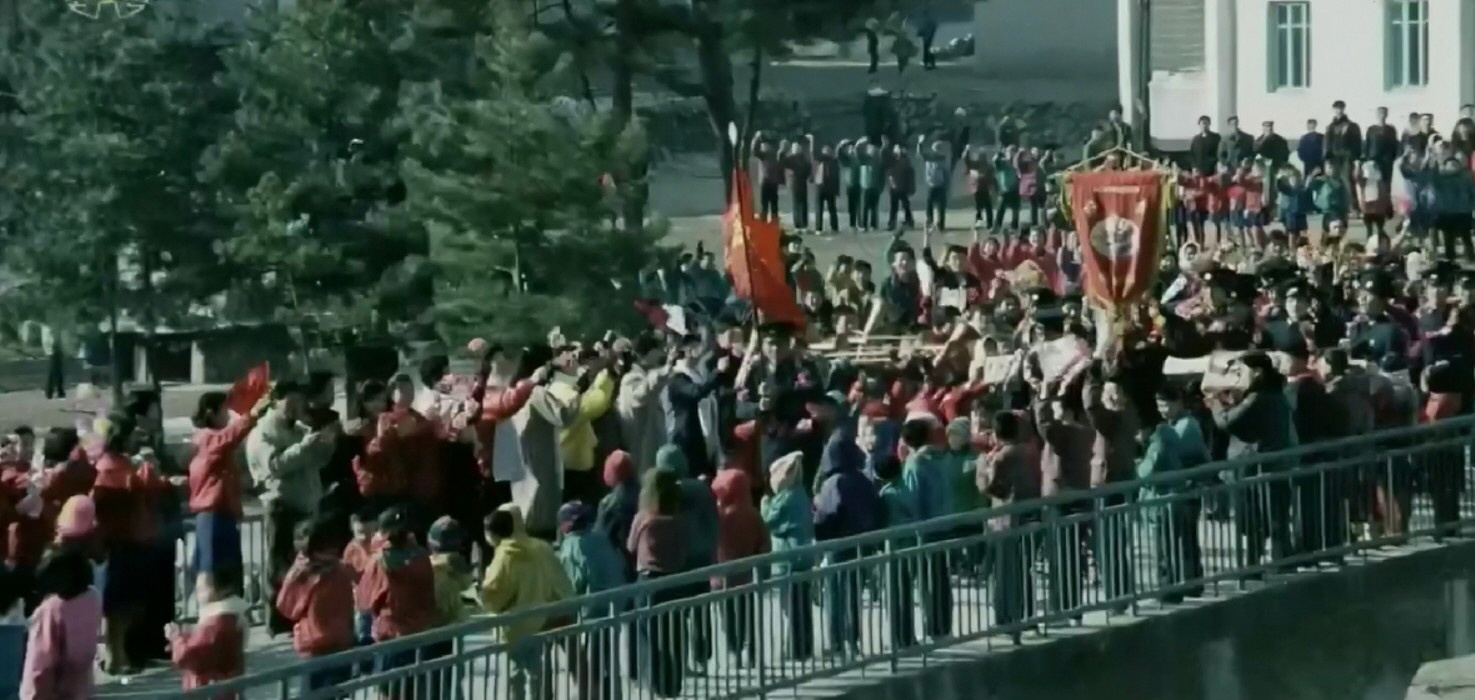
The case of Wihwa Island illustrates how administrative realignments in North Korea can produce economic and social disruptions at the local level, reflecting the inherent tension between state policies and public welfare and demonstrating how strategic sites are used by the government to consolidate political and economic control.
-
PREV [Thematic Analysis]
-
NEXT [North Korea Inside]