

North Korea Inside
· North Korean Artillery Fire and Sino-Russian Bomber Flights Create the Appearance of Strategic Encirclement
· Ri Il-hwan, North Korea’s “Goebbels” and the Workers’ Party’s “Phoenix,” Returns to the Political Stage After Eleven Months Under Investigation
· North Korea Uses the Term ‘On-Site Guidance’ for Choe Ryong-hae’s Provincial Visit for the Third Times
· Cohabitation Constitutes a Severe Criminal Offense in North Korea; Evidence Suggests Some Executions Result in Decapitation
Kim Myong-sung
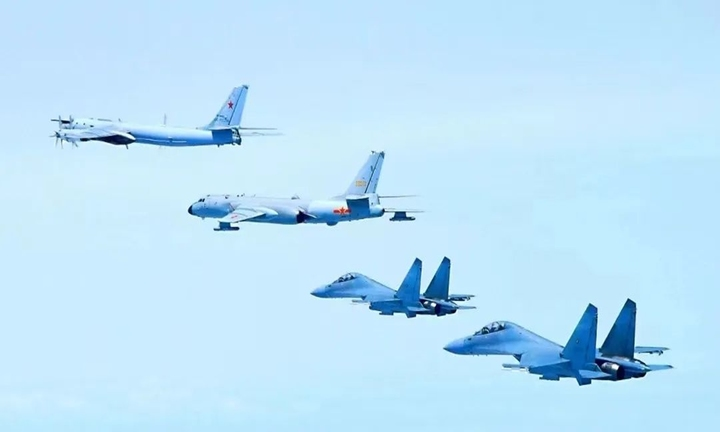
Although each of these activities has occurred individually in the past, it is uncommon for North Korea, China, and Russia to carry out military operations of this scale almost simultaneously across the air and maritime approaches to the Korean Peninsula. The timing and geographic distribution of these actions generated the impression of a coordinated encirclement posture—North Korea applying pressure in the West Sea, China maneuvering in the South, and Russia operating in the East.
On December 10, the Republic of Korea’s Joint Chiefs of Staff (JCS) announced that they had detected “approximately ten multiple rocket launcher rounds fired by North Korean forces toward the northern waters of the West Sea at around 3:00 p.m. on the 9th.” The JCS stated that South Korean and U.S. intelligence authorities are conducting a detailed joint assessment.
The munitions are believed to have been 240mm long-range multiple rocket launchers, systems capable of striking the Seoul metropolitan area. The JCS also emphasized that the military is maintaining enhanced surveillance of North Korea’s broader force posture.
North Korea typically begins its winter training cycle in early December, and on its face the latest launch could be interpreted as part of that routine. The North had also fired roughly ten presumed 240mm rockets into the West Sea on December 1 and 3.
However, because the most recent launch coincided with the opening of an enlarged plenary meeting of the Workers’ Party Central Committee—a high-priority political event—and because Chinese and Russian military aircraft entered the KADIZ only hours later without prior notification, defense analysts broadly assess that the activity exceeds the level normally associated with seasonal training.
The Chinese and Russian aircraft entered the KADIZ sequentially over the East and South Seas beginning at approximately 10:00 a.m. on December 9. According to the ROK military, the Chinese contingent consisted of two aircraft, while the Russian contingent consisted of seven. Although the aircraft did not violate sovereign airspace, the ROK Air Force immediately scrambled fighter jets to ensure continuous monitoring and maintain interception readiness.
Since 2019, China and Russia have conducted one or two annual entries into the KADIZ as part of what they describe as “joint training” or “strategic aerial patrols,” almost always without providing advance notice. The December 9 activity marked the first concurrent entry of Chinese and Russian aircraft into the KADIZ since November 29 of the previous year. While Beijing and Moscow publicly characterized the flights as a joint strategic patrol, the ROK military views the activity as a calibrated pressure operation.
Analysts also noted that the aircraft entered not only the KADIZ but also Japan’s Air Defense Identification Zone (JADIZ) without prior notification. Against the backdrop of recently strained China–Japan relations—exacerbated by remarks from the Japanese Prime Minister signaling potential involvement in a Taiwan contingency—defense observers assess that the flights may have been intended as a multidirectional warning signal.
According to one diplomatic source, the activity “appears designed to check both the unexpectedly stable South Korea–Japan relationship under the Lee Jae-myung administration and the increasingly confrontational alignment between the United States and Japan vis-à-vis China and Russia.”
The ROK Ministry of National Defense announced on December 10 that Director-General for International Policy Lee Kwang-seok had formally lodged a protest with the Chinese and Russian defense attachés in Seoul regarding the unauthorized entry of their aircraft into the KADIZ. The Ministry stated that South Korea “will respond actively and in full compliance with international law to any future aircraft activity by neighboring countries within the KADIZ.”
Ri Il-hwan, the Workers’ Party secretary for propaganda whose whereabouts had been the subject of persistent speculation, has returned to public view after an 11-month absence. Ri, often described as “North Korea’s Goebbels,” had not appeared in state media since early January.

Photographs released on December 10 by the Korean Central News Agency (KCNA) from the enlarged meeting of the 13th Plenary Session of the 8th Central Committee showed Ri seated prominently in the front row of the presidium.
Ri’s last public appearance before his disappearance dates to January 2 of this year, when he was photographed alongside Kim Jong-un with labor innovators and meritorious workers. After that event, he vanished from official media and was notably absent from major party functions.
In April, South Korea’s National Intelligence Service (NIS) acknowledged that it was monitoring the disappearances of both Ri Il-hwan and Jo Yong-won, suggesting possible personnel changes. According to sources familiar with internal developments in North Korea, Ri had been removed from his position on corruption charges and subjected to a period of “revolutionary re-education” during his nearly year-long absence.
Following the 8th Party Congress, Kim Jong-un reportedly expressed concern about corruption, privileged lifestyles, and inaccurate reporting among senior officials, instructing the party leadership to carry out a comprehensive reinvestigation.
The internal probe, which ran from January through late February, was overseen by Kim Hyong-sik, head of the Legal Affairs Department, and Kim Jae-ryong, head of the Disciplinary Inspection Department. Approximately 20 senior party officials were targeted, including Organization Secretary Jo Yong-won and Propaganda Secretary Ri Il-hwan.
The investigation encompassed not only the officials themselves but also their spouses, children, siblings, and in-laws, scrutinizing “every aspect” of their lifestyles. Investigators reviewed workplace activities, foreign contacts, unauthorized use of state materials, and access to preferential allocation systems. Key areas of inquiry included:
— omissions and distortions in the 8th Party Congress report;
— privileged lifestyles of senior officials and their families;
— procurement of materials through unofficial channels;
— leakage of internal documents; and
— illicit accumulation or diversion of funds.
Sources familiar with the matter report that substantial evidence emerged implicating Ri Il-hwan in several corruption-related offenses. He was suspected of earning foreign currency through unreported dealings with Chinese counterparts during publishing projects overseen by an agency affiliated with the Propaganda Department.
Investigators also uncovered indications that he had diverted party funds to support informal propaganda organizations linked to his personal network. In addition, he was reportedly connected to the smuggling of foreign equipment through the Bonghwa Joint Venture Company operated by his wife. At the time, internal assessments suggested that a political comeback was highly unlikely.
Ri’s prominent appearance at the plenary meeting indicates that he ultimately received a disciplinary measure consistent with “re-education through labor,” rather than permanent removal. Within Pyongyang, observers noted widespread remarks referring to him as “a phoenix,” a reference to an earlier episode in his career.
In 2002, while serving as First Secretary of the Youth League, Ri survived a severe automobile accident during a trip to a goat farm in Hamhung. His car plunged off a cliff, killing the student affairs secretary who was accompanying him. Ri had been driving the vehicle himself, reportedly to practice in advance of receiving a new sedan from Kim Jong-il.
To avoid taking responsibility, he initially blamed the driver, but the truth emerged after the driver reported the incident. Kim Jong-il, reportedly furious, ordered Ri to undergo ideological re-education at the Deokseong Mine in South Hamgyeong Province, declaring that Ri had “killed two people that day.” The accident and its political aftermath left Ri with a reputation for improbable survival.
Ri’s political durability is widely understood to stem from his long-standing connection to Kim Jong-un’s mother, Ko Yong-hui. During his tenure as First Secretary of the Kim Il-sung Socialist Youth League from 1998 to 2001, Ri led the propaganda initiative that formalized Ko Yong-hui’s deification—a key step in establishing Kim Jong-un as successor. According to a high-ranking defector, Ko Yong-hui personally invited Ri to her residence, introduced him to her son, shared meals with him, and presented him with gifts.
At the December plenary session, military officials were visibly relegated to less prominent seating. Senior figures such as Pak Jong-chon, Secretary for Military Affairs; No Kwang-chol, Minister of National Defense; Jong Kyong-taek, Director of the General Political Bureau; and Ri Yong-gil, Chief of the General Staff, were positioned toward the back. Meanwhile, key officials associated with policy toward South Korea, such as Ri Son-gwon and Kim Yong-chol, were absent entirely.
Although North Korea had previously announced five agenda items for the plenary session, state media reported on only three:
— the review of 2025 policy priorities,
— the work report of the Central Inspection Commission, and
— preparations for the 9th Party Congress.
Analysts believe the two undisclosed items likely pertained to personnel reforms, organizational restructuring, or amendments to the party constitution.
North Korea Uses the Term ‘On-Site Guidance’ for Choe Ryong-hae’s Provincial Visit for the Third Time
North Korean state media has once again used the term “on-site guidance”—a designation traditionally reserved exclusively for State Affairs Commission Chairman Kim Jong-un—to describe Supreme People’s Assembly Standing Committee Chairman Choe Ryong-hae’s local inspection activities.
This shift in terminology is notable, as Pyongyang has historically employed ryohae (inspection or assessment) for visits conducted by senior officials other than the supreme leader. Against the backdrop of speculation about Choe’s expanding political stature, some analysts have even suggested that he may have been tapped for the position of First Secretary of the Workers’ Party, a post created but left unfilled at the 8th Party Congress in 2021.

According to the December 7 edition of the Rodong Sinmun, “Comrade Choe Ryong-hae, member of the Political Bureau Presidium of the Workers’ Party of Korea, provided on-site guidance on various sectors.” Choe toured the Namhung Youth Chemical Complex in North Hamgyeong Province, the Unchon County Food Processing Factory, and the Eup and Bojeok Farms, where he issued instructions on strengthening production management, improving food quality, and expanding organic fertilizer output.
This marks the third instance this year in which North Korean media has applied the term “on-site guidance” to Choe’s provincial activities, following similar designations in June and September. On September 14, for example, the Rodong Sinmun reported that Choe had conducted “on-site guidance” at the Samjigang Farm in Jaeryong County, South Hwanghae Province, and the Daecheong Farm in Unpa County, North Hwanghae Province. A separate report on June 8 stated that Choe had provided “on-site guidance” at several economic facilities in South Hwanghae Province, including the South Hwanghae Steel Mill.
Traditionally, North Korea distinguishes between “inspection”—a term applied to activities by senior officials—and “guidance,” which is framed as the exclusive prerogative of the top leader. This unwritten rule has, however, eroded to some extent under Kim Jong-un.
In 2021, during typhoon-recovery efforts, the term “guidance” appeared in reports involving several senior officials, though this was generally attributed to the exceptional circumstances of a national emergency. By contrast, the terminology now applied to Choe Ryong-hae carries more deliberate and explicitly political overtones.
In this case, the use of “guidance” appears to signal a notable expansion of Choe’s authority, particularly given that he is currently overseeing broad segments of the economy, including agriculture and the chemical industry. A researcher at a state-run institute observed that “the expression ‘on-site guidance’ carries significant political weight within North Korea’s system, which elevates the supreme leader’s exclusive authority,” adding that this terminology is “less indicative of a routine inspection and more suggestive of hierarchical adjustment.”
Choe Ryong-hae’s political lineage is also relevant. As the son of Choe Hyon, former Minister of the People’s Armed Forces and a prominent anti-Japanese guerrilla who fought alongside Kim Il-sung, Choe carries substantial symbolic weight within the regime.
North Korea recently highlighted this legacy by naming its first modern destroyer the Choe Hyon-ho. Since Kim Jong-un’s rise to power, Choe has held a succession of senior posts across both the Workers’ Party and the military, including Director of the Organization and Guidance Department (OGD) and Director of the Korean People’s Army General Political Bureau.
South Korea’s National Assembly Research Service (NARS) assessment published last April concluded that after Choe assumed the OGD directorship in 2017, “the formalization of an unofficial organizational network” accelerated rapidly, enabling his associates to advance across key institutions in the Workers’ Party, government, and military.
Among those considered part of Choe’s professional network—many of whom rose significantly during his tenure—are Chief of the General Staff Ri Yong-gil and former Minister of the People’s Armed Forces No Kwang-chol. The report found that Choe’s institutional influence is “substantially broader than the networks highlighted during the purge of Jang Song-thaek in 2013,” and argued that his power base has been “reproduced sustainably through the objective authority delegated by Kim Jong-un.”
Following the collapse of the 2019 Hanoi Summit, Choe stepped down from the OGD, but observers note that his political weight actually increased as he assumed the positions of First Vice Chairman of the State Affairs Commission and Chairman of the Presidium of the Supreme People’s Assembly.
The NARS report characterizes this evolution as “a unified patronage structure that merges Kim Jong-un’s legitimacy with Choe Ryong-hae’s administrative authority.” A researcher at a state-run institute further stated that empowering Choe “helps mitigate the excessive burden of governance concentrated on Kim Jong-un.”
Lee Seung-yeol, also of the NARS, assessed that at the upcoming 9th Workers’ Party Congress, Choe Ryong-hae could be appointed First Secretary of the Workers’ Party, a role that would, in effect, make him Kim Jong-un’s delegate and potentially position him as a political guardian for Kim Ju-ae.
An expert at a state-run research institute commented that “the Choe Hyon–Choe Ryong-hae lineage symbolizes a loyal guerrilla pedigree spanning three generations of the Kim family,” adding, “There is arguably no figure more capable than Choe Ryong-hae of legitimizing a fourth-generation succession to Kim Ju-ae.”
Cohabitation Constitutes a Severe Criminal Offense in North Korea; Evidence Suggests Some Executions Result in Decapitation
A recent defector account offers a stark illustration of the heightened repression in North Korea following the enactment of the Anti-Reactionary Ideology and Culture Rejection Law in 2020. According to this testimony, the number of people executed by firing squad for watching or distributing South Korean dramas, K-pop content, or other foreign media has increased significantly. The defector also described incidents in which stray bullets during public executions resulted in the decapitation of prisoners—imagery that underscores the extreme brutality of these punishments.
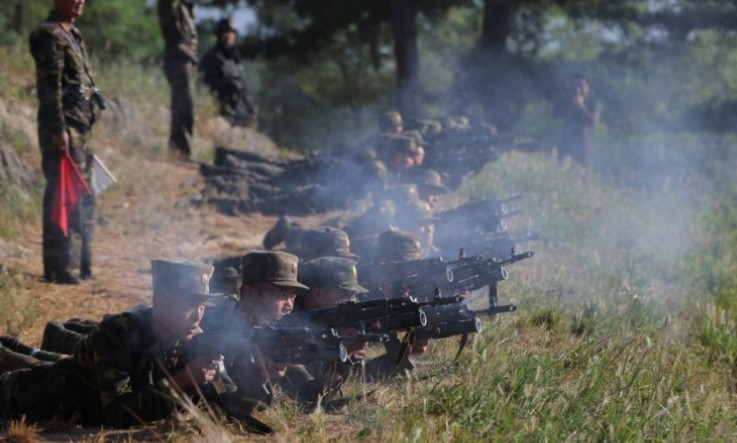
Japan’s weekly current-affairs magazine Daily Shincho interviewed two defectors who fled North Korea after 2022, providing an updated account of human rights conditions inside the country. One interviewee, 35-year-old Kim Il-hyeok from Byeokseong County in South Hwanghae Province, described a July 2022 public execution as “a scene I will never be able to erase.”
Two individuals were executed that day: one accused of watching and circulating more than 70 South Korean songs and three dramas, and another reportedly detained for a murder that had occurred nine years earlier.
Kim explained that nearly the entire village, including children, had been compelled to attend under the pretext of “ideological education.” Approximately 1,000 residents stood in silence as the execution proceeded in severe weather conditions. The prisoners, tied to wooden stakes with white cloths covering their heads, faced a firing squad. Kim recalled that one bullet was so misaligned that it severed a prisoner’s head from his body.
According to Kim, the frequency of public executions increased sharply after 2020. Whereas such executions had previously occurred perhaps once a year, they began taking place roughly twice every three months. He attributed this escalation to the Anti-Reactionary Ideology and Culture Rejection Law, which criminalizes the possession, viewing, or distribution of foreign media—particularly from South Korea, Japan, and the United States—and authorizes capital punishment in certain cases. Kim noted that offenses that once resulted in imprisonment can now lead to execution.
Since the law’s implementation, censorship and surveillance have intensified significantly. Residential searches that were once conducted twice a year now occur as often as twice a month. Security agents reportedly dismantle beds, furniture, and storage spaces during inspections. Random street searches have also become more frequent, and personal devices capable of storing foreign content—USB drives, SD cards, MP3 players—are routinely confiscated.
Kim emphasized that exposure to South Korean popular culture is nearly universal among North Koreans in their 20s and 30s. He admitted to listening to Girls’ Generation and to watching television dramas such as Iris. He noted that portrayals of prosperity abroad foster aspirations for a better life, sentiments the regime perceives as a direct threat.
Kim also cited North Korea’s rigid songbun (caste) system as a major factor in his decision to flee. Because he was classified as a worker and his wife as a farm laborer, legalizing their marriage would have downgraded him to the farm-worker category, reducing his earnings. As a result, the couple lived together without official registration.
Under the Youth Education Guarantee Law enacted in 2021, however, such unregistered cohabitation became a punishable offense, with the length of the sentence corresponding to the duration of cohabitation. Having lived together for three years, Kim faced a potential three-year prison term. He ultimately resorted to bribery to move his family from the interior to a coastal area, from which all nine members eventually defected.
A second defector, 25-year-old Park Young-chul (a pseudonym), defected to North Korea in May 2022. He attributed his decision primarily to the severe economic deterioration that followed the COVID-19 border closures, which effectively halted trade with China.
The resulting shortages drove the prices of food and basic necessities far beyond what many households could afford. Park said that foreign films and animations offered a glimpse of life beyond North Korea, reinforcing his belief that escape was essential for economic survival. He defected alone, leaving his parents behind.
Taken together, these two accounts offer a vivid glimpse into the shifting domestic landscape inside North Korea. They illustrate the cumulative impact of what defectors describe as the regime’s “three draconian laws”: the 2020 Anti-Reactionary Ideology and Culture Rejection Law, the 2021 Youth Education Guarantee Law, and the 2021 Pyongyang Cultural Language Protection Law. As more such testimonies surface, the international community is likely to increase pressure on Pyongyang over its persistent and systemic human rights abuses.
-
PREV [NK Focus]
-
NEXT [NK Focus]