

North Korea Inside
· Kim Jong Un Sends Two Special Delegations to Pressure Moscow Over Nuclear Submarine Technology Transfers
· Kim Jong Un’s Symbolic Appearances with Kim Ju-ae Signal Succession Plans
· Kim Jong Un References “Maduro’s Ouster” While Overseeing Hypersonic Missile Launch
· North Korea Downplays Xi Jinping’s New Year Message While Elevating Putin’s, Signaling Friction with Beijing
Kim Myong-sung
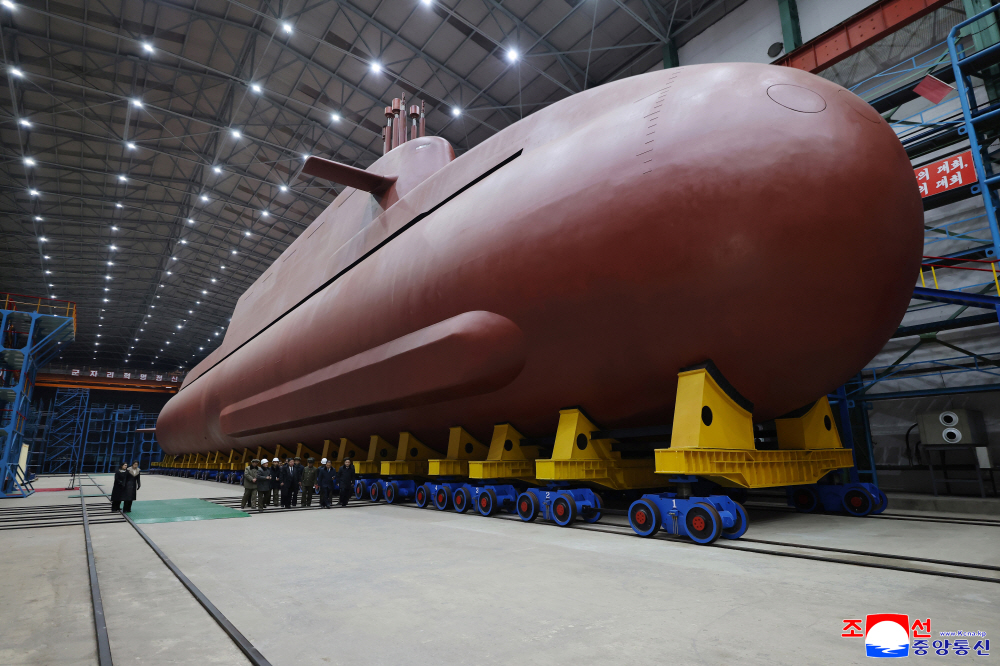
At the meeting, Kim is said to have instructed officials to “conduct a comprehensive, phased review of all agreements reached with Russia over the past three years and prepare a precise implementation claim.” Sources emphasize that this directive went beyond routine bureaucratic reporting, instead amounting to a quasi-demand document intended to pressure Moscow into delivering advanced technologies and equipment commensurate with the military manpower and logistical support Pyongyang has provided to Russia.
Kim reportedly followed this with a “first-priority directive” calling for strict accounting of what has been delivered, what remains outstanding, and which items require rescheduling.
In the days following the meeting, North Korea dispatched two working-level delegations to Russia. These groups reportedly included officials from the State Affairs Commission, the Missile Guidance Bureau, the Reconnaissance General Bureau, and the Ministry of National Defense’s Equipment Bureau. Personnel from the State Security Department were also reportedly attached, suggesting concerns not only about technical coordination and logistical support but also about information control and the prevention of technology leakage.
According to informed sources, the first working group is tasked with verifying on-site whether key equipment and materials essential to nuclear submarine construction are being delivered as agreed, as well as renegotiating timelines for technology transfers and component shipments delayed over the past three years.
The second group is reportedly focused on assessing the scope and quality of cooperation in missile and intelligence-reconnaissance domains while coordinating contingency planning with Russian counterparts in anticipation of shifts in the international environment, including a potential end to the Russo-Ukrainian War. Both delegations are expected to contribute to a consolidated roadmap defining additional areas of cooperation required to complete the nuclear submarine program within the year.
Analysts assess that Kim’s decision to abruptly form and dispatch these task forces reflects deeper structural problems in the submarine program. Kim identified the “possession of nuclear-powered submarines and underwater-launched nuclear strategic weapons” as a core objective of the five-year defense development plan unveiled at the Eighth Party Congress in January 2021. Under the original timeline, a launch ceremony would likely have already occurred.
Against this backdrop, European media recently reported on a mysterious maritime incident in the Mediterranean roughly one year ago, in which a Russian cargo vessel allegedly carrying a compact nuclear reactor intended for a North Korean submarine was sunk in a torpedo attack attributed to a Western country.
Diplomatic sources suggest the incident may have temporarily derailed Pyongyang’s ambitions. A subsequent Russian reactor shipment, however, is believed to have reached its destination. Military experts analyzing imagery released by North Korea have noted that the submarine’s external configuration suggests a small reactor may already be installed.
While it remains difficult to independently verify the Mediterranean incident or assess its precise impact, the absence of a launch ceremony—expected around the time of the Ninth Party Congress—points to a significant delay in the program.
A source familiar with North Korean internal dynamics noted that Kim Jong Un’s much-publicized “20×10 regional development policy,” prioritized last year, has produced few substantive results beyond ceremonial completions. The source added that the nuclear submarine represents the most tangible achievement available to showcase progress over the past five years. Its delay, the source suggested, is likely a source of acute frustration for the leadership.
This interpretation is reinforced by reports that Kim abruptly suspended a provincial inspection tour on December 21 and convened another emergency meeting in Pyongyang, citing a “comprehensive crisis.” The meeting followed Kim’s visits to a local factory completion ceremony and the Sinpo submarine construction site on December 19, and a hotel completion ceremony in Samjiyon on December 20. Observers assess that the juxtaposition of underwhelming regional development outcomes and stalled strategic weapons programs may have prompted Kim’s unusually sharp internal directives.
A high-level defector familiar with the program assessed that Kim has likely concluded that Russia’s transfer of advanced military technology is proceeding more slowly than promised or that the quality of transferred technology falls short of expectations. The defector added that Pyongyang is unlikely to stop at the current working-level engagements and may escalate its demands on Moscow in the coming months.
Separately, Kim Jong Un has continued a series of highly choreographed public appearances linked to North Korea’s overseas military operations, including a recent visit to the construction site of a memorial hall honoring fallen expeditionary forces, accompanied by his daughter Kim Ju-ae.
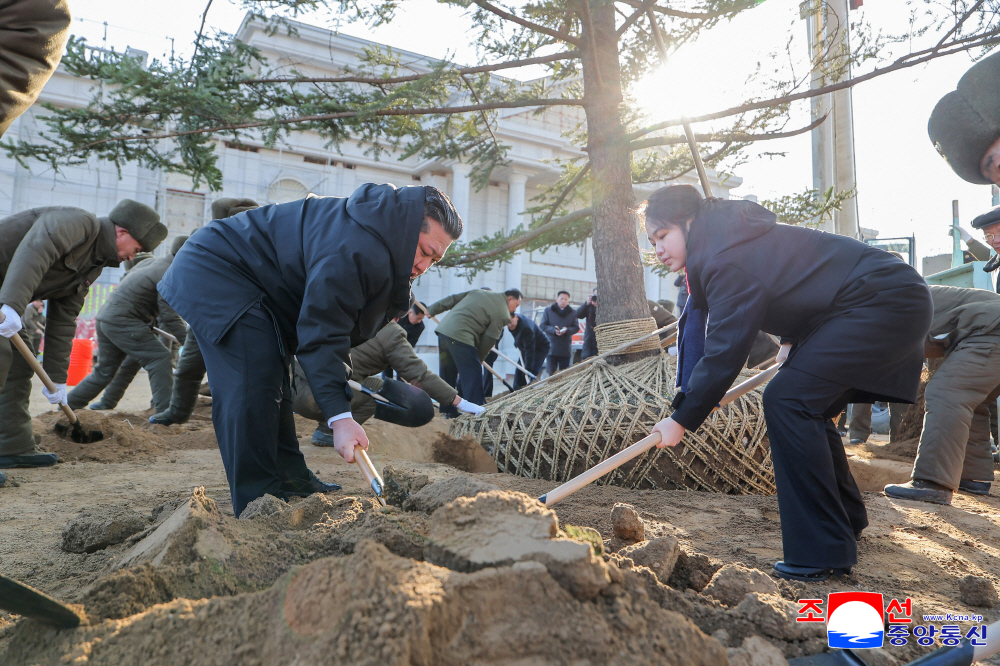
Rodong Sinmun reported on January 6 that Kim visited the construction site of the “Overseas Military Operations Combat Merit Memorial Hall” in Pyongyang’s Hwasong District the previous day. Accompanied by senior party, government, and military officials, Kim toured the site, offered encouragement to soldier-builders, and personally planted the first commemorative tree in accordance with the memorial’s landscaping plan.
In remarks carried by state media, Kim stated that the “noble sacrifices and heroic feats of the combatants will inspire patriotic fervor across all generations,” adding that the memorial would “powerfully demonstrate to the world the eternal vitality of the DPRK and the invincibility of the Korean People’s Army.”
State-released photographs showed Kim personally operating a forklift to move trees and shoveling soil, while Kim Ju-ae was depicted planting a tree with a long-handled shovel. She wore a red, blue, and white scarf evoking the colors of the North Korean flag.
Earlier, on January 1, Kim Ju-ae made her first recorded visit to the Kumsusan Palace of the Sun. Dressed in a purple suit, she stood prominently in the front row between Kim Jong Un and Ri Sol-ju, with Politburo Standing Committee members positioned half a step behind.
Observers note that North Korean media’s decision to place Kim Ju-ae at the center of mourning imagery—visually ahead of senior officials—is highly unusual and reinforces perceptions that her public profile is being deliberately elevated through repeated appearances at major military and state events.
Kim Jong Un References “Maduro’s Ouster” While Overseeing Hypersonic Missile Launch
North Korean leader Kim Jong Un has publicly emphasized the need for the continuous modernization of offensive weapons systems and the strengthening of nuclear war deterrence, citing recent “complex international incidents.” Observers assess that these remarks implicitly reference the recent U.S. operation involving the arrest and extradition of Venezuelan President Nicolás Maduro.
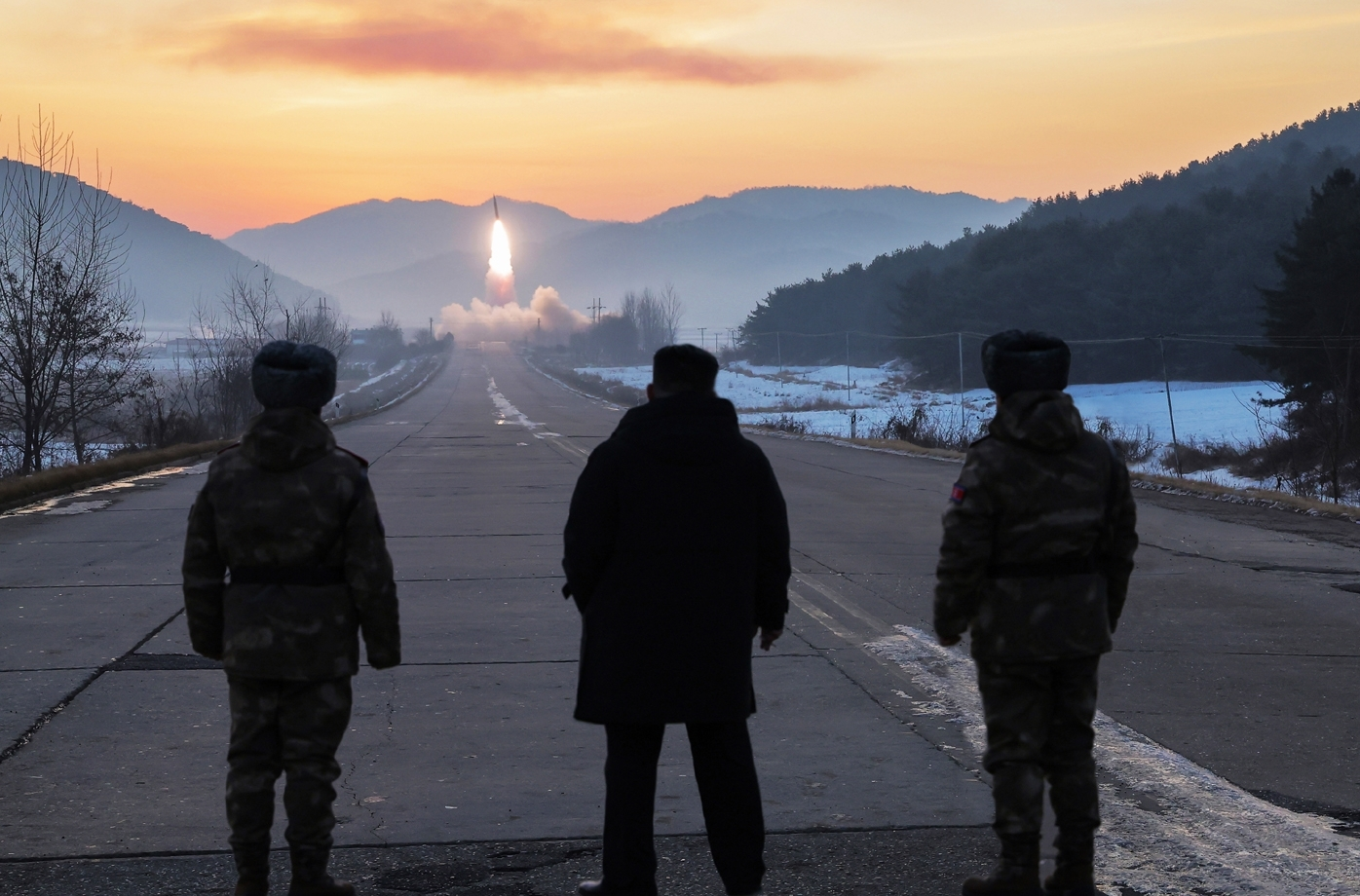
The Korean Central News Agency (KCNA) reported on January 5 that Kim observed a hypersonic missile launch drill the previous day. According to the report, hypersonic missiles launched from the Ryokpo District of Pyongyang flew northeast and struck designated targets approximately 1,000 kilometers away in the East Sea.
KCNA stated that the exercise was conducted “as part of an operational assessment to evaluate the readiness of the hypersonic weapons system, verify and confirm its mission capability, improve the combat proficiency of missile units, and ensure the continuity, effectiveness, and reliability of war deterrence.”
While observing the launch, Kim underscored that “maintaining and expanding a powerful and reliable nuclear deterrent— through continuous verification of key components of war deterrence, systematic performance enhancement, and mastery of operational capabilities—constitutes a critically important strategic task.”
He further argued that North Korea must “continuously renew its military capabilities, particularly offensive weapon systems,” characterizing this as “an essential requirement for self-defense.” Kim added that repeatedly compelling adversaries to recognize the constant readiness and lethality of North Korea’s strategic offensive forces is itself “a vital and effective means of exercising war deterrence.”
Kim went on to stress that there should be “no misunderstanding” regarding the intent of these activities, stating that they are “clearly aimed at the step-by-step enhancement of nuclear war deterrence capabilities.” He attributed the necessity of this effort to “recent geopolitical crises and increasingly complex international incidents.”
Analysts interpret Kim’s reference to “international incidents” as an indirect allusion to the U.S. arrest and transfer of Venezuelan President Nicolás Maduro to New York. By citing the case of a leader from a country Pyongyang considers politically aligned being abruptly detained by U.S. authorities, Kim appears to be reinforcing domestically the regime’s long-standing narrative that nuclear weapons constitute the ultimate guarantee of regime survival.
Kim was accompanied at the launch drill by Kim Jong-sik, First Vice Minister of the Munitions Industry Department of the Workers’ Party of Korea, and Jang Chang-ha, Director of the Missile Bureau. Separately, South Korea’s Joint Chiefs of Staff announced that North Korea had launched multiple ballistic missiles toward the East Sea on the morning of January 4. The launches marked Pyongyang’s first ballistic missile tests of the year and occurred approximately two months after its previous short-range ballistic missile launch on November 7 of last year.
North Korea Downplays Xi Jinping’s New Year Message While Elevating Putin’s, Signaling Friction with Beijing
Signs of renewed strain have emerged in North Korea–China relations, which had appeared to stabilize following Kim Jong Un’s attendance at China’s Victory Day commemorations last September. On January 1, North Korean state media provided only minimal coverage of Chinese President Xi Jinping’s New Year greeting to Kim, treating it as a brief item alongside messages from other foreign leaders. Analysts note that such treatment would have been nearly inconceivable given the historical centrality of the bilateral relationship.
Rodong Sinmun, the official newspaper of the Workers’ Party of Korea, reported that multiple heads of state, party leaders, and foreign figures had sent New Year’s greetings to Kim Jong Un. Xi Jinping and his wife were listed alongside leaders from Vietnam, Myanmar, Turkmenistan, Belarus, and Algeria. Notably, however, Rodong Sinmun neither published the full text of Xi’s message in a separate article nor indicated whether Kim had sent a reply.
This approach represents a sharp departure from past practice. In 2024, designated by both sides as the “Year of DPRK–China Friendship,” North Korean media prominently published the full texts of congratulatory messages exchanged between Kim and Xi, highlighting efforts to restore and deepen bilateral ties.
Given that China accounts for approximately 98 percent of North Korea’s external trade and remains indispensable to the North Korean economy, New Year’s greetings from China’s top leader have historically received exceptional coverage. Analysts argue that relegating Xi’s message to a brief mention constitutes not merely a diplomatic snub, but a visible cooling of relations.
The shift is further underscored by Rodong Sinmun’s year-end special article published on December 31, which characterized 2025 as a year of historic transition. While the piece extensively highlighted achievements in national defense and construction, it made no reference to Kim Jong Un’s diplomatic activities.
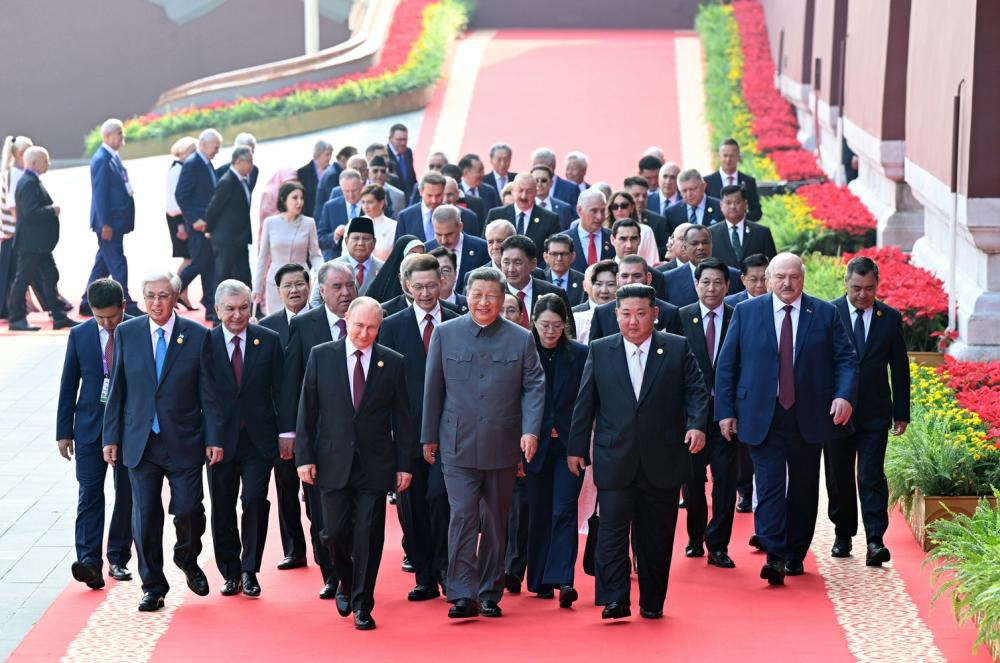
Conspicuously absent was any mention of Kim’s September visit to China to attend the 80th anniversary of Victory Day, his first appearance at a major multilateral diplomatic event since assuming power. At that event, Kim stood alongside Xi Jinping and Russian President Vladimir Putin atop Tiananmen Gate, symbolically projecting a close trilateral alignment.
In contrast, North Korea has gone to considerable lengths to highlight its relationship with Russia. Following the publication of Russian President Vladimir Putin’s New Year’s message on December 18, Rodong Sinmun subsequently released the full text of Kim Jong Un’s reply on December 27. In the letter, Kim wrote that he felt “infinite pride” and was “deeply moved” to be jointly forging “the great history of DPRK–Russia relations and the century-long friendship” between the two countries with President Putin.
Subtle indications of friction with China have also surfaced in the civilian sphere. Reports indicate that female staff members who had long worked at North Korean restaurants in Beijing have recently returned to North Korea in succession. Observers assess that this development is less likely the result of routine visa issues and more indicative of a shift in Chinese authorities’ tolerance toward the irregular operations of such establishments.
In some cases, Chinese television broadcasts have reportedly replaced Korean Central Television programming, and menus have increasingly emphasized Chinese cuisine—suggesting that the personnel withdrawals may be permanent rather than temporary.
Diplomatic sources assess that Pyongyang harbors resentment over what it perceives as inadequate compensation from Beijing for its participation in the Victory Day celebrations. To date, the only confirmed material support provided by China appears to have been shipments of sugar.
Last month, China’s National Diplomatic Academy, citing customs data, reported that North Korea received approximately 19,000 tons of sugar following Kim’s summit with Xi. According to sources familiar with internal sentiment, this outcome reportedly generated dissatisfaction within Pyongyang, where expectations of more substantial economic or strategic benefits had been widespread.
Additional frustration may stem from China’s continued engagement with South Korea. North Korea is reportedly displeased by the steady improvement in Seoul–Beijing relations, including the South Korea–China summit held on the margins of the APEC meeting in Gyeongju last year and President Lee’s state visit to China earlier this month. A diplomatic source in Beijing noted that Pyongyang’s sensitivities are likely heightened ahead of the upcoming South Korea–China summit in China, the first such meeting in nine years.
-
PREV [North Korea Inside]
-
NEXT [Thematic Analysis]