

North Korea Inside
· “Decapitation Anxiety” in Pyongyang After Maduro’s Arrest: Kim Jong-un’s Personal Security Elevated to a Quasi-Wartime Posture
· Sinuiju Greenhouse Project and North Korea’s Potential Shift Toward Tourism-Based Foreign Currency Generation
· North Korea Screens Film Depicting an Assassination Plot Against Kim Jong-il Nationwide and Broadcasts It on State Television
· Kim Yo-jong Rejects Prospects for Improved Inter-Korean Relations
Kim Myong-sung
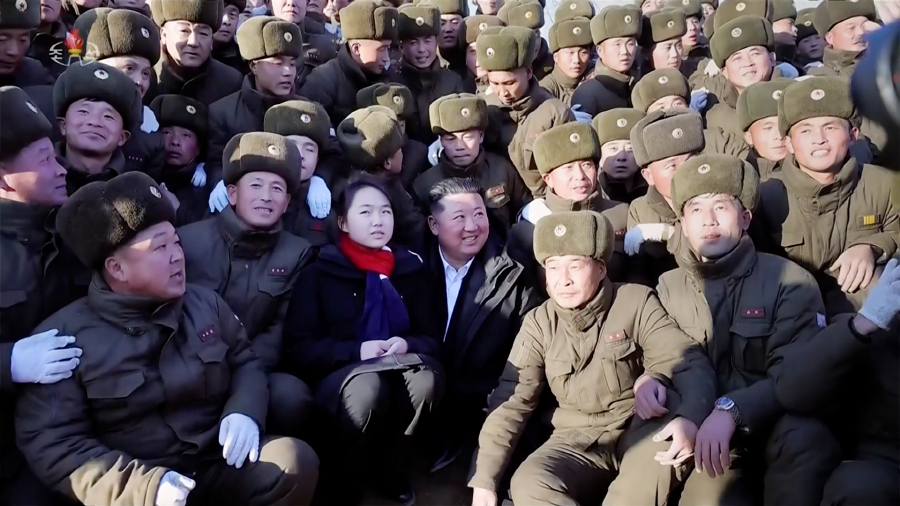
Security conditions in central Pyongyang and surrounding areas have reportedly reached an unprecedented level of intensity. Following emergency directives issued jointly by the State Affairs Commission and the Party Secretariat in the early hours of January 4, personnel assigned to the protection of “Event No. 1”—a codename for Kim Jong-un’s movements—were reportedly increased to approximately five times their normal levels. Heavily armed units, including long-range sniper teams and machine-gun crews, were deployed at key locations, while orders were issued to increase individual ammunition loads by up to tenfold.
All personnel assigned to Kim Jong Un and his family, including guards stationed at the Kumsusan Palace of the Sun, were placed on continuous standby within secure compounds and barred from leave or off-site movement. In the capital’s outskirts, including Pyeongseong and Samseok, mechanized and infantry units under the Guard Bureau reportedly conducted round-the-clock drills simulating external infiltration and precision strikes.
According to a source, slogans such as “Defend Kim Jong Un at all costs” and “Defend the Paekdu bloodline at all costs” were prominently displayed, reinforcing an atmosphere in which operational error is intolerable. Even senior officials are reportedly proceeding with extreme caution amid heightened surveillance and discipline.
This development is expected to further elevate the institutional status of Kim Jong Un’s guard units, which already function as a quasi-independent military force. These units reportedly encompass ground, naval, and air components, as well as special operations and electronic warfare capabilities. In an emergency scenario, all branches, including sniper and counter-infiltration teams, are reportedly tasked not only with leader protection but also with supporting strategic retaliation, including nuclear response contingencies.
The apparent intent is to reorganize national military priorities around regime survival, with Kim Jong Un’s personal security placed above all other considerations. As of January 11, no order had been issued to downgrade the quasi-war posture. Party and guard authorities remain highly sensitive to U.S. military movements, and sources assess that this heightened security posture is likely to persist for an extended period.
Personnel changes within the leadership security apparatus further underscore regime unease. According to the South Korean Ministry of Unification’s Key North Korean Figures 2025 and North Korean Agency Personnel Directory 2025, the head of the Workers’ Party Central Committee Guard Office has been replaced, as have the director of the State Affairs Commission Security Bureau and the commander of the Guard Command responsible for Kim Jong Un’s personal security. Although the precise timing remains unclear, the reshuffles reportedly occurred within the past two to three years, suggesting a broader effort to tighten loyalty and control within the security elite.
Separate developments suggest Pyongyang is simultaneously exploring new foreign currency channels. Analysts increasingly assess that the Sinuiju Greenhouse Farm Complex under construction near the Chinese border may be designed for purposes extending well beyond agricultural production, potentially functioning as a combined tourism, logistics, and export hub.
In a report released January 12, Eun-yi Jung of the Korea Institute for National Unification noted that the Sinuiju facility differs markedly from existing greenhouse complexes in scale, infrastructure, and media portrayal. Covering approximately 4.46 million square meters—significantly larger than comparable facilities—it includes landscaped parks, fruit forests, processing plants, storage facilities, and upgraded transport infrastructure.
Notably, Kim Jong Un has conducted repeated on-site inspections, visiting the complex five times last year and again at the start of this year, an unusually high level of personal attention. North Korean media coverage has conspicuously omitted customary references to “improving the people’s diet,” instead emphasizing scale, lighting, and scenic features, including prominent nighttime illumination—widely interpreted as catering to potential Chinese tourists.
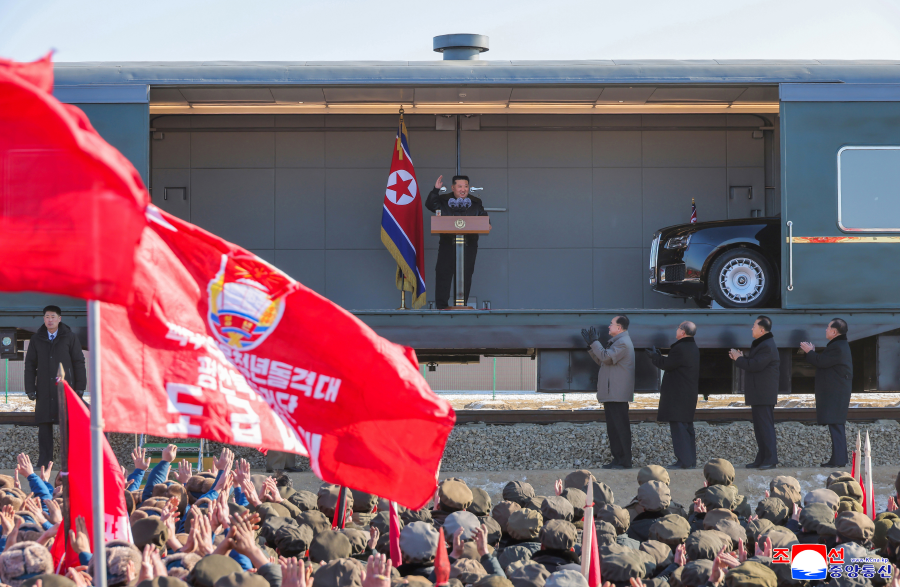
Logistics upgrades further reinforce this interpretation. Kim reportedly ordered the adjacent railway station to be converted into a combined passenger and freight hub, facilitating both mass transport and export. Field reporting from Dandong, China, indicates possible Chinese capital involvement, raising the likelihood that the project is oriented toward export markets and foreign currency earnings.
Analysts suggest the Sinuiju greenhouse project may represent an attempt to merge agriculture, tourism, and logistics into a sanctions-resilient revenue model—a “tourism complex disguised as agriculture.”
North Korea Screens Film Depicting an Assassination Plot Against Kim Jong-il Nationwide and Broadcasts It on State Television
North Korea has confirmed that a feature film depicting an assassination attempt on Kim Jong Il, former chairman of the National Defense Commission, is being screened nationwide and broadcast on state television.
In a political system where even indirect references to the personal security of the supreme leader have traditionally been treated as taboo, the public dissemination of such content represents a notable departure from past practice. The regime’s decision to expose the entire population to a narrative centered on threats to the leader suggests a calculated effort to reinforce internal cohesion by underscoring the theme of “absolute loyalty” to the leadership.
The portrayal of the would-be assassin as having links to South Korea further indicates an intent to channel public hostility toward external enemies. As one South Korean government source observed on January 9, “Kim Jong Un appears to harbor a significantly higher level of anxiety regarding his personal safety and regime security than his predecessors.”
According to Rodong Sinmun, the Workers’ Party daily, the film—Day and Night of Confrontation, produced by the 4·25 Art Film Studio—has been screened since the beginning of the year at cinemas across Pyongyang, including the People’s Culture Palace, as well as at regional theaters nationwide.
NK News, a U.S.-based outlet specializing in North Korean affairs, further reported that the film was aired on Korean Central Television (KCTV) on January 3. Broadcasting a film that is simultaneously in nationwide theatrical release on KCTV, an outlet watched by virtually the entire population, is unprecedented and underscores the regime’s determination to maximize its reach and impact.
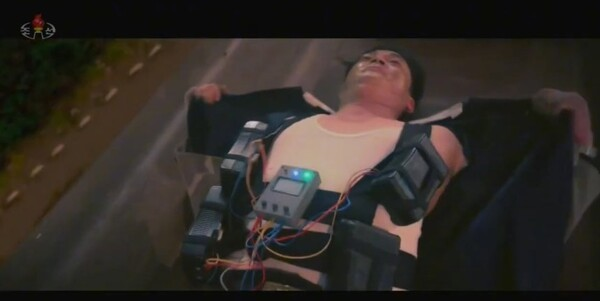
The film, which received awards in three categories at last year’s Pyongyang International Film Festival, is a sequel to the 2022 production A Day and a Night, which depicted an assassination attempt against Kim Il-sung. Together, the two films form a series centered on successive assassination plots targeting members of the Kim family.
According to Rodong Sinmun, the first installment drew inspiration from an incident in which anti-regime elements infiltrated the railway sector in the so-called “New Liberation Zone” (present-day South Hwanghae Province) and were intercepted while attempting to assassinate Kim Il Sung aboard a train.
Set in the 1990s following Kim Il Sung’s death, Day and Night of Confrontation follows prosecutor Kim Sung-jae, ostensibly tasked with investigating a series of murders. He is later revealed to be the mastermind behind a plot to assassinate Kim Jong Il. His true identity is Ri Tae-ul, the son of the would-be assassin from the first film, who inherits his father’s ideological mission and attempts to kill Kim Jong Il by sabotaging his train.
Rodong Sinmun described audience reactions by stating that viewers were overwhelmed with anger upon witnessing “the son of a class enemy, who infiltrated key positions after the war, concealed his identity for decades, and plotted to overthrow the state in revenge for his father.”
The train bombing depicted in the film closely parallels the 2004 Ryongchon train explosion in North Pyongan Province, in which a train carrying ammonium nitrate and fuel ignited after contacting overhead power lines, killing 154 people and injuring more than 1,300. The incident occurred only hours after Kim Jong-il’s special train had passed through the same station following a visit to China.
At the time, North Korean authorities treated the explosion as a possible assassination attempt, launching a sweeping investigation that culminated in the confiscation of all mobile phones nationwide and the suspension of mobile communications—a measure unprecedented even by North Korean standards.
The film concludes with Ri Tae-ul fleeing abroad after the failed assassination attempt, while his descendants later return to North Korea to attend the 2024 inauguration of Pyongyang’s Pioneer Street. Rodong Sinmun hinted at a future sequel, noting that the ending features “a grandson who vows revenge against our system.” This narrative arc, spanning three generations of assassination threats, strongly suggests that a subsequent installment may focus on a plot targeting Kim Jong Un himself.
Several narrative devices reinforce the film’s ideological messaging. Notably, Ri Tae-ul’s wife addresses him using the term “oppa,” a South Korean expression prohibited under North Korean law. This linguistic choice implicitly frames the character as influenced by external forces, particularly South Korea, and functions as a tool for cultivating anti-South sentiment. As Rodong Sinmun asserted, the film conveys the lesson that “even after a thousand years, the nature of imperialists and class enemies does not change, and those driven by self-interest inevitably end in treason.”
In contrast to traditional North Korean cinema, the film features graphic depictions of murder, torture, and armed confrontation, including train fights, car chases, and large-scale explosions reminiscent of Hollywood action films. The state media praised its fast-paced narrative and dramatic tension, noting that its unexpected plot developments kept audiences “immersed in excitement.” Analysts assess that this stylistic shift reflects a deliberate effort to appeal to younger viewers who have been increasingly exposed to foreign media.
A senior official at a South Korea’s national research institute commented that the film’s objective is to attract viewers through spectacle and violence while embedding a core propaganda message: “Enemies are perpetually targeting the leadership, and the struggle against them is unending.” The official added that the timing of the release, coinciding with Kim Ju-ae’s increased public visibility and the apparent institutionalization of fourth-generation succession, was “highly consequential.”
Kim Yo-jong Rejects Prospects for Improved Inter-Korean Relations
Against this backdrop, Kim Yo-jong, vice department director of the Workers’ Party of Korea, publicly dismissed the South Korean government’s expectations for improved inter-Korean relations as a “pipe dream.” Her remarks are widely interpreted as reinforcing Kim Jong Un’s doctrine of “two hostile states” and as an effort to foreclose any near-term prospects for dialogue with Seoul.

In a statement released via the Korean Central News Agency late on January 13, Kim criticized the South Korean Ministry of Unification for suggesting that her previous remarks left room for communication and tension reduction, calling the assessment “pathetic” and “fundamentally misguided.” She asserted that all South Korean notions of improving inter-Korean relations were “unrealizable illusions” and that no change in North Korea’s stance should be expected.
Analysts view the statement as a calculated move to seize the initiative vis-à-vis the Lee Jae-myung administration, leveraging the recent drone incident to underscore Seoul’s alleged responsibility while reaffirming Pyongyang’s refusal to engage. Kim reiterated demands for an apology and preventive measures, warning that repeated violations would result in “unbearable consequences” and implying that rhetorical warnings could translate into concrete action.
Observers note that North Korea’s increasingly confrontational rhetoric since the start of the year coincides with President Lee’s active diplomatic engagement with the United States, Japan, and China on peace and denuclearization issues. From Pyongyang’s perspective, being placed back on the international diplomatic agenda appears to have provoked a hardened response.
In this context, Kim Yo-jong’s statement is widely interpreted as delivering a dual message: reaffirming the regime’s policy of severing inter-Korean relations while simultaneously applying pressure on Seoul to acknowledge responsibility for recent incidents. Contrary to official South Korean assessments suggesting even a minimal opening for dialogue, prevailing analysis holds that North Korea is more likely to sustain its confrontational posture for the foreseeable future.
-
PREV [Thematic Analysis]
-
NEXT [North Korea Inside]