

North Korea Inside
· Kim Jong Un Visits Ministry of National Defense on 78th Army Foundation Day, Launching New Five-Year Defense Plan
· North Korea Schedules Ninth Party Congress for Late February; 50,000 Housing Unit Completion Ceremony to Precede Event
· Signs of Renewed North Korea–China Engagement
Kim Myong-sung
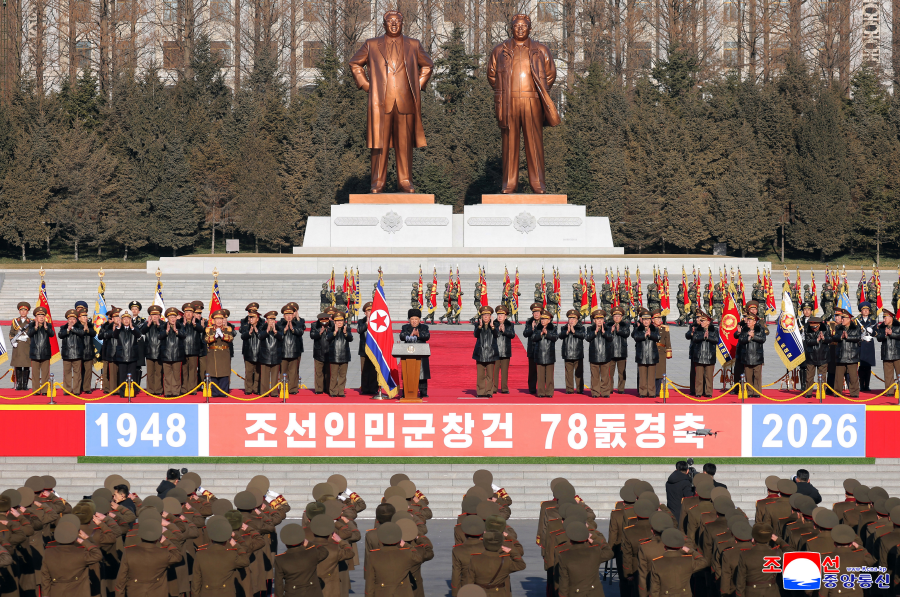
Although Kim did not provide specific policy details, observers anticipate that—similar to the Eighth Party Congress in January 2021, which unveiled a “Five-Year Plan for National Defense Development”—the forthcoming Ninth Party Congress later this month will outline new defense priorities and force modernization objectives. Additionally, 2026 marks the third year of implementation of the regime’s “20×10 Local Development Policy,” with the military expected to play an expanded role in major state-led construction and infrastructure projects.
Notably, Kim’s remarks did not include explicit criticism of the United States or South Korea. By contrast, during his Armed Forces Day address last year, he characterized the United States as a principal driver of global conflict and reaffirmed a policy of strengthening nuclear forces. The relative restraint in this year’s speech may reflect Pyongyang’s effort to calibrate external messaging ahead of the Party Congress, particularly amid fluid regional dynamics, including a planned U.S.–China summit in April.
In his address, Kim paid tribute not only to senior commanders and military officials but also to “commanders and combatants of overseas special operations forces” reportedly deployed to Russia, highlighting the regime’s continued emphasis on external military engagement.
He described the period leading up to the Ninth Party Congress as one in which the “greatness and preciousness” of the armed forces are particularly evident. Reflecting on the past five years, Kim asserted that the country’s achievements would not have been possible without the “immense role” played by the KPA.
Kim characterized the previous year as one marked by “unprecedented and dramatic events” and “brilliant achievements” attributable to the military. He further stated that the coming year would represent “a grand year of transformation,” during which the operational scope of the armed forces would expand and necessitate more assertive action.
Referring to the guidance of the Ninth Party Congress, he emphasized that the “grand struggle ahead” calls upon the Korean People’s Army, which he described as “the strongest and invincible heroic army in the world.”
Following his remarks, Kim posed for commemorative photographs with senior Ministry of National Defense commanders and retired military personnel, and observed athletic competitions. Officials accompanying him included Pak Jong-chon, No Kwang-chol, Ri Yong-gil, Kim Kwang-hyok, Pak Kwang-sop, Jong Kyong-thak, and Hwang Pyong-so.
Senior military leaders also paid tribute at the Kumsusan Palace of the Sun, where Kim Il-sung and Kim Jong-il lie in state, marking Army Foundation Day with floral offerings.
Commemorative events were held nationwide. In Pyongyang, Choe Ryong-hae, President of the Standing Committee of the Supreme People’s Assembly, attended a concert and dance performance by the Ministry of National Defense Orchestra at the Ponghwa Art Theater. Additional celebrations included dance gatherings for Women’s Union members at Arch of Triumph Square and youth and student performances at various venues, including outside the Pyongyang Grand Theatre.
Delegations from the Workers’ Party and government officials visited military units to express support for service members. Citizens, soldiers, workers, and youth also laid flowers at the statues of Kim Il-sung and Kim Jong-il on Mansu Hill and paid respects at memorial sites dedicated to those who died in the Korean War, reinforcing official narratives of patriotism and revolutionary continuity.
North Korea announced on February 8 that it will convene the Ninth Congress of the Workers’ Party of Korea (WPK)—the regime’s highest decision-making body—in late February.
According to the Korean Central News Agency (KCNA), the decision was adopted at the 27th meeting of the Political Bureau of the Eighth Central Committee, held on February 7 at the WPK Central Committee headquarters under the guidance of Kim Jong Un. KCNA reported that the Political Bureau unanimously approved a resolution to convene the Ninth Party Congress in Pyongyang, described as the “revolutionary capital,” in late February 2026.
The meeting reportedly reviewed and approved key agenda items, including the qualifications of delegates, proposals concerning the composition of the congress leadership bodies, including the executive body, presidium, and secretariat, and draft documents to be submitted for deliberation. KCNA stated that Kim “positively evaluated” the preparatory work undertaken by relevant subcommittees and outlined “fundamental issues and detailed tasks” to ensure the congress’s success.
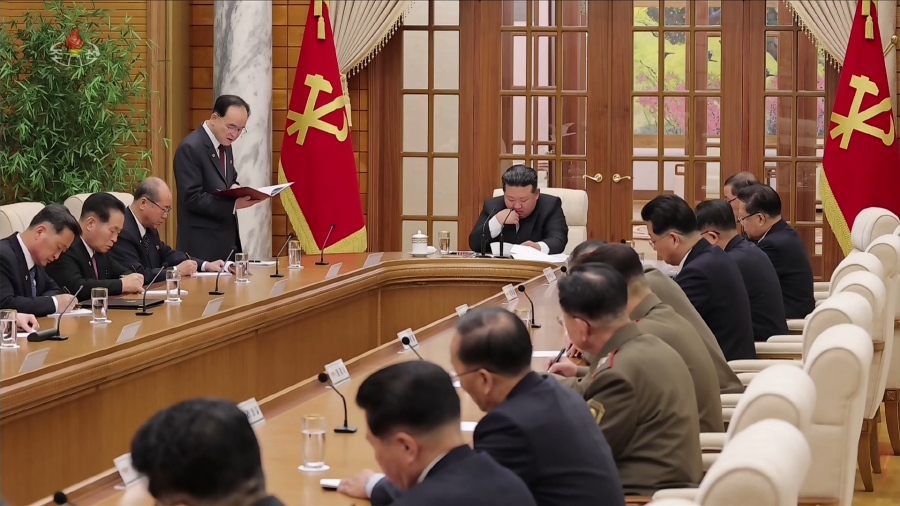
By formalizing the schedule through the Political Bureau—the Party’s core decision-making organ—Pyongyang appears to have completed the principal procedural steps required to convene the congress.
The Ninth Party Congress is expected to assess policy outcomes over the previous five-year period and articulate domestic and foreign policy priorities for the next five years. Particular attention will be given to Kim Jong Un’s remarks concerning inter-Korean relations and policy toward the United States, especially amid ongoing regional security tensions.
The session was reportedly presided over by Jo Yong-won, Director of the Organization and Guidance Department, acting pursuant to Kim’s instructions. Attendees included Politburo Standing Committee members Pak Thae-song and Choe Ryong-hae, as well as Politburo members Ri Il-hwan, Pak Jong-chon, Kim Tok-hun, and Choe Son-hui. Ri Pyong-chol, the Party’s senior advisor on military-industrial policy, was also observed in attendance.
North Korea has concurrently completed the selection of delegates. KCNA reported that between January 28 and February 6, representative meetings of provincial and central-level party organizations—including the Cabinet, the Korean People’s Army, the Ministry of Social Security, and the Ministry of Railways—were convened to elect delegates and nominated observers. These meetings followed earlier delegate selections at lower-level party meetings.
The Eighth Party Congress in 2021 was attended by approximately 7,000 participants, including 4,750 delegates, 250 senior Party officials, and roughly 2,000 observers. A similar scale of participation may be anticipated for the upcoming congress.
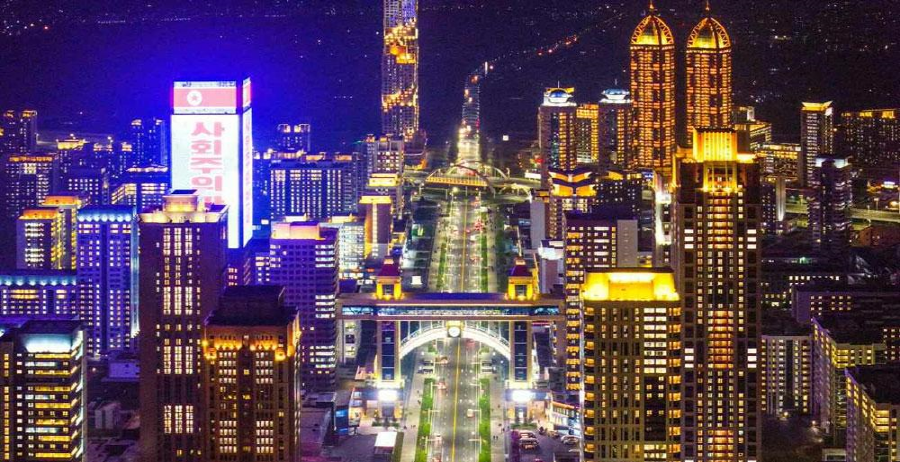
In parallel with preparations for the Party Congress, North Korea appears poised to complete the “Pyongyang 50,000-Unit Housing Construction Project,” a flagship initiative first announced at the Eighth Party Congress in 2021. The project called for the construction of 10,000 housing units annually over five years to address chronic housing shortages in the capital.
Rodong Sinmun, the Party’s official newspaper, reported on February 11 that the project is “on the verge of grand completion,” asserting that the goal has been achieved “on schedule as determined by the Party.” The newspaper characterized the new residential districts—particularly in the Hwasong area northeast of Pyongyang—as emblematic of “the remarkable transformation and development” of the Kim Jong Un era.
Since 2022, 10,000 housing units have reportedly been completed each year, including developments in the Songsin-Songhwa district, as well as multiple phases of the Hwasong District project. KCNA previously reported that finishing work on the fourth and final phase had reached approximately 99 percent completion as of early January.
Given the political significance attached to the project, observers assess that Pyongyang may stage a high-profile completion ceremony immediately prior to the Party Congress to reinforce narratives of economic progress and regime legitimacy.
In addition, North Korea appears to be accelerating groundbreaking ceremonies for the third year of its “20×10 Local Development Policy,” which calls for the annual construction of industrial facilities, hospitals, and service centers in 20 regional areas. State media has reported ceremonies in more than 20 localities in recent weeks, suggesting a coordinated effort to demonstrate policy momentum ahead of the congress.
Signs of Renewed North Korea–China Engagement
Separately, recent developments point to tentative signs of increased engagement between North Korea and China.
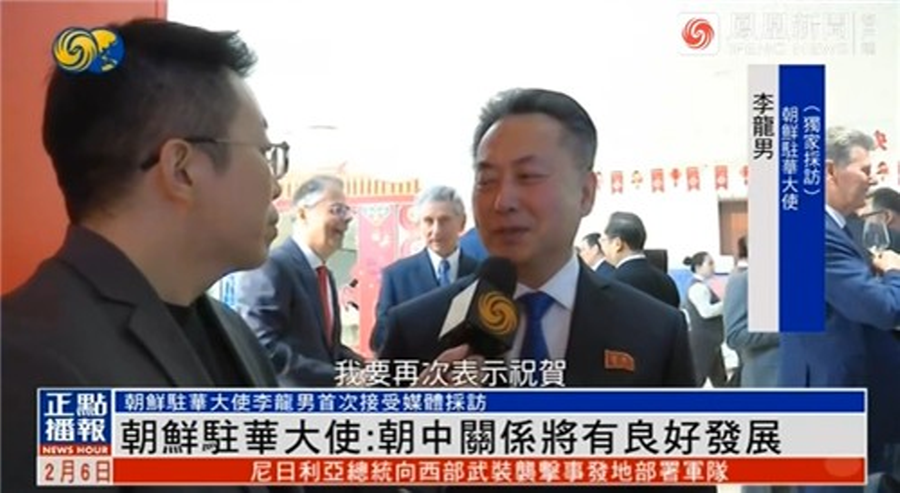
Ri Ryong-nam, North Korean ambassador to China, stated that high-level exchanges between the two countries would “proceed normally” this year. According to Hong Kong-based Phoenix Television, Ri made the remarks on February 5 following a New Year reception hosted by Chinese Ministry of Foreign Affairs. He expressed confidence that bilateral relations would “develop well” in line with the intentions of both countries’ leaders.
Phoenix Television noted that Ri—appointed in 2021—rarely engages with the media publicly, making the interview noteworthy.
Since early this year, North Korea has dispatched multiple working-level delegations to China in the economic and technical sectors. NK News reported that a North Korean livestock delegation visited a biotechnology firm in Yunnan Province in mid-January, where discussions reportedly focused on breeding systems, feed production, and digital livestock management technologies. These areas align with recent domestic priorities emphasized by Kim Jong Un, including the modernization of agricultural and livestock production.
In addition, a delegation from North Korea’s Ministry of Education reportedly visited artificial intelligence (AI) and extended reality (XR) technology companies in Shenzhen, China, in late January, where discussions included technology demonstrations and localization strategies.
Taken together, these developments suggest a gradual normalization of practical cooperation in economic and technical fields, potentially signaling a broader stabilization of North Korea–China relations following a period of relative strain.
With the Ninth Party Congress approaching, Pyongyang appears intent on entering the gathering amid carefully choreographed displays of domestic achievement and cautiously expanding external engagement.
-
PREV [NK Focus]
-
NEXT [NK Focus]