

North Korea Inside
· North Korea to Hold Supreme People’s Assembly Elections on March 15, with Institutional Actions Expected After Party Congress
· Release of Solo Image of Kim Jong-un’s Daughter Viewed as Unusual
· Kim Jong-un Inspects Cement Complex Following Party Congress

Kim Myong-sung
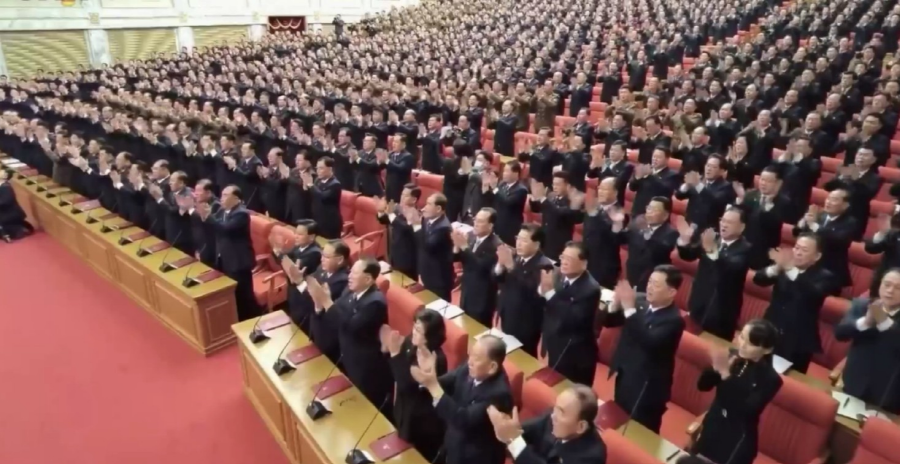
On March 4, state media outlets—including the Korean Central News Agency and the Rodong Sinmun—reported that the Presidium of the SPA had issued a resolution announcing that elections for deputies to the 15th SPA would be held in accordance with Article 90 of the DPRK Constitution. Kim Hyong-sik was appointed chairman of the Central Election Commission, with Jeon Kyong-chol serving as vice chairman.
The SPA functions as North Korea’s highest state authority under its constitution, primarily serving to formalize and codify decisions made by the WPK leadership. It is typically convened following major Party gatherings, including Party Congresses and plenary meetings of the Party Central Committee, and its sessions are generally used to ratify personnel appointments, budgetary plans, and legislative revisions.
The timing of the 15th-term election is notable. Although the five-year term of deputies elected in 2019 expired in 2024, the election was delayed for nearly a year and was announced immediately following the conclusion of the Ninth Party Congress. This sequencing suggests a deliberate effort to align legislative renewal with the Party’s newly articulated policy direction.
The election is widely expected to facilitate a reorganization of state institutions and a recalibration of senior personnel. Choe Ryong-hae, who has served as President of the Presidium of the SPA since 2019 and has effectively held the state’s second-highest formal position, was not included among the members of the newly elected Party Central Committee at the Ninth Party Congress. His formal retirement may be confirmed during the forthcoming SPA session.
Speculation has emerged regarding potential successors, including Jo Yong-won, a senior Party official previously responsible for organizational affairs and widely regarded as a close associate of Kim Jong-un.
Observers are also assessing the likelihood of constitutional amendments. Of particular interest is whether Kim Jong-un’s articulation of “two hostile states” on the Korean Peninsula—recently reflected in revisions to Party rules—will be codified in the state constitution. Additionally, some analysts have raised the possibility that the long-vacant post of state “Chairman,” last held by Kim Il-sung, could be reinstated and reassigned to Kim Jong-un, signaling a further institutional consolidation of authority.
Under North Korea’s constitutional framework, SPA deputies are elected for five-year terms at a ratio of one representative per 30,000 citizens. Elections are formally conducted by universal, equal, and direct suffrage through secret ballot, although in practice candidate selection is centrally managed.
South Korea’s Ministry of Unification described as “unusual” North Korean state media’s recent release of a solo photograph showing Kim Jong-un’s daughter, Ju-ae, aiming and firing a rifle, while cautioning against reading too much into it with respect to succession planning.
According to state media reports, Kim Jong-un presented newly manufactured sniper rifles to senior Party officials and military commanders at a meeting held at the Party Central Committee headquarters on February 27. Coverage by the Korean Central News Agency included images and video footage of Ju-ae independently handling the weapon. This appears to be the first publicly released imagery featuring Ju-ae without Kim Jong-un or other officials in the same frame.
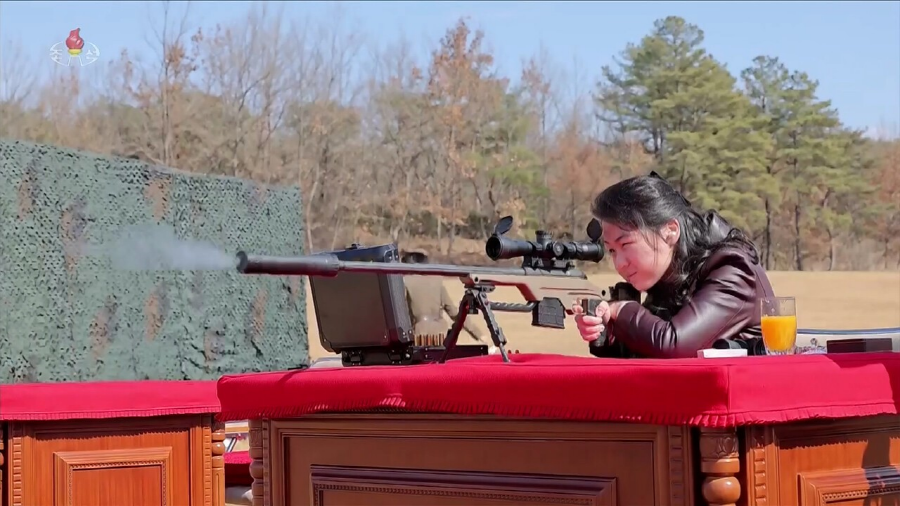
Additional images showed Ju-ae observing events through binoculars alongside her father and standing behind him during the presentation ceremony. While some observers interpret such imagery as indicative of early-stage succession grooming, South Korean officials emphasized that the available evidence remains insufficient to conclude that a formalized succession framework is in place.
Kim Jong-un Inspects Cement Complex Following Party Congress
Kim Jong‑un chose an industrial site visit to a major cement production facility as his first public economic engagement following the conclusion of the Ninth Workers’ Party of Korea (WPK) Congress. The inspection took place amid heightened regional tensions after recent U.S. military actions, drawing attention to the leadership’s messaging priorities.
According to state media reports on March 2, Kim inspected the Sangwon Cement Complex the previous day, instructing officials to increase output and modernize production facilities. He reportedly emphasized the complex’s central role in advancing national development goals and underscored the importance of expanded production for achieving economic revival.
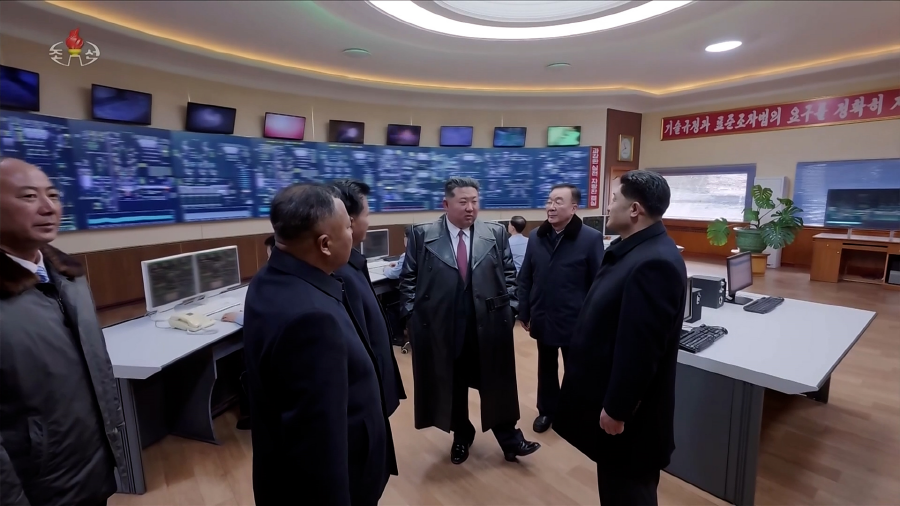
The visit marked Kim’s first on-site guidance since presenting a new five-year national economic development plan at the Party Congress. Notably, he visited a construction materials facility rather than a defense-industrial or strategic weapons site. The choice appears aimed at reinforcing the primacy of economic objectives—particularly housing construction and local industrial development—highlighted at the Congress.
Cement production plays a critical role in North Korea’s centrally planned economy. Major initiatives—including large-scale housing construction in Pyongyang and the expansion of provincial industrial capacity—depend heavily on a steady supply of cement. The Sangwon Cement Complex, operational since 1989 and supported by nearby limestone reserves, remains one of the country’s principal production hubs.
The timing of the visit has also drawn scrutiny. As developments in the Middle East intensified, including reports of the death of Iran’s Supreme Leader in a U.S. strike, Pyongyang publicly condemned the action through a Foreign Ministry statement carried in domestic media. Kim’s decision to proceed the following day with a domestically focused inspection may have been intended to project continuity and resolve in the face of external volatility.
At the same time, the selected site is located in Sangwon County near Pyongyang, minimizing travel and security exposure during a period of elevated alert. The choice suggests a calibrated approach: signaling stability and policy continuity while limiting operational risk.
Taken together, the cement complex visit underscored two parallel imperatives facing the North Korean leadership—demonstrating resilience amid external uncertainty while reinforcing the domestic economic agenda set forth at the Party Congress.
-
PREV [North Korea Inside]
-
NEXT [NK Focus]