

North Korea Inside
· Pyongyang Hosts Event Marking 105th Anniversary of Chinese Communist Party; Jo Yong-won and Senior Officials Attend
· North Korea Warns: “Those Who Abuse the People Will Not Escape the Law’s Ruthless Judgment”
· Kim Jong-un Visits Wonsan-Kalma Tourist Facilities Amid Expectations of Growing Chinese Tourism

Kim Myong-sung
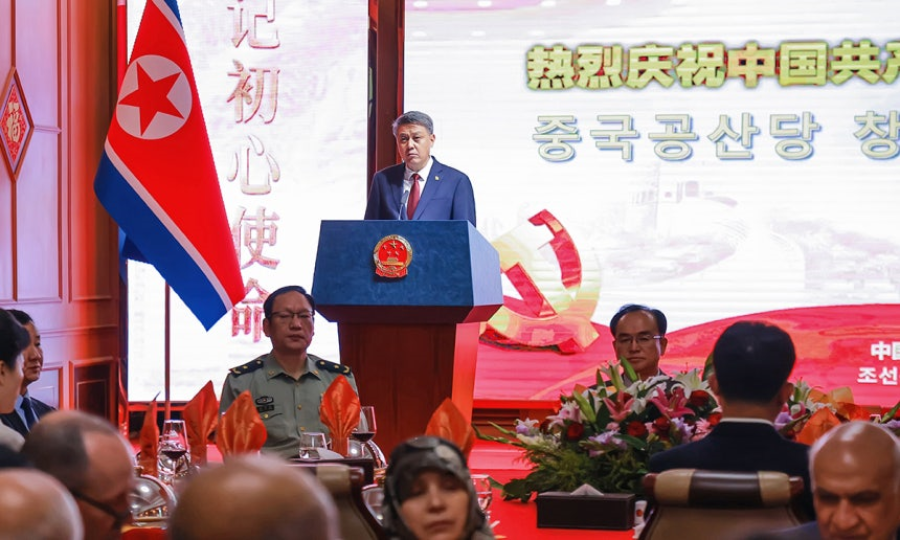
According to the Chinese Embassy in Pyongyang on July 1, Chinese Ambassador Wang Yajun hosted a reception at the embassy on June 30 to commemorate the anniversary.
The North Korean delegation included Jo Yong-won, Director of the WPK Organization and Guidance Department; Kim Song-nam, Director of the WPK International Department; Mun Song-hyok, Deputy Director of the WPK International Department; Vice Foreign Minister Kim Myong-su; Vice Minister of External Economic Relations Ryu Eun-hae; and Vice Minister of Culture Pak Kyong-chol. Members of the diplomatic corps accredited to North Korea also attended the event.
In his remarks, Ambassador Wang stated, “Since entering the new era, General Secretary Xi Jinping and General Secretary Kim Jong-un have held seven historic summits that have charted the course for the development of relations between our two parties and two countries.”
He added that China stands ready to “faithfully implement the important consensus reached by the top leaders of both countries, deepen exchanges on governance experience between our parties and states, promote the healthy and stable development of bilateral relations, and jointly safeguard regional peace and development.”
Responding on behalf of the North Korean side, Kim Song-nam praised China’s recent achievements, stating that “under the leadership of the Communist Party, China has achieved remarkable progress in high-quality economic development, social stability, and the enhancement of its international standing.”
Prior to the reception, participants toured a photo exhibition commemorating the 105th anniversary of the founding of the CCP.
On the same day, Pyongyang also hosted a symposium on exchanges of party-building experience between the WPK and the CCP. Ambassador Wang noted that “this year marks both the 105th anniversary of the founding of the Communist Party of China and the first year of North Korea’s implementation of the decisions adopted at its Ninth Party Congress.”
He added that China is prepared to work with North Korea to implement the important consensus reached by the leaders of both parties, while expanding mutual learning so that socialist development in both countries can achieve new progress.
North Korean participants likewise emphasized the importance of sharing party governance experience and strengthening cooperation in socialist construction, expressing support for expanding exchanges between the two ruling parties.
To mark the anniversary, Kim Jong-un also sent a congratulatory message and a floral basket to Chinese President Xi Jinping.
In his message, Kim reaffirmed Pyongyang’s commitment to strengthening bilateral ties, stating, “It is the unwavering position of our Party and government to continuously strengthen and develop the DPRK–China friendship centered on the socialist cause.”
Jo Yong-won’s personal attendance—given his status as one of Kim Jong-un’s closest aides—combined with both sides’ repeated emphasis on implementing leader-level agreements and expanding party-to-party exchanges, suggests that bilateral relations continue to be managed through close institutional coordination between the two ruling parties. The events underscore the central role of party diplomacy in maintaining stability and continuity in contemporary DPRK–China relations.
North Korea has recently intensified its messaging that “even Workers’ Party officials will face legal punishment if they commit crimes,” signaling a renewed effort to tighten discipline among the country’s ruling elite. While framed as an affirmation of the “rule of law,” the campaign appears aimed at curbing corruption and misconduct within the Party, government, and military, while reinforcing loyalty to Kim Jong-un.
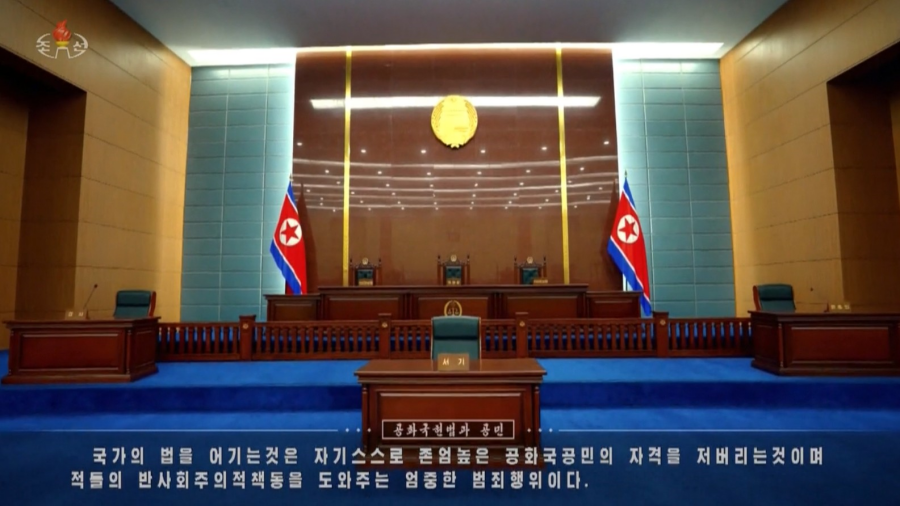
On June 29, Korean Central Television (KCTV), during its Law and Citizens program, delivered a stern warning against violations of state law, declaring that “there can be absolutely no exceptions or special privileges before the laws of the Republic.”
The broadcast further asserted that “violating state law constitutes a renunciation of one’s status as a dignified citizen of the Republic and a grave criminal act that assists the enemies’ anti-socialist schemes.” It added that “those who abuse their authority over the people and infringe upon their interests will not escape the ruthless judgment of the Republic’s laws.”
Analysts view North Korea’s repeated emphasis on “equality before the law” as a direct response to corruption and entrenched privilege within the party-state apparatus. In authoritarian systems, references to the rule of law typically serve less as a commitment to judicial independence than as an instrument of political control and regime legitimacy.
More specifically, the messaging appears intended to demonstrate Kim Jong-un’s willingness to subject even senior Workers’ Party officials to formal legal punishment.
Earlier, North Korea announced that the Second Plenary Meeting of the Ninth Central Committee of the Workers’ Party, held from June 20 to 22, had decided to refer Pak Hui-chol, Director of the Organization Department of the General Political Bureau of the Korean People’s Army, to judicial authorities for investigation on corruption allegations. Rather than handling the case solely through internal party disciplinary procedures, the decision to pursue criminal prosecution against a senior military party official appears designed to reinforce the message that no official is beyond the reach of state law.
The campaign also coincides with Kim Jong-un’s increasingly public criticism of declining discipline within the party. In a June 30 editorial, Rodong Sinmun argued that “outdated practices, backward thinking, and obsolete habits that no longer correspond to present-day realities must be overcome and eliminated.”
The newspaper also criticized bureaucratic complacency, stating that “an official preoccupied only with personal safety and self-preservation is, in effect, no different from one who does not exist.”
The editorial further called for intensified efforts to dismantle “outdated formulas and frameworks, stubborn conservatism, and unscientific empiricism.” The language has been widely interpreted as a warning that officials who fail to adapt to Kim Jong-un’s evolving policy priorities—or who resist implementing them—could face removal.
Separately, on June 29, Rodong Sinmun urged party officials to “make no compromises on conviction or principle,” reiterating that unwavering political loyalty remains the foremost expectation of the leadership.
Kim Jong-un’s recent decision to reinstate his longtime confidant Jo Yong-won as Director of the Workers’ Party Organization and Guidance Department is likewise viewed as part of a broader effort to reinforce internal discipline. Jo returned to the position approximately three months after being reassigned to serve as Chairman of the Standing Committee of the Supreme People’s Assembly.
The Organization and Guidance Department remains the party’s most powerful institution for overseeing cadre appointments, personnel management, and political discipline. Observers assess Jo’s reinstatement as reflecting Kim’s determination to directly address growing concerns over lax discipline and corruption within both the party and the military, while strengthening internal cohesion ahead of future political priorities.
Kim Jong-un Visits Wonsan-Kalma Tourist Facilities Amid Expectations of Growing Chinese Tourism
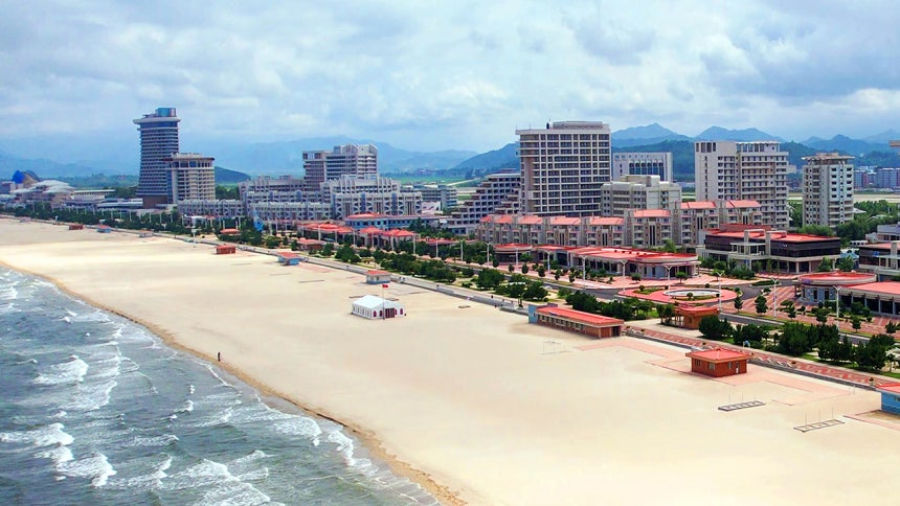
Kim Jong-un, Chairman of the State Affairs Commission of North Korea, has conducted consecutive inspections of newly completed railway and medical facilities at the Wonsan-Kalma Coastal Tourist Zone, one of his signature economic development projects. As Pyongyang continues to expand its tourism infrastructure, analysts suggest the inspections may signal preparations for a broader reopening of international tourism, particularly targeting Chinese visitors following the limited resumption of Russian tourism.
According to the Korean Central News Agency (KCNA) on June 26, Kim provided on-site guidance at newly completed facilities within the Wonsan-Kalma Coastal Tourist Zone on June 24. During his inspection of the newly constructed Kalma Tourist Railway Station, he reviewed both construction quality and operational readiness.
Reflecting on the pace of construction, Kim remarked, “It seems like only yesterday that we selected a site near the coastal tourist zone to improve transportation convenience for visitors, yet a modern railway station has been completed in just one year,” praising the officials responsible for the project.
At the same time, Kim identified shortcomings discovered during the final stages of construction and called for more rigorous quality control. He emphasized the need to strengthen construction regulations by requiring contractors to assume legal responsibility for the quality of completed structures over a specified warranty period and to carry out any necessary repairs and maintenance.
Images released by North Korean state media show that the station includes a modest restaurant and souvenir shop on the first floor, while the second floor features convenience-store-style retail outlets. The layout suggests that Pyongyang intends the facility to function not only as a transportation hub but also as a service center designed to enhance the visitor experience.
Kim also announced plans to modernize railway stations in provincial capitals across the country based on experience gained from the Kalma project. Stressing the importance of scientific planning, he stated that station designs should reflect both passenger and freight demand as well as regional characteristics. He further instructed officials to develop specialized plans for the operation of dedicated tourist trains.
Kim subsequently inspected the newly constructed emergency medical center within the Wonsan-Kalma Coastal Tourist Zone. According to North Korean media, the facility includes an emergency resuscitation unit, operating theaters, recovery rooms, and laboratory facilities.
During the inspection, Kim emphasized the need to further improve both the functionality and professionalism of the medical center. He also reaffirmed his government’s commitment to constructing modern hospitals in 20 cities and counties annually under the “20×10 Regional Development Policy,” one of his flagship domestic development initiatives.
The Wonsan-Kalma Coastal Tourist Zone, officially opened in July 2025, is a large-scale seaside resort capable of accommodating approximately 20,000 visitors. Personally championed by Kim Jong-un, the project is intended to become one of North Korea’s premier tourism destinations while generating much-needed foreign currency through international tourism.
North Korea has thus far resumed foreign tourism only on a limited basis, primarily for Russian visitors. Against this backdrop, analysts assess that Pyongyang’s efforts to upgrade transportation and medical infrastructure may be aimed at preparing for a broader reopening of the tourism sector, including the potential return of Chinese tourists.
China remains North Korea’s largest potential source of international visitors. As cross-border exchanges between the two countries continue to recover following the COVID-19 pandemic, some observers believe Pyongyang intends to position Wonsan-Kalma as its principal tourism hub for attracting Chinese travelers and expanding foreign currency earnings.
Separately, KCNA reported on June 26 that Kim personally observed a test of newly developed artillery systems capable of striking key targets in South Korea, marking the anniversary of the outbreak of the Korean War. The juxtaposition of economic development initiatives and military demonstrations underscores Pyongyang’s continued pursuit of parallel efforts to strengthen both domestic economic capacity and military deterrence.
-
PREV [NK Focus]
-
NEXT [Issue Analysis]