

North Korea Inside
· North Korean Women's Union Holds First Congress in Five Years, Prioritizing Ideological Education and Population Growth
· Kim Jong-un Publicly Exposes Military Corruption, Labels Case a Political Crime Undermining Party Control
· Pak Thae-song Visits China as North Korea and China Commemorate 65 Years of Friendship Treaty

Myongsung Kim
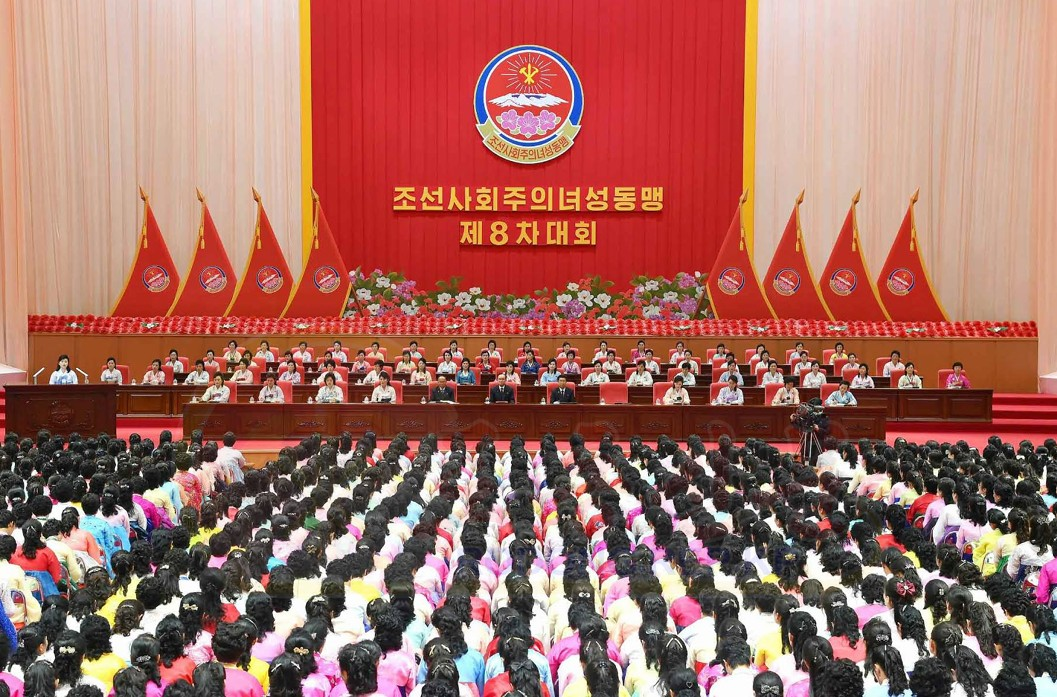
According to the Korean Central News Agency (KCNA), the Eighth Congress of the Korean Socialist Women’s Union was held in Pyongyang on July 13–14. Senior party officials, including Organization Secretary Jo Yong-won and Party Secretaries Jong Kyong-thaek and Ju Chang-il, attended the event, along with members of the Union’s Executive Committee. Kim Jong-un did not make a public appearance at the congress.
In a congratulatory message, the Workers’ Party Central Committee argued that the role of mass organizations—including the Women’s Union—has become increasingly important in advancing what it described as the “transformation of the new era” aimed at building a stronger and more prosperous state. The message identified ideological education as the organization’s foremost responsibility and called for intensified campaigns promoting patriotism, class consciousness, and morality.
The Party further instructed Women’s Union members to “resolutely reject reactionary capitalist ideology, culture, and lifestyles” while defending North Korea’s socialist values. This emphasis suggests that women remain a primary target of the regime’s ideological control efforts, particularly amid Pyongyang’s ongoing campaign to prevent the spread of South Korean media and other foreign cultural influences.
The congress also highlighted the promotion of childbirth as a key policy objective. The Party’s message asserted that ensuring women “give birth to many children and raise them well” constitutes an important national task and called for expanding both the institutional responsibilities of the Women’s Union and the individual role of women in addressing the issue. This emphasis reflects Pyongyang’s growing concern over declining birth rates and demographic challenges and suggests that the regime intends to mobilize mass organizations in support of its pronatalist agenda.
Delegates reviewed the Central Committee’s work report, amended the organization’s bylaws, and elected a new central leadership. The report stressed the need to further strengthen ideological education and political mobilization so that Women’s Union organizations can fully perform their role as instruments of political education. At the First Plenary Meeting of the Eighth Central Committee, held immediately after the congress, Chairwoman Jon Hyang-sun was re-elected to lead the organization.
The Korean Socialist Women’s Union is one of North Korea’s four major mass organizations, alongside the General Federation of Trade Unions of Korea, the Union of Agricultural Workers, and the Socialist Patriotic Youth League. These organizations serve as key channels through which the Workers’ Party disseminates policy directives and mobilizes workers, farmers, youth, and women. Membership in these organizations is effectively compulsory for their respective constituencies.
Since the conclusion of the Ninth Workers’ Party Congress in February, North Korea has accelerated the reorganization of its mass organizations to facilitate the implementation of the Party’s new five-year program. The Socialist Patriotic Youth League convened its Eleventh Congress in April, followed by the Ninth Congress of the General Federation of Trade Unions last month. Against this backdrop, the Women’s Union congress appears to represent another step in Pyongyang’s efforts to strengthen policy implementation, reinforce ideological discipline, and consolidate political unity throughout society.
North Korean leader Kim Jong-un has launched a sweeping anti-corruption campaign targeting senior figures within the military’s political establishment, publicly exposing alleged corruption involving officials responsible for personnel management and ideological supervision. The unusually public handling of the case suggests an effort to reinforce Party control over the military while warning senior officers against abuses of power.
According to the Workers’ Party newspaper Rodong Sinmun, a joint meeting of senior Party, government, and military officials held in Pyongyang on July 10 publicly disclosed evidence of what the regime described as “extraordinarily serious criminal acts” committed by Pak Hui-chol, former director of the Organization Department of the Korean People’s Army General Political Bureau, and several associates. The meeting was attended by Kim Jong-un, senior Party and military leaders, commanders from across the armed forces, central and local government officials, and representatives from disciplinary and judicial institutions.
The General Political Bureau serves as the Party’s principal mechanism for maintaining political control over the military. Through an extensive network of political commissars and political officers, it oversees ideological indoctrination, monitors Party discipline within the armed forces, and exercises significant influence over military personnel appointments. In his previous position, Pak reportedly oversaw organizational and personnel affairs within this system.
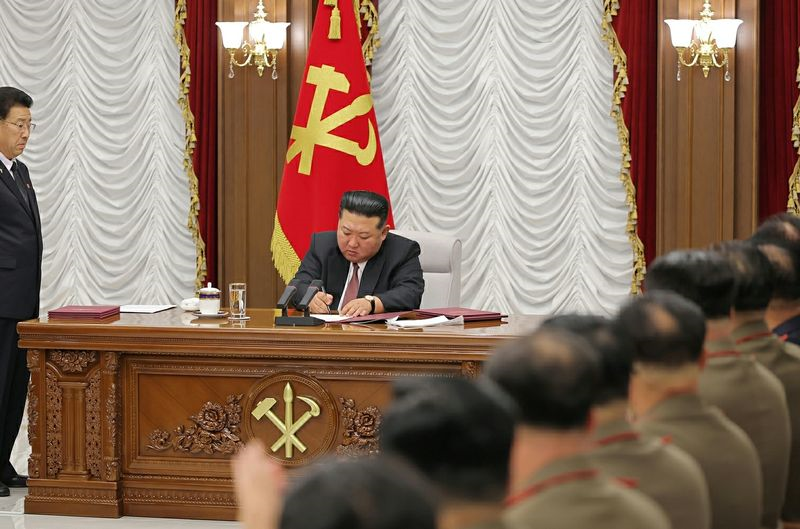
According to Rodong Sinmun, Pak abused his authority over personnel decisions over the past four years by accepting bribes and promoting loyal associates to key military positions. Authorities accused him of institutionalizing the sale of official positions, engaging in political manipulation, and embezzling state funds and materials to finance an extravagant lifestyle.
The newspaper stated that North Korea’s highest judicial authority had found Pak and his associates guilty based on “objective evidence” and announced that the Supreme Court had imposed criminal sentences. The regime, however, did not disclose the specific punishments.
The investigation first became public late last month after the Workers’ Party Central Military Commission ordered an inquiry into corruption allegations involving Pak. Shortly afterward, the Second Plenary Meeting of the Ninth Central Committee removed him from the Party’s leadership and referred the case to judicial authorities.
Addressing the joint meeting, Kim Jong-un framed the scandal not simply as corruption but as a direct challenge to the Party’s command over the military. He argued that an official entrusted with combating illicit enrichment had instead transformed his authority into “a weapon for personal gain,” describing the misconduct as “a political crime” that undermined the Party’s disciplinary principles while harming the interests of both the state and the people.
Kim further argued that the significance of the case lies in the fact that it occurred as the Party has declared an intensified campaign against factionalism, bureaucracy, and corruption. He instructed disciplinary authorities to strengthen oversight and expand anti-corruption investigations throughout the military.
He also emphasized that corruption cannot be eradicated without continuous ideological education and institutional oversight of officials, urging cadres to uphold personal integrity and prioritize the interests of the people.
Reaffirming the Party’s broader anti-corruption campaign, Kim pledged to continue strengthening both ideological discipline and legal enforcement in order to eliminate corruption and improve the quality of the official corps.
Publicly exposing corruption allegations against a senior official within the military’s powerful General Political Bureau is highly unusual in North Korea. The decision to announce the case at a large joint meeting attended by senior military commanders appears intended to deter corruption among military elites, particularly in personnel management, while reinforcing Kim Jong-un’s direct authority over the armed forces. The timing is notable, as the military assumes an increasingly prominent role in supporting North Korea’s expanding defense production, large-scale domestic mobilization campaigns, and overseas deployments, including military cooperation with Russia.
Pak Thae-song Visits China as North Korea and China Commemorate 65 Years of Friendship Treaty
North Korea and China commemorated the 65th anniversary of the 1961 Treaty of Friendship, Cooperation, and Mutual Assistance through an exchange of congratulatory messages between their leaders, high-level meetings, and renewed pledges to deepen strategic cooperation. Coming only one month after Chinese President Xi Jinping’s visit to Pyongyang, these diplomatic exchanges underscore both governments’ intention to elevate bilateral relations to what they describe as a “new strategic stage.”
According to China’s state-run Xinhua News Agency and China Central Television (CCTV), President Xi Jinping met North Korean Premier Pak Thae-song at the Great Hall of the People in Beijing on July 10. Pak visited China from July 10 to 12 to participate in events commemorating the anniversary of the bilateral treaty.
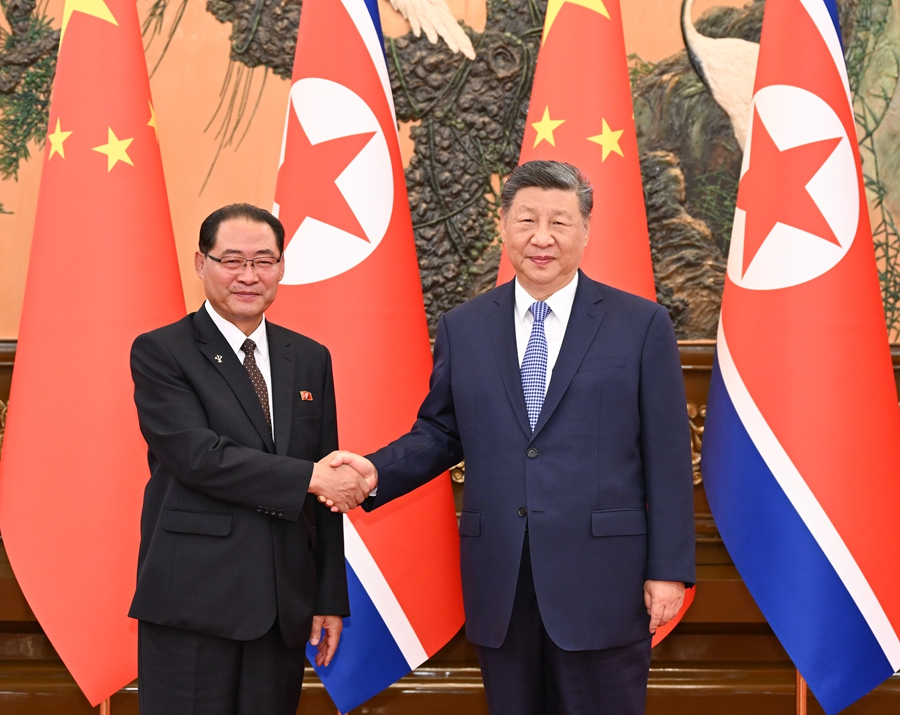
During the meeting, Xi stated that the increasingly complex international environment requires China and North Korea to maintain strategic resolve and deepen mutual confidence. He called for the implementation of the consensus reached with Kim Jong-un to ensure that bilateral relations continue to develop in accordance with the strategic objectives of both countries.
Xi further emphasized the importance of preserving the traditional friendship between the two countries across generations and expanding strategic cooperation to safeguard their respective sovereignty, security, and development interests. He also stressed the need to foster an external environment conducive to each country’s socialist development path.
Describing the bilateral relationship as one characterized by enduring friendship, mutual assistance, and a shared future, Xi argued that the 1961 treaty established the political and legal foundation for the continued development of China-DPRK relations.
Pak conveyed Kim Jong-un’s greetings and praised Xi’s recent visit to North Korea, describing it as an important milestone in bilateral relations. He argued that the friendship treaty provides the legal foundation for long-term strategic cooperation and stated that both countries are jointly advancing socialist development while contributing to regional and international peace in accordance with the treaty’s principles.
According to Xinhua, Pak also reaffirmed North Korea’s support for China’s core national interests, including Beijing’s position on Taiwan.
Leaders Reaffirm Strategic Importance of the Bilateral Relationship
The anniversary was also marked by an exchange of congratulatory messages between Kim Jong-un and Xi Jinping, with both leaders highlighting the enduring strategic significance of their bilateral relationship.
According to Rodong Sinmun, Kim stated that North Korea seeks to develop relations with China into “the strongest and most strategic relationship among socialist countries.” He characterized the 1961 treaty as having established the legal foundation for the long-term development of bilateral friendship, unity, and mutually beneficial cooperation.
Kim further argued that DPRK-China relations have reached “a new strategic height,” enabling both countries to safeguard their sovereignty, security, and development interests amid an increasingly complex international environment while contributing to regional stability. He reiterated that strengthening the traditional socialist partnership with China remains a consistent policy of the Workers’ Party and the North Korean government.
In his response, Xi emphasized that China’s commitment to its traditional friendship with North Korea remains unchanged regardless of changes in the international environment. He also reaffirmed Beijing’s continued support for North Korea’s socialist development and its commitment to safeguarding the shared strategic interests of both countries.
Referring to his summit with Kim in Pyongyang last month, Xi stated that the meeting established the strategic direction for bilateral relations in the new era. He pledged to maintain close strategic communication with Kim Jong-un to ensure the continued development of bilateral cooperation.
Premier-Level Talks Highlight Continued Political Alignment
Pak also held talks with Chinese Premier Li Qiang at the Great Hall of the People. According to the Korean Central News Agency (KCNA), Pak stated that China-DPRK relations have reached “a new height” under the leadership of Kim Jong-un and Xi Jinping.
Pak described the friendship treaty as a firm political and legal foundation for bilateral cooperation and argued that the increasingly complex international environment requires both countries to uphold the treaty’s principles of unity, cooperation, and the protection of shared interests in order to advance the socialist cause.
He further pledged to implement the strategic understandings reached by the two leaders and continue strengthening bilateral solidarity.
Li likewise emphasized the strategic importance of the bilateral relationship, describing China and North Korea as neighbors sharing a common destiny that have historically supported one another. He argued that Xi’s recent visit to Pyongyang produced important strategic understandings with Kim Jong-un regarding the future direction of bilateral relations.
Li reaffirmed that maintaining and strengthening China-DPRK relations remains a consistent policy of the Chinese government. He expressed Beijing’s willingness to expand high-level exchanges, deepen political trust, and broaden practical cooperation in ways that would benefit both countries while contributing to regional peace and stability.
According to KCNA, the two sides also discussed expanding cooperation across multiple sectors in accordance with the agreements reached during the recent Xi-Kim summit in Pyongyang. However, neither side disclosed specific areas of cooperation or announced any new bilateral agreements.
Economic Dimension Appears Increasingly Prominent
Pak’s delegation included senior officials from the Workers’ Party, the Foreign Ministry, and the Ministry of Foreign Economic Relations, including Party Secretary Kim Song-nam, International Department Deputy Director Mun Song-hyok, Vice Foreign Minister Kim Myong-su, and Vice Minister of Foreign Economic Relations Ryu Un-hae.
The composition of the delegation suggests that both governments are seeking to broaden bilateral cooperation beyond traditional political and diplomatic ties by placing greater emphasis on economic engagement.
Overall, Pak’s visit appears to have served three principal objectives: reaffirming political trust established through leader-level diplomacy; commemorating the 65th anniversary of the friendship treaty; and signaling both governments’ intention to deepen strategic coordination across diplomatic, political, and economic domains. The extensive high-level exchanges also indicate that Pyongyang and Beijing intend to further institutionalize their traditional partnership while adapting it to evolving regional and international circumstances.
-
PREV [NK Inside]
-
NEXT [NK Focus]