

< North Korean Trends, July 2026 >
Parallel Pursuit of Naval Modernization and Regional Development
Amid Deepening Strategic Cooperation with China and Russia

Seung-hyun Lee
Ph.D in Public Administration
Research Fellow, Sand Research Institute
In July 2026, North Korea continued to pursue a dual-track strategy of advancing naval modernization while implementing regional development initiatives, alongside a foreign policy increasingly centered on strategic cooperation with China and Russia. Although Kim Jong-un's public appearances declined modestly compared to the previous month, his activities reflected an effort to sustain regime stability and maintain policy momentum by balancing priorities across the diplomatic, military, economic, and social sectors. Strengthening strategic ties with China and Russia, modernizing naval capabilities, advancing the "20×10 Regional Development Policy," and reinforcing revolutionary traditions emerged as the regime's principal policy priorities throughout the month.
In the political and diplomatic sphere, the 65th anniversary of the DPRK–China Treaty of Friendship, Cooperation and Mutual Assistance marked the month's most significant diplomatic event. Kim Jong-un met with Wang Huning, Chairman of the National Committee of the Chinese People's Political Consultative Conference (CPPCC), during the latter's visit to Pyongyang and emphasized the importance of further strengthening bilateral relations in response to the evolving strategic environment. The meeting is widely regarded as a follow-up to the June summit between the two countries' leaders and reaffirmed their shared commitment to expanding cooperation across the political, economic, and cultural domains while maintaining close strategic coordination.
In addition, North Korean Foreign Minister Choe Son-hui traveled to Russia to participate in the third DPRK–Russia Strategic Dialogue, where both sides continued consultations on implementing the Treaty on Comprehensive Strategic Partnership. Collectively, these diplomatic engagements suggest that Pyongyang continues to rely on closer strategic alignment with Beijing and Moscow to expand its diplomatic maneuvering space amid an increasingly competitive international environment.
In the military sphere, naval modernization and the enhancement of strategic deterrence remained central priorities. Kim Jong-un observed operational performance tests of weapons systems aboard the newly commissioned destroyer Ganggon-ho and personally inspected the operational readiness of strategic cruise missiles and shipboard weapons systems. Subsequently, an enlarged meeting of the Central Military Commission of the Workers' Party reviewed command-and-control arrangements, military preparedness, and future force development priorities aimed at addressing the evolving character of modern warfare.
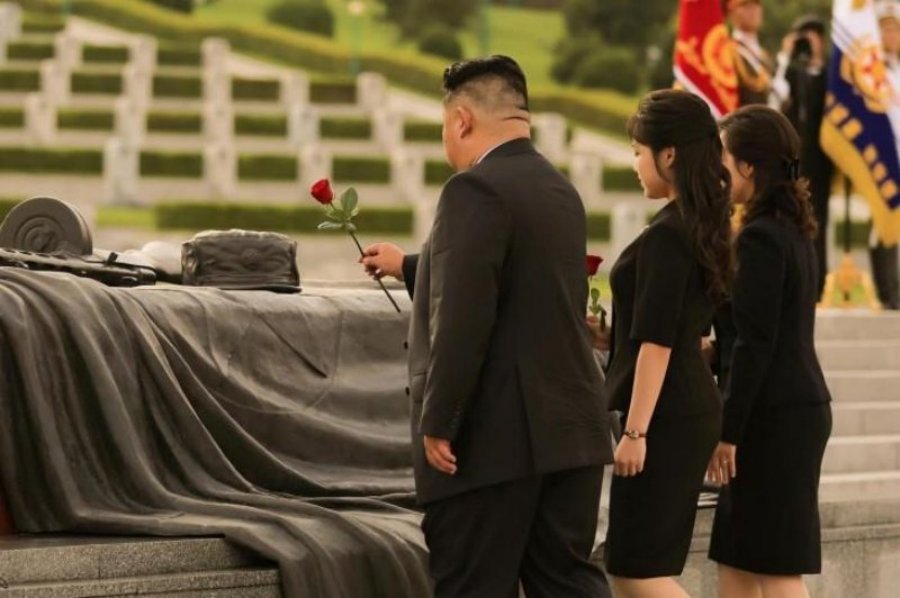
During commemorative events marking Victory Day, Kim also highlighted the sacrifices of the wartime generation and the importance of preserving revolutionary traditions, thereby reinforcing ideological cohesion between the military and society. Meanwhile, North Korea's Ministry of Foreign Affairs and Ministry of National Defense issued successive statements criticizing the expansion of trilateral security cooperation among South Korea, the United States, and Japan, reaffirming Pyongyang's longstanding hardline stance toward Washington and its regional allies. These developments suggest that North Korea continues to prioritize not only strategic weapons development but also broader military modernization—particularly naval force development—as a central component of its long-term defense strategy.
In the economic sphere, implementation of the "20×10 Regional Development Policy" continued. Kim Jong Un conducted on-site inspections of regional development projects in Rakwon County, South Hamgyong Province, where he emphasized expanding local industrial capacity and improving public infrastructure. The regime also accelerated operations at the Wonsan-Kalma Coastal Tourist Zone, reinforcing its strategy of promoting tourism as a source of foreign currency earnings and regional economic growth.
At the same time, authorities continued implementing seasonal disaster prevention measures and protecting agricultural infrastructure during the rainy season in an effort to safeguard agricultural production and maintain economic stability. These activities suggest that Pyongyang remains committed to a policy framework aimed at promoting balanced regional development while supporting broader economic recovery.
In the social sphere, the regime continued efforts to reinforce revolutionary traditions and strengthen ideological cohesion. Through nationwide commemorations marking the 32nd anniversary of Kim Il-sung's death and Victory Day, North Korean authorities emphasized the continuity of revolutionary history and patriotic values. At the same time, the regime linked the activities of youth and women's organizations with ideological education campaigns aimed at strengthening socialist values among the population. These initiatives appear intended not only to reinforce the human capital foundation supporting national defense and economic development but also to preserve political loyalty and internal cohesion.
In summary, North Korea's policy agenda during July 2026 centered on two overarching objectives: expanding its strategic diplomatic space and maintaining domestic stability. Although Kim Jong Un's public activities declined somewhat compared to the previous month, the regime appeared to focus its efforts on a limited number of strategic priorities, including strengthening relations with China and Russia, advancing naval modernization, implementing the "20×10 Regional Development Policy," and reinforcing revolutionary traditions. Notably, both naval modernization and regional development continue to be pursued not as short-term initiatives but as integral components of North Korea's broader long-term national development strategy.
Looking ahead, Pyongyang is likely to continue emphasizing defense modernization and regional economic revitalization while deepening strategic cooperation with China and Russia as part of its broader effort to preserve regime stability and sustain its long-term policy objectives.
-
PREV [NK Inside]
-
NEXT [NK Inside]