

NK Inside
· North Korea Has Criticized Japan Eleven Times This Month Alone, Aligning Its Actions with China and Russia in “Cooperation Against Japan”
· North Korea: “Increase Local Government Revenue and Residents’ Per Capita Income”
· North Korea Fires Missile into the East Sea Ahead of U.S.-South Korea Joint Drills

Myongsung Kim
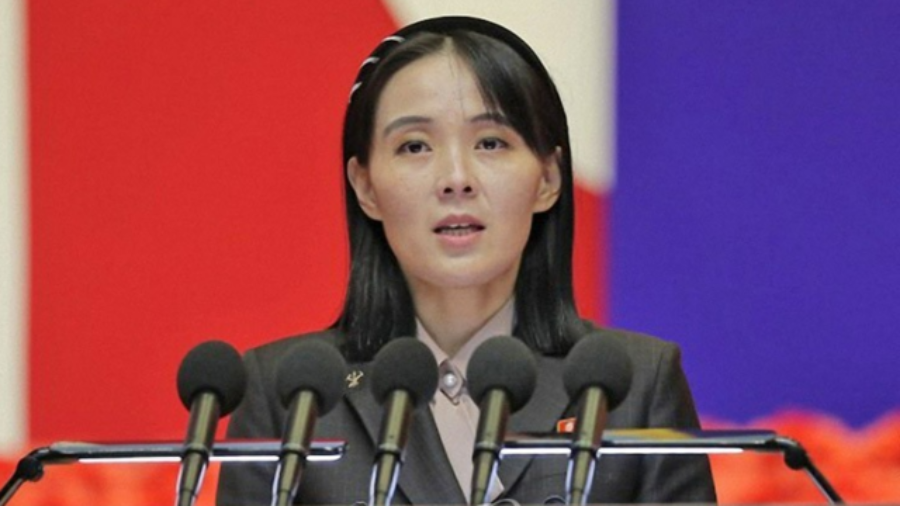
The most notable aspect of North Korea’s campaign against Japan is the direct involvement of Kim Yo-jong.
On August 5, Kim issued a statement titled “Japan’s Possession of Preemptive Strike Capabilities as a War-Crime Nation Poses a Serious Threat to International Peace and Stability.” Analysts note that her direct criticism of Japan’s military policies—despite her having primarily addressed issues involving South Korea and the United States—underscores the sensitivity with which the North Korean leadership views Japan’s ongoing military buildup.
Kim specifically criticized the test launch of a Tomahawk long-range cruise missile from an Aegis destroyer of the Japan Maritime Self-Defense Force. Emphasizing that the Tomahawks acquired by Japan could place North Korea and other neighboring countries within range, she portrayed Japan’s acquisition of the system as evidence that Tokyo is developing a preemptive-strike capability.
She warned, “We will absolutely not stand idly by.” More significantly, she stated that the North Korean military and leadership “will establish additional, clear military options in response to Japan’s transformation.” This suggests that North Korea may develop specific military countermeasures in response to Japan’s expanding defense capabilities.
On August 6, one day after Kim’s statement, North Korea launched a short-range ballistic missile toward the East Sea. Although Pyongyang did not explicitly link the launch to its tensions with Japan, concerns have emerged that North Korea’s stated determination to respond to Japan’s strengthening long-range strike capabilities could translate into concrete military action.
North Korea has also reacted strongly to the possibility that Japan could reconsider its Three Non-Nuclear Principles. On August 2, Rodong Sinmun published an article titled “Why Is Japan Trying to Revise the Three Non-Nuclear Principles?” criticizing the possibility of a review of Japan’s nuclear policy. It characterized discussions within Japan’s defense establishment regarding a possible policy review—including the potential deployment of nuclear weapons—as evidence of “ambitions to possess nuclear weapons.”
On August 9, North Korea also criticized the Japanese government’s announcement that it would maintain the Three Non-Nuclear Principles. In a brief commentary titled “A Cheap Trick,” Rodong Sinmun described the government’s commitment to maintaining the principles as a “deception.” It argued that the Japanese government had merely put forward the Chief Cabinet Secretary to contain domestic and international criticism while, in practice, keeping open the possibility of acquiring nuclear weapons.
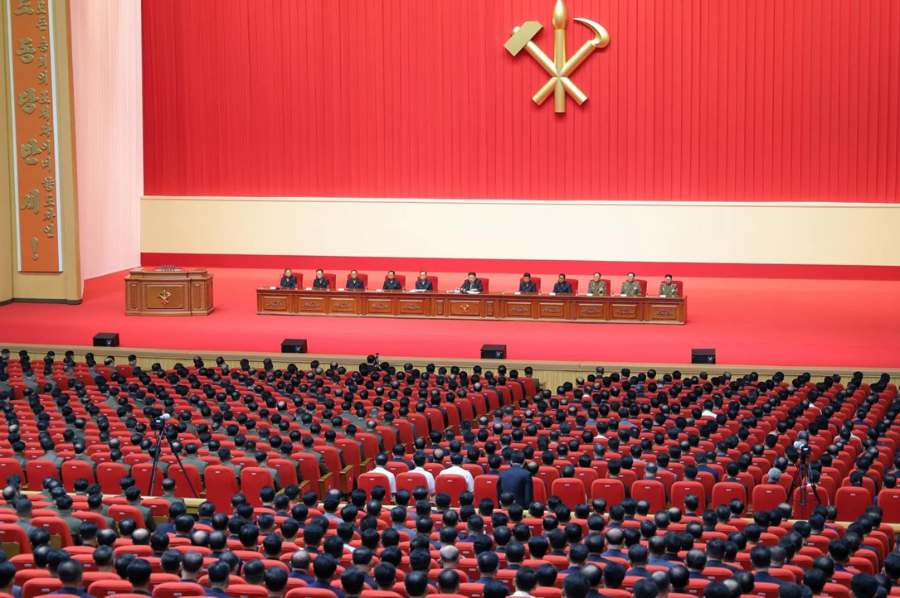
On August 12, North Korea further intensified its criticism of Japan’s moves to revise the Three Non-Nuclear Principles, declaring, “Any attempt to acquire nuclear weapons must be resolutely nipped in the bud.”
Behind North Korea’s “attacks on Japan” lies China. Another notable feature of Pyongyang’s recent campaign against Japan is its active amplification of Beijing’s criticism of Tokyo.
A significant portion of Rodong Sinmun’s reporting on Japan this month has consisted of statements by spokespersons for China’s Ministry of Foreign Affairs and Ministry of National Defense. On August 1, it reported remarks by a Chinese Foreign Ministry spokesperson criticizing historical revisionism among Japan’s right-wing forces. On August 2, it featured comments by a Chinese Defense Ministry spokesperson criticizing the possibility that Japan’s defense authorities might review the Three Non-Nuclear Principles.
On August 4, Rodong Sinmun published remarks by Chinese officials criticizing Japan’s plans to establish a National Intelligence Agency. On August 7 and 8, it featured Chinese comments challenging the “China threat theory” cited in Japan’s Defense White Paper, as well as criticism of Tokyo’s efforts to expand its long-range strike capabilities.
On August 9, marking the 81st anniversary of the atomic bombing of Hiroshima, the newspaper carried remarks by a Chinese Foreign Ministry spokesperson condemning Japan’s moves toward acquiring nuclear weapons. On August 10, it reported comments by a Chinese Defense Ministry spokesperson criticizing Japan’s Tomahawk test launches, deployment of long-range missiles, and efforts to strengthen its counterstrike capabilities.
On August 11, Rodong Sinmun even reported remarks by a Chinese Foreign Ministry spokesperson claiming that approximately 80 percent of the Japanese public opposes maintaining the Three Non-Nuclear Principles and “nuclear sharing.”
North Korea’s intensive coverage of China’s criticism of Japan is widely interpreted as an effort to publicly underscore that Pyongyang and Beijing share broadly similar assessments of Japan’s military expansion.
A South Korean Ministry of Unification official stated, “North Korea has recently intensified its criticism by portraying Japan’s military developments and trilateral security cooperation among South Korea, the United States, and Japan as threats to peace and security in the Asia-Pacific region.” The official added, “We assess that, while North Korea is actively seeking to justify the expansion of its nuclear capabilities, it is also seeking to strengthen its ties with China and Russia by aligning its position with theirs on regional security issues.”
As North Korea moves forward with the “Local Development 20×10 Policy,” a flagship economic initiative of the Kim Jong-un regime, it has begun to place greater public emphasis on increasing local governments’ revenues and raising residents’ per capita income. Until recently, the policy had focused primarily on expanding physical infrastructure—including factories, hospitals, and cultural facilities—across the country.
The latest emphasis suggests a shift toward an “operational” phase in which newly built facilities are expected to generate revenue and contribute to improvements in living standards.
In an article titled “The Development of Cities and Counties Must Be Thoroughly Self-Reliant,” published on August 8, Rodong Sinmun, the official newspaper of the Workers’ Party of Korea, emphasized that “we must effectively develop and utilize the region’s natural and geographical potential and resources, and achieve self-reliant development by firmly relying on our own capabilities.” In particular, it cited Sinpo City in South Hamgyong Province, noting that “measures are also being put in place to ensure that the city’s total revenue and per capita income can be increased beyond current levels.”
It is notable that North Korean state media explicitly cited both “total regional revenue” and “per capita income”—conventional indicators of economic performance—when assessing local development. This suggests a potential shift in the policy’s performance criteria: rather than measuring success simply by the number of local factories constructed, the leadership appears increasingly interested in the revenue generated by local economies and whether residents’ livelihoods actually improve.
The “20×10” local development policy, which North Korean leader Kim Jong-un has vigorously promoted since 2024, calls for transforming the industrial infrastructure of 200 cities and counties over a 10-year period by constructing local industrial facilities in 20 cities and counties each year. Initially, the policy focused on establishing local industrial plants producing food and everyday necessities. Beginning in late 2024, however, North Korea expanded the scope of the policy to include not only local industrial plants but also city- and county-level hospitals, scientific, educational, and cultural facilities, and grain-management facilities—the so-called “three essential projects.”
The more difficult challenge lies in the post-construction phase. Even when the central government builds factories and facilities and transfers them to local authorities, those facilities cannot operate effectively if local governments are unable to secure raw materials or face shortages of electricity, transportation, and skilled labor. Even when goods can be produced, inventories are likely to accumulate if purchasing power remains weak and distribution networks are underdeveloped.
Against this backdrop, analysts suggest that the North Korean leadership’s repeated emphasis on “self-reliant development” reflects an awareness of these practical constraints. Rodong Sinmun stated that “even when considering the operation of local industrial factories alone, raw material sources, production sites, and consumption areas must be concentrated within the region to ensure maximum effectiveness and achieve expanded reproduction.”
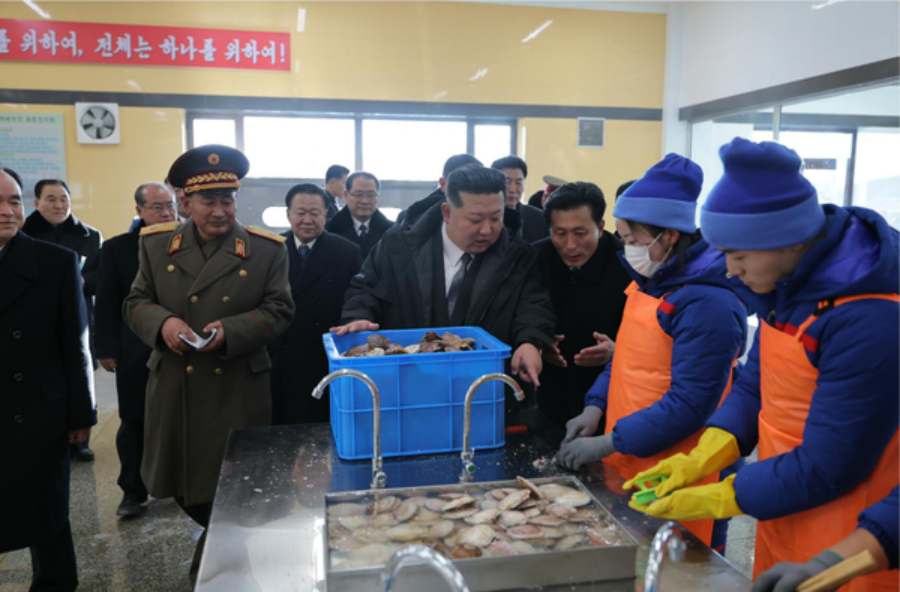
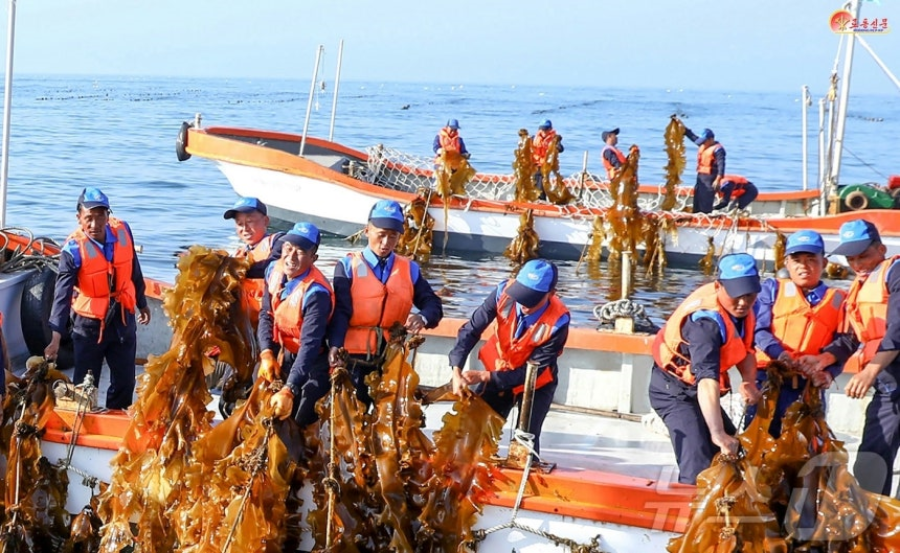
In other words, the objective is to source raw materials locally, produce goods locally, and market them locally, thereby keeping economic activity and revenue within the region. This can be understood as an attempt to establish a “virtuous cycle” within North Korea’s local economies. North Korea has highlighted Sinpo City as a leading example. The city illustrates how Pyongyang is seeking to leverage marine resources as part of its local development strategy. Kim Jong-un visited Sinpo several times in 2024 to oversee the construction of a marine aquaculture facility. North Korea is now constructing a seafood processing plant in the same area.
Rodong Sinmun reported that Sinpo is “increasing its economic potential by revitalizing modern marine aquaculture facilities and local industrial plants,” adding that “projects to build a modern seafood processing plant near the Sinpo City marine aquaculture facility are also making substantial progress.” This reflects a broader shift in how North Korea approaches local economic management. The objective is no longer simply to expand aquaculture production, but to establish an integrated value chain linking aquaculture, processing, and marketing.
By processing locally sourced seafood such as kelp and clams, improving product quality, and marketing the resulting products, North Korea can potentially generate greater value than through the production and sale of raw materials alone.
Consistent with this approach, North Korea, in highlighting the Sinpo case, emphasized not only “improving product quality,” but also “reducing costs” and “expanding product varieties.”
In other words, local development policy appears to be moving beyond a narrow focus on production volumes toward greater attention to profitability and productivity. There also appear to be fiscal considerations behind North Korea’s growing emphasis on local “revenue.”
The “20×10” policy entails large-scale construction projects in 20 cities and counties each year. Simultaneously constructing hospitals, factories, cultural facilities, and grain-storage facilities requires substantial financial resources, labor, and materials. North Korea has long devoted significant resources to its nuclear and missile programs and broader military sector.
Expanding local development projects nationwide at the same time inevitably increases the fiscal and resource burden on the central government. Rodong Sinmun’s assertion that “amid the country’s still-limited economic circumstances, the state’s decision to bear the full cost and ceaselessly expand and deepen projects for local transformation on a nationwide scale is a bold decision that only our Party can make” can be understood in this context.
The newspaper also emphasized local self-reliance, stating, “It is not the fighting spirit of our people to simply hope that the Party will solve everything and sit idly by waiting for conditions to improve.” Ultimately, this can be interpreted as an effort to establish a division of responsibility in which the central government finances major construction while local governments assume greater responsibility for subsequent operations. Particularly noteworthy is the reference to “per capita income.” Although North Korea has long emphasized improving residents’ livelihoods, it has rarely presented residents’ income at the local level as a key measure of policy performance in the way that market-oriented economies typically do.
In this edition of Rodong Sinmun, however, the newspaper cited both “the city’s total revenue” and “per capita income” when describing the development of Sinpo City. This may indicate that Pyongyang is seeking to assess the success of its local development policy not merely in terms of construction achievements or production volumes, but also in terms of the economic value generated by local economies and its impact on residents’ living standards. According to South Korea’s Bank of Korea, North Korea’s nominal gross national income (GNI) in 2024 was estimated at 44.4 trillion won, while its per capita GNI was estimated at 1.719 million won. By comparison, South Korea’s per capita GNI stood at 50.12 million won—approximately 29 times higher.
Given the low overall income level of the North Korean economy, simply increasing the supply of goods has clear limitations when it comes to raising household incomes.
Ultimately, local economies need production and commercial activities capable of generating actual revenue and income. This appears to be one reason the North Korean leadership has increasingly emphasized not only factory operating rates, raw-material supplies, and product quality and costs, but also local revenues and residents’ incomes.
The 20×10 Policy for Local Development is now approaching a critical test. Constructing buildings can, to some extent, be accomplished through centralized resource allocation and mobilization. Keeping factories operating efficiently and generating sustainable revenue, however, presents a fundamentally different challenge. North Korea’s local economies face persistent shortages of raw materials, energy, transportation infrastructure, and skilled workers. International sanctions also make it difficult to reliably import raw materials, equipment, and other production inputs. In particular, even if new consumer-goods factories are completed, sustaining sales will be difficult if local residents lack sufficient purchasing power.
Electricity supply is another major constraint. Stable factory operations require reliable access to electricity and raw materials, yet chronic power shortages remain a structural problem in North Korea. Ultimately, whether the country’s concept of “self-reliant development” produces meaningful economic self-reliance will depend less on how many factories are built than on how consistently and efficiently those factories can operate.
There are also structural limitations in the policy design itself. North Korea’s current “20×10” strategy relies heavily on the central government to lead major construction projects, after which local authorities are expected to assume responsibility for operations. This approach can reduce regional disparities in the short term by directing central resources to underdeveloped areas. At the same time, however, it risks leaving local authorities responsible for operating costs, raw-material procurement, and securing skilled technical personnel once construction is complete.
Rodong Sinmun appears to acknowledge this challenge. It emphasized the need to proceed “with foresight” in training engineers and skilled workers, developing raw-material production bases, and securing supplies. Conversely, this may suggest that the leadership recognizes that local factories are already facing structural shortages of raw materials, labor, and technical expertise. Moreover, if the central government continues to concentrate resources in selected regions, regional disparities could, paradoxically, widen. Resources and skilled personnel may become concentrated in areas deemed politically important or in regions that Kim Jong-un has personally visited and prioritized.
Regional development policies are not driven solely by economic considerations. Analysts suggest that the Kim Jong-un regime’s successive efforts to narrow the gap in living standards between Pyongyang and the provinces—and to expand access to consumer goods, medical services, and education in rural areas—also serve a broader political purpose: addressing public dissatisfaction stemming from regional disparities in living conditions.
This is particularly important in a North Korean society where marketization has advanced considerably. For many residents, the state’s reported production figures matter less than practical questions: how easily they can obtain food and everyday necessities, how much income they can earn, and what educational opportunities they can provide for their children. Accordingly, simultaneously promoting local factory construction and raising residents’ incomes serves both economic and social-management functions. This helps explain why Kim Jong-un has repeatedly emphasized linking regional development to “improving the people’s livelihood.”
The key concept in North Korea’s regional development strategy now appears to be shifting from “factory construction” to “self-reliant development.” The more fundamental question, however, is not whether the slogan of self-reliance is being promoted, but whether local economies can establish sustainable, revenue-generating structures. The Sinpo model—using local marine resources for aquaculture and then processing those products at nearby seafood-processing facilities to generate greater added value—offers one potentially viable model for North Korea’s local economies.
In agricultural regions, North Korea could similarly establish raw-material production bases to supply local factories, which could then produce food and everyday necessities for local consumers. If successful, such a model could create a self-sustaining economic cycle: production → processing → sales → income → reinvestment. Conversely, if the central government must continue supplying raw materials, electricity, and skilled labor—and if factories operate primarily in response to political directives—local industrial facilities risk becoming little more than “showcase projects.”
Ultimately, the success of Kim Jong-un’s “20×10” local development policy will not be measured by the number of completion ceremonies held. The more meaningful test will be whether local economies can establish a virtuous cycle in which they generate their own revenue, residents’ incomes actually increase, and those revenues are reinvested in local economic activity. From this perspective, North Korea’s decision to explicitly highlight both “total municipal revenue” and “per capita income” in this edition of Rodong Sinmun is particularly significant.
North Korea Fires Missile into the East Sea Ahead of U.S.-South Korea Joint Drills
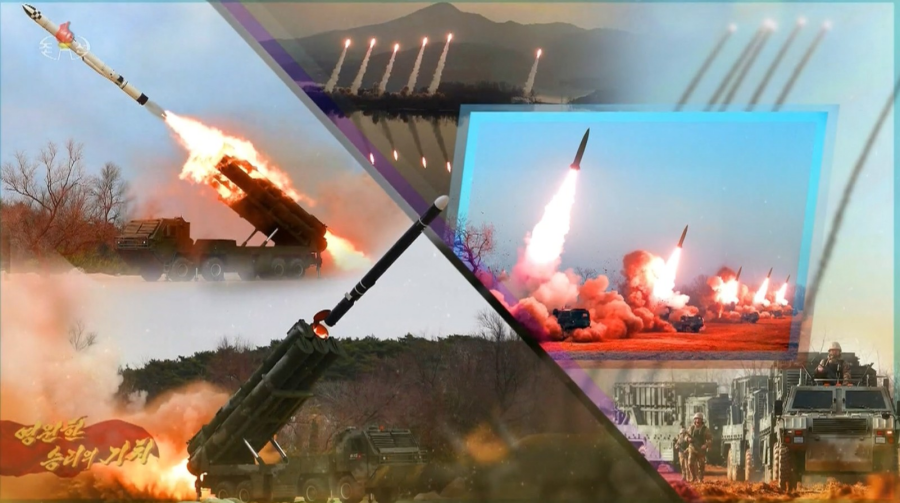
Ahead of the U.S.-South Korea joint military exercise “Ulchi Freedom Shield” (UFS), North Korea launched another ballistic missile into the East Sea, marking its first such launch in six days. South Korea’s Joint Chiefs of Staff (JCS) announced that it detected one ballistic missile launched from the Wonsan area of North Korea toward the East Sea at approximately 6:00 a.m. on August 12.
“The North Korean missile flew more than 700 kilometers, and South Korean and U.S. authorities are conducting a detailed analysis to determine its precise specifications,” the JCS said. Missiles with ranges of approximately 300 to 1,000 kilometers are generally classified as short-range ballistic missiles (SRBMs).
North Korea’s known SRBM arsenal includes the KN-23, a North Korean system modeled on Russia’s Iskander, with an estimated range of approximately 700 to 800 kilometers. However, the JCS did not explicitly classify the missile launched on August 12 as an SRBM.
This leaves open the possibility that the missile was a different system from those previously tested or that it was a medium-range ballistic missile (MRBM), generally defined as having a range of 1,000 to 3,000 kilometers, launched on a depressed trajectory to limit its flight distance.
South Korean military authorities are reportedly considering both possibilities as they conduct a more detailed assessment of the missile’s characteristics and type.
North Korea previously launched an SRBM toward the East Sea from the Wonsan area on the afternoon of August 6, raising the possibility that the latest launch involved the same or a similar missile system.
At the time, North Korean state media did not report the launch, prompting speculation that the test represented a somewhat different pattern from Pyongyang’s usual practice of publicly highlighting major weapons tests.
Regarding the latest launch, the JCS stated that “South Korean and U.S. intelligence authorities have been closely monitoring developments since the initial stages of the launch and have shared relevant information regarding North Korea’s ballistic missile activity with Japan.”
“Under the robust U.S.-South Korea combined defense posture, our military is closely monitoring North Korea’s various activities while maintaining the capability and readiness to respond decisively to any provocation,” the JCS added. The projectile, assessed to have been a North Korean ballistic missile, was also reportedly visible to the naked eye from the coast near Gonghyeonjin in Goseong County, Gangwon Province, approximately 130 kilometers from Wonsan in a straight-line distance.
The launch marks North Korea’s eleventh ballistic missile test of the year. The test came ahead of the annual Ulchi Freedom Shield (UFS), which is scheduled to take place from August 17 to 27. North Korea has consistently denounced UFS as a “drill for an invasion of North Korea” and has frequently conducted missile launches and other military demonstrations around the time of the exercises.
In response to the latest launch, South Korea’s National Security Office convened an “emergency security situation review meeting” involving relevant agencies, including the Ministry of National Defense and the Joint Chiefs of Staff. Officials expressed concern over North Korea’s repeated ballistic missile launches, following the previous launch on August 6, and reviewed the security situation and the military’s readiness posture.
-
PREV [NK Inside]
-
NEXT [NK Inside]