

NK Inside
-North Korea to Send Approximately 100 Athletes to Nagoya Asian Games: Could the Games Open a Channel for North Korea–Japan Contacts?
-Kim Jong-un Presides Over Enlarged Politburo Meeting, Offers No Response to Trump’s Overtures
-Income Polarization in North Korea’s Market Sector Has Worsened Since the 2014–2015 Economic Shock

Myongsung Kim
North Korea to Send Approximately 100 Athletes to Nagoya Asian Games: Could the Games Open a Channel for North Korea–Japan Contacts?
North Korea plans to send a delegation of approximately 100 athletes to the 2026 Aichi-Nagoya Asian Games, which will open next month in Japan. The delegation is expected to compete in 14 sports, including men’s and women’s soccer, weightlifting, boxing, and wrestling.
Ko Chol-ho, secretary-general of the North Korean National Olympic Committee (NOC), disclosed the plans in an interview with Choson Sinbo, the official newspaper of the General Association of Korean Residents in Japan (Chongryon), on August 25. The size of North Korea’s delegation will be significantly smaller than that sent to the previous Asian Games in Hangzhou in 2023, when North Korea dispatched 185 athletes to compete in 18 sports.
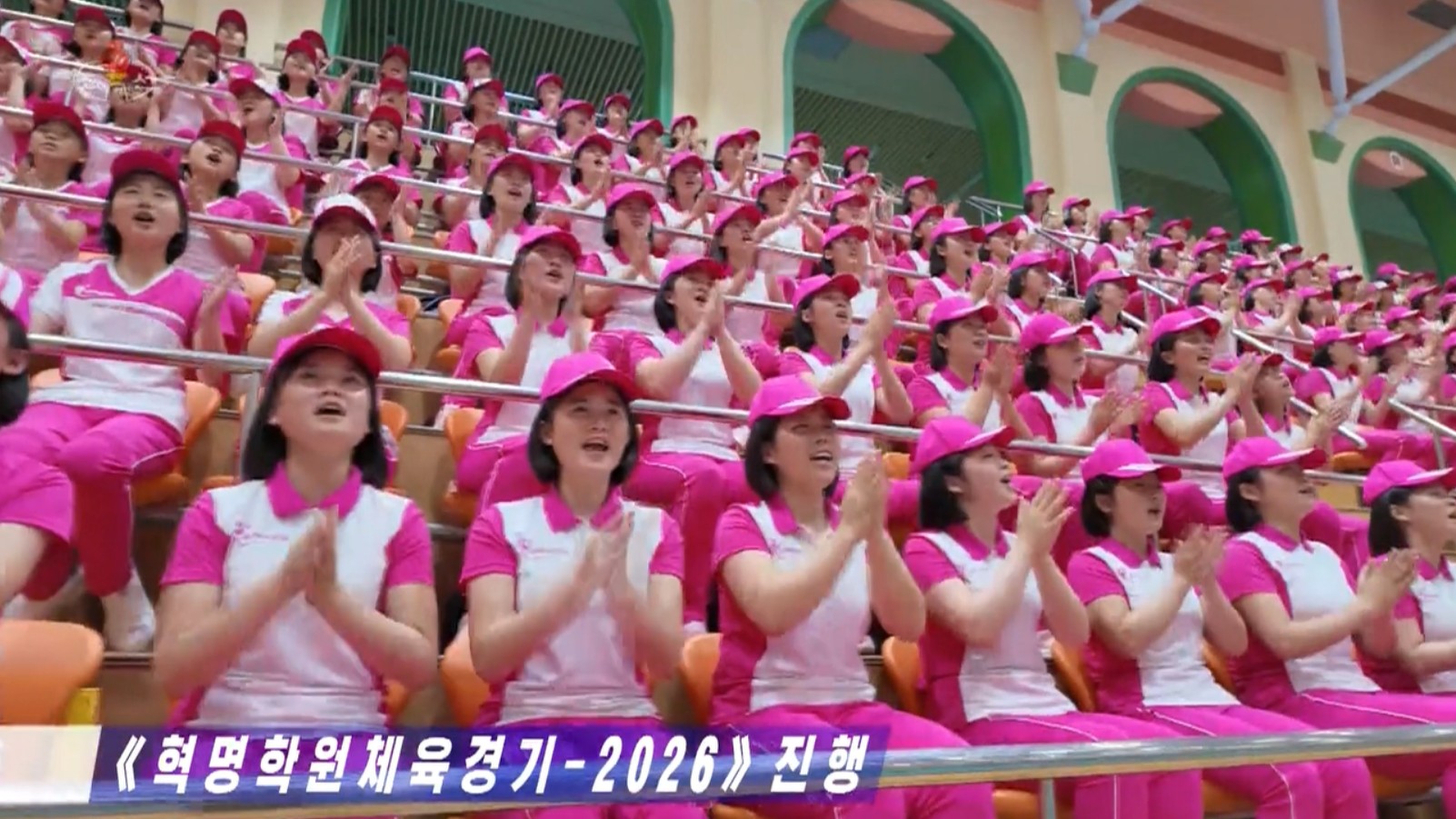
Ko expressed confidence that, despite the smaller delegation and reduced number of participating sports, North Korea could improve its medal performance compared with the Hangzhou Games. “Our athletes, coaches, and sports officials have been preparing over the past four years to achieve even better results,” he said. “They are making every effort, motivated by the desire to meet the expectations of the country and its people through outstanding athletic performances.”
Two Japan-based athletes of Korean descent are also included in North Korea’s delegation: Ri Song-a in women’s soccer and Jung Se-ri in karate. The fact that North Korea’s specific plans for the delegation were disclosed through Choson Sinbo, rather than through North Korean state media, appears to reflect, at least in part, the fact that the competition will be held in Japan.
North Korea effectively suspended its participation in major international multi-sport events during the COVID-19 pandemic. It did not send a delegation to the Tokyo Olympics, which were held in 2021 after being postponed for one year because of the pandemic. As a result, the International Olympic Committee (IOC) suspended North Korea’s National Olympic Committee from participating in the Olympic Games.
North Korea returned to the international multi-sport arena for the first time in five years at the 2023 Hangzhou Asian Games in China, having last participated in the 2018 Jakarta-Palembang Asian Games. North Korea won a total of 39 medals at the Hangzhou Games—11 gold, 18 silver, and 10 bronze—finishing 10th overall in the medal standings. In particular, it won six gold medals in weightlifting, a sport in which North Korea has traditionally been highly competitive.
North Korea also sent a delegation to the Paris Olympics last year. Fifteen North Korean athletes competed in seven sports, winning two silver medals and four bronze medals. This participation appears to reflect a gradual normalization of North Korea’s involvement in international multi-sport competitions as the country continues to reengage with the international sporting community following the COVID-19 pandemic.
The 2026 Aichi-Nagoya Asian Games will be held from September 19 to October 4 in Aichi Prefecture and Nagoya City, Japan.
Against this backdrop, attention is increasingly focused on whether North Korea’s decision to send approximately 100 athletes to the Aichi-Nagoya Asian Games could create an opening for movement in the currently strained North Korea–Japan relationship. Although Pyongyang and Tokyo have remained at odds for years over issues including the abduction of Japanese citizens and North Korea’s nuclear and missile programs, the arrival of a sizable North Korean delegation in Japan could provide a rare opportunity for direct or informal contact between the two sides.
The North Korean delegation’s visit to Japan is significant in its own right. Although Japan has, in principle, restricted the entry of North Korean nationals since 2016 in response to North Korea’s nuclear and missile activities, exceptions have been made for athletes participating in international sporting events. As the host country of the Asian Games, Japan has also been coordinating with relevant government agencies regarding the entry and participation of the North Korean delegation.
In particular, there has been speculation that North Korea’s Minister of Sports could lead the delegation. If senior North Korean sports officials travel to Japan, they could have opportunities for informal interactions with Japanese government officials and representatives of Japan’s sporting community. Such contacts would be noteworthy because, unlike encounters between South and North Korean delegations at sporting venues or athletes’ villages, high-level contacts between North Korea and Japan remain relatively rare in the absence of formal diplomatic relations between the two countries.
At the same time, it would be premature to assume that sports exchanges will immediately lead to high-level political dialogue between North Korea and Japan. The abduction issue remains one of the principal obstacles to improving bilateral relations. The Japanese government continues to call for the immediate return of all Japanese citizens abducted by North Korea. Since 2002, when North Korea acknowledged its abductions of Japanese citizens and five victims were returned to Japan, no additional abductees have been repatriated.
The Japanese government has repeatedly expressed its willingness to engage in dialogue with North Korea. In May 2026, at a rally calling for the return of abductees, Japanese Prime Minister Sanae Takaichi stated that she would “not rule out any options,” including a summit with North Korean State Affairs Commission Chairman Kim Jong-un, and expressed her determination to make progress on the abduction issue during her tenure. She also appealed directly to Chairman Kim to take a “courageous step forward,” expressing hope that Japan’s message would reach the North Korean people.
The critical question, however, is how North Korea will respond. Pyongyang has recently intensified its criticism of Japan’s efforts to strengthen its defense capabilities and its security cooperation with the United States and South Korea. In particular, North Korea has criticized Japan’s efforts to acquire long-range strike capabilities and its testing of U.S.-made Tomahawk cruise missiles, while warning that such developments could trigger a military response. Since last month, criticism of Japan in North Korean state media has also become more pronounced.
Against this backdrop, North Korea’s decision to participate in an international sporting event hosted by Japan suggests that Pyongyang is not, at least in the sporting arena, seeking to eliminate all forms of external contact with Japan.
From Japan’s perspective, the prospect of renewed U.S.-North Korea engagement also creates an incentive to ensure that North Korea-Japan relations do not become marginalized on the broader diplomatic agenda. Japan’s diplomatic space could become increasingly constrained as North Korea deepens its strategic relationships with China and Russia. North Korea and Russia continue to expand their military and security cooperation, while Pyongyang has also maintained high-level exchanges with Beijing.
Accordingly, the Aichi-Nagoya Asian Games are unlikely, by themselves, to produce a fundamental breakthrough in North Korea-Japan relations. They could, however, provide a “low-threshold venue for contact” where the two sides can gauge each other’s intentions without immediately confronting the most contentious political issues.
If interactions among athletes, sports officials, and other representatives lead to informal exchanges of views, the Games could provide a modest but potentially meaningful catalyst for reopening communication channels that have remained largely dormant. In this respect, the significance of the Aichi-Nagoya Asian Games may extend beyond the sporting arena: they could offer North Korea and Japan an opportunity to test whether limited engagement in the sports sector can eventually support broader dialogue on bilateral issues.
Kim Jong-un Presides Over Enlarged Politburo Meeting, Offers No Response to Trump’s Overtures
Chairman of the State Affairs Commission Kim Jong-un convened an enlarged meeting of the Political Bureau of the Workers’ Party of Korea (WPK) Central Committee and called for corrective measures to address shortcomings stemming from the “immature operational and command capabilities of economic leadership bodies.” Although U.S. President Donald Trump has recently sent a series of conciliatory signals indicating an interest in resuming dialogue with North Korea, Kim made no public response to those messages.
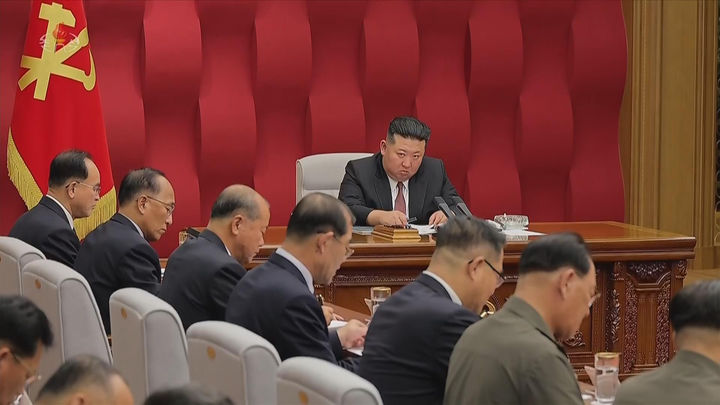
The Korean Central News Agency (KCNA) reported on August 26 that the Political Bureau of the WPK Central Committee convened the 4th Enlarged Meeting of the Political Bureau of the 9th Central Committee on August 25 to strengthen political and practical measures for the successful implementation of key policy tasks for 2026. It added that “Comrade Kim Jong-un presided over the meeting.”
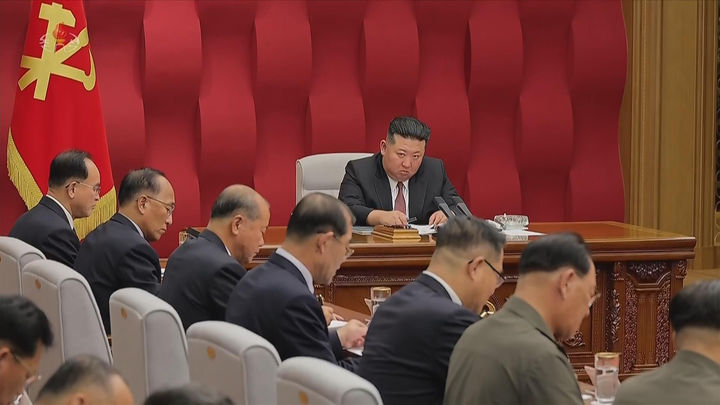
The meeting reviewed progress in implementing major policy and construction projects for 2026, as well as the performance of key economic sectors, in accordance with decisions adopted at the first and second plenary meetings of the 9th Central Committee.
In this context, Kim pointed to shortcomings that had emerged in the implementation of decisions adopted at the Party Congress. He attributed these problems to “the immature operational and command capabilities of economic leadership bodies, which have failed to keep pace with our heightened ideals and strengthened momentum for progress.” He added that these shortcomings could be overcome through “renewed resolve and a fighting spirit.”
Kim did not, however, specify the particular economic projects or policy areas in which such shortcomings had emerged.
He further emphasized that the transformation goals established by the 9th Party Congress should not be viewed merely as quantitative economic targets. Rather, he described them as “major political struggle tasks” intended to safeguard the dignity of the state and demonstrate the superiority of North Korea’s political and economic system.
He called for the country to “bring this year’s struggle to a victorious conclusion” in order to create the conditions necessary to pursue North Korea’s longer-term strategic objectives.
KCNA also reported that the meeting established principles and guidelines for national economic leadership bodies to respond proactively and strategically to changes in the external environment, difficult conditions, and economic challenges. Particular emphasis was placed on ensuring progress in major policy-driven construction projects.
The meeting also reviewed strategic adjustments and corresponding measures aimed at strengthening implementation in accordance with prevailing conditions and practical requirements. These measures were intended to ensure the completion of projects scheduled for this year while also improving the implementation of short-, medium-, and long-term economic tasks.
Notably, the KCNA report made no reference to President Trump’s recent messages regarding renewed engagement with Kim.
On August 25 (local time), President Trump reposted on Truth Social a message he had originally published nine days earlier regarding his decision to scale back U.S.-South Korea joint military exercises. On August 24, he also posted several photographs from his meetings with Kim during the 2018 U.S.-North Korea summit and the 2019 Panmunjom meeting, continuing a series of conciliatory signals toward the North Korean leader.
Against this backdrop, Kim’s decision to focus publicly on domestic economic management rather than respond to Trump’s overtures suggests that Pyongyang is, at least for now, prioritizing the implementation of its domestic economic agenda. The absence of a public response does not necessarily indicate that North Korea has ruled out future engagement with Washington, but it underscores that Pyongyang has not yet signaled a willingness to respond directly to Trump’s latest overtures.
Income Polarization in North Korea’s Market Sector Has Worsened Since the 2014–2015 Economic Shock
Income polarization in North Korea’s market sector, centered on the jangmadang, has reportedly intensified since the economic shock of 2014–2015, with lower-income households bearing a disproportionate share of the impact.
According to a report released on August 23 by Yong-shin Jo, an associate researcher in the Economic Security Research Division of the Bank of Korea’s Economic Research Institute, the income gap among those engaged in informal jangmadang and other market-based activities widened following economic shocks associated with severe droughts and other factors.
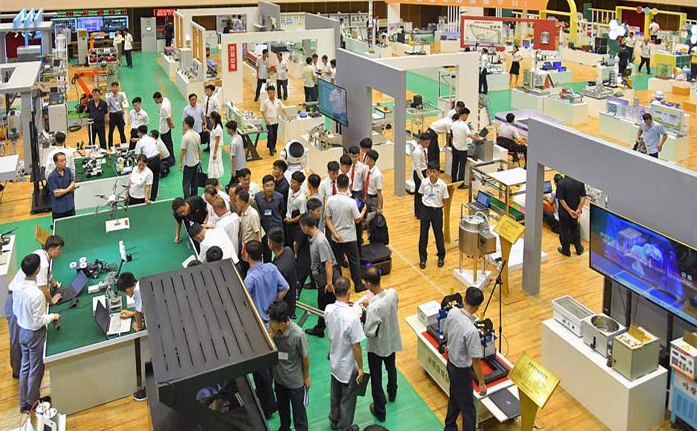
North Korea’s market sector began expanding rapidly in the mid-to-late 1990s as the country’s rationing system deteriorated amid prolonged economic hardship.
The jangmadang, where producers and consumers engage in direct transactions, initially expanded primarily in rural areas before becoming more widespread. The range of goods traded through these markets subsequently broadened to include a wide variety of consumer products.
Previous research has suggested that the market sector plays a critical role in household livelihoods, with approximately 70 percent of the general population’s income reportedly derived from market-related activities.
North Korea’s market economy, however, lacks effective mechanisms to ensure fair competition, taxation and redistribution, and the protection of private property rights. As a result, it exhibits characteristics of a “quasi-market” system in which access to economic opportunities can be heavily influenced by political connections and access to capital.
Jo analyzed changes in income distribution before and after the economic shock that affected North Korea in 2014–2015.
During that period, severe drought reduced agricultural production and hydropower generation, while exports declined amid factors including China’s economic slowdown and falling commodity prices. North Korea’s economic growth rate, which had remained positive for the previous four years, fell to negative 1.1 percent in 2015.
According to Jo, an analysis of survey data collected from North Korean defectors by Seoul National University’s Institute for Unification and Peace Studies between 2011 and 2020 found that income polarization in informal earnings deepened during 2015–2019 compared with the pre-shock period of 2011–2014.
The analysis further found that the widening gap was driven primarily by a sharp increase in the share of lower-income households rather than by a larger share of upper-income households.
The report also found that the increased level of income polarization persisted for a considerable period even after the North Korean economy began to recover from the shock.
It explained that, in a “quasi-market” environment, external economic shocks can create opportunities for politically connected individuals and those with greater access to capital to increase their economic gains through rent-seeking and low-risk arbitrage. By contrast, lower-middle- and low-income households with weaker economic foundations are more likely to bear the effects of economic shocks directly, producing highly asymmetric outcomes.
These findings suggest that economic recovery in North Korea does not necessarily translate into an equitable improvement in household welfare. Rather, the benefits of recovery may be distributed unevenly according to differences in access to political networks, capital, and market opportunities.
Against this backdrop, the overall volume of North Korea-China trade has recovered to approximately pre-COVID-19 levels, but the recovery remains uneven and is accompanied by a persistent structural trade deficit.
The Hyundai Research Institute reached this assessment in a report titled Analysis and Outlook on North Korea-China Trade in the First Half of 2026, released on August 23.
According to the report, total North Korea-China trade reached approximately $1.51 billion in the first half of this year, representing a 19.6 percent increase from approximately $1.26 billion during the same period last year.
Annual bilateral trade totaled approximately $2.736 billion in 2025, recovering to 98.1 percent of the level recorded in 2019, before the COVID-19 pandemic.
The report assessed that the overall volume of North Korea-China trade had largely returned to pre-pandemic levels during the first half of this year. However, North Korea’s exports remained highly concentrated in a limited number of products, while a structural trade deficit continued to constrain its external economic position.
North Korean exports to China during the first half of the year were concentrated in a small number of products, including tungsten ore, recarburizer, and goods subject to simplified customs procedures.
The ten largest export categories at the four-digit HS code level accounted for 88.5 percent of North Korea’s total exports. By comparison, the ten largest import categories accounted for only 32.1 percent of total imports.
This indicates a pronounced asymmetry in the structure of bilateral trade. North Korea’s exports are concentrated in a relatively small number of foreign-exchange-generating products, while imports are diversified across food, consumer goods, raw materials, and construction materials.
Although North Korea’s export-to-import ratio improved from 20.0 percent in the first half of last year to 27.4 percent during the same period this year, the value of imports remained approximately 3.6 times greater than that of exports.
As a result, North Korea’s chronic trade deficit with China persisted, widening to approximately $860 million.
The report cautioned that an increase in the overall volume of trade should not necessarily be interpreted as an improvement in North Korea’s foreign-exchange earnings or external payment capacity. It emphasized that future assessments of North Korea-China economic relations should focus not only on the volume of bilateral trade but also on changes in the composition and structure of exports and imports.
Taken together, the trends in North Korea’s domestic market and external trade point to a broader structural challenge. While North Korea has demonstrated some capacity to restore economic activity and expand external trade, the benefits remain unevenly distributed internally, and the country continues to face limitations in generating sufficient foreign exchange through exports. These constraints are likely to remain important factors shaping Pyongyang’s economic policy and its broader external strategy.