

·Kim Yo-jong and Pak Jong-chon Inspect Border Fortifications, Warn of Immediate Retaliation Against Provocations
·North Korea Test-Launches New AI-Enabled High-Speed Torpedo, Jam-2.0
·Kim Ju-ae Accompanies Kim Jong-un to Clothing and Footwear Exhibition Wearing a Pink Skirt Suit

Myongsung Kim
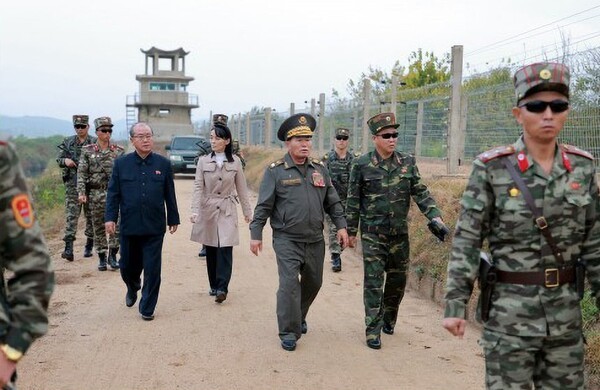
Kim Yo-jong and Pak Jong-chon Inspect Border Fortifications, Warn of Immediate Retaliation Against Provocations
Senior North Korean officials, including Kim Yo-jong, a senior Workers’ Party of Korea (WPK) official, and Pak Jong-chon, an adviser to the Ministry of National Defense, inspected fortification sites along the Military Demarcation Line (MDL) and warned that South Korean forces would face an immediate military response if they fired further warning shots. Notably, the officials disclosed that Kim Jong-un had ordered the inter-Korean boundary to be transformed into a permanent national border, directing the military to make no concessions in defending North Korea’s territorial sovereignty. These developments suggest that Pyongyang is seeking to institutionalize its designation of inter-Korean relations as those between two hostile states by reinforcing the boundary both physically and militarily.
The Korean Central News Agency (KCNA) reported on October 21 that Pak Jong-chon had inspected key sites along the southern border fortification line the previous day. He was accompanied by Ri Il-hwan, Secretary of the WPK Central Committee; Kim Yo-jong, Kim Jong-un’s sister and a senior WPK official; and senior commanders of the Korean People’s Army (KPA) General Staff.
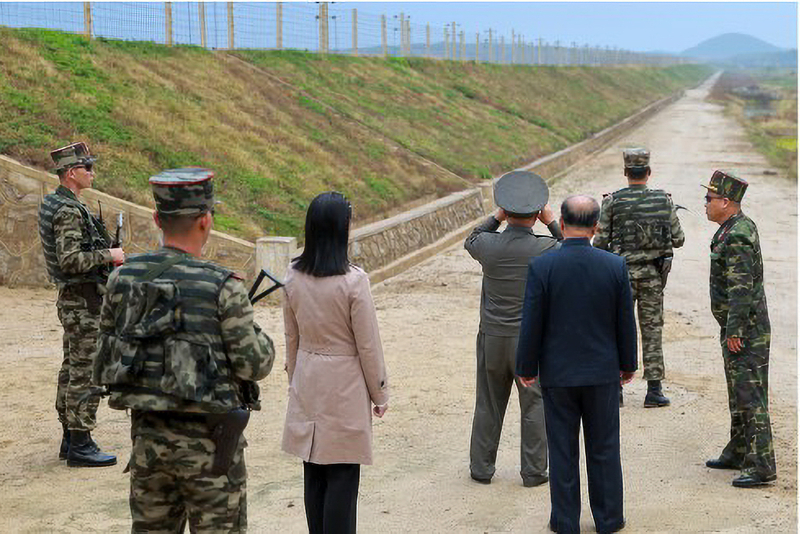
According to KCNA, Pak reviewed progress on the construction of physical barriers intended to establish a permanent border and encouraged the military personnel assigned to the project. Kim Yo-jong’s participation, alongside senior military commanders, underscored the political and strategic significance of the fortification campaign. It also suggested that the effort was being pursued under the direct authority of Chairman Kim Jong-un.
During the inspection, Pak sharply criticized the South Korean military’s response to North Korea’s construction activities. He accused Seoul of using what Pyongyang describes as legitimate border reinforcement operations as a pretext for confrontation. He also dismissed South Korean allegations that North Korean troops had crossed the MDL, portraying them as deliberate attempts to shift responsibility for escalating tensions onto North Korea.
Pak further asserted that North Korean forces knew the precise location of their country’s border and were conducting legitimate construction activities within what Pyongyang considers its own territory.
Park also condemned South Korea’s warning broadcasts and warning shots, explicitly threatening military retaliation if similar incidents continued. He stressed that any South Korean action beyond warning broadcasts and warning shots that endangered North Korean personnel would be unacceptable and must be met with an immediate counterattack. Declaring that the time for verbal exchanges had passed, he signaled Pyongyang’s readiness to respond militarily to what it considers further provocations.
Kim Yo-jong reinforced the warning by disclosing that additional North Korean firepower units had been deployed to frontline areas. She said the military leadership should ensure that South Korean forces were fully aware that these units had taken up firing positions. Her remarks suggest that Pyongyang is seeking to strengthen its forward-deployed firepower posture and reinforce its deterrent messaging in response to South Korean warning shots.
Of particular significance, Kim Yo-jong disclosed that her brother, Kim Jong-un, had personally ordered the permanent establishment of the inter-Korean boundary as a national border. According to her, the North Korean leader instructed the military to make no concessions in exercising the country’s territorial sovereignty and to formalize the boundary with what Pyongyang considers a hostile state as a permanent national border.
She characterized the initiative as a historic undertaking intended to end what North Korea regards as a longstanding misrepresentation of inter-Korean relations, emphasizing that the military must fully implement Chairman Kim’s directive. These statements underscore Pyongyang’s apparent determination to replace the traditional conception of inter-Korean relations as a special relationship oriented toward eventual reunification with a framework premised on the existence of two mutually hostile states. The fortification campaign appears intended to translate this political doctrine into a durable physical and military reality.
Since 2024, North Korea has undertaken extensive fortification activities along the inter-Korean boundary, primarily on the northern side of the MDL. These efforts have included the installation of barbed-wire fencing, defensive barriers, anti-tank obstacles, and minefields. More recently, Pyongyang has expanded related construction, including improvements to tactical roads and the installation of additional barriers, further heightening military tensions along the boundary.
Tensions escalated further following a landmine explosion in the western sector of the DMZ on September 21, which injured three South Korean military personnel. On October 5, South Korea’s military released its final investigative findings, concluding that the explosion had been caused by a plastic anti-personnel mine planted by North Korean forces south of the MDL. The United Nations Command also determined that the incident constituted a violation of the Korean Armistice Agreement. Pyongyang, however, rejected these findings, dismissing the incident as a fabrication by South Korea and accusing the South Korean military of provocations involving warning broadcasts and warning shots.
In a statement issued on October 19, Kim Yo-jong claimed that South Korean forces had conducted 2,870 warning broadcasts and fired 201 warning shots toward North Korean personnel between August 1 and October 17. During the subsequent inspection, North Korean officials reiterated these allegations and again warned of possible military retaliation.
The most consequential aspect of the inspection was Pyongyang’s explicit presentation of its fortification campaign as an effort to establish a permanent inter-Korean border, rather than simply reinforce existing military positions. This framing suggests that the construction campaign serves not only an immediate defensive purpose but also a broader political objective: to give physical and military expression to North Korea’s policy of treating the two Koreas as separate, hostile states.
By publicly invoking Kim Jong-un’s direct orders and organizing a joint inspection involving Kim Yo-jong and senior military officials, North Korea appears intent on demonstrating, both domestically and internationally, that the permanent fortification of the inter-Korean boundary has become a central element of its long-term national strategy.
The disclosure that additional firepower units have taken up firing positions, coupled with warnings of immediate retaliation against further South Korean military actions, raises concerns about the risk of inadvertent military confrontation along the MDL. Given Pyongyang’s rejection of Seoul’s interpretation of the MDL and its own territorial claims, further North Korean troop incursions followed by South Korean warning shots could create conditions in which a localized incident escalates into a broader armed confrontation.
North Korea Test-Launches New AI-Enabled High-Speed Torpedo, Jam-2.0
North Korea announced that it had conducted an underwater test launch of Jam-2.0, a new high-speed, precision-guided torpedo system reportedly incorporating artificial intelligence (AI) technology. Following a recent test of submarine-launched strategic cruise missiles, the announcement underscores Pyongyang’s efforts to modernize its naval forces and expand its underwater strike and precision-engagement capabilities.
According to the Korean Central News Agency (KCNA), the Academy of Defense Science, the General Bureau of Missiles, and the Research Bureau of Torpedo Weapons conducted the underwater test launch on October 15 to assess technological improvements and verify the performance of the newly developed Jam-2.0 high-speed, precision-guided torpedo system. KCNA reported the test on October 17.
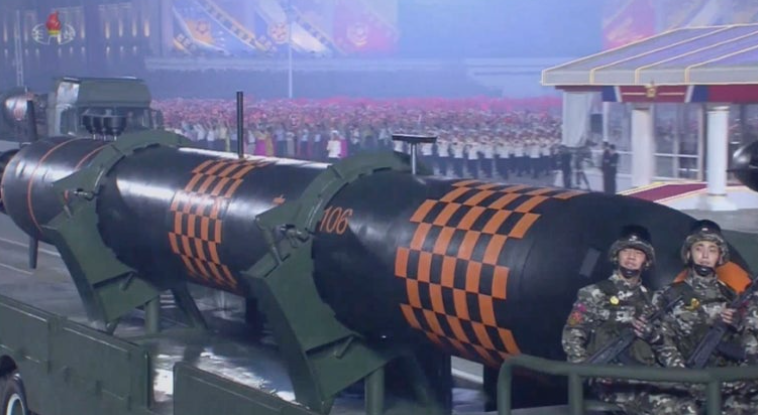
KCNA stated that Jam-2.0 was jointly developed by several North Korean defense research institutions and incorporates AI technology for target detection and guidance. The agency also claimed that the system had undergone more than 180 tests over the preceding five years, leading to the development of key technologies intended to improve propulsion efficiency. The latest test reportedly demonstrated the performance of the system’s rocket propulsion mechanism.
North Korea, however, did not disclose critical technical specifications, including the torpedo’s actual speed, maximum operational range, warhead configuration, destructive capability, or the specific mechanisms through which AI supports target detection and guidance. It also remains unclear how extensively AI technology has been integrated into the system or whether its incorporation offers measurable improvements in target acquisition, tracking, and engagement compared with existing torpedoes.
According to KCNA, senior officials from North Korea’s defense research establishment who observed the test described it as an important achievement, marking a significant advance in the development of the country’s naval capabilities. Pyongyang also characterized the launch as part of routine research and development activities aimed at enhancing the technological sophistication of its weapons systems.
North Korea’s claim that Jam-2.0 incorporates AI technology suggests an effort to enhance the precision, autonomy, and target-tracking capabilities of its underwater weapons. If the reported advances in rocket propulsion and high-speed underwater maneuverability are substantiated, the system could shorten the time needed to reach a target and reduce the response window available to opposing naval forces. Nevertheless, independent technical verification is needed to determine whether the system has achieved the claimed capabilities.
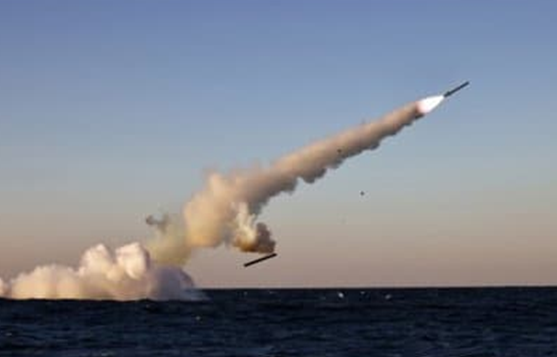
Pyongyang has increasingly prioritized naval modernization as part of its broader military development strategy, unveiling successive advances in surface combatants, submarines, and underwater weapons systems. On October 14, North Korea announced that it had conducted test launches of two types of submarine-launched strategic cruise missiles in the East Sea. By expanding its destroyer fleet while simultaneously developing submarine-launched weapons, North Korea appears to be diversifying its maritime strike capabilities across surface and subsurface platforms.
The disclosure of the Jam-2.0 test should therefore be viewed in the broader context of North Korea’s naval modernization campaign. It suggests that Pyongyang is pursuing two complementary objectives: developing longer-range strike capabilities through submarine-launched missiles and enhancing underwater engagement capabilities through AI-enabled precision-guided torpedoes.
North Korea’s emphasis on the torpedo’s AI-assisted target detection and guidance capabilities, alongside improvements in propulsion and speed, also appears intended to demonstrate the growing technological sophistication of its naval weapons systems to both domestic and international audiences.
It remains unclear whether Pyongyang will disclose further information about the torpedo’s operational deployment, intended launch platforms, or subsequent test results. If the system’s actual performance substantiates North Korea’s claims, it could pose additional challenges for the anti-submarine warfare and maritime defense operations of the South Korean and U.S. navies.
Kim Ju-ae Accompanies Kim Jong-un to Clothing and Footwear Exhibition Wearing a Pink Skirt Suit
Kim Ju-ae, the daughter of North Korean leader Kim Jong-un, has increasingly accompanied her father not only to military and diplomatic events but also to industrial and economic activities closely linked to the daily lives of North Korean citizens, including clothing and footwear production. Her repeated appearances at events showcasing the achievements of Kim’s key economic initiatives suggest that her public role is expanding beyond military affairs to encompass economic development and public welfare. These developments have also fueled speculation that Pyongyang may be gradually cultivating her public image as a potential future successor.
KCNA reported on October 20 that Kim Jong-un had visited the National Clothing and Footwear Exhibition 2026 the previous day, accompanied by senior Party and government officials. His wife, Ri Sol-ju, and daughter, Ju-ae, also attended the event. Wearing a pink skirt suit, Ju-ae toured the exhibition alongside her father and was photographed holding a pair of shoes at an exhibition display while speaking with him.
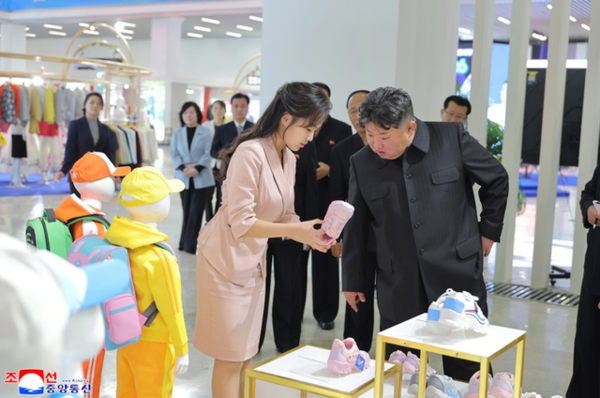
Held under the theme “A Drive for New Product Development and Quality Improvement,” the exhibition brought together approximately 270 production units, including major North Korean light-industry enterprises and newly established garment factories in cities and counties. Participants displayed clothing in more than 30 categories, comprising approximately 70,700 items, as well as footwear in more than 60 categories, totaling approximately 170,000 pairs.
Particularly noteworthy was Ju-ae’s attendance at an event showcasing the results of one of Chairman Kim’s key economic policy initiatives. Previously, her public appearances had been concentrated largely in military settings, including missile launches, inspections of military facilities, and military parades. More recently, however, her public activities have expanded to include diplomatic engagements, economic events, and occasions highlighting the daily welfare of North Korean citizens.
The exhibition was particularly significant because it showcased achievements associated with Kim Jong-un’s Regional Development 20×10 Policy. Launched in 2024, the initiative aims to establish modern factories, hospitals, and public service facilities in 20 cities and counties annually over a 10-year period. Its stated objectives are to narrow regional economic disparities and improve living standards outside major urban centers.
Now in its third year of implementation, the Regional Development 20×10 Policy has been accompanied by efforts to demonstrate that products manufactured at newly established regional industrial facilities are approaching the quality standards of those produced by major centrally managed enterprises.
During his visit, Kim Jong-un stated that numerous stylish, high-quality clothing and footwear products manufactured by newly established garment factories in cities and counties under the Party’s regional development policy, as well as by other local light-industry enterprises, were now competing on equal terms with products from centrally managed factories.
He further described this development as clear evidence of the legitimacy and effectiveness of the Party’s policy of reducing regional disparities, narrowing the urban-rural divide, and promoting balanced development nationwide.
Kim also expressed satisfaction with the exhibition, held annually in October, stating that it demonstrated rapid and tangible progress in the light-industry sector as enterprises intensified competition, improved product quality, and pursued new product development.
He also emphasized the importance of improving clothing and footwear design. He instructed the relevant authorities to organize design festivals and exhibitions in various formats and to enhance economic efficiency and scientific production management by identifying consumer preferences and incorporating them into product development.
In addition, he called for promoting traditional Korean attire, developing products featuring symbols associated with the North Korean national flag, publishing photo features and magazines showcasing new clothing and footwear products, and fostering greater competition among manufacturing enterprises. Improving the quality of school uniforms, backpacks, and footwear for students was also identified as a priority.
North Korea’s extensive coverage of the exhibition appears intended to showcase the achievements of its regional industrial development policy, bolster public confidence in the government’s economic agenda, and portray Kim as a leader attentive to improving everyday living standards.
-
PREV Current Affairs Analysis-Global Critical Mineral Security
-
NEXT 다음 글이 없습니다.