

-
 [News&Issue]
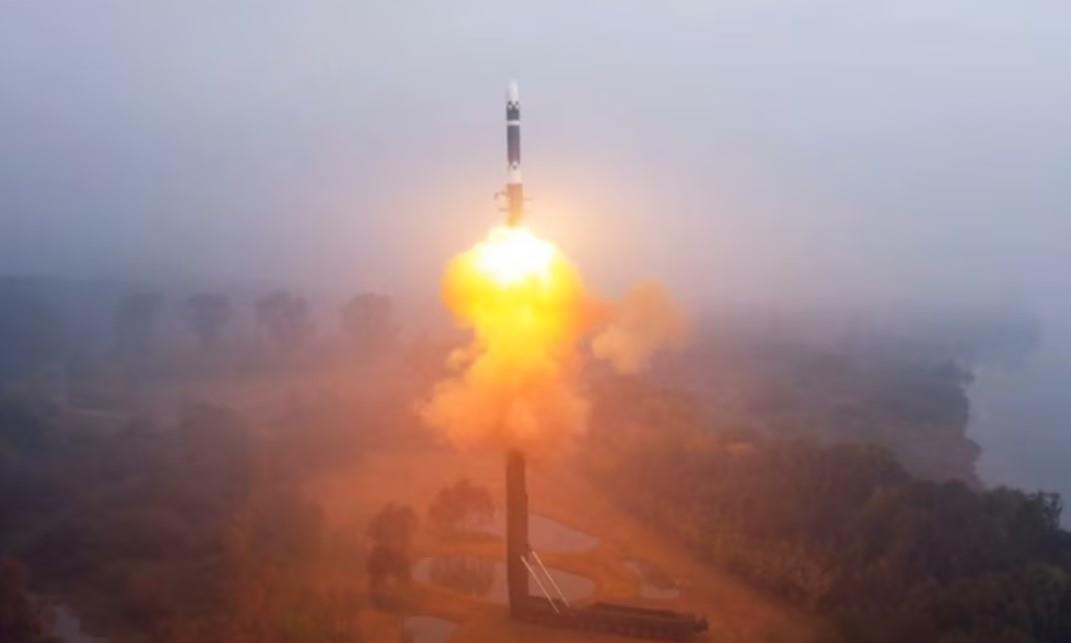
North Korean Activities in September and OctoberKim Jong-un Intensifies Focus in September and October: 14 of 21 Public Appearances Centered on Military Affairs- Is Kim Testing His “Three-Day War Plan” Against South Korea by Sending Special Forces to Russia? Lee Seung-hyunResearch Fellow at SAND InstituteNorth Korean leader Kim Jong-un focused on military affairs in September and October. North Korean media reported 21 public activities during these months (10 in September, 11 in October), with military engagements comprising 14 of them (7 in each month).In September, Kim Jong-un conducted 10 public activities, categorized as 2 in politics, 7 in military, and 1 in social/economic affairs, heavily skewed toward military engagements. His military inspections primarily focused on strategic assets such as nuclear and missile capabilities.In August, Kim prioritized domestic issues and flood recovery, but by September, his focus had shifted almost entirely to military affairs. * September: 10 activities — 2 in politics, 7 in military, 1 in social/economic * August: 11 activities — 2 in politics, 3 in military, 6 in social/economicOn September 13, North Korean media reported Kim’s visit to the Nuclear Weapons Institute and a weapons-grade nuclear material facility, where he called for “strengthening the production base” and emphasized expanding centrifuge capacity to build the nation’s nuclear arsenal.The Hwasong-19, a new intercontinental ballistic missile (ICBM) test-launched by North Korea at an undisclosedlocation on the 1st./Korean Central News AgencyKim also visited the General Missile Bureau and the State Academy of Defense Sciences, announcing a successful September 18 test launch of a new tactical ballistic missile, the “Hwasong-11Da-4.5,” along with an enhanced strategic cruise missile. North Korea revealed that the new missile is capable of carrying a 4.5-ton warhead with an accuracy range of 320 km, highlighting its effectiveness for medium-range targeting. The cruise missile has also been upgraded for combat applications.Ongoing provocations included deploying trash balloons over South Korea, testing 600mm rocket launchers, and announcing advancements in tactical ballistic and cruise missiles, all of which escalate regional tensions. North Korea's recent disclosure of highly enriched uranium (HEU) production facilities, coinciding with the U.S. election, seems intended to solidify its nuclear status and enhance its negotiating leverage.In conclusion, North Korea’s focus in September was outward, emphasizing military posturing and signaling to the U.S. Linked to the U.S. election, these provocations are expected to continue but remain restrained. Rather than a seventh nuclear test, North Korea may choose lower-level displays of its nuclear capabilities, such as showcasing delivery systems or conducting drills that don’t directly threaten U.S. security. The September facility disclosures align with this approach.The continued use of trash balloons targeting South Korea has reportedly been adopted as a new North Korean tactic, likely to persist in the future. This tactic aims to wear down South Korean defenses, drain resources, and inflict economic losses. North Korea may use these provocations to assess South Korea's responses and explore additional tactics for rear-area infiltration.In October, Kim Jong-un conducted 11 public activities, comparable to the 10 in September, again focusing primarily on military matters.* September: 10 activities — 2 in politics, 7 in military, 1 in social/economic* October: 11 activities — 2 in politics, 7 in military, 2 in social/economicIn October, North Korea’s Supreme People’s Assembly cemented a more hostile stance toward South Korea under the “Two Hostile States” doctrine. Kim Jong-un heightened this hostility, stressing ideological unity within the Korean People's Army to bolster internal solidarity and vigilance against external threats.With Kim Jong-un designating South Korea as a hostile state in October, the North Korean leadership has moved to formalize this stance in its constitution, excluding reunification prospects and extending its threat-focused policy. Kim Yo-jong also issued a critical statement as part of this new approach.In summary, like in September, Kim Jong-un's focus in October remained on foreign affairs, particularly in the military sector. This included strengthening military cooperation with Russia by signing a "Comprehensive Strategic Partnership Agreement" and deploying special forces—part of the "Three-Day War Plan" announced in 2013—to the Ukraine conflict for combat experience that enhances the feasibility of this plan against South Korea. North Korea is expected to continue sending troops to support Russian forces, supplying weapons, and escalating threats against South Korea, especially with the U.S. presidential election approaching.
24.11.08 -
 [Kim Myongsung’s Inside North Korea]
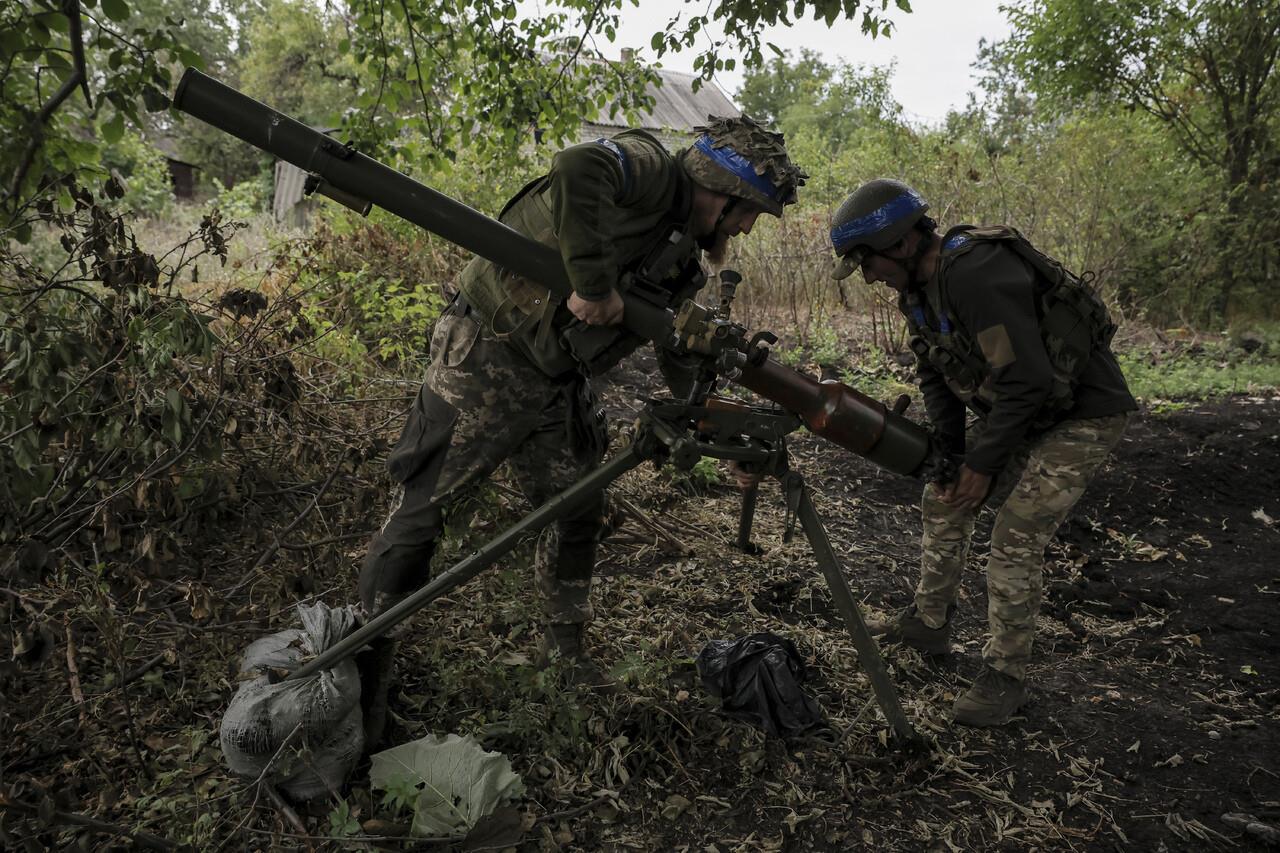
Kim Myongsung’s Inside North Korea· Ministry of National Defense: “Over 10,000 North Korean Troops Deployed to Russia, Many at Front Lines” … Bodies Discovered with North Korean Flags· North Korean Authorities Silent on Troop Deployment to Russia, but Rumors Spread … Soldiers and Civilians Stirred· North Korea Fires Several SRBMs After Launching ‘Hwasong-19’ ICBM Ahead of U.S. Presidential ElectionKim Myong-sungSecretary General of the SAND InstituteMinistry of National Defense: “Over 10,000 North Korean Troops Deployed to Russia, Many at Front Lines” … Bodies Discovered with North Korean FlagsOn the 5th, the South Korean Ministry of National Defense reported that over 10,000 North Korean soldiers have been deployed to Russia, with many moving to frontline areas like Kursk amid ongoing fighting. Additionally, claims emerged of a body found at the conflict site wearing a North Korean flag-adorned military cap, suggesting significant potential casualties among North Korean troops if full-scale combat occurs.During a routine briefing, spokesperson Jeon Ha-kyu from the Ministry of National Defense confirmed that “over 10,000 North Korean troops are currently in Russia, with a significant number having moved to front-line areas, including Kursk, as reported by military intelligence agencies from South Korea and the United States.”On the 4th, Mathew Miller, a spokesperson for the U.S. State Department, mentioned in a briefing that “last week, Secretary of State Tony Blinken reported that 8,000 North Korean troops had been sent to Kursk, and our current assessment indicates that this number has risen to approximately 10,000.”Concerns have been raised regarding the high likelihood of significant casualties among North Korean troops, who lack experience and understanding of modern warfare if they are deployed to the front lines. Given that nearly 700,000 Russian casualties have been reported, these troops may face even harsher conditions than the Russian forces.Last month, the National Intelligence Service (NIS) told the Intelligence Committee that Russian trainers recognized the physical capability and morale of North Korean soldiers but noted their lack of modern warfare knowledge, predicting significant casualties if deployed to the front.In this context, reports have surfaced regarding a body found in the conflict zone of Kursk, wearing a military cap that bore the North Korean flag. On the 4th, Radio Free Asia (RFA) reported confirming a photograph from the Lithuanian NGO Blue/Yellow that has been providing military assistance to Ukraine since 2014. This photograph allegedly depicts a body with a North Korean flag-adorned cap lying among debris from a battle that occurred on October 25.Jonas Ohman, the head of Blue/Yellow, previously stated that during the battle between Ukrainian and Russian forces on October 25 in Kursk, soldiers presumed to be North Korean lost their lives. He subsequently shared a photograph taken at the scene with RFA, showing a body.Ohman informed RFA that “drone footage provided by the Ukrainian military captured multiple soldiers wearing caps featuring the North Korean flag.” He further mentioned, “Ukrainian forces attacked Russian positions, and Russian troops mistakenly shelled their own positions, resulting in some casualties believed to include North Korean soldiers, with military caps showing the North Korean flag visible in the footage.”He remarked that the deceased soldier was armed with an old Russian-made Kalashnikov rifle and estimated that around 10 North Korean soldiers may have died, though the chaotic nature of the battle makes it hard to determine an exact number. Although there is no way to verify if they were indeed North Korean soldiers, he found the circumstances highly plausible, according to RFA.However, RFA chose not to release the photograph. They reported that “Jonas Ohman shared one drone-captured image on the condition that it would not be made public.” They added that while the body of a soldier wearing a military cap with the North Korean flag was identifiable, the face could not be discerned.Amidst the impending harsh winter, there are growing fears that inadequate supplies and Russia's aggressive 'push-through' tactics may lead the deployed North Korean troops into a perilous situation.North Korean Authorities Silent on Troop Deployment to Russia, but Rumors Spread … Soldiers and Civilians StirredReports suggest that North Korea has sent a large number of special forces to Russia. As news of this deployment circulates within the country, it has sparked unrest among both the civilian population and military personnel.During a recent national audit on the 29th of last month, South Korea’s National Intelligence Service (NIS) reported that North Korean authorities are taking steps to prevent news of the deployment from reaching civilians. The NIS indicated that the government is relocating and isolating the families of deployed soldiers to manage information and maintain secrecy.Analysts believe that North Korea's focus on internal control is driven by fears that significant casualties or cases of desertion among deployed troops could threaten the stability of the regime.To quell any potential unrest, the North Korean government has reportedly misled the families of deployed soldiers, telling them their loved ones are simply undergoing training. They are also continuing relocation and isolation measures. Officials have banned officers from using mobile phones and instructed soldiers in the dispatched units to remain silent. However, many soldiers are expressing anxiety, questioning why they should sacrifice themselves for a foreign conflict.In particular, rumors about the deployment have proliferated in the North Korea-China border regions, where information control is less stringent, resulting in heightened public anxiety. Residents are worried that their children may be among those sent to Russia.On the 30th of last month, Daily NK, a media outlet specializing in North Korean news, cited a source in Ryanggang Province, stating that “news of the Russian deployment has circulated widely among residents of Hyesan City.” Parents who have sent their children into the military are feeling particularly anxious, uncertain if their kids are included in the deployment.Currently, reports indicate that the North Korean military has suspended leave and outside contact for soldiers, citing increased tensions as the reason, effectively cutting off their communication with the outside world.A resident in his 50s from Hyesan City, whose child is serving in the military, shared, “I felt my mind go blank when I heard about the deployment. I've wanted to visit my son's unit countless times, but since visits are not allowed, I feel utterly distressed.” Another resident in his 40s from Hyesan expressed frustration, saying, “It’s already unfair that they have to serve in the military for 10 years, and now they’re being sent to war? How many will actually come back alive, and who can guarantee they’ll return in good health?”A source from North Hamgyong Province reported, “Parents are desperately trying to find out about their children's situations, with some even visiting fortune tellers or going directly to their sons’ units.”Another insider revealed that “some officials are spending money to ensure their children don’t get deployed, while ordinary citizens feel powerless and resign themselves to their fate, sighing in despair.”North Korea Fires Several SRBMs After Launching ‘Hwasong-19’ ICBM Ahead of U.S. Presidential Election North Korea tested its new-type ICBM ‘Hwasong-19’ on October 31 and subsequently launched several SRBMs into the East Sea on November 5. Observers believe these actions aim to enhance North Korea’s visibility ahead of the U.S. presidential election and to retaliate against recent joint air drills conducted by South Korea, the U.S., and Japan.The Republic of Korea Joint Chiefs of Staff reported on the 5th that “Our military detected multiple SRBMs launched toward the East Sea around 7:30 a.m.” According to the South Korean military and Japan’s NHK, the missiles were fired from near Sariwon City in North Hwanghae Province, flying about 400 km before landing outside Japan’s Exclusive Economic Zone (EEZ). Japanese Defense Minister Nakatani Gen stated, “At least seven missiles were observed, reaching a maximum altitude of approximately 100 km and covering about 400 km.”This missile provocation occurred just five days after North Korea's test launch of the ICBM ‘Hwasong-19’ on October 31. Given that the launch coincided with the presidential election day at 2 p.m., some analysts interpret it as a show of force directed at the incoming U.S. administration. It may also serve as a response to the South Korea-U.S.-Japan joint drill on November 3, which involved the U.S. strategic bomber B-1B. Kim Yo-jong, Deputy Director of the Workers' Party of Korea, condemned the drills in a statement, describing them as “a clear demonstration of the enemies’ most hostile and aggressive nature against our republic” and asserting the “urgency and legitimacy of our chosen path to strengthen nuclear capabilities.”Analysts have noted that the specifications of these missiles closely resemble North Korea's large-caliber multiple rocket launcher, the KN-25. This similarity suggests that North Korea may be testing modified missiles intended for export to Russia.On October 31, North Korea launched the new-type ICBM ‘Hwasong-19.’ According to the Korean Central News Agency (KCNA), the Hwasong-19 reached a maximum altitude of 7,687.5 km, traveled a distance of 1,001.2 km, and flew for 5,156 seconds (85.9 minutes) before landing in the targeted open waters of the East Sea.Analysts have suggested that the Hwasong-19 ICBM is being developed as a multiple-warhead missile with Russian technical assistance.On November 2, the Ukrainian military-focused media Defense Express reported, “The Hwasong-19 resembles Russia’s Yars missile in appearance. It appears to have adopted Russian advanced technology,” and speculated that North Korea might have replicated or modified the design to increase range and payload. The report added that images suggest Multiple Independently-targetable Reentry Vehicle (MIRV) technology, supporting suspicions of Russian involvement. Yars is a well-known multiple-warhead ICBM operated by Russia, along with the Sarmat.Yoo Yong-weon, a former military journalist and member of the People Power Party, analyzed the Hwasong-19 on November 3, noting that this solid-fuel ICBM is an upgraded version of the Hwasong-18, featuring increased length and diameter. He suggested that these enhancements aim to develop a multiple-warhead system, as the expanded warhead space and payload capacity indicate. Yoo also observed that the blunt shape of the Hwasong-19's warhead resembles Russia's Sarmat missile, and its first-stage booster is similar to the Yars missile.Multiple-warhead technology enables warheads to split during descent and hit multiple targets independently, complicating interception and potentially bypassing even advanced U.S. defense systems. However, it relies on miniaturized nuclear warheads and dependable re-entry technology, which experts highlight as substantial technical challenges. Notably, North Korea has yet to conduct standard-angle (30-45 degrees) re-entry tests, making independent development of this technology difficult.Amid these developments, Russia declared its “full support for the measures taken by the leadership of the Democratic People’s Republic of Korea to curb the aggression policy of the United States and its allies” in a joint statement following strategic talks during North Korean Foreign Minister Choe Son-hui’s visit to Russia. This statement has been viewed as an explicit endorsement of North Korea’s nuclear force buildup by Russia.
24.11.08 -
 [NK Focus]
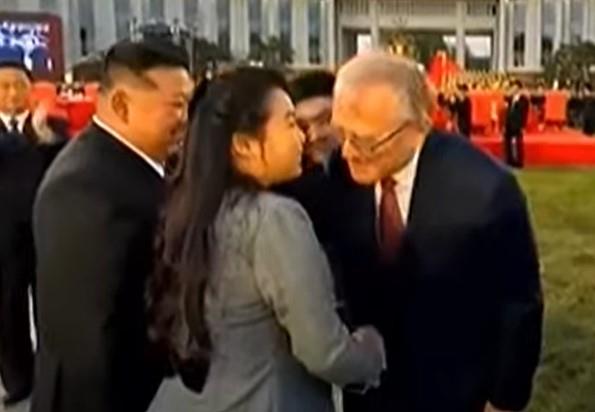
What Was the Purpose of Kim Ju-ae Whispering withthe Russian Ambassador? Lee Seung-hyunResearch Fellow at SAND InstituteA recent video shows Kim Ju-ae, daughter of North Korean leader Kim Jong-un, whispering with Russian Ambassador Alexander Ivanovich Machegora during the 79th anniversary celebration of North Korea's Party Foundation Day on October 10. The footage captures Kim Ju-ae leaning in to whisper as they greeted each other.This marks the first time she has been seen publicly interacting with a foreign diplomat at an official event. The only previous instance of her meeting a foreign figure was in September 2013, when former NBA star Dennis Rodman, invited to North Korea by Kim Jong-un, met her privately.Footage released by Korean Central Television (KCTV) shows Kim Ju-ae arriving at the event dressed formally, accompanied by her father in a luxurious Aurus limousine, a high-end Russian vehicle. The limousine was a gift from Russian President Vladimir Putin during his visit to North Korea in June and features the number ‘7.27.1953,’ commemorating the signing of the Korean Armistice Agreement.Upon arriving, Kim Jong-un and Kim Ju-ae greeted senior officials already present. Ambassador Alexander Ivanovich Machegora was notably present as a special foreign guest, highlighting the close ties between North Korea and Russia. North Korean media described him as a “personal guest” of Kim Jong-un.Kim Ju-ae, the daughter of Kim Jong-un, was seen greeting and whispering with Alexander Ivanovich Machegoraduring the 79th anniversary event of the WPK’s Foundation Day held on October 10 / Korean Central TelevisionDuring the event, Kim Jong-un introduced his daughter to Machegora after shaking hands with him. Kim Ju-ae then warmly shook hands with the ambassador before leaning in to whisper, a gesture that made Machegora smile broadly.Later in the evening, Kim Ju-ae attended a celebratory performance and banquet, where Machegora was seated next to North Korean Foreign Minister Choe Son-hui, further emphasizing the close relations between the two nations.Meanwhile, Russia has voiced support for North Korea's claims that South Korea sent a drone over Pyongyang. On October 14, Russian Foreign Ministry spokesperson Maria Zakharova issued a statement condemning Seoul’s actions as a violation of North Korean sovereignty and an interference in its internal affairs.Zakharova also reiterated Russia's commitment to playing a constructive role on the Korean Peninsula, in line with the Comprehensive Strategic Partnership Agreement between Russia and North Korea. She emphasized that Russia aims to prevent escalating tensions and restore stability in the region.Russia’s increasing alignment with North Korea follows its conflict with the West over its invasion of Ukraine. Moscow has frequently criticized the South Korean government, often echoing North Korea’s rhetoric.On the same day, Russian President Vladimir Putin submitted a bill to the State Duma to ratify the ‘Comprehensive Strategic Partnership Agreement’ signed with North Korea in June. This agreement, finalized after Putin’s summit with Kim Jong-un, signifies deeper cooperation between the two countries. The treaty contains provisions for mutual military assistance, stipulating that if either country faces military invasion, the other will provide support according to the United Nations Charter and relevant laws. Analysts view this as a sign that North Korea and Russia are strengthening their alliance to a military level.Last month, Sergei Shoigu, Secretary of the Russian Security Council, visited Pyongyang to meet Kim Jong-un, while North Korean Foreign Minister Choe Son-hui visited Russia, holding talks with Sergey Lavrov before attending the Eurasian Women’s Forum, highlighting active diplomatic exchanges between the two nations.As allegations persist about North Korea supplying Russia with weapons for its invasion of Ukraine, there are even claims that North Korean troops have been deployed to support Russian forces there.The scene of Kim Ju-ae whispering to Machegora is seen as a calculated move to display the closeness between North Korea and Russia. In contrast, the Chinese ambassador to North Korea was notably absent from the podium, highlighting the current strained relationship between North Korea and China.
24.10.18 -
 [Kim Myongsung’s Inside North Korea]
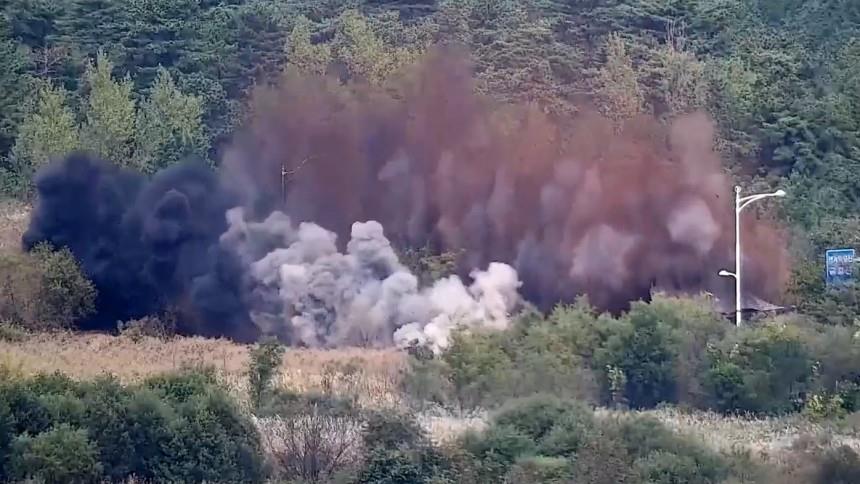
Kim Myongsung’s Inside North Korea· Kim Jong-un’s Anti-Reunification Act: Destruction of About $133 Million in Assets — August 15th Doctrine Challenges His Two-State Policy· Kim Yo-jong Involves U.S. about South Korean sending Drones to North: "We Know It’s South" ... "The U.S. Must Take Responsibility"· Kim Jong-un Gathers Top Military Officials to Discuss Response to Pyongyang Drone IncidentKim Myong-sungSecretary General of the SAND InstituteKim Jong-un’s Anti-Reunification Act: Destruction of About $133 Million in Assets — August 15th Doctrine Challenges His Two-State PolicyOn the 15th, North Korea demolished the Gyeongui and Donghae roads, symbols of inter-Korean cooperation, severing the peninsula’s connection and undoing over 60 years of reconciliation efforts.The scene of North Korea destroying the road on the northern side of the Gyeongui Line around noon on the 15th/ Joint Chiefs of StaffThe destroyed Gyeongui and Donghae roads originated from the 1992 Inter-Korean Basic Agreement under Kim Il-sung, aimed at reconnecting severed infrastructure. The initiative gained momentum after the 2000 inter-Korean summit during Kim Jong-il's rule, with both Koreas holding simultaneous groundbreaking ceremonies in September 2002. At the time, North Korean media expressed optimism, advocating for swift reconnection to achieve national prosperity and unity.At the end of last year, Kim Jong-un redefined inter-Korean relations as ‘two hostile states.’ He then ordered the complete severance of the northern section of the Gyeongui line. By August, North Korea had blocked the Gyeongui and Donghae railroads, fully cutting off land routes between the Koreas. These actions abandon the reunification legacy of Kim Il-sung and Kim Jong-il, who once equated reunification with patriotism and division with betrayal.North Korea also announced plans to fortify the severed roads with concrete barriers, effectively creating a de facto border. These actions not only erase the hopes of North Koreans who saw reunification as essential but also undermine the collective desire for unity shared across the Korean Peninsula.North Korea demolished roads built with 180 billion won (about $132.3 million USD) of South Korean taxpayer money, violating property rights and undermining inter-Korean trust—a serious legal offense. In 2020, North Korea similarly destroyed the Kaesong Inter-Korean Joint Liaison Office, another taxpayer-funded project, claiming it was due to anti-North leaflets.In response, the South Korean government filed its first lawsuit against North Korea in June last year, seeking 44.7 billion won (about $32.8 million USD) in damages. There are renewed calls for compensation, emphasizing that North Korea’s unauthorized destruction of South Korean assets is illegal and infringes on the property rights of the state and its citizens.North Korea’s shift to redefine inter-Korean relations as ‘hostile two-state relations’ began after the 2019 Hanoi summit collapse. With no plans for denuclearization, Kim Jong-un saw no economic gain in improving ties. To curb South Korean cultural influence, he enacted the 2020 ‘Reactionary Ideology and Culture Rejection Law.’ In late 2023, he reinforced this stance by ordering the Supreme People’s Assembly to remove terms like ‘independence, peaceful reunification, and national unity’ from the constitution, labeling South Korea as the ‘primary enemy.’In line with Kim’s directives, North Korea swiftly removed reunification symbols. The Monument to the Three-Point Charter for National Reunification, once a symbol of unity, was taken down, shocking citizens. The phrase ‘Land of the Morning Calm’ was removed from the national anthem, and references to reunification and nationhood are being erased from monuments with the writings of Kim Il-sung and Kim Jong-il across the country.Since March, North Korea dismantled streetlights along the Gyeongui and Donghae roads in the DMZ. In May, sections of the Donghae railway near Mount Kumgang were removed, and in late June, rails from the northern Gyeongui road near Kaesong were dismantled. In August, the Gyeongui train depot was also taken down. Additionally, North Korea escalated ‘trash balloon’ attacks to stir internal tensions in South Korea.Additionally, North Korea is fostering a warlike atmosphere among its population, instilling hostility to justify the Two-State policy.Kim Jong-un's tactics are becoming increasingly evident, not only to South Korea and the international community but also to North Koreans. This likely explains why the regime has kept the balloon attacks and road demolitions secret from its citizens. Kim’s abandonment of reunification—a core pillar of the Kim dynasty’s legitimacy—reveals a fear rooted in a sense of vulnerability and defeat in the face of South Korea’s system.In response to fading hopes for reunification due to Kim’s anti-reunification stance, President Yoon Suk-yeol introduced the August 15th Reunification Doctrine.The doctrine envisions reunification based on principles of ‘Freedom, Peace, and Prosperity,’ opposing Kim Jong-un’s Two-State policy and reaffirming South Korea’s commitment to reunification both domestically and globally.The doctrine outlines specific steps South Korea can take without North Korean involvement, highlighting its readiness to lead reunification efforts and positioning itself as the primary driver for Korean unity.Kim Yo-jong Involves U.S. about South Korean sending Drones to North: "We Know It’s South" ... "The U.S. Must Take Responsibility"Drones / Leaflets in basket / Dispersed leaflets A photo of the drone and leaflets that North Korea claims appeared over the Office Building of the CentralCommittee of the WPK in Pyongyang on the 11th / Korean Central News AgencyKim Yo-jong, sister of North Korean leader Kim Jong-un and Deputy Director of the Workers' Party of Korea, claimed on the 14th that the South Korean military is behind the drones sent to North Korea. In a statement via the Korean Central News Agency (KCNA), she accused, "We know the despicable South Korean military is responsible for this."Kim Yo-jong escalated the rhetoric by involving the U.S., stating, "If the sovereignty of a nuclear-armed nation has been violated by the lackeys trained by the Americans, then the ones responsible should be held accountable."Her harsh statement appears to be a response to South Korea’s Ministry of National Defense, which pointed out that North Korea was unable to identify the origin of the drones carrying the leaflets.Earlier, in a statement on the 12th, Kim Yo-jong raised the possibility that civilian groups might be behind the drone activity, saying, "If the military cannot even properly identify drones that are freely crossing the border, then that’s clearly a problem."Although she blamed the South Korean military, she did not provide evidence. Since North Korea’s claim on the 11th that a South Korean drone entered Pyongyang airspace, she has made inflammatory statements for three days, escalating threats against South Korea.It appears Kim Yo-jong is trying to stir up anti-South Korean and anti-U.S. sentiment by blaming both for the drone incident. This may also be an attempt to highlight Korean Peninsula tensions ahead of the U.S. presidential election.Meanwhile, the South Korean Ministry of National Defense has remained firm in its stance of "not confirming" whether the military sent drones into Pyongyang.North Korea's Ministry of Foreign Affairs previously issued a statement on the 11th, claiming that South Korea had sent drones to Pyongyang on the 3rd, 9th, and 10th to distribute anti-North Korea leaflets.Kim Jong-un Gathers Top Military Officials to Discuss Response to Pyongyang Drone Incident On the 14th, Kim Jong-un convened a meeting focused on defense and security to discuss North Korea’s response to the Pyongyang drone infiltration. His appearance, just three days after North Korea accused South Korea of sending drones, is interpreted as a sign of the importance he places on addressing the incident.Kim Jong-un convenes a meeting on the 14th to discuss response measures to the drone incident/ Korean Central News AgencyAccording to KCNA on the 15th, Ri Chang-ho, head of North Korea's Reconnaissance General Bureau, delivered an analysis on the "provocation of enemy." Other key reports were presented by Ri Yong-gil, Chief of the General Staff of the KPA, on military action plans; No Kwang-chol, Minister of Defense, on military modernization; Jo Chun-ryong, Secretary for Military Industry, on weapons production; and Ri Chang-dae, director of the Ministry of State Security, on intelligence operations.KCNA also reported that after reviewing the General Staff’s progress and military unit readiness, Kim Jong-un outlined the "direction for military activities" and set "critical tasks for maintaining war deterrence and exercising self-defense." However, the specific tasks were not disclosed.Additionally, Kim Jong-un reportedly expressed the "firm political and military stance" of the Party and the North Korean government, although no further details were given.Given the officials present, discussions likely covered distributing trash balloons to the South and assessing the readiness of eight artillery brigades near the DMZ. By convening military and intelligence leaders, Kim Jong-un appears to be escalating tensions, boosting security vigilance, and using the meeting to strengthen internal discipline and regime unity.Meanwhile, it has been confirmed that Ri Chang-ho, who attended the meeting, was recently promoted from major general (two stars) to lieutenant general (three stars).
24.10.18 -
 [Opinion]
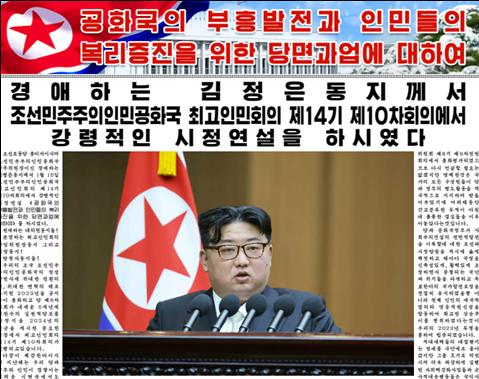
Kim Jong-un's 'Two-State Policy' and Its Delayed Legalization Choi Kyong-huiPresident of SAND InstituteOn October 7–8, 2024, the 11th Session of the 14th Supreme People's Assembly convened in Pyongyang. The assembly amended parts of the socialist constitution, passed the Light Industry and Foreign Economic Laws, and discussed enforcement of the Quality Control Law and other issues. However, the details of the constitutional changes were not disclosed, which is notable given that, in the previous 10th Session held on January 15, Kim Jong-un had abolished the National Committee for the Peaceful Reunification of the Fatherland, the National Economic Cooperation Committee, and the Mount Kumgang Tourist Bureau. He had also instructed the Assembly to clearly define the political and geographical boundaries, including territory, territorial waters, and airspace, in the constitution.Kim Jong-un, who has recently intensified the crisis in inter-Korean relations, neither attended this session nor disclosed the amended laws. In his previous speech, he framed the relationship between North and South Korea as that of two distinct states, branding South Korea as a hostile entity. He also instructed officials to legally clarify North Korea’s sovereign territories. Furthermore, he demanded the removal of language and symbols promoting unification or common identity with South Koreans from North Korean society, including terms like ‘independence,’ ‘peaceful reunification,’ and ‘great national unity.’ Kim even ordered the dismantling of the 'Monument to the Three-Point Charter for National Reunification' in Pyongyang. True to his word, the monument has since been removed.Kim Jong-un delivers a policy speech at the 10th Session of the 14th Supreme People's Assemblyin January 2024 / Rodong SinmunSo, why is Kim Jong-un pushing for the formalization of the ‘Two-State Policy’ now, even as he distances himself from his grandfather Kim Il-sung’s reunification vision and his father Kim Jong-il’s policies? This article examines the significance of this policy in the context of inter-Korean relations and its implications for Kim Jong-un.A Complete State Model for Lifelong PowerSince taking power, Kim Jong-un has aimed to establish North Korea as a unified, complete state rather than a divided nation, using nuclear weapons and centralized control as his main tools. He views nuclear capabilities as essential for maintaining his regime’s stability, distinguishing North Korea from the South, and asserting his authority globally. Following the successful 2017 test of the ‘Hwasong-15’ missile, Kim declared the country’s nuclear arsenal complete and promoted the ‘Our State First Principle’ to emphasize North Korea's status as a nuclear power.In 2015, Kim introduced the ‘Paektu bloodline’ concept and established ‘Pyongyang Time’ to create a time difference with South Korea. Although he reversed this in 2018 after the inter-Korean summit, it was likely due to concerns about North Korea’s growing isolation. His efforts to cut ties with the South continued during a 2019 inspection of Mount Kumgang, where he criticized South Korean facilities as "shabby" and ordered their removal. In 2022, the Ministry of Unification confirmed that several South Korean structures, including the Hotel Haegumgang and a golf course, had been demolished.The newly enacted laws, such as the ‘Reactionary Ideology and Culture Rejection Law’ and the ‘Pyongyang Cultural Language Protection Law,’ show North Korea tightening control over perceptions of South Korea. Shifting focus from the U.S., Kim Jong-un has intensified anti-South sentiment through education. Kim Yo Jong’s use of ‘Republic of Korea’ and the ‘Two-State Policy’ reflect this heightened stance. Externally, North Korea’s aggressive actions and severed ties further indicate Kim’s aim to create a unified state model—a family dynasty—to secure his power. With unification seen as viable only through one side’s absorption, the ‘Two-State Policy’ aligns with Kim’s strategy to consolidate power and ensure the ‘Paektu bloodlines’ rule.Reasons for Withholding the Supreme People's Assembly’s Constitutional AmendmentsKim Jong-un had instructed the assembly to formalize the ‘Two-State Policy’ in the constitution, but he neither attended the session nor announced any amendments. One reason could be the lack of a solid framework to justify abandoning reunification. Explicitly stating the policy would require extensive revisions, potentially revealing flaws. In North Korea’s hereditary regime, legal justification is crucial for control, and any weakness could undermine legitimacy. Therefore, the amendment process may be delayed or still under consideration due to these unresolved issues.Secondly, if North Korea officially abandons reunification, it would undermine the ‘revolutionary’ narrative that has sustained the regime for over 80 years, forcing the Workers' Party of Korea to shift its long-held stance, potentially leading to public discontent. As North Koreans become increasingly aware of South Korea’s development, abandoning reunification would likely cause widespread disappointment. In the past, some separated families could meet officially, but now such reunions occur unofficially through defections. Abandoning unification efforts without proper preparation would further disrupt North Korean society. On October 15, North Korea demolished a road connecting the two Koreas to sever ties, but state media did not report it, suggesting a reluctance to completely suppress hopes for reunification.Thirdly, as North Korea observes the U.S. presidential election, Kim Jong-un's ‘Two-State Policy’ reveals his intention to bypass South Korea and engage directly with the U.S. He promoted this policy during a time when a potential rematch between Joe Biden and Donald Trump seemed to favor Trump. Having previously negotiated with Trump while maintaining North Korea’s nuclear capabilities, Kim indicated his preference for direct talks with the U.S. if Trump were re-elected. However, after Kamala Harris entered the race following Biden’s mid-campaign withdrawal, the political landscape shifted, leading Kim to postpone actions like legalizing the policy amid the uncertainty. Nonetheless, North Korea’s recent provocations suggest a strategy to prioritize its nuclear issue on the agenda of the incoming U.S. administration, securing its role as a negotiation partner.OutlookKim Jong-un’s ‘Two-State Policy’ aims to stabilize his regime by abandoning reunification and permanently dividing the two Koreas. His strategy targets ‘gray zones’—areas of low conflict risk but high psychological pressure. While avoiding direct conflict with South Korea, North Korea is likely to escalate its nuclear capabilities and heighten tensions on the peninsula to boost its leverage with the U.S. Depending on the U.S. election results, North Korea may adjust its approach but will still prioritize U.S. relations. Provocations toward South Korea will continue as it entrenches the two-state framework.Kim’s push for the ‘Two-State Policy’ is mainly to secure his lifelong power. This involves sealing borders with China and South Korea, restricting escape routes and defection opportunities. North Koreans face worsening economic hardship, stricter surveillance, and intensified human rights abuses. While this policy may stabilize the regime, it deepens divisions and worsens conditions for North Koreans. Despite Kim’s efforts to divide the peninsula permanently, efforts should focus on building reunification capacity and fostering North Korean aspirations for unification, as it remains a vital national goal.
24.10.18 -
 [Kim Myongsung’s Inside North Korea]
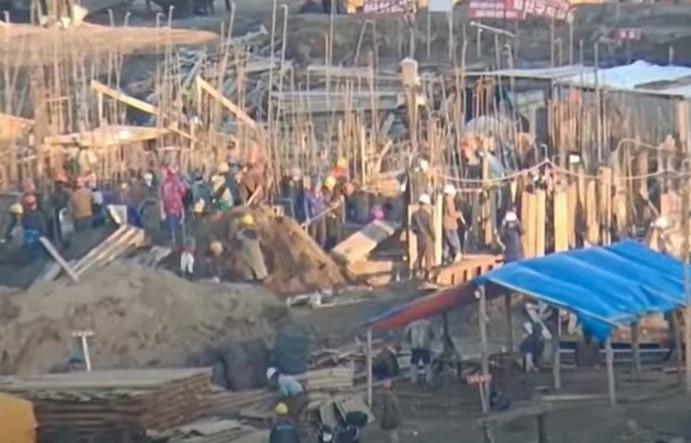
Kim Myongsung’s Inside North Korea· North Korea Orders Traders to Import Large Quantities of Chemicals, Including Body Preservatives and Disinfectants· Kim Jong-un Visits Flood-Affected Areas for the Third Time in an Attempt to Quell Public Discontent· Kim Jong-un Focuses on Domestic Affairs, While Kim Yo-jong Takes Charge of Foreign Policy with Her Consecutive SpeechesKim Myong-sungSecretary General of the SAND InstituteNorth Korea Orders Traders to Import Large Quantities of Chemicals, Including Body Preservatives and Disinfectants- Thousands of Bodies Decompose After Heatwave and Flooding; Mass Deaths Reported at Chongori Concentration CampIn August, North Korea reportedly instructed its overseas trade workers to acquire substantial quantities of chemical substances like zeolite, formaldehyde, glutaraldehyde, and essential oils (such as lavender and eucalyptus), along with hydrogen peroxide (H₂O₂).These chemicals, used as disinfectants, preservatives, deodorizers, and sterilizers, were ordered due to the rapid decomposition of thousands of bodies—victims of severe summer flooding in the northern border areas and mass deaths in concentration camps. The extreme heat accelerated decay, while inadequate cremation facilities couldn’t keep up, resulting in overwhelming odors.A trade source in Dandong, China, familiar with the situation in Pyonganbuk-do, said, "We are buying large quantities of deodorants to eliminate odors, preservatives to prevent body decomposition, and disinfectants. Once we secure the supplies, they will be sent to the flood-affected areas of Pyonganbuk-do, Jagang-do, and Ryanggang-do." The source further explained that the damage in these regions, particularly along the Yalu River, was severe, with estimates of over 3,000 people having perished in the floods.Despite North Korea’s denouncement of South Korean media reports as "fabrications," the flood’s impact appears far more devastating than initially anticipated. Over 2,500 deaths have been reported in Jagang-do alone, and with more bodies discovered during recovery efforts, the death toll is expected to rise, potentially reaching between 3,500 and 4,000.On September 20, North Korean residents work on flood recovery in Sinuiju, one of the disaster-affected areas./ Kang Dong-wan TVThe primary concern now is the rapid decomposition of bodies due to the heat, which is causing a foul stench and risking the spread of diseases. The source described hospitals overwhelmed by the number of bodies, with morgues overflowing, and power outages hastening decomposition. Makeshift burials and inadequate cremation facilities have led to long queues for cremations, with the smell spreading for kilometers, causing distress among nearby residents.Meanwhile, North Korea has also seen a significant number of deaths in its concentration camps due to the record-breaking heat this year. Particularly at Chongori Concentration Camp in North Hamgyong Province, hundreds of prisoners are reported to have died from the heat, forced labor, beatings, and starvation.A judicial source knowledgeable about Chongori explained that from June to August, during the peak of the heatwave, more than half of the camp's inmates died. The source even described how the gases from decomposing bodies caused them to burst with loud "popping" sounds in the overcrowded morgues.Approximately 10 bodies are cremated each day at the camp, but the poor quality of coal used for cremation releases a nauseating smell that permeates the entire camp, driving both prisoners and guards to the brink of madness. The stench has even reached neighboring regions like Pungsan, causing severe odor pollution. Prisoners, who are forced to endure grueling labor in unbearable conditions, are reportedly pleading for death, saying, "Life is worse than death, please just kill me."In an urgent response, North Korean authorities ordered trade workers to procure as many deodorizers, preservatives, and disinfectants as possible. One worker remarked, "In all my years of trade, I’ve never been asked to buy chemicals to prevent corpses from rotting. The frustration of the people affected by the floods and heatwave is growing."Kim Jong-un Visits Flood-Affected Areas for the Third Time in an Attempt to Quell Public Discontent North Korea’s leader, Kim Jong-un, visited the flood-hit northwestern regions again at the end of July, encouraging soldiers and youth involved in reconstruction and urging them to complete housing projects to the highest standard in the shortest time possible. This marks Kim’s third visit to the affected areas this year, which is unusual for him.According to Rodong Sinmun, during his visit to the recovery sites in North Pyongan Province on the 29th, Kim emphasized that the top priority for the Party and government is to swiftly relieve the suffering of flood victims and restore normal production and daily life in the affected areas.Photos released by North Korean media show new buildings under construction where homes were destroyed by the floods. However, the images also reveal a lack of heavy machinery, with construction relying heavily on manual labor. The presence of makeshift wooden stairs further underscores the shortage of materials and equipment.This is Kim Jong-un’s eighth publicized move regarding flood recovery, seen by many as an effort to boost morale among soldiers and youth involved in reconstruction, and to ease growing discontent among residents in the affected areas.Kim Jong-un visits a flood-damaged area in North Pyongan Province on the 29th. / Korean Central News AgencyDuring his visit, Kim stressed the importance of ensuring adequate living conditions for those working on recovery efforts and promised "important measures" to support them.This statement has led to speculation that the situation on the ground may be worse than previously thought, with reports of severe shortages of drinking water and the spread of diseases exacerbating the misery of the local population.Kim’s frequent visits to flood-affected regions are also seen as efforts to present himself as a caring leader, amid rising public dissatisfaction due to inflation and economic hardship. North Korean propaganda outlets, including Rodong Sinmun, have recently downplayed Kim’s involvement in missile launches, likely to emphasize his compassionate image.A mix of strict market controls, excessive military spending, rural housing projects, the construction of 50,000 homes in Pyongyang, and the 20×10 regional development policy has fueled inflation, causing North Korea's economy to falter.There are reports that starving North Korean soldiers have resorted to armed raids on civilian homes. Despite the regime's efforts to tighten control by increasing the number of capital offenses from 11 to 16, public dissatisfaction is growing as the economic crisis deepens. Critics claim that Kim’s visits to flood-hit areas are mere displays, intended to pacify the public but lacking real substance.Kim Jong-un Focuses on Domestic Affairs, While Kim Yo-jong Takes Charge of Foreign Policy with Her Consecutive SpeechesKim Yo-jong, the Deputy Director of the WPK has recently issued several statements on foreign affairs, indicating her growing influence in this domain. While Kim Jong-un remains focused on domestic politics, Kim Yo-jong, granted considerable authority, seems to be playing a significant role in shaping North Korea’s foreign policy.In a statement released by the Korean Central News Agency (KCNA) on the 24th of last month, Kim Yo-jong disclosed that the Air and Space Reconnaissance Bureau, an independent intelligence agency under the direct command of North Korea’s head of state, had detected an unusual object at a dock in Busan Port at 10:03:10 a.m. on the 23rd, which had been under constant surveillance. The object was identified as the U.S. Navy's Virginia-class nuclear-powered submarine Vermont (SSN-792, 7,800 tons), which had docked at Busan Port for crew rest.Kim Yo-jong stated, "This nuclear submarine, rarely seen since its 2020 commissioning, cannot simply be viewed as on a ‘leisure cruise’ during its first appearance at the Busan Operational Base." She added that its presence highlights the U.S.’s ambition to expand its hegemonic power through malicious force, emphasizing the need to strengthen North Korea’s nuclear deterrent both qualitatively and quantitatively, without limits, to counter external threats.The U.S. Navy’s Virginia-class nuclear-powered submarine Vermont (SSN-792, 7,800 tons) docks at the BusanOperational Base on the morning of the 23rd. / Yonhap News AgencyThe “Air and Space Reconnaissance Bureau,” which Kim Yo-jong claimed detected the submarine, likely refers to the Malligyong-1 satellite, successfully launched into orbit last November after three failed attempts. However, South Korean Defense Minister Shin Won-sik said in February that the satellite "shows no signs of functioning and is simply orbiting without performing surveillance." North Korea has not provided satellite images or other evidence to support its claim, leading some to speculate that the information may have come from Russia.On the 29th, Kim Yo-jong also responded sharply to comments made by Ukrainian President Volodymyr Zelenskyy at the United Nations Security Council, where he accused Russia of making North Korea and Iran accomplices in war crimes through arms deals. She dismissed his remarks as absurd and a reckless political provocation.In a statement via KCNA, Kim Yo-jong argued that by Zelenskyy’s logic, the United States and Western nations, as the largest suppliers of weapons to Ukraine, should also be seen as key accomplices. She criticized the U.S. for its involvement in the conflict and warned that if Zelenskyy’s actions are not stopped, a catastrophe will be unavoidable.She went on to say that Zelenskyy, foolish enough to attempt an attack on the territory of a nuclear power, should back down before it's too late to avoid an impending disaster. She further questioned whether the U.S. and the West were truly prepared to deal with the consequences of their reckless actions, suggesting that they would struggle to handle the fallout of challenging a nuclear superpower like Russia.
24.10.03 -
 [NK Focus]
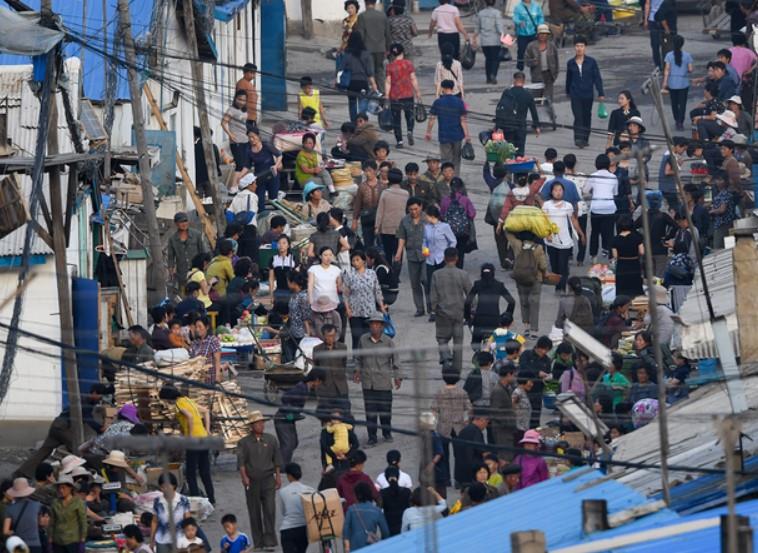
Rising Inflation Cho Chung-heePh.D. in North Korean Studies,Director of Good Farmers Research Institute1. The Current SituationRecent reports show growing concerns over inflation in North Korean markets, with rice prices surging to 7,000 won in Pyongyang and Pyongsong and up to 8,000 won in inland Ryanggang and North Hamgyong provinces—marking the highest increase in recent years.As of September 2024, North Korea's Central Bank set the official exchange rate at 9,000 won per U.S. dollar, while the market rate is 18,000 won. Table 1 outlines the fluctuations in grain prices in Pyongsong and Hyesan since 2021.As the data shows, while grain prices in North Korean won have risen steeply, prices in U.S. dollars have followed a different trend. Since most North Koreans don't engage in dollar-based transactions, the sharp increase in local grain prices is alarming. Under hyperinflation, citizens face skyrocketing prices without any rise in their real income, exacerbating their hardships.Table 1: Changes in Grain Prices in Pyongsong and Hyesan Regions as of September2. Identifying the ProblemInflation is generally defined as the consistent and proportional rise in prices over a period or the persistent decline in a currency's value. In North Korea, several factors are contributing to the depreciation of the won and the rise of the dollar. These factors are not merely linked to a one-time price increase but are part of a broader inflationary trend. So, what are the main causes? 1) Rising Dollar Exchange RateOne major cause of the rising exchange rate is the impact of global financial trends. The dollar has been strengthening in markets worldwide, including in South Korea. During the COVID-19 lockdown, when North Korea was isolated, the dollar dropped to 5,300 won, and the price of rice nearly matched one dollar at 0.96 USD per kilogram. However, with the lifting of lockdowns, North Korea has felt the effects of the rising dollar.A Glimpse of Hyesan Market in Ryanggang Province, North Korea / Kang Dong-wan, Professor at Dong-A UniversityAnother contributing factor is North Korea's limited dollar reserves. The severe economic hardships that have plagued the country since the mid-1990s have made it difficult for North Korea to accumulate significant foreign currency reserves.Furthermore, North Korea’s rigid financial system and strict controls on the flow of dollars are also a factor. The government tightly regulates dollar exchanges through various state agencies, including the Central Bank and judicial institutions, which has further restricted the dollar's circulation.Finally, the reckless printing of money by the central bank has added to the problem. Instead of providing materials for construction projects, the government has opted to print more money, which has flooded the market and contributed to inflation.Note: A recent report from a resident in Pyongsong where North Korea’s currency factory is located, indicates that the factory has been running at full capacity for the past year, flooding the market with new currency. This rapid production increases the risk of hyperinflation. Most North Koreans, who are part of the low-income class, consider holding foreign currencies like the dollar or yuan a luxury and primarily keep their assets in North Korean won. As a result, the devaluation of the won further exacerbates their financial struggles. With rising prices, people save less, and businesses face greater difficulties in attracting investment. 2) Rising Prices of Essential GoodsNorth Korea's recent inflation stems from a decline in overall supply, as the government and banks have exhausted their ability to raise funds in the wake of COVID-19, while struggling to meet growing demands. First, the North Korean government is pouring vast resources into military preparations.Second, Kim Jong-un and his regime have recklessly pursued consumption-driven economic policies to showcase achievements that help maintain the regime. Despite a lack of resources, they are pressing ahead with projects like the 20×10 regional development policy, rural revitalization initiatives, and building 50,000 housing units in Pyongyang after COVID-19. Additionally, the financial burden has worsened due to flood damage in the Yalu River region. With skyrocketing fiscal demands and limited capacity to generate funds, the government has resorted to excessive money printing to cover the gap.Third, the supply of essential goods like rice, corn, and flour has sharply decreased. Economic uncertainties in North Korea have caused price distortions in these vital markets, crucial for residents' survival. These distortions, along with wealth redistribution, have fueled social unrest and disrupted resource allocation, further endangering survival. This is North Korea's current reality.3. Proposed SolutionsTo overcome the current crisis, North Korea must revitalize its market by granting individuals the freedom to pursue personal economic gains. By allowing residents to engage in trade and cooperation for their benefit, the material wealth of both the government and the people can improve.In response to the soaring demand for essential goods, such as grains, the country must increase supply by striking a balance between domestic production and imports. Given the foreign currency shortage, combining state-regulated trade with private smuggling may be the fastest solution.Second, institutional reforms are essential. Historically, communities with rigid systems have struggled to progress beyond basic lifestyles, with many fading away after maintaining only a nominal existence. Institutions are crucial not just for social behavior and human relations, but also for economic growth. North Korea's lack of economic development and the long-term poverty its people endure are closely tied to the rigidity of its institutions.A self-reliant economy should be built around the population's demand and production capacity, with price increases occurring naturally as a result. The belief that cutting off external connections and raising prices due to supply shortages will stimulate the economy is a flawed reversal of cause and effect.Excessive price increases hurt both businesses and consumers, ultimately suppressing demand and stalling economic growth. It is crucial to recognize that some of North Korea's policies are worsening the situation, rather than addressing the root causes of its economic challenges.
24.10.03 -
 [News & Issues]
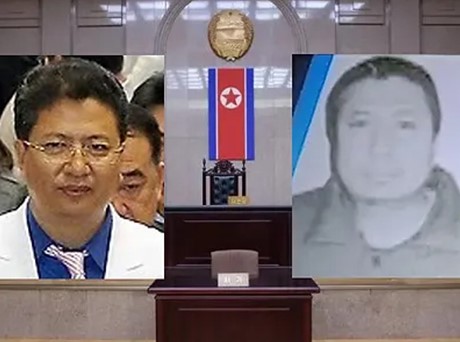
Son Kwang-ho, North Korean Sports Vice Minister Who Greeted Dennis Rodman, Arrested for Foreign Currency Embezzlement- He Led the North Korean Delegation to the 2014 Asian Games in IncheonSAND Institute English Newsletter TeamSon Kwang-ho, a key figure in North Korean sports under Kim Jong-un and former Vice Minister of the Ministry of Physical Culture and Sports, has been arrested for embezzling foreign currency. He played a major role in North-South sports exchanges, welcoming Dennis Rodman at Pyongyang’s Sunan Airport in 2013 and 2017, and leading North Korea’s delegation to the 2014 Asian Games in Incheon.A North Korean video shows Son Kwang-ho (left), former Vice Minister of the Ministry of Physical Culture and Sports,and Ri Chun-ok (right), the ministry’s finance chief, being punished for foreign currency embezzlement. / SAND Institute English Newsletter TeamThe SAND Institute’s English Newsletter team recently obtained educational videos produced for North Korean citizens between 2021 and 2022. These videos show that Son Kwang-ho was severely punished for embezzling a significant amount of foreign currency between 2013 and 2017.One part of the video displays a photo of Son with a shaved head, wearing prison clothes.The video explains how Son Kwang-ho, as Vice Minister of the Ministry of Physical Culture and Sports and Director of the Overseas Business Department, turned a blind eye to the embezzlement by Ri Chun-ok, the department’s finance chief. It reveals that Son, tempted by the foreign currency and goods Ri provided, allowed the illegal activities to continue.Son Kwang-ho (circled in red), Vice Minister of North Korea’s Ministry of Physical Culture and Sports, greets formerNBA player Dennis Rodman at Pyongyang Sunan International Airport during his 2013 visit. / AP NewsisThe video further states that, with Son’s deliberate silence, Ri Chun-ok was able to embezzle foreign currency more than 70 times between October 2013 and October 2017.The video also discloses a report from October 2017 regarding foreign currency expenses. The document details the number of athletes and travel expenses for North Korea’s participation in an archery competition in Denmark in July 2015, leading to suspicions that Son and Ri embezzled funds meant for the athletes’ travel.In the video, a North Korean announcer harshly criticized the misuse of authority by officials, accusing them of damaging the people’s trust in the Party and hindering the development of the socialist state through their corrupt practices.Despite his current downfall, Son had been a key figure in North Korea’s sports world under Kim Jong-un. He is seen in the video greeting Dennis Rodman during the former NBA star’s visit to Pyongyang in June 2017.Son also participated in the signing of a North Korea-China sports exchange agreement in December 2014 alongside Chinese Ambassador Liu Hongcai.Son Kwang-ho (left) as Secretary General of North Korea’s Olympic Committee, shakes hands with South Koreanofficials at Panmunjom’s Peace House in July 2014, during talks about sending North Korean athletes andsupporters to the Incheon Asian Games. / Ministry of UnificationSon played a key role in inter-Korean sports exchanges, serving as Secretary General for North Korea during discussions for the 2014 Incheon Asian Games. A former national football player, Son followed in the footsteps of his father, Son Kil-cheon, who also served as Secretary General of the North Korean Olympic Committee in the 1970s.Son was also part of the North Korean delegation for the 2003 Daegu Universiade and led negotiations for a joint North-South Olympic team in 2005. He was known for his easy-going personality and active role in the North Korean sports community, appearing frequently in the media while welcoming foreign sports officials.Son greeted Dennis Rodman twice at Pyongyang’s Sunan International Airport during Rodman’s visits in 2013 and 2017. He also represented North Korea at the 2015 ANOC General Assembly in Washington as the Vice Minister of Physical Culture and Sports.Corruption, a deep-rooted issue in North Korea’s sports sector, appears to have finally caught up with Son Kwang-ho, despite his high-ranking position.A former senior official in charge of judicial and prosecutorial affairs in North Korean Workers' Party said, "Embezzling foreign currency is considered treason," and added, "He was likely sentenced to life imprisonment."
24.10.03 -
 [Kim Myongsung’s Inside North Korea]
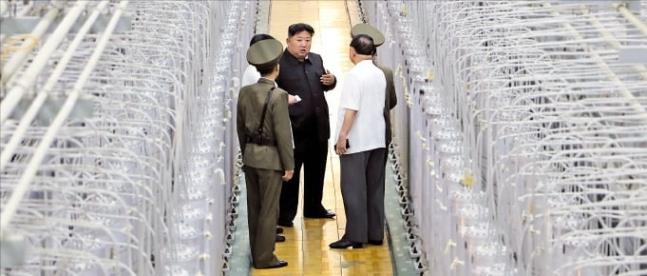
Kim Myongsung’s Inside North Korea· Kim Jong-un Orders Full-Scale Nuclear Material Production, Unveils Uranium Facility for the First Time· North Korea Conducts 20th 'Trash Balloon' Provocation During Chuseok Holiday· Shoigu Visits Pyongyang, Choe Son-hui Heads to Russia: North Korea and Russia Strengthen Strategic PartnershipKim Myong-sungSecretary General of the SAND InstituteKim Jong-un Orders Full-Scale Nuclear Material Production, Unveils Uranium Facility for the First TimeNorth Korean leader Kim Jong-un recently visited a highly enriched uranium (HEU) facility, ordering the strengthening of weapons-grade nuclear material production. This rare public disclosure of a key nuclear site, typically kept secret, is seen as a strategic move ahead of the U.S. presidential election to gain leverage in future negotiations with Washington.The Korean Central News Agency (KCNA) reported on the 13th that Kim Jong-un visited a nuclear weapons research institute and a uranium production facility, outlining key tasks to boost nuclear material production.The KCNA reported on the 13th that Kim visited a uranium enrichment facility. / Korean Central News AgencyKim was quoted as saying that just being at the uranium enrichment site "gives him strength," expressing his satisfaction after hearing reports of ongoing nuclear material production. He also ordered an increase in the number of centrifuges and an enhancement of their individual capacities. Additionally, he emphasized the planned introduction of new centrifuges, which are already in the final stages, to further solidify the foundation for producing weapons-grade nuclear materials.Kim Jong-un watches soldiers perform a demonstration drill at a special operations training base. / News1While North Korea had shown a uranium enrichment facility to U.S. nuclear scientist Dr. Siegfried S. Hecker in 2010, this is the first time the regime has openly revealed such a facility to the global audience. Although the exact location of the site wasn’t disclosed, it’s speculated that it might be in Kangson, near Pyongyang, which U.S. intelligence agencies have long suspected to be a secret nuclear facility.The International Atomic Energy Agency (IAEA) released a report last month stating that construction work on an annex at the southwestern part of the Kangson complex, which began in February, was completed by early April. The report also mentioned that in May, further construction work was underway on a neighboring building.It’s believed that North Korea is increasingly relying on HEU, which can be produced covertly and in larger quantities than plutonium, which is generated in smaller amounts at the Yongbyon reactor. The timing of this facility’s disclosure, just 50 days before the U.S. election, seems to be aimed directly at the U.S. The National Intelligence Service (NIS) of South Korea noted that North Korea has made significant progress in the miniaturization of nuclear warheads, following six rounds of nuclear testing. In addition to Kim’s visit to the uranium enrichment site, KCNA also reported that he inspected a special forces training base and supervised a test of the 600mm super-large multiple launch rocket system (MLRS). Kim’s visit to the special forces base and the rocket test are seen as a direct message to South Korea, signaling a potential threat.North Korea Conducts 20th 'Trash Balloon' Provocation During Chuseok Holiday North Korea launched its 20th round of "trash balloon" provocations during the Chuseok holiday.On the afternoon of the 15th, the Republic of Korea Joint Chiefs of Staff (JCS) reported that North Korea had once again sent balloons filled with debris into South Korean territory.The JCS warned that due to shifts in wind direction, these trash-filled balloons might drift towards northern Gyeonggi Province and the Seoul metropolitan area. They urged the public to avoid any fallen balloons and report them immediately to the military or police.According to the JCS, North Korea had launched about 50 trash balloons from the night of the 14th to the early hours of the 15th, with around 10 balloons landing in northern Gyeonggi and Seoul. The balloons contained household waste like paper, plastic, and bottles.On the morning of the 6th, a trash balloon was found on the rooftop of a building in Donghwa-ri, Munmak-eup,Wonju, Gangwon Province. / Yonhap News AgencySince late May, North Korea has been sending these balloons southward, claiming it to be a response to anti-regime leaflets being sent from the South. The launches on the night of the 14th and the afternoon of the 15th marked the 19th and 20th incidents of this nature.On the 15th, one of these balloons landed on the rooftop of a building in Naebalsan-dong, Gangseo District, Seoul, causing a fire. The Gangseo Fire Department responded quickly, dispatching 15 fire trucks and 56 firefighters to extinguish the blaze. There had been a similar incident a week earlier, on the 8th, in Paju, Gyeonggi Province, where a trash balloon landed on a warehouse rooftop and caused a fire that resulted in significant property damage.Shoigu Visits Pyongyang, Choe Son-hui Heads to Russia: North Korea and Russia Strengthen Strategic PartnershipNorth Korean leader Kim Jong-un met with Sergei Shoigu, Russia’s Security Council Secretary, during his visit to Pyongyang, confirming plans to deepen their strategic partnership. Meanwhile, North Korean Foreign Minister Choe Son-hui attended the 4th Eurasian Women’s Forum in Russia. Experts attribute the growing North Korea-Russia ties to the Ukraine war, marking a new phase of cooperation.A North Korean media outlet released a photo showing Kim driving a Mercedes with Sergei Shoigu in the passenger seat./ Korean Central News AgencyDuring their discussions, the two leaders agreed to strengthen their dialogue and cooperation to protect mutual interests, while also exchanging views on regional and global issues.The newspaper noted that the two sides "reached a satisfactory consensus on the issues discussed." It also reported that Kim met with Sergei Shoigu again in the evening for further talks and gave him a warm send-off, drawing attention for the special treatment Shoigu received. A published photo showed Kim embracing Shoigu at the airport, with another showing Kim driving Shoigu in a Mercedes.There is speculation that Kim's visit to Russia may have been discussed. In June, President Vladimir Putin expressed his desire to meet Kim in Moscow for their next meeting after their encounter in Pyongyang.This visit marks Shoigu’s first trip to North Korea in over a year, his last visit being in July for the 70th-anniversary celebrations of the signing of the Korean Armistice Agreement. Following that, he also met with Kim in Vladivostok in September to discuss military cooperation.Meanwhile, Choe Son-hui attended the Eurasian Women’s Forum in Saint Petersburg, continuing diplomatic exchanges between North Korea and Russia.
24.09.20 -
 [SAND Exclusive]
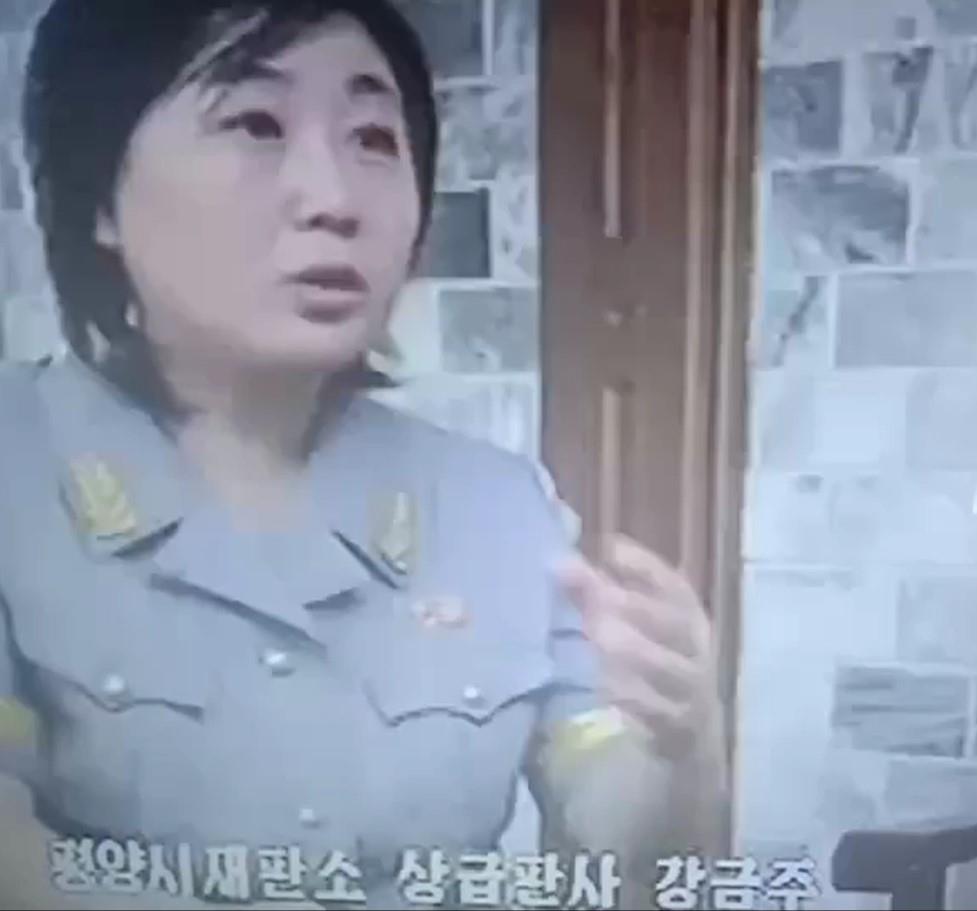
A Senior Judge from the Central Court of Pyongyang Reveals the Realities Inside Pyongyang- First Public Release of North Korean Criminal Records: Female Officials Are Involved in CrimesSAND Institute English Newsletter TeamAs social deviance rises in North Korea, the SAND Institute Newsletter team exclusively obtained an educational video featuring a senior female judge from Pyongyang's Central Court. The video offers a rare look into Pyongyang's crime situation, an unusual move that underscores the growing impact of marketization and external cultural influences on North Korean society.The video, produced by North Korean authorities in 2021, reveals that even the officials, such as People’s Unit leaders and local Socialist Women’s Union chairs, have been involved in criminal activities.The People’s Unit leader of Singan 2-dong and the chairwoman of the Socialist Women’s Union in Singan 3-dong, Hyongjesan District, committed crimes and were imprisoned. Higher-level organizations, including the Workers' Party and others in Hyongjesan, were reportedly unaware until the crimes were exposed. The video’s announcer criticized the officials, likening them to those who are 'willfully blind' and 'deaf to the truth' for failing to prevent even minor deviance through ideological control.Next, a woman named Kang Kum-ju, introduced as a senior judge from Pyongyang Central Court, appeared in uniform to personally discuss recent criminal activity in Pyongyang. Criminal records listing these offenses were also revealed. In the past, North Korean judges and prosecutors did not wear uniforms, but under Kim Jong-un’s leadership, both now do.Kang Kum-ju, senior judge from Pyongyang Central Court, appears in a North Korean educational videoexplaining the country's crime situation. / SAND Institute English Newsletter TeamJudge Kang stated, “Women are currently involved in a range of criminal activities, with property crimes being the most common. Women also make up a large portion of offenders in drug-related and impure acts, such as prostitution and watching South Korean dramas.”She further remarked, “Women are even involved in crimes that endanger human life, and the severity of their offenses has reached a level unimaginable to men.” Since the economic collapse of the mid-1990s, North Korean women, who played a key role in marketization, have been exposed to external information, leading to shifts in consciousness and increased deviant behavior.The video pointed out that such deviant acts harm the nation's interests and foster social distrust, calling them “extremely dangerous acts of self-destruction, where individuals sow the seeds of disaster and destroy the lives and futures of themselves and their families.”It stressed that social deviance erodes ideological consciousness, turning people into "spiritual cripples and monsters" who neglect their families, communities, and the state, urging political and class struggles to combat it.It also depicted a young female student, publicly tried in front of a crowd for watching a South Korean drama, being handcuffed and dragged away by female officers from the Ministry of Social Security.The appearance of a judge discussing crime and the public release of criminal records suggest that social deviance and various criminal activities are widespread even in Pyongyang, North Korea's political and social core.
24.09.20 -
 [Kim Myongsung’s Inside North Korea]
Kim Myongsung’s Inside North Korea· Flooding Paralyzes North Korea's Arms Production Hub in Jagang Province, Disrupting Supplies to Russia· North Korea Spends $10 Million on Watches for Kim Jong-un’s Gift-Giving Strategy in the First Half of This Year· Strained North Korea-China Relations on 75th Anniversary of Diplomatic Ties: North Korea Bans Chinese Drama Praised by Kim Jong-ilKim Myong-sungSecretary General of the SAND InstituteFlooding Paralyzes North Korea's Arms Production Hub in Jagang Province, Disrupting Supplies to Russia- Arms factories in tunnels crippled by floods- Landslides cut off roads; communication lines remain down- Hundreds of border mines lost near the Amnok River- Significant damage to border fences and surveillance cameras Jagang Province, North Korea's key military production hub, has been severely affected by late July flooding, disrupting military goods production. Reports also indicate damage to barbed wire fences and surveillance cameras along the North Korea-China border, with some mines being washed away. Some suggest that Kim Jong-un's recent unveiling of new artillery and suicide drones may be a strategy to show that North Korea can still produce military supplies for Russia despite these setbacks.On September 2, the National Intelligence Service (NIS) commented on the flooding in Jagang Province, stating, "This area is densely packed with military factories, and we are closely monitoring for potential damage, disruptions in military supply production, and impacts on North Korea-Russia arms trade." The underground tunnel factories have been flooded and are currently non-operational.A source familiar with the situation in North Korea reported, "The mountainous terrain of Jagang Province has experienced several large-scale landslides from the recent downpour, resulting in flooded tunnels and cut-off railways and roads."Kim Jong-un touring major military factories in August / Korean Central TelevisionJagang Province is largely mountainous, featuring a well-developed railway network and rich underground resources crucial for weapon production. Its location near the Chinese border allows for easier importation of materials needed for military development, establishing the province as a key center for North Korea's military industry. Numerous military factories are hidden in tunnels throughout the region, producing missiles, artillery shells, launchers, rifles, machine guns, helmets, and water canteens. Since North Korea began exporting significant amounts of artillery shells, ammunition, and missiles to Russia last year, these factories have reportedly been operating at much higher levels.However, the recent flooding has submerged both the military production equipment and materials inside these tunnels, including sensitive items like gunpowder, which are likely now unusable, according to sources. Due to the extent of the damage in Jagang Province, recovery is expected to take several months rather than just a few. It seems that Kim Jong-un's decision to dismiss the Party Secretary of Jagang Province was a direct reaction to the failure to protect these key military facilities from flooding.The severe damage to Jagang Province’s military factories could significantly hinder North Korea’s ability to produce weapons for Russia. With the ongoing conflict in Ukraine straining Russia's military production, North Korea has been stepping in to fill the gap. However, the flooding in this critical production area has raised concerns. Observers suggest Kim Jong-un has avoided visiting Jagang Province due to the severe damage. Additionally, North Korea’s recent display of new drones and rocket launchers is seen by analysts as an effort to show that its military production capabilities for Russia remain intact despite the floods.A village in Jagang Province, North Korea, submerged after August floods / KBSMeanwhile, many barbed wire fences along the Amnok River, intended to prevent defections, have been damaged, and numerous mines have been washed away. A North Korean source reported that mines planted along the 20th Guard Brigade's patrol routes in Sinuiju City and Uiju County, North Pyongan Province, were swept away by the flooding. These mines, along with sediment, flowed into residential and farming areas, prompting recovery efforts by the authorities. During the recovery process, an explosion reportedly occurred, resulting in multiple casualties.The recent flooding along the Amnok River has impacted North Pyongan, Jagang, and Ryanggang provinces, with reports of 1,100 to 1,500 people dead or missing. Official North Korean sources state that the number of flood victims is around 15,400. There have also been reports of looting amid the chaos following the disaster.North Korea Spends $10 Million on Watches for Kim Jong-un’s Gift-Giving Strategy in the First Half of This Year - Imports of luxury goods like Cognac have surged 200-fold compared to during the COVID-19 lockdown.- Imports of cosmetics have risen more than 20 timesDespite severe economic difficulties and flood damage last year, North Korea imported $37.94 million (about 5.05 billion KRW) worth of goods, including $10 million on watches for Kim Jong-un's gift-giving, in the first half of this year. Critics claim that, despite sanctions and economic struggles, North Korea continues to spend foreign currency on luxury items for Kim Jong-un’s family and the elite, using illicit means to bypass restrictions.Signs of luxury goods being used by Kim Jong-un’s family / Ministry of UnificationOn the 20th of last month, an analysis of Chinese customs data by the office of Yoon Sang-hyun, a member of the People Power Party (PPP) on the Foreign Affairs and Unification Committee, showed that North Korea's imports from China steadily increased between January and June after the lifting of the COVID-19 lockdown.Breaking down the categories, liquor imports jumped dramatically from $20,000 to $3.93 million, marking a 200-fold increase compared to 2021 during the COVID-19 lockdown. Similarly, cosmetics imports soared from around $550,000 to $11.8 million in the first half of this year, a more than 20-fold increase.Imports of leather goods surged from $60,000 to $4.03 million, a more than 60-fold increase. For watches, often used in Kim Jong-un's "gift strategies," the import value in the first half of this year reached $10.72 million, surpassing last year's total of $9.43 million.Since its first nuclear test in October 2006, North Korea has been banned from buying high-end luxury goods under the UNSC sanctions. However, it continues to obtain these items through covert means. It was also recently revealed that North Korea imported 24 white horses from Russia last month.Yoon pointed out that the sharp rise in imports of alcohol, cosmetics, and watches indicates Kim Jong-un is using these luxury goods for his gift-giving strategy to the Party, Military, and State. He also mentioned that the amount of luxury goods being smuggled in, bypassing official statistics, is likely significant.Yoon further warned, “The growing closeness between North Korea and Russia, evident through summits and military cooperation, could undermine the sanctions regime and create more channels for smuggling luxury goods.” He urged for “stronger collaboration with the international community to tighten sanctions on North Korea.”Strained North Korea-China Relations on 75th Anniversary of Diplomatic Ties: North Korea Bans Chinese Drama Praised by Kim Jong-ilNorth Korea has reportedly banned Chinese films and dramas, labeling them as "impure recordings," including one that was highly praised by Kim Jong-il. As this year marks the 75th anniversary of their diplomatic relations, these actions suggest the relationship between North Korea and China may be moving toward long-term tension.Poster for "The Love Eterne" / BaiduAccording to an August 28 report by Radio Free Asia (RFA), North Korean authorities recently issued a ban on viewing Chinese content, including movies and dramas, indicating a tightening of restrictions on foreign media.A source from South Hamgyong Province told RFA that the list, issued from late May to early June, included dozens of South Korean songs and movies, such as a North Korean concert song by South Korean singer Kim Yon-ja, as well as TV series and films from India, Russia, and China, all labeled as "impure recordings."Among the banned Chinese videos are films and dramas like "The Love Eterne," "The Charm of a Man," "The Man Who Came to Shanghai," "Martial Arts," and "Detective Police," which were produced in Hong Kong or mainland China. Notably, "The Love Eterne," a Chinese adaptation of "Romeo and Juliet," was staged by North Korea’s renowned Pibada Opera Troupe under Kim Jong-il's direction in 2010 and toured extensively in North Korea and China, becoming highly popular. The designation of such a once-celebrated work as "impure material" highlights the current frosty state of North Korea-China relations.As North Korea and China mark the 75th anniversary of their diplomatic relations this year, there are several signs of growing tensions in various areas. Recently, North Korea raised concerns with the United Nations' International Telecommunication Union (ITU) over China's plans to set up radio stations near the border.On July 24, North Korea emailed the ITU, stating that China's plan to install 17 base stations, including one in Dandong, could cause "serious interference" and opposed their installation near the border. North Korea argued that China did not seek prior coordination, which they claimed violated ITU guidelines, even though such coordination is only recommended, not required, by the ITU.Analysts believe North Korea’s decision to ban Chinese cultural content reflects its intent to block external information, even from its ally China. In a further move to distance itself from China, North Korea switched the broadcast of Korean Central Television from a Chinese satellite to a Russian one in July. Earlier in May, China removed a "footprint plaque" that commemorated Kim Jong-un's 2018 visit to Dalian, where he had a walk with Chinese President Xi Jinping to strengthen their relationship. Additionally, early last month, China reportedly demanded that all North Korean workers, a significant source of foreign currency for North Korea, be sent back to their home country.In response to the China-Japan-South Korea Trilateral Summit in Seoul on May 27, which led to a joint declaration mentioning "denuclearization of the Korean Peninsula," North Korea issued an unusually harsh statement. On the same day, it launched the Reconnaissance Satellite No. 2, signaling its displeasure. Additionally, the Chinese ambassador to North Korea was notably absent from the "Victory Day" (Korean War Armistice Agreement Anniversary) event in Pyongyang on July 27.In late July, after floods affected areas along the North Korea-China border, including North Pyongan, Jagang, and Ryanggang provinces in North Korea, China offered assistance, which North Korea reportedly declined. Experts believe this tense atmosphere between the two nations is likely to continue for the foreseeable future.
24.09.06 -
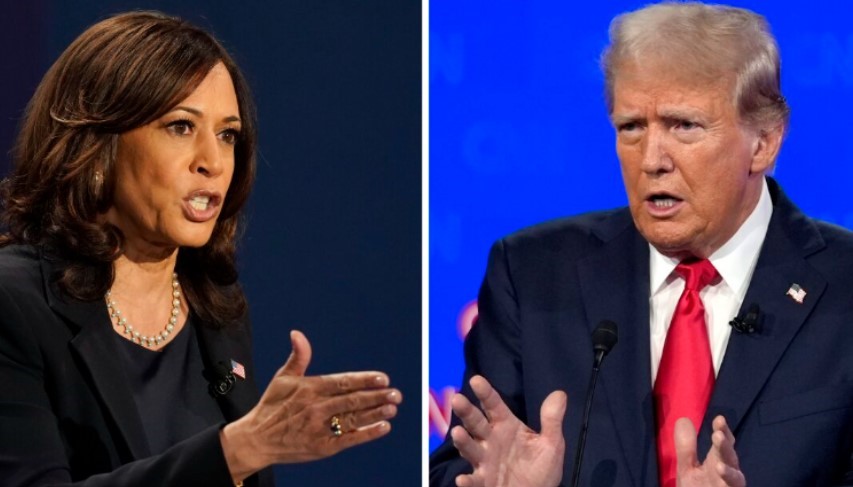 [Issue Brief]
The U.S. Presidential Election and Inter-Korean Relations Jung Jun-heeAuditor, Korea Institute for National Unification▢ Potential Changes in U.S. Policy Toward North Korea After the Presidential ElectionMany anticipate that regardless of the outcome of the U.S. presidential election, we will either see a continuation of Joe Biden’s policies or a return to Donald Trump’s approach. In terms of foreign policy, both candidates are expected to prioritize maintaining the status quo over implementing significant changes, with only minor adjustments anticipated.Both the Democratic and Republican parties are focused on the U.S.-China rivalry, albeit with different strategies—Democrats tend to favor leveraging alliances, while Republicans might prefer unilateral actions. Meanwhile, the North Korea issue remains a secondary priority, overshadowed by more pressing concerns like the Russia-Ukraine War and the Israeli-Palestinian Conflict, which will also influence how the U.S. approaches its issues with China. The Democrats are likely to advocate for unconditional dialogue with North Korea, aiming to bring them to the negotiating table through a combination of pressure and sanctions.The Republicans, on the other hand, prioritize personal diplomacy between leaders in line with their "America First" philosophy, although it remains unclear how this aligns with broader U.S. interests. Should Trump be re-elected, there is speculation about whether he would renew talks with North Korea, and if so, what the scope and impact of such discussions might be on inter-Korean relations.▢ The Next U.S. Administration’s Approach to North KoreaIf the Democratic Party, led by Kamala Harris and Tim Walz, wins, they are expected to uphold the Biden administration’s focus on democratic values in foreign policy and on restoring U.S. leadership. However, there may still be some room for policy adjustments.Democratic U.S. presidential candidate Kamara Harris(left)Donald Trump, Republican presidential candidate of the United States(right)The administration would likely focus on countering China’s influence in the international order through multilateral partnerships like the Quad, AUKUS, and Chip4, targeting trade, technology, and supply chains. Their goal would be to weaken authoritarian regimes globally and address the two ongoing conflicts. During her vice presidency, Kamala Harris emphasized the need to limit China’s influence in the region, particularly during her visits to the Korean Demilitarized Zone.Within the Democratic Party, there are voices calling for a shift in foreign policy. For example, Ben Rhodes, a former Deputy National Security Advisor under Obama, recently suggested that the next Democratic president should move beyond the post-9/11 security mindset and adopt a more globally resonant agenda. This indicates potential discussions about foreign policy changes if the Democrats maintain power. Concerning North Korea, unless there is a significant shift in North Korea’s stance, the U.S. would likely continue its strategy of maintaining extended deterrence through the U.S.-ROK Nuclear Consultative Group (NCG) and close security cooperation with Japan, focusing on managing U.S.-North Korea relations under the principle of unconditional dialogue for denuclearization. Comparing this to the shift in North Korea policy during George W. Bush's second term in 2007, the motivation at that time was to maintain the Six-Party Talks, prevent any connection with Iran's nuclear situation, and address a decline in North Korea hardliners following the midterm election results, all in an effort to mitigate domestic and international crises. However, the current situation appears to be somewhat different.If Donald Trump were to return to office, it is expected to focus on further maintaining and strengthening U.S. interests by reactivating an "America First Foreign Policy," rather than introducing new policy directions, drawing on the experiences from the first term.The administration would likely aim to avoid unnecessary international conflicts in diplomacy and security, constrain rival powers in key strategic regions such as Asia, Europe, and the Middle East, and prioritize ending automatic defense budget cuts, rebuilding the military, and promoting peace through strength. This would be under a policy that revises alliances based on a "transactional" approach. The goal would be to conclude the ongoing Ukraine war in its current state, improve relations with Russia, reduce the alignment between Russia and China, and concentrate efforts on exerting pressure on China.Regarding North Korea, the administration would aim to revive leader-to-leader diplomacy to ease the current deadlock and attempt to restart discussions on "denuclearization and normalization of relations" that took place during Trump's first term. Donald Trump has frequently hinted at the possibility of renewed dialogue with North Korea if he returns to power, often highlighting his relationship with Kim Jong-un by saying, "We got along well" (Republican nomination acceptance speech, July 18) and "Countries with nuclear weapons are the biggest threat. There was no nuclear crisis when I was in office" (August 12, conversation with Elon Musk on X-Space).▢ North Korea’s Demand for Preemptive Actions from the U.S.After the breakdown of the 2019 North Korea–United States Hanoi Summit, North Korea seems to have shifted its national strategy. It now appears to be focused on strengthening ties with Russia and "courting China," while sidelining its relationship with the United States for the foreseeable future.Following North Korea’s declaration of the "completion of nuclear forces" in November 2017, Kim Jong-un recognized that the economic hardships caused by sanctions, particularly those imposed since 2016, would only worsen. His primary goal became lifting these sanctions. In his 2018 New Year’s speech, Kim aimed to use South Korea as a bridge to engage the United States and push for sanctions relief. This strategy included a charm offensive, such as proposing summits with the U.S. and South Korea, which effectively caught both countries off guard and also provoked China. Sensing China's unease about a potential U.S.-North Korea rapprochement, Kim Jong-un proactively proposed a summit with China, to which China promptly agreed.The strained bilateral relationship quickly turned into a close alliance, effectively opening a significant loophole in the sanctions regime against North Korea, with sanctions nearly collapsing in 2018. However, after the failure of the Hanoi Summit, which aimed to fully lift sanctions, North Korea shifted tactics, announcing a new path of direct confrontation. This move suggests a desire not only to lift sanctions but also to assert its status as a "self-reliant nuclear state with an independent economy," free from interference by neighboring powers like China or Russia.Today, North Korea is benefiting from its status as a "de facto nuclear power" and is enjoying "de facto sanctions relief" in the wake of the Ukraine invasion. The regime is currently focused on taking advantage of wartime economic opportunities and consolidating internal stability.Regarding dialogue with the U.S., North Korea has maintained the tough conditions set in 2019, insisting that the U.S. must take preemptive actions before any negotiations can resume. Statements from North Korean officials have consistently underscored this stance: “The U.S. should not even dream of denuclearization negotiations until it withdraws its hostile policy toward North Korea” (Kim Yong Chol, Chairman of the Korea Asia-Pacific Peace Committee, November 19, 2019) and “The framework of U.S.-North Korea negotiations, once centered on ‘denuclearization for sanctions relief,’ must now be shifted to ‘withdrawal of hostility for the resumption of talks’” (Kim Yo-jong, First Deputy Director of the Central Committee of the Workers' Party of Korea, July 10, 2020).Reacting to Donald Trump’s references to his personal rapport with Kim Jong-un, North Korea has expressed disappointment, stating that "personal relationships between leaders did not bring any meaningful changes" and emphasizing that "it does not matter which U.S. administration is in power" (Central Committee commentary, July 23, 2024, "Whether the clock of U.S.-North Korea confrontation stops depends on U.S. actions"). They demand that the U.S. must make the first friendly gesture if it wants dialogue to resume.Additionally, there is speculation about a potential "October Surprise" from North Korea, possibly coinciding with the U.S. presidential election. While high-intensity provocations like ICBM launches would depend on political factors such as the positions of Russia and China and the impact on the U.S.-South Korea alliance, it currently appears that military considerations will take precedence over political ones, leading to potentially limited provocations.North Korea is currently focused on achieving the "five major tasks for defense science development and weapons system development" outlined at the 8th Party Congress in 2021. These tasks include developing super-large nuclear warheads, hypersonic glide vehicles, solid-fuel engines for land-based and underwater ICBMs, nuclear submarines, and military reconnaissance satellites, all aimed at establishing itself as a "self-reliant nuclear state with an independent economy." While North Korea may consider political factors like the U.S. presidential election to some extent, it will likely proceed with its military experiments whenever it deems necessary, regardless of external political events.▢ Considerations in Resuming U.S.-North Korea DialogueThe timing for the resumption of U.S.-North Korea talks largely hinges on shifts in the global landscape, such as the outcomes of ongoing conflicts in Europe and the Middle East. Equally crucial are North Korea’s own goals and current situation. Given these considerations, it is likely that a considerable amount of time will be needed before dialogue can resume.Should the U.S. take an active role in ending the war in Ukraine, removing North Korea's "war-related benefits," and if North Korea finds itself lacking momentum for building a self-sufficient economy due to strained relations with China after aligning closely with Russia, the chances for dialogue with the U.S. might increase.According to the General Administration of Customs of the People's Republic of China (GACC), North Korea's imports of rice and flour from China fell sharply in the first half of 2024 compared to the same period last year, dropping by 10.7% and 23% respectively. Imports of corn for animal feed and nitrogen fertilizer have also nearly ceased, at 1.3% and 0.3%, respectively. This suggests that trade between China and North Korea is practically dormant. If the benefits North Korea receives from Russia diminish, it may seek to improve relations with China or find a new outlet, potentially through the U.S. If the wars conclude, leading to improved U.S.-Russia relations and a more relaxed China-Russia alliance, North Korea might be more inclined to use dialogue with the U.S. as leverage to gain support from China. Similarly, if Donald Trump were to see the two conflicts end and enter a lame-duck period following the 2026 U.S. midterm elections, he might have a stronger incentive to use a U.S.-North Korea summit as a means to secure new momentum in governance and solidify his legacy.However, even if U.S.-North Korea dialogue does resume, the significant differences between the two sides' goals and expectations mean that tensions and potential breakdowns in the implementation phase remain a real possibility, even if an agreement is reached.To restart talks, the U.S. might need to make significant concessions, such as halting joint military exercises with South Korea, to meet North Korea's demand for the end of what it calls the "hostile policy" toward the DPRK. This "hostile policy," according to North Korea, includes a wide range of actions, such as U.S.-South Korea military drills, the deployment of advanced strategic weapons that pose a threat to North Korea, and designations related to terrorism, human rights, and religious freedom. Similar to the previous decision to remove North Korea from the list of state sponsors of terrorism, Donald Trump might be willing to meet some of North Korea's demands if they are considered low-cost concessions.If a summit does occur, the U.S. is likely to insist on discussions starting from where they left off at the Hanoi Summit, while North Korea would push for negotiations to follow the sequence agreed upon during the Singapore Summit. This difference in approach suggests a bumpy road ahead, with both sides possibly needing to compromise on a smaller-scale deal.The U.S. may prefer to focus on easing sanctions starting with the Nyongbyon Nuclear Scientific Research Center, but North Korea will likely argue that discussions on the complete denuclearization of the Korean Peninsula can only proceed after establishing a new U.S.-North Korea relationship and a robust peace regime, as outlined in the 2018 Singapore Joint Statement.A “small deal” could involve a variety of elements, such as the closure of nuclear facilities or arms reduction. If such a deal is struck, the U.S. could claim success in "managing North Korea," while North Korea might perceive it as having achieved "sanctions relief while maintaining its status as a de facto nuclear state." Both sides might consider this a win-win scenario.China and Russia could also view the easing of sanctions on North Korea positively, as it would relieve them of a significant burden. However, the possibility that this might encourage countries like Iran, South Korea, and Japan to pursue nuclear capabilities could be seen as a negative impact on their security.▢ The Direction of U.S.-North Korea Relations and Policy Toward North KoreaIf the Democratic Party wins the U.S. presidential election, the current stalemate in U.S.-North Korea relations is likely to continue, with an emphasis on "unconditional dialogue for the denuclearization of the Korean Peninsula." In this scenario, South Korea should focus on effectively managing North Korea and aim for gradual, incremental changes.To strengthen extended deterrence, South Korea should advocate for more detailed and institutionalized discussions within the U.S.-ROK Nuclear Consultative Group. Instead of hastily attempting to initiate inter-Korean dialogue, South Korea should take the lead in drawing North Korea into broader international engagement through countries like China and Japan.Additionally, South Korea should flood North Korea with information about the international community and South Korea to highlight the "anti-people and anti-national" nature of North Korea's "two-state policy." This effort should also aim to shift the perceptions of North Korea’s younger generation.If Donald Trump returns to power and pursues U.S.-North Korea summits, North Korea may adopt a strategy of "bypassing South Korea to directly engage with the U.S.," aiming to isolate South Korea. In such a scenario, the U.S. might not fully take South Korea’s interests into account, potentially weakening South Korea’s security position.Even if U.S.-North Korea dialogue resumes, North Korea is expected to intensify its nuclear threat doctrine against South Korea and maintain its view of South Korea as a "hostile state at war," in line with its "two-state policy." The U.S. might try to ease South Korea's concerns by emphasizing its nuclear umbrella, while still holding the position that South Korea should take the lead in conventional defense against North Korea’s threats, as outlined in "Project 2025."In response, South Korea should actively engage in diplomacy with the U.S., clearly expressing its intention to strengthen its nuclear capabilities and highlighting the risks of any flawed agreements between the U.S. and North Korea.South Korea should emphasize that a small-scale deal between the U.S. and North Korea could lead to higher U.S. security costs, weakened cooperation between South Korea and Japan due to pressure from China, problematic ties between North Korea and Iran, negative precedents for resolving Iran's nuclear program, and potential weakening of the NPT framework. It should convey to the U.S. that superficially managing a nuclear-armed state as a temporary measure could ultimately undermine U.S. national interests in the long run.By November, the U.S. administration will be decided. Regardless of who comes to power, South Korea must clearly define its goal of unification, take practical steps to achieve it, and continue to strengthen its self-reliance and resilience.
24.09.06 -
 [NK Focus]
What New Medicines Is Kim Jong-un Looking For? Lee Seung-hyunResearch Fellow at SAND InstitutePh.D. in Public Administrationdrharacearthur@gmail.com- Pyongyang Health Officials Spend Hundreds of Thousands of Dollars Abroad on Medications- Focus Seen on Drugs for Diabetes, Cystitis, Gout, and TuberculosisOfficials from North Korea's Ministry of Public Health reportedly visited Dandong, Shenyang, and Beijing last July to buy large quantities of medicine. A Shenyang-based source with over 30 years of experience in North Korea trade said the list included more than 20 types of medications, such as treatments for tuberculosis, vitamins, stomach remedies, diabetes medications, painkillers, anticancer drugs, and medicines for cystitis and gout.Those dispatched to different locations reportedly paid Chinese traders at least tens of thousands of dollars upfront, requesting them to secure the medicines listed in their purchase orders.On the 26th, the Korean Central News Agency reported that North Korean leader Kim Jong-un inspectedlocal industrial plant construction sites on the 24th and 25th of last month. / Yonhap News AgencyThe source noted that it's unusual for North Korea to pay in advance, as they typically receive goods first and pay later, either on credit or upon delivery. This urgent prepayment suggests a critical need for these medications, likely due to a rise in illnesses from weakened immunity following the COVID-19 pandemic. This health crisis seems to have caused a medicine shortage in pharmacies and markets, known as Jangmadang, across various regions, including Pyongyang.Due to the urgent need, Ministry of Public Health officials were quickly dispatched to buy large quantities of medicine, while individual smugglers working with China focused on high-demand drugs. Reports also indicate that pharmaceutical brokers have emerged in Pyongyang and other major cities to supply medicines to hospital pharmacies and Jangmadang.However, the inclusion of a significant number of drugs that were not on previous lists has sparked interest and speculation. A North Korean trader in Dandong who was involved in the transaction highlighted that this time, officials were especially focused on acquiring medications for cystitis, urinary incontinence, and gout. According to the trader, these drugs are not intended for the general population but are specifically meant for hospitals serving high-ranking officials.The trader mentioned, "I heard that cystitis and gout medicines are used by the regime's top officials," and added that rumors among Chinese traders suggest Kim Jong-un, who has diabetes and other chronic conditions, is also struggling with cystitis and gout.Last month, on the 29th, South Korea's National Intelligence Service (NIS) informed the National Assembly that "Kim Jong-un seems to be seeking out medications beyond his usual prescriptions," suggesting there might be certain health conditions that his current medicines cannot adequately address.Reports also indicate that Kim Jong-un's weight is around 140kg, with a body mass index (BMI) in the mid-40s, significantly above the standard BMI of 25, categorizing him as extremely obese and at high risk for heart disease.The NIS further stated, "Kim Jong-un began showing symptoms of high blood pressure and diabetes in his early 30s. If his health doesn't improve, he could develop cardiovascular diseases, which run in his family, so his condition is being closely monitored," adding that his stable weight of around 140kg is likely due to stress, smoking, and alcohol use.
24.09.06 -
 [Kim Myongsung’s Inside North Korea]
Kim Myongsung’s Inside North Korea· Pyongyang's Donju Collapse and Market Decline: Ethnic Chinese Residents Report· Emergence of Kim Ju-ae and Strategic Value Changes in the WPK· Kim Jong-un’s Repeated Visits to Flood-Affected Areas: Shifting Blame to Natural Disasters and Avoiding Government Responsibility Kim Myong-sungSecretary General of the SAND InstitutePyongyang's Donju Collapse and Market Decline: Ethnic Chinese Residents ReportAs North Korea intensifies its anti-market policies, reports suggest that Pyongyang's Donju (wealthy patrons) class is collapsing, and individual businesses are failing. The SAND Institute's English newsletter team interviewed two ethnic Chinese residents of Pyongyang who recently obtained visas to travel to Dandong, China. For safety, they requested anonymity. They revealed that anti-socialist policies and trade company restructuring have led to the downfall of the once-prosperous Donju, causing most small business owners of restaurants and shops to go bankrupt.One resident, referred to as A, mentioned that since last year, North Korea has moved most trade companies from the party, government, and military to the cabinet. These Donju, executives at foreign currency-earning companies, had amassed considerable wealth through legal and illegal trade, living lavishly in Pyongyang. A explained, "Except for companies tied to major power agencies like the Ministry of State Security, most have been transferred to the cabinet, reducing the Donju from managers to ordinary workers overnight.“Another resident, B, reported that crackdowns on individual commercial activities in Pyongyang have intensified. "Enforcement on high-end restaurants, bars, and market stalls is so strict that many merchants have given up," B said. An acquaintance running a bar in Pothonggang District had to close due to frequent inspections. Various agencies, including the Workers' Party of Korea, Ministry of State Security, Ministry of Social Security, and anti-socialist task forces (TF), visit shops daily to extort bribes. After paying these bribes, merchants incur losses, forcing them to shut down.Customs Scene at Dandong, China, Before the COVID-19 Pandemic in 2019 / VOAA reported that enforcing the Reactionary Ideology and Culture Rejection Law and anti-socialist crackdowns has worsened living conditions in Pyongyang. However, ethnic Chinese residents found some relief as travel to China resumed after COVID-19 lockdowns.A mentioned that 43 ethnic Chinese residents of Pyongyang were selected after fierce competition to board a bus to China in early July. A stated that they had to bribe officials with 5,000 yuan to obtain the visa and an additional 3,000 yuan to expedite their selection for the China-bound bus.B noted that many Pyongyang residents, facing economic hardships, often seek to befriend or even marry ethnic Chinese involved in trade with China. "In the past, Pyongyang residents were wary of ethnic Chinese due to their background, but now they approach them for marriage," B said.A stated, "In Pyongyang's markets, you can buy anything if you have money, but merchants hide good products under their stalls due to crackdowns. Ethnic Chinese can order anything, and merchants will bring out the hidden items at the agreed time.“Meanwhile, it is reported that after North Korea proposed policies to reduce market activity and expand the state-run commercial network during the 8th Congress of the Workers' Party of Korea in 2021, it has been gradually implementing these policies along with wage increases. While the increased wages allow for the purchase of food at lower prices from state-run food stores compared to markets, the amount is insufficient for a normal lifestyle.B, an ethnic Chinese resident in Pyongyang, said, "Many people are dissatisfied with the authorities' policy to reduce the market area, which is a capitalist element, and make all residents employees of state-owned enterprises. Ethnic Chinese who have traveled to China are trying to extend their stay and delay their return to Pyongyang as much as possible."Emergence of Kim Ju-ae and Strategic Value Changes in the WPK Speculation is mounting about the emergence of Kim Ju-ae, the daughter of North Korean leader Kim Jong-un, as a potential successor.Last month, the National Intelligence Service reported to the National Intelligence Council that North Korea is hinting at Kim Ju-ae as a likely successor. She is being trained for succession while the regime carefully manages public reactions to her, adjusting propaganda levels and public exposure, and guiding her through private activities.While future changes are possible, it seems highly likely that Kim Ju-ae is the fourth-generation heir of the Kim family at this time.If Kim Ju-ae becomes the successor, it would mark the first female leader in North Korea, indicating a significant shift in the nature of North Korean power.On June 12, North Korea's Workers' Party newspaper, Rodong Sinmun, highlighted Kim Jong-un's speech at the completion ceremony of the Central Cadres Training School of WPK on May 22, in an article titled "Strategic Values of WPK."It is notable that Kim Ju-ae came into the spotlight after Kim Jong-un mentioned 'successor' during his 2022 visit to the Central Cadres Training School of WPK. Two years later, he revisited the school and made another important speech.North Korean Chairman Kim Jong-un attending the completion ceremony of the Central Cadres Training School of WPKon May 21, applauding./Korean Central TelevisionAccording to Rodong Sinmun, Kim Jong-un said in his speech at the completion ceremony of the Central Cadres Training School of WPK, "The Central Cadres Training School of WPK is emerging as a prestigious revolutionary university nurturing successors, further enhancing its reputation."Kim Jong-un further emphasized the strategic values of WPK, stating, "The nearly 80-year history of the Central Cadres Training School of WPK begins and achieves the historical cause of succession by arming and nurturing party cadres. The most prioritized task in envisioning and designing the bright future of the party and the revolution is to excellently build the base for party cadre training." Analysts suggest that this is a call to thoroughly prepare party cadres to support the fourth-generation succession centered around Kim Ju-ae.At 40, Kim Jong-un revived the "Oath of Loyalty" meeting on his January 8 birthday after 12 years, created a badge featuring his image, and is now believed to be preparing for the fourth-generation succession by promoting Kim Ju-ae.If Kim Ju-ae becomes the successor, many changes will be required in the terms used to describe North Korea's supreme leader and the ruling WPK.In North Korea, the common term for Kim Il-sung, Kim Jong-il, and Kim Jong-un is 'Father.' The term 'Father' is an honorific for 'father.' North Korea defines itself as 'one big family,' with the supreme leader, the Suryong, as the 'Father,' and the ruling WPK as the 'Mother.' This applies Confucian logic where the 'Father Leader' and the 'Mother Party' play the roles of parents in a big family.Therefore, if the female Kim Ju-ae becomes a North Korean leader, the title 'Father' cannot be used. The titles previously given to women of the Kim family in North Korea include 'Mother of Korea' (Kang Ban-sok), 'Mother of the Revolution' (Kim Jong-suk), and 'Mother of the Military First Policy' (Ko Yong-hui).The first female ruler in Korean history was Queen Seondeok of Silla, who ascended to the throne in 632, about 1,300 years ago.When Jinpyeong of Silla died without a son, the Hwabaek council, the highest decision-making body of Silla, appointed Jinpyeong's daughter Seondeok as the new ruler, bestowing her with the honorific title Seongjo Hwanggo, meaning 'holy ancestor empress.‘ Recently, North Korea has been emphasizing the Baekdu bloodline, and it is likely that Kim Ju-ae will be given the title 'Noble Leader of the Baekdu Bloodline.’If Kim Ju-ae is titled 'Mother' and the WPK is titled 'Father,' changing their roles, it would signify a fundamental shift in power, leading to significant contemplation by North Korean authorities over her title.Kim Jong-un’s Repeated Visits to Flood-Affected Areas: Shifting Blame to Natural Disasters and Avoiding Government ResponsibilityOn August 8-9, Kim Jong-un visited flood-affected areas in Sinuiju and Uiju County, North Pyongan Province, following heavy rains, and announced that 15,400 vulnerable flood victims, including children, would be sent to Pyongyang for protection.According to North Korean media such as Rodong Sinmun, Kim Jong-un visited the tents where flood victims were staying, offering comfort by holding hands and personally dressing children in department store clothes he had brought and feeding them snacks.He also brought flood relief supplies and food on his private train and instructed party officials to distribute them directly.Kim Jong-un visiting the flood-affected areas of Uiju County in North Pyongan Province in May to comfort flood victims./Korean Central TelevisionNorth Korean media focused on close-up images of children receiving gifts and residents tearfully holding Kim Jong-un's hand.North Korean media emphasized that the flood was an 'unavoidable natural disaster,' deflecting responsibility from the government. Kim Jong-un pointed out the 'chronic vulnerability' of Uiju County and Sinuiju areas, which turn into reservoirs during heavy rains, and instructed scientific evaluations and realistic measures to address this.The Amnok River area, which was hit by floods, has previously suffered flood damage in 2010, 2012, and 2016. While China built barriers on the opposite side of the Amnok River to prevent damage, North Korea suffered significant losses. The government has avoided taking responsibility, blaming the floods solely on natural disasters.Kim Jong-un also criticized South Korean media for fabricating reports on the flood damage, saying, "They are trying to deceive their people and shake world opinion with nonsense that demeans us." He emphasized, "The enemy is an unchangeable enemy," and said, "We must use this opportunity to properly understand the nature of the enemy.“Kim Jong-un also declared that despite the severe flood damage, North Korea would not accept external aid. This is interpreted as an attempt to prevent negative internal impacts on the regime that could result from accepting external flood relief.
24.08.16 -
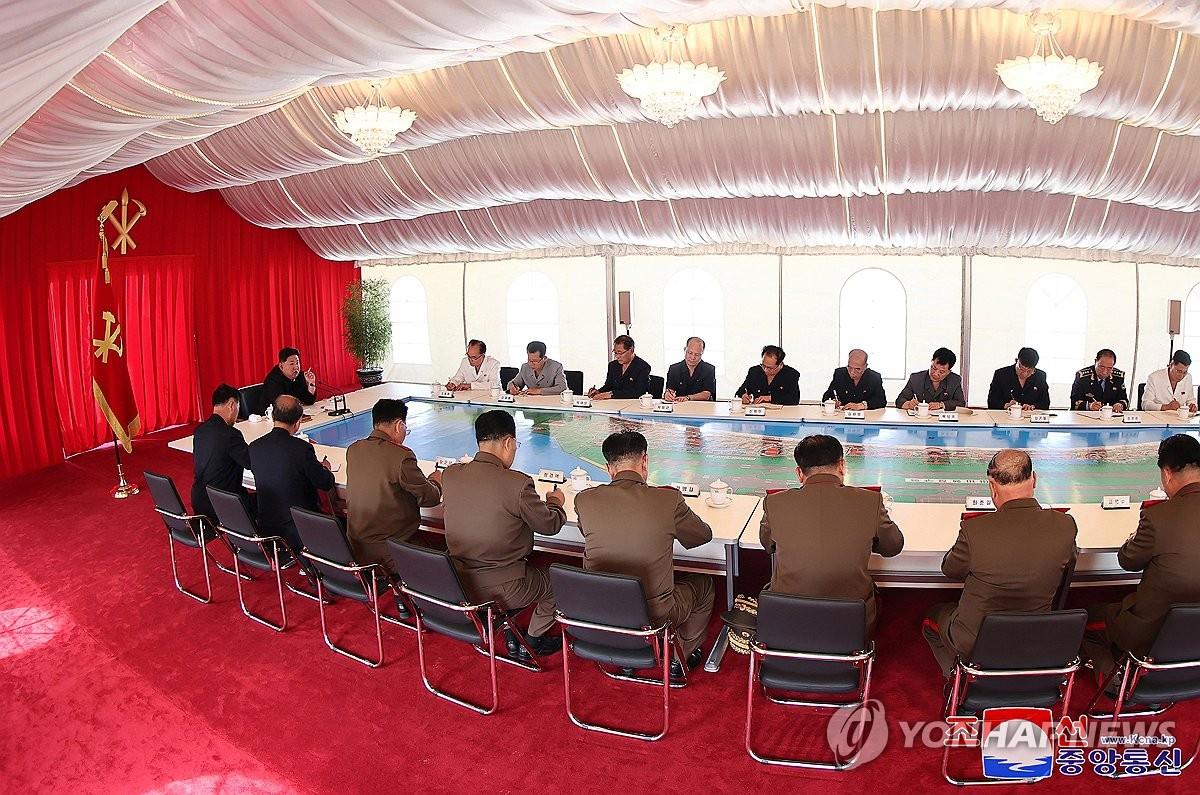 [NK Focus]
North Korea's Policy Toward South Korea: Trends from July and August 2024- Kim Jong-un's "Two Hostile States" and the DPRK - Lee Seung-hyunResearch Fellow at SAND InstitutePh.D. in Public Administrationdrharacearthur@gmail.comOn December 30, 2023, at the fifth session of the Workers' Party of Korea Plenary Meeting, Kim Jong-un declared that inter-Korean relations were no longer fraternal but had become those of two hostile states. He stated that unification with South Korea was unattainable. Kim emphasized that North-South ties had solidified as adversarial and likened the relationship to two warring states. He noted that South Korea’s policies of 'unification by absorption' and 'system unification' starkly contrasted with North Korea’s vision of a “two-state system” and “one Korea policy,” making unification impossible.This announcement might suggest that North Korea has abandoned the goal of reunifying the Korean Peninsula. Following this, North Korea's actions, such as building barriers and maintaining hostile policies towards South Korea, may seem to endorse a permanent separation. However, assuming North Korea has completely forsaken the goal of reunification would be a grave policy mistake, as indicated by Kim’s detailed explanation of the hostile relationship between the two Koreas. Kim Jong-un’s remarks on the hostile nature of inter-Korean relations included warnings that the Military Demarcation Line (MDL), where large military forces confront each other, could easily become a flashpoint for conflict. He implied that this situation might not just cement the armistice line as a permanent border but could lead to escalated military actions aimed at occupying South Korea. Despite this, North Korea’s recent policy actions suggest a strategic shift in military planning.Confident in its nuclear arsenal, delivery systems, rockets, and cyber capabilities, North Korea seems poised to use more sophisticated methods to minimize physical destruction while targeting South Korea. This strategy aligns with recent efforts, such as constructing barriers near the armistice line and Kim’s remarks at the new tactical ballistic missile handover ceremony, emphasizing readiness for frontline units.On July 16, Kim Jong-un inspected the Wonsan-Kalma coastal tourism zone with key officials,highlighting his focus ondomestic development / KCNA, Yonhap News AgencyIn July, alongside these military actions, Kim Yo-jong, Deputy Director of the WPK, and the military issued continuous hostile statements against South Korea. They criticized and responded to the South Korean military's resumption of firing exercises in border areas and the distribution of anti-North Korea leaflets by South Korean groups. The North Korean military, through a Ministry of National Defence spokesperson, expressed strong opposition to the adoption of the 'U.S.-ROK Joint Statement on Nuclear Deterrence and Nuclear Operations Guidelines' at the NATO summit, claiming it indicated a “clear intent of nuclear confrontation” and “preparation for a nuclear war targeting North Korea.”Despite these aggressive stances, Kim Jong-un also focused on domestic issues, emphasizing his role as a leader attentive to the people’s welfare. He inspected various construction sites, such as those in Samjiyon City and the Wonsan-Kalma District, and provided on-site guidance in Sinuiju and Uiju County. His focus on internal development, along with his prominent display during the 10th Plenary Meeting of the 8th Central Committee of the WPK and the commemoration of Kim Il-sung’s death on July 8, suggests a deliberate effort to idolize Kim Jong-un.Throughout North Korea, murals with a sun emblem and the phrase "Suryong and General will be with us forever" can be seen./ by Rodong SinmunMoreover, it appears that Kim Yo-jong oversees policies toward South Korea and military affairs, Foreign Minister Choe Son-hui handles international relations, and Premier Kim Tok-hun manages internal affairs, indicating a new order of governance in North Korea, with Kim Jong-un at the helm.The ‘Reactionary Ideology and Culture Rejection Law’ has increased public executions and tightened control over the population, with more frequent mobilizations, ideological education, and self-criticism sessions. The heightened control over the Socialist Women's Union of Korea has limited housewives' economic activities, and crackdowns on market activities by the Central Committee of the Workers' Party of Korea have threatened the ‘Jangmadang,’ a key component of North Korea's economy. From July 25 to 29, floods in the Yalu River basin caused significant casualties and damage in North Pyongan Province, Jagang Province, and Ryanggang Province. Although South Korea offered humanitarian aid, Kim Jong-un declined, opting instead to manage disaster recovery internally. His visit to flood-affected areas in Uiju County on August 8-9 and the subsequent measures announced underscore his commitment to self-reliance, even at the expense of rejecting international aid. In reality, North Korea deployed soldiers and shock troops from local industrial plant construction in Kimhyongjik County to the flood-affected areas, but they focused on restoring historical sites and embankments rather than residents' homes. North Korea is also bolstering its diplomatic ties with Russia. President Vladimir Putin's visit on June 19 and the subsequent North Korean military education delegation to Russia in July highlight the growing military cooperation between the two nations. While China has not directly commented on this closer North Korea-Russia relationship, it has shown discomfort by requesting the repatriation of North Korean workers. North Korea likely sees more tangible benefits in military cooperation with Russia than in the calculated support from China, leading to a stronger partnership with Russia.On August 5, North Korean state media reported that Kim Yo-jong bowed slightly to Kim Ju-ae during a handover ceremony for a new tactical ballistic missile launcher, sparking speculation about Kim Ju-ae as a potential successor. However, it is premature to consider this a definitive sign of succession. The bow could reflect protocol and rank rather than a clear indication of succession. Nevertheless, Kim Ju-ae’s continued public appearances, especially in military contexts, suggest that she might be groomed for a significant role, potentially overseeing inter-Korean and military affairs, similar to Kim Yo-jong. In conclusion, North Korea's activities in July and August 2024 indicate a structured approach to governance centered around Kim Jong-un. Kim Yo-jong manages policies toward South Korea and military affairs, aligning with the public appearances of Kim Ju-ae. The regime is promoting Kim Jong-un's idolization, reinforced by his declaration of ‘hostile relations between two states.’ They are tightening control over residents through the ‘Reactionary Ideology and Culture Rejection Law’ and organizations like the Socialist Women's Union of Korea. Additionally, they are rejecting international aid for flood damage to maintain social control and emphasize Kim Jong-un's image as a benevolent leader. North Korea is also likely to continue strengthening its relationship with Russia to bypass sanctions through military cooperation. Overall, North Korea maintains its hostile policy toward South Korea, justifies provocations, suppresses public dissent through ideological reinforcement, and stabilizes the regime by idolizing Kim Jong-un.
24.08.16 -
 [Current Affairs Analysis]
The Third Plenary Session of the 20th Communist Party of China (CPC) and Its Significance Lee Tae-hwanSenior Fellow at The Sejong InstituteThe 3rd Plenary Session of the 20th Communist Party of China (CPC), held from July 15 to 18, drew significant attention. This followed an April 30 Politburo meeting, where it was decided to hold the session in July in Beijing to address economic difficulties. The meeting was notable because it was held nine months later than usual, despite its importance in outlining the economic direction for Xi Jinping's third term. It also attracted attention as it could provide insights into China's future economic, social, and foreign policies under Xi's leadership.The session approved the "Decision of the Central Committee on Further Deepening Comprehensive Reform and Promoting Chinese-Style Modernization." This article will examine the details, features, and significance of this decision.This decision includes 60 articles with over 300 reform measures focusing on systems, mechanisms, and institutions. Key points include the importance of comprehensive reforms, reforms driven by the economic system, and enhancing party leadership in reform. The emphasis is on a Chinese model, solidifying the party-state system rather than adopting a Western approach.Second, the session addressed measures for international cooperation and attracting foreign investment. Amid global instability, foreign investment in China has drastically decreased, and credit ratings have been downgraded. In 2023, foreign direct investment in China amounted to $33 billion, just a tenth of the $344.1 billion in 2021. There are significant concerns that China's economic recovery may fall short of expectations. Achieving China's 5% economic growth target this year depends on both domestic recovery and the extent of China's openness to international cooperation.On July 18, in Beijing, the closing ceremony of the Third Plenary Session of the 20th CPC was held.Top Chinese leaders are shown passing a resolution by a show of hands. / July 19, 2024/XinhuaAt the Two Sessions in March, "openness and international cooperation" were emphasized. The decision at the 3rd Plenary Session to deepen market reforms and reform the foreign investment and overseas investment management systems is significant but represents tactical adjustments within the party-state system rather than strategic changes.Third, the session stressed the importance of "new quality productive forces" led by high-tech industries. It aims to strengthen the state's role in key strategic sectors such as science and technology, focusing resources on areas like next-generation IT, AI, aerospace, new energy, new materials, advanced equipment, biotechnology, pharmaceuticals, and quantum science and technology.Fourth, plans were introduced to enact the Private Economy Promotion Law and Financial Law. These laws aim to create a favorable environment and provide more opportunities for the non-public sector economy.Fifth, the session outlined long-term goals, aiming to complete the proposed reform tasks by 2029, the 80th anniversary of the People's Republic of China, and establish a high-level socialist market economy system by 2035.Sixth, the session highlighted the need to promote positive interactions between security and new productive forces and to modernize the national security system. In conclusion, the policies and measures discussed at the session focus on medium- to long-term tasks and goals. The success of these reforms hinges on the effective implementation of specific and flexible plans. The 75th Anniversary of North Korea-China Diplomatic Relations and the Outlook for Their Relationship If the recent economic reforms don’t produce results and the slowdown continues, China’s ability to exert geopolitical influence through aid and loans might be compromised. The state of China’s economy could also impact its economic cooperation with North Korea. Given the sanctions and considering its relations with the US, Japan, and European countries, China will find it challenging to expand aid or trade with North Korea. This reluctance is also why China hasn’t agreed to extend UN sanctions against North Korea. During Xi Jinping's tenure, North Korea-China relations have been managed within the broader framework of US-China and multilateral relations rather than through traditional bilateral ties. The five North Korea-China summits in 2018 and 2019, surrounding the North Korea-US summits, reflect considerations of regional dynamics between the US and China. Marking the 75th anniversary of diplomatic relations, North Korea and China are accelerating cooperation and high-level exchanges. In April, Zhao Leji, Chairman of the National People's Congress Standing Committee, visited North Korea, indicating a possible North Korea-China summit this year. However, some believe China is distancing itself from North Korea, avoiding a US-South Korea-Japan vs. China-Russia-North Korea bloc formation. The Chinese delegation emphasized a mutually beneficial relationship and 'protecting common interests' rather than strong support for North Korea, contrasting with the anti-American or anti-Western rhetoric at the Xi Jinping-Vladimir Putin summit.The strengthening of Russia-North Korea cooperation has emerged as a key factor in North Korea-China relations. After Putin's visit to North Korea in June, where a mutual defense treaty was signed, China has shown indifference or discomfort. Chinese Foreign Ministry spokesperson Lin Jian stated that the cooperation between Russia and North Korea is an issue between two sovereign states and refused to comment on the new agreement. This contrasts with the emphasis on unlimited cooperation between China and Russia when Putin visited China in May, indicating China’s concerns about competing with Russia for influence over North Korea.Facing economic challenges, China aims to maintain influence over both North and South Korea. It adopts a competitive and restrained approach with the US and Japan rather than direct confrontation. China is restoring military dialogue channels with the US to avoid conflicts and is adopting a wait-and-see approach until the US presidential election. After Putin's visit to China in May, Xi Jinping attended the South Korea-China-Japan summit to boost economic cooperation and counter the growing military ties between South Korea, the US, and Japan. To maintain friendly relations with EU countries amid trade tensions, Xi toured Europe, visiting France, Hungary, and Romania. In July, when the Italian Prime Minister led a large delegation to China, they promised cooperation and investment in the automotive and AI sectors, reflecting a conciliatory stance.Given China’s economic situation and its comprehensive approach to international cooperation, significant expansion of economic and military exchanges with North Korea or a South Korea-US-Japan vs. North Korea-China-Russia bloc confrontation is unlikely this year. After the US presidential election, US-China relations may be readjusted, potentially leading to a realignment of North Korea-China relations.
24.08.02
News Letter
We are leading the global communication via Newsletter.
We will deliver the latest information and proven facts on Korean Peninsula status including North Korea situation.