

-
 [NK Focus]
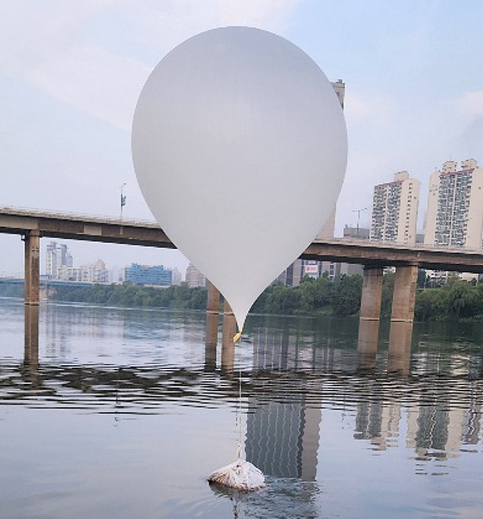
Rising Threat from North Korean Trash Balloons:A New Role for the United Front Department? Lee Seung-hyunResearch Fellow at SAND InstituteFrom May to July, North Korea floated around 3,600 trash balloons into South Korea in retaliation against leaflets sent by defector groups. Despite our military's countermeasures, including propaganda broadcasts, North Korea flew over 1,500 more trash balloons on just the 24th alone.The frequency of these balloon drops has increased, and they have become more dangerous. Now equipped with timers and detonators, some balloons have landed inside the Yongsan presidential office complex for the first time.The National Intelligence Service (NIS) reported on the 29th that North Korea has sent a total of around 3,600 trash balloons in 10 separate incidents. Initially, they sent waste, mainly manure or discarded plastic, but later switched to paper and garbage to confuse our response.Kim Yo-jong, the Deputy Director of the Workers' Party of Korea (WPK) and sister of North Korean leader Kim Jong-un, has issued five statements regarding the trash balloons. The NIS considers this an unusual move, marking the most statements made on a single issue in a short period.It’s anticipated that North Korea will modify their tactics by targeting densely populated areas or major security facilities with these trash balloons. They might also enclose suspicious white powder and carry out other provocations, such as strikes near the Northern Limit Line (NLL).A trash balloon sent by North Korea, discovered near Jamsil Bridge on the Hangang Riverin Seoul, on the morning of June 9th. / JTBCThe United Front Department (UFD) of the Workers' Party of Korea is believed to be behind these trash balloon launches. Recently renamed the "10th Bureau of the WPK Central Committee," this organization was restructured to focus on overtly hostile activities against South Korea.Earlier this year, Kim Jong-un declared inter-Korean relations to be hostile and ordered a reorganization of related departments. Consequently, the UFD’s role in inter-Korean dialogue was abolished, and it was transformed into an entity responsible for aggressive operations like the trash balloon launches.It is speculated that the UFD planned the trash balloon operations, with execution by the North Korean Army's Reconnaissance General Bureau and propaganda handled by the WPK's Propaganda and Agitation Department.Established in 1978, the UFD is the North Korean Workers' Party's organization responsible for inter-Korean negotiations, economic cooperation, psychological warfare, recruiting pro-North figures, and instigating internal conflicts.This department oversees various organizations like the National Committee for the Peaceful Reunification of the Fatherland and the Korean Asia-Pacific Peace Committee, directing operations against the South. The UFD also played a leading role in the inter-Korean and US-North Korea summits in 2018 and 2019.Following the failure of the Hanoi summit, the UFD underwent scrutiny and purges, leading to its downsizing and reorganization. Earlier this year, Kim Jong-un redefined inter-Korean relations as hostile, removing the concept of 'unification,' and renamed the UFD as the "10th Bureau of the WPK Central Committee.“Known as the "Bureau of the Enemy," this name reflects its role in enhancing aggressive operations and psychological warfare against the South.The recent trash balloon launches are seen as attempts to destabilize South Korea by dividing public opinion, isolating defectors, and creating confusion in South Korea’s policies towards the North.However, if there is significant backlash against the trash balloons both domestically and internationally, the Bureau could be labeled a "garbage department." North Korean authorities likely refrain from informing their citizens about the balloons to avoid internal criticism.There are also speculations that North Korea is using these balloons to collect wind data for targeting major South Korean facilities. Concerns have been raised that North Korea might escalate provocations by attacking the launch points of South Korean balloons.The US and South Korean defense ministers' strong demand on the 28th for North Korea to stop the trash balloon launches is seen as a warning against North Korea’s aggressive actions.
24.08.02 -
 [Kim Myongsung’s Inside North Korea]
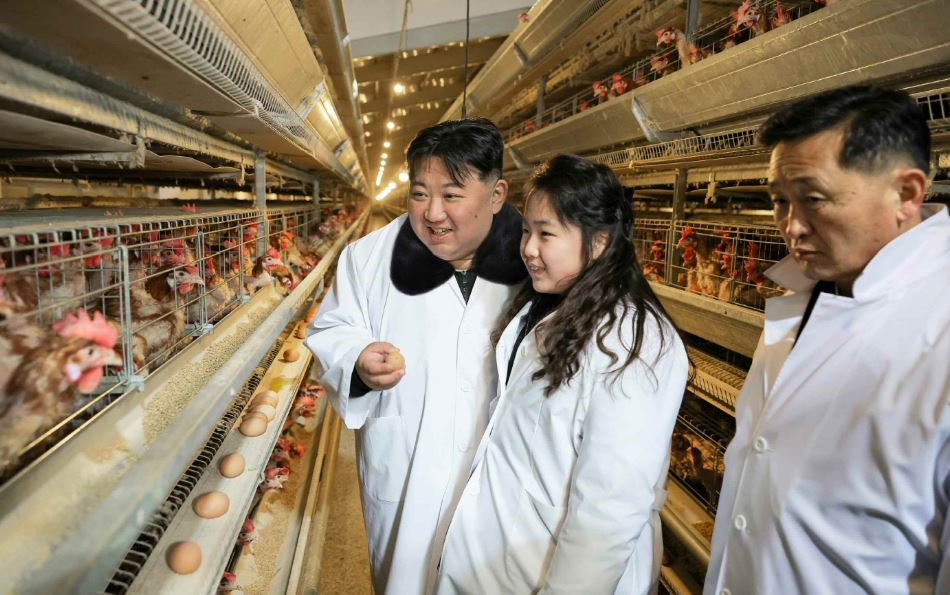
Kim Myongsung’s Inside North Korea· NIS Reports: "Kim Ju-ae in Successor Training" ... "Potential for Change Exists"· Is Kim Jong-un's 140kg Weight too heavy for Medication? ... Signs of Seeking Alternative Medication Abroad· Kim Jong-un Fires Police Chief and Governor Over Flood DisasterKim Myong-sungSecretary General of the SAND InstituteNIS Reports: "Kim Ju-ae in Successor Training" ... "Potential for Change Exists"On the 29th, the National Intelligence Service (NIS) disclosed in a full session of the Intelligence Committee that Kim Ju-ae, the second daughter of North Korean leader Kim Jong-un, is being groomed as a successor.Kim Ju-ae inspecting a chicken factory on January 8th, featured in North Korean media on Kim Jong-un's 40th birthday / Rodong SinmunThe NIS reported that North Korea is hinting at Kim Ju-ae as a potential successor and has started training her for the role. They are aware of the public's concerns about her young age and are carefully balancing her propaganda exposure and appearances while guiding her through private activities.The NIS identified Kim Ju-ae's successor training based on her titles and the frequency and nature of her public appearances.The NIS analysis stated, "More than 60% of Kim Ju-ae's past activities involved military events with her father, and she has also taken part in some economic activities. The term 'Hyangdo,' used exclusively for successors or the Suryong (leader), suggests that Kim Ju-ae's position as a potential successor is becoming more established.“'Hyangdo' means 'to illuminate the path in the revolutionary struggle,' and since it's reserved for the Suryong or successors, using it for Kim Ju-ae suggests she is being positioned as a future leader.However, the NIS also stated, "Given the possibility of other siblings stepping up and that Kim Ju-ae is not confirmed as the final successor, a change in the successor remains possible.“It is believed that North Korea, which has passed power to sons for three generations, chose a female successor for the fourth generation due to the unclear status of Kim Jong-un's son. To help the patriarchal North Korean society accept a future female leader, authorities are increasing Kim Ju-ae's public appearances from a young age to build familiarity.Is Kim Jong-un's 140kg Weight too heavy for Medication? ... Signs of Seeking Alternative Medication Abroad On the 29th, the NIS briefed the National Assembly on Kim Jong-un's health, revealing that he weighs around 140 kg with a BMI in the mid-40s. This places him well above the normal BMI of 25, categorizing him as extremely obese and at high risk for heart disease.Kim Jong-un conversing with war veterans attending the Korean Armistice Agreement commemorative event on July 27th./ Korean Central News Agency Yonhap News AgencyThe report continued, noting that Kim Jong-un has exhibited symptoms of hypertension and diabetes since his early 30s. If his health does not improve, he is at risk for cardiovascular diseases, which are common in his family. His condition is being closely monitored.The NIS also pointed out that Kim’s weight peaked at around 140kg, and it is currently estimated to be the same. This could be due to factors like stress, smoking, and alcohol consumption.The NIS specifically noted that there are signs Kim is seeking alternative medications beyond his current treatment. This suggests that his current medications might not be effectively managing his health.Kim Jong-un appears to have conditions related to hypertension and diabetes, and there have been clear indications that he has been looking for treatments abroad.The NIS also reported that North Korea has launched 48 missiles in 14 instances this year. Additionally, they expect North Korea to employ other provocative measures, such as increasing tensions near the Northern Limit Line (NLL) and using loudspeaker strikes, along with trash balloons.Kim Jong-un Fires Police Chief and Governor Over Flood DisasterNorth Korean leader Kim Jong-un has dismissed key officials, including the Minister of Social Security and the provincial governor, blaming them for failing to prevent flood damage in North Pyongan and Jagang provinces.According to the Korean Central News Agency, on the 31st, Kim convened the 22nd emergency Politburo meeting in Sinuiju, North Pyongan Province, to address the severe flood damage, resulting in these dismissals.During the first day of the meeting, Kim Jong-un declared, "We will severely punish those responsible for the unacceptable human casualties caused by neglecting their duties assigned by the Party and the state.“The next day, North Korean media announced new appointments: Ri Hi-yong, former first deputy director of the Party's Organization and Guidance Department, as Chief Secretary of the North Pyongan Provincial Party Committee; Pak Song-chol, the Chief Secretary of the North Pyongan Provincial Party Committee, as Chief Secretary of the Jagang Provincial Party Committee; and Pang Tu-sop, former first deputy director of the Party's Military Affairs Department, as Minister of Social Security.North Korean media reported on the 31st that heavy rains caused major flooding in North Pyongan and Jagang provinces./KCNAIt seems that Kang Bong-hun, the former Chief Secretary of the Jagang Provincial Party Committee, and Ri Thae-sop, the former Minister of Social Security, have been removed from their positions.In Sinuiju and Uiju County, situated in the lower reaches of the Yalu River, heavy rains have caused severe damage, flooding 4,100 homes and 9 million pyeong of farmland, submerging entire villages. The entire regions of North Pyongan and Jagang provinces hit by the floods have been declared disaster areas.
24.08.02 -
 [Analysis]
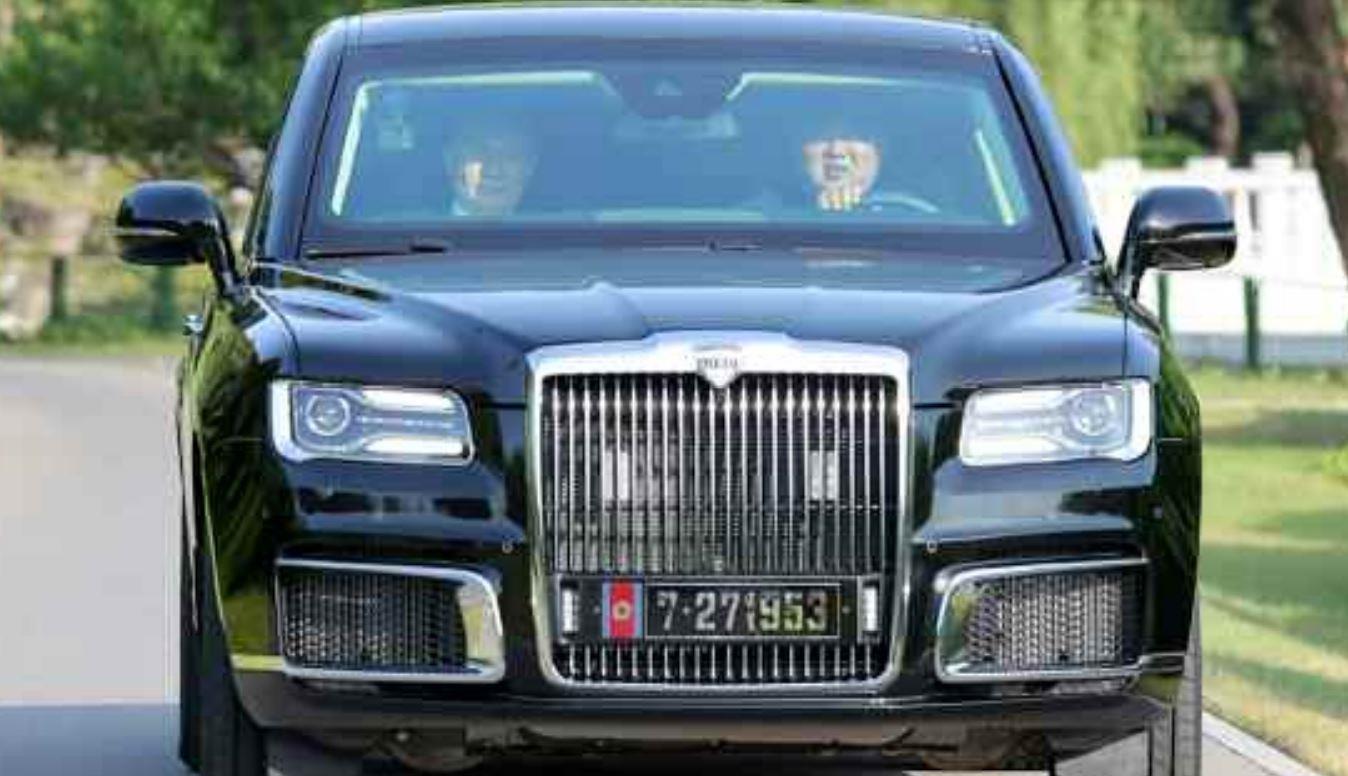
The Hidden Message Behind Putin's Gifts to Kim Jong-un: An 'Aurus' Car with '7.27.1953' Engraved- Analyzing the Political Significance of July 27 in North Korea - Lee Seung-hyunResearch Fellow at SAND InstituteLast month, President Vladimir Putin presented North Korean leader Kim Jong-un with a luxury Russian-made ‘Aurus’ limousine during his visit to Pyongyang. The car's license plate bore the date ‘7.27.1953,’ marking the signing of the Korean Armistice Agreement on July 27, 1953.Earlier in February, President Putin had given Kim Jong-un an ‘Aurus’ car with the same date, ‘7.27.1953,’ inscribed on its license plate. Kim frequently used this vehicle for official purposes and was seen with his daughter, Kim Ju-ae, at the inauguration of the Kangdong Greenhouse Farm near Pyongyang in March.What could be the reason behind Vladimir Putin gifting Kim an ‘Aurus’ car with the date ‘7.27.1953’ engraved on it twice this year?North Korea celebrates July 27 as ‘Victory Day,’ marking their perceived victory in the Korean War. Since Kim Jong-un took power, the date ‘July 27’ has become his personal brand. His official vehicle, known as the ‘No. 1 car,’ carries the license plate number ‘7.27.598.’ The first part, ‘7.27,’ signifies the armistice date, ‘59’ corresponds to his appointment as Chairman of the Workers' Party on May 9, 2016, and the ‘8’ is believed to represent his birth year.Kim Jong-un (right) drives the ‘Aurus’ car with the number ‘7.27.1953,’ a gift from President Vladimir Putin (left),during Putin's visit to Pyongyang on June 19. / Rodong SinmunKim Jong-un is known to have gifted high-end cars featuring the ‘7.27’ plate to his close associates. During Kim Jong-il's regime, top officials' cars had plates marking his birthday, ‘2.16.’ Kim Jong-un's grandfather, Kim Il-sung, branded ‘4.15’ to signify his own birthday.Kim Jong-un's use of ‘7.27’ as his brand is speculated to be politically motivated, partly because he cannot officially reveal his complete biography.With North Korea officially adopting ‘7.27’ as Kim Jong-un’s brand, even cigarette brands with this date have appeared. The ‘7.27’ cigarettes, which Kim reportedly enjoys, are sold at premium prices. Putin's decision to gift Kim Jong-un an Aurus car with the ‘7.27’ plate twice is seen as highly symbolic.Gifting luxury cars is not new for Russia. In 1950, during the Korean War, Joseph Stalin gave Kim Il-sung a Soviet luxury car, the ‘ZIS.’ Seventy-four years later, during the ongoing conflict in Ukraine, Putin has gifted a luxury car to Kim Jong-un, receiving conventional weapons from North Korea in return.The Soviet ‘ZIS’ passenger car gifted by Joseph Stalin to North Korean leader Kim Il-sungon October 26, 1950 / International Friendship Exhibition websitePutin and Kim Jong-un have highlighted their close relationship by taking turns driving cars with the ‘7.27’ license plate.Putin was seen driving with Kim Jong-un in the passenger seat, highlighting the idea that the ‘7.27’ victory was achieved with Russian support.On the other hand, Kim driving with Putin beside him signals their shared ambition to achieve victories on the global stage, including in the Ukraine conflict.Putin paid tribute to Soviet soldiers who died in the Korean War by laying a wreath at the Liberation Monument and signed a treaty that strengthened the bilateral relationship to a near-military alliance.The Aurus, dubbed the ‘Russian Rolls-Royce,’ is Russia’s premier luxury car brand used for official state purposes. As a luxury item, it violates United Nations Security Council (UNSC) sanctions against North Korea. Analysts interpret Putin's repeated gifting of such cars to Kim Jong-un as an effort to undermine these sanctions.
24.07.19 -
 [Kim Myongsung’s Inside North Korea]
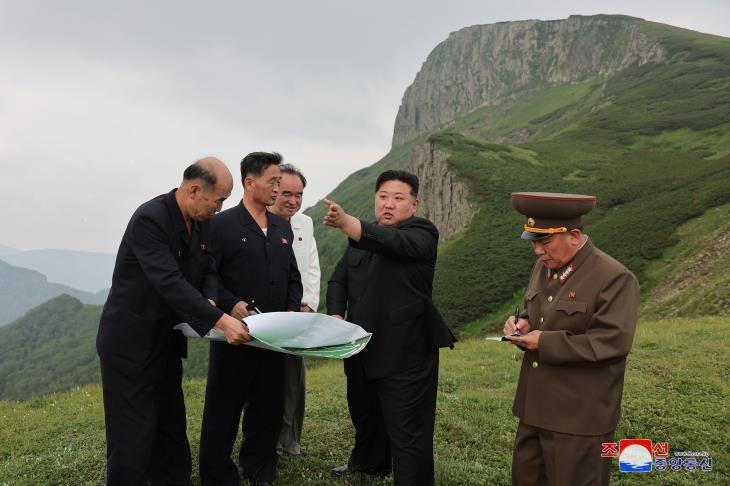
Kim Myongsung’s Inside North Korea· Kim Jong-un Furious Over Poor Construction: "They Completely Ignored My Orders" ... Officials Face Stricter Discipline· North Korea Reacts Strongly to Anti-North Leaflets: Punishes Residents Who Collected Them and Warns South Korea to 'Be Prepared’· High-Ranking North Korean Diplomat’s Family Defects to South Korea from Cuba Last November, Ahead of South Korea-Cuba Diplomatic RelationsKim Myong-sungSecretary General of the SAND InstituteKim Jong-un Furious Over Poor Construction: "They Completely Ignored My Orders" ... Officials Face Stricter DisciplineSince the 10th Plenary Meeting of the 8th Central Committee of the Workers' Party of Korea earlier this month, North Korea has tightened its reins on officials. Leader Kim Jong-un harshly criticized officials for poor work at construction sites and within provincial party committees and the cabinet. This move is seen as an effort to shift blame to officials amid ongoing economic struggles due to international sanctions.According to Rodong Sinmun, Kim Jong-un visited the construction site in Samjiyon City on July 11 and 12. He criticized officials for the substandard construction, calling it careless and outdated, and accused them of ignoring directives from the Workers' Party of Korea and the government.Kim labeled Ri Son-chol, the Minister of State Construction Supervision, and a former vice minister as "unfit individuals lacking basic morals and qualifications as state officials." He ordered their dismissal and referred them to judicial authorities. Additionally, he called for the removal of the head of the construction-related political group in the Organization and Guidance Department of the WPK.Samjiyon, a symbolic site in North Korea, holds significance for Kim Il-sung's anti-Japanese activities and Kim Jong-il's birthplace. Designated as a special tourist zone by Kim Jong-un in 2015, it underwent a three-phase modernization project aimed at becoming a model for local development. By the end of 2019, it was upgraded from a county to a city, and North Korea now showcases Samjiyon as a "model socialist mountain cultural city."On July 11 and 12, Kim Jong-un provided on-site guidance for the construction project in Samjiyon City. / Korean Central News AgencyIn November 2021, as the four-year construction project in Samjiyon neared completion, Kim Jong-un ordered additional lodging facilities, roads, and rail projects. Most of these projects have been finished, except for the renovation of Samjiyon Airport and some rail works.However, due to dissatisfaction with the results, Kim Jong-un revisited the site and reprimanded those responsible for the construction.Following the Plenary Meeting, North Korea has been actively enforcing stricter discipline among officials. Kim emphasized the need to improve the work attitudes of officials, identifying various issues that were hindering economic progress during the recent Plenary Meeting.Rodong Sinmun highlighted that provincial party committees and the cabinet convened meetings to discuss the implementation of the Plenary Meeting’s outcomes and stressed the need to address officials’ negligence.The public rebuke of officials and the critique of their work attitudes seem to be part of an effort by the North Korean leadership to shift the blame for economic difficulties to the working-level officials, especially when economic resources are scarce due to ongoing sanctions.North Korea Reacts Strongly to Anti-North Leaflets: Punishes Residents Who Collected Them and Warns South Korea to 'Be Prepared’ North Korea is responding strongly to anti-North leaflets sent by defector groups by harshly punishing residents who picked them up and warning South Korea to "be prepared.“On the 10th, TV Chosun reported, citing a South Korean government source, that North Korean authorities publicly executed about 30 middle school students for watching South Korean dramas found on USB drives hidden in leaflets.Last month, teenagers around 17 years old received life imprisonment or death sentences for the same offense.North Korea also reacted nervously to 'rice PET bottles' sent by defector groups. According to a government official, some residents were sentenced to labor for cooking and eating rice from these bottles.North Korea has announced Kim Jong-un's directive to burn anti-North leaflets due to COVID-19 concerns, but severe food shortages complicate enforcement.Despite harsh governance tactics, the younger generation, known as the 'Jangmadang generation,' is expected to continue defying these restrictions.On the 14th, a statement by Kim Yo-jong, a WPK official, criticizing anti-North leaflets was reported,along with the photo of the leaflets being burned. / Korean Central News AgencyOn the 14th, Kim Yo-jong issued a statement warning of consequences if anti-North leaflets were found again in North Korea's border areas. On the 16th, she reiterated that "South Korea will have to pay for this" after more leaflets were discovered. Previously, North Korean media had released photos of objects like comprehensive cold medicines, presumably sent with the leaflets, being incinerated. This release of photos showing leaflets that landed in North Korea is the first amid the recent conflict over anti-North leaflets and waste balloons between the two Koreas. Recently, North Korea has retaliated to anti-North leaflets sent by defector groups by sending waste balloons back to the South.High-Ranking North Korean Diplomat’s Family Defects to South Korea from Cuba Last November, Ahead of South Korea-Cuba Diplomatic RelationsOn the 16th, it was confirmed that a North Korean diplomat stationed in Cuba defected to South Korea in November last year, amid active communication preceding the establishment of diplomatic relations with Cuba in February this year.North Korean Embassy in Cuba / Yonhap News AgencyAccording to a South Korean government source, North Korean diplomat Ri Il-kyu (52), who was stationed at the North Korean Embassy in Cuba, defected to South Korea with his wife and children in November last year.Ri, a diplomat handling South Korea-related affairs in the North Korean Ministry of Foreign Affairs and having served twice in Cuba, reportedly decided to defect following conflicts with the Ministry’s headquarters over job evaluations.Speculation suggests that the establishment of diplomatic relations between South Korea and Cuba may have influenced his decision to defect. Cuba, a traditional ally of North Korea, announced diplomatic ties with South Korea in February.Until his defection, Ri was responsible for preventing the establishment of diplomatic relations between South Korea and Cuba.This diplomat's defection is the first confirmed since July 2019, when two acting ambassadors, Jo Song-gil in Italy and Ryu Hyun-woo in Kuwait, also defected.In recent years, as the COVID-19 pandemic subsided, North Korea has reshuffled its overseas representatives, resulting in a wave of defections among the elite stationed globally.According to the Ministry of Unification, about ten 'elite' North Koreans defected last year, marking the highest number since 2017. Despite the overall number of defectors entering South Korea dropping to one-sixth of the 2017 figures due to stringent border controls, defections among those stationed abroad have persisted.
24.07.19 -
 [NK Focus]
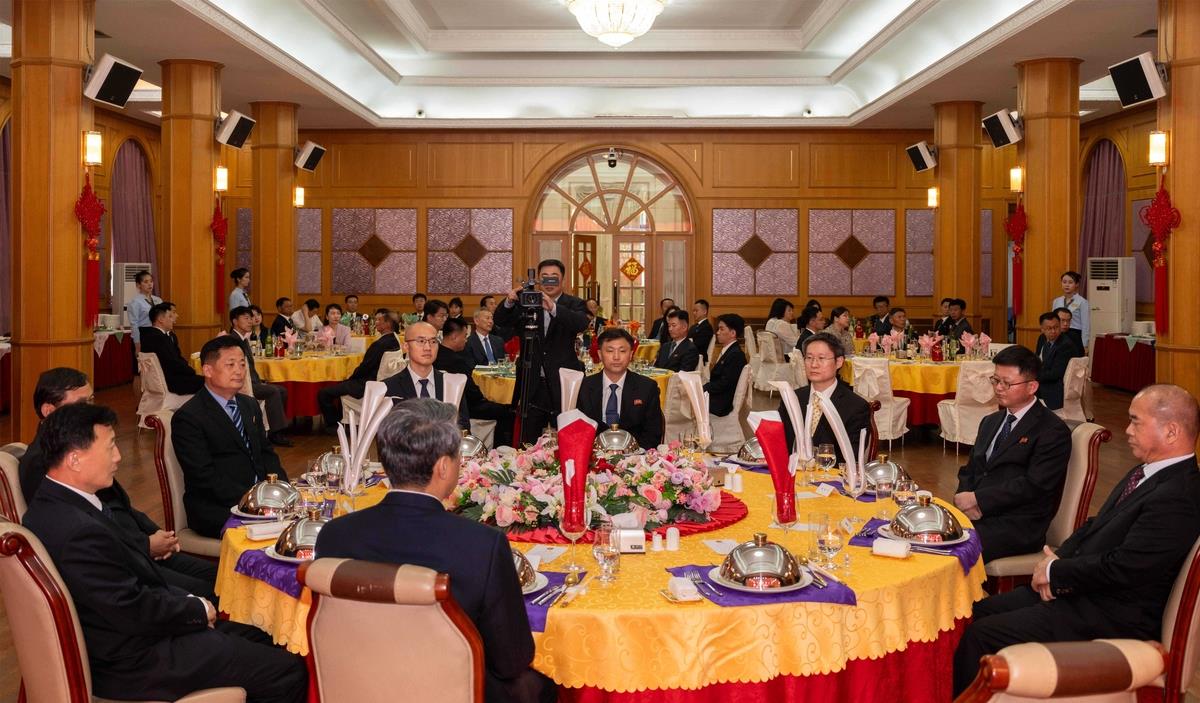
Tensions Grow in North Korea-China Relations Amid Closer North Korea-Russia Ties Cho Yui-haengProfessor at Seoul Theological UniversityThe growing closeness between North Korea and Russia is causing political tension in North Korea-China relations, now in their 75th year. This has become evident recently. On July 11, North Korea and China marked the 63rd anniversary of their Treaty of Friendship, Cooperation, and Mutual Assistance. However, the rank of officials attending the events was notably lower than in previous years. In Pyongyang, Kim Seung-chan, chairman of the North Korea-China Friendship Association and president of Kim Il Sung University, represented North Korea, while Ambassador Wang Yajun and embassy staff attended on behalf of China. Even though this year is not a major milestone, the lower rank of attendees was striking. Last year, high-ranking North Korean officials like Kang Yun-sok and Moon Sung-hyuk attended the event, highlighting the downgrade this year. Similarly, China’s representation was also lower this year. Last year, Peng Qinghua, Vice Chairman of the National People's Congress, attended the Beijing event. This year, He Ping from the Chinese People's Political Consultative Conference represented China. Adding to the tension, North Korea's Rodong Sinmun and China’s People's Daily did not publish any articles on the anniversary this year. While Rodong Sinmun did cover the event on the day, China's Xinhua News Agency did not report on the banquet.Commemorative event for the 63rd anniversary of the Sino-North Korean Treaty at the Chinese Embassyin Pyongyang on July 11 / Embassy of China in North Korea website.Reports indicate that China recently demanded the return of all North Korean workers stationed in the country. While North Korea plans a gradual repatriation, China insists on the immediate return of workers whose visas are expiring. North Korea has circumvented UN sanctions by sending workers to China on student and tourist visas. Tens of thousands of North Korean workers are estimated to be in China through this method. With their visas expiring soon, China has decided not to extend them and will send the workers back to North Korea. The international community believes North Korea earns hundreds of millions of dollars annually by taking up to 90% of the wages of its overseas workers. Therefore, if the workers are repatriated, it could significantly impact North Korea. Although the Chinese Foreign Ministry has denied the report, multiple signs of tension between the two countries have emerged this year. In January, North Korea remained silent after the election of Taiwan's anti-China President Lai Ching-te and did not send condolences following a major earthquake in China. However, when an earthquake struck Japan, Kim Jong-un sent a formal condolence letter to Prime Minister Kishida Fumio, using an honorific term. Chinese Ambassador to North Korea Wang Yajun did not attend a large anti-American rally in Pyongyang on the anniversary of the Korean War, unlike Russian Ambassador Alexander Ivanovich Matsegora. This absence was notable, given China's significant involvement in the Korean War. China has also removed a commemorative plaque from the 2018 summit between Xi Jinping and Kim Jong-un in Dalian. Additionally, North Korea switched from using Chinese satellites to Russian ones for broadcasting Korean Central Television, indicating further strain in relations. The smuggling of goods between North Korea and China, once thriving despite UN sanctions, has been curbed by intensified Chinese crackdowns. China's customs data shows that North Korean imports from China dropped by 8.8% in May compared to April, amounting to $150.38 million. While Russia has resumed sending tourists to North Korea after the COVID-19 pandemic, China has yet to send any. Despite declaring this year the 'Year of North Korea-China Friendship' for their 75th anniversary of diplomatic ties, tensions remain high. China’s recent actions seem to signal displeasure with North Korea’s growing closeness to Russia. Since the latter half of last year, North Korea has grown closer to Russia, holding two summits and engaging in military exchanges amid Russia's invasion of Ukraine. Meanwhile, China has distanced itself from North Korea to maintain good relations with the U.S. and the West, prompting North Korea's dissatisfaction. As the Ukraine war drags on and North Korea's ties with Russia strengthen, North Korea-China relations are likely to remain strained for the foreseeable future.
24.07.18 -
 [Kim Myongsung’s Inside North Korea]
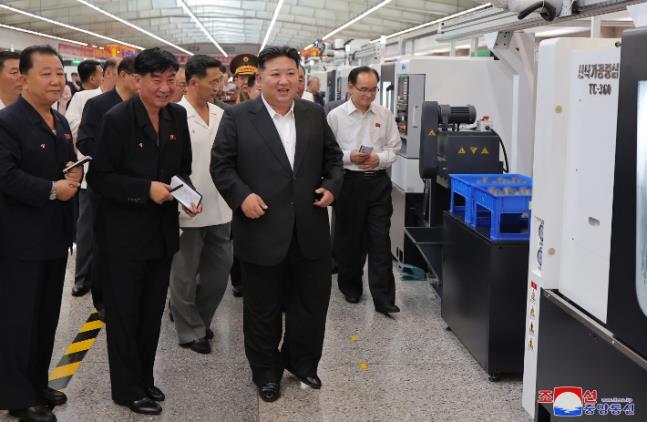
Kim Myongsung’s Inside North Korea· Kim Jong-un Visits Military Factory Post-Plenary, Signaling Urgency in Arms Exports?· North Korea Falsely Claims Success Amid Consecutive Missile Failures· North Korea Debuts 'Kim Jong-un Badge' as Leader Solidifies Unique Status on 40th BirthdayKim MyongsungSAND's Secretary General Editor for the SAND NewsletterKim Jong-un Visits Military Factory Post-Plenary, Signaling Urgency in Arms Exports?North Korean leader Kim Jong-un, after the Workers' Party of Korea (WPK) Plenary Meeting, visited a defense industry factory with officials, emphasizing it as a model for all economic sectors. This visit appears to justify defense industry development despite economic challenges and to expedite weapon production for export to Russia.KCNA detailed that Kim Jong-un inspected a defense industry facility critical to enhancing the nation's defense capabilities. He reviewed advanced unmanned production processes noted for their high levels of intelligence, precision, and performance.They conveyed Kim Jong-un's assertion that the level of modernization achieved by the defense industry sets a benchmark for all sectors of the national economy. He called for continuous updates to production command systems and the rapid dissemination of these advancements across all economic areas.This assessment indicates that North Korea is fully leveraging its capabilities to maintain munitions factories at full operational capacity despite comprehensive international sanctions. The Rodong Sinmun's report highlighted that the defense factory exceeded its production targets for the first half of the year, with officials recognizing the rapid progress in the defense sector. The "military economy" is seen as a key area for North Korea to earn foreign currency, as well as secure food, energy, and critical weapon technologies amid international sanctions.Kim Jong-un's tour also included visits to significant machinery factories and medical equipment production facilities. This follow-up visit is viewed as an extension of the Plenary Meeting, which focused on economic achievements and future goals.North Korea previously disclosed the outcomes of the 10th Plenary Meeting of the 8th Central Committee of the Workers' Party, chaired by Kim Jong-un from June 28 to July 1, focusing on people's livelihoods and internal system management. North Korean media reported that Kim Jong-un expressed contentment with the results of the country's economic policies, noting an apparent economic upturn. However, acknowledging the mid-term evaluation, he highlighted significant obstacles and challenges in national and social affairs, along with various deviations and defects within the people's economy, reflecting North Korea's tough economic reality.Kim Jong-un toured a defense industry factory, a key machinery factory, and a medical equipment factorywith senior central party officials on the 3rd, reported the Korean Central News Agency (KCNA). / KCNAThe meeting also addressed measures to tighten internal controls within North Korea. Kim Jong-un praised the improved role of legal institutions in ensuring party decisions and social stability and emphasized the need for enhanced legal oversight to establish discipline across all areas of social life and effectively address key issues for the people's livelihood. This indicates a continued effort to prevent ideological relaxation, particularly among North Korea's youth.Interestingly, there were no public statements on foreign relations or a new treaty with Russia during this Plenary Meeting. It's speculated that detailed military evaluations and the North Korea-Russia treaty implementation were discussed but not disclosed. Observers suggest North Korea may be taking a strategic break before unveiling new constitutional amendments at the upcoming Supreme People's Assembly, which may include removing terms like 'unification' and 'same ethnicity.'North Korea Falsely Claims Success Amid Consecutive Missile FailuresNorth Korea has been falsely presenting its recent missile test launches as successful despite a series of failures. This seems to be an effort to avoid the embarrassment that comes with repeated failures.On the 2nd, North Korea announced it had conducted a "minimum range test launch of a tactical missile with a super-large warhead." However, South Korean military authorities cast doubt on this claim, suggesting that a likely failed ballistic missile test was being misrepresented as a success.North Korea claimed that the Hwasongpho-11 Da-4.5 missiles, capable of carrying a 4.5-ton warhead, were tested to verify flight stability and accuracy at a maximum range of 500 kilometers and a minimum range of 90 kilometers.The Hwasongpo-11, also known as the “North Korean Iskander” or KN-23, reportedly had its warhead weight increased from the typical 500 kg to 2.5 tons and up to 4.5 tons, intended to demonstrate its Bunker Buster-grade destructive power.Of the two missiles launched, the first, with a range of 500 km, reached the East Sea near Chongjin. However, the second missile, aimed at an inland range of 90 km, would have landed near Pyongyang if direction and distance are estimated correctly.Given that a large WPK Plenary Meeting attended by Kim Jong-un was occurring in Pyongyang on the 1st, it seems improbable that a missile was deliberately aimed at Pyongyang. This leads to speculation that the second missile might have gone off course. A Republic of Korea Joint Chiefs of Staff official called North Korea’s claims deceptive, doubting that a missile with a 4.5-ton warhead was test-launched inland, suggesting the claim might be fabricated.The JCS had previously noted that the second missile possibly failed, stating, “If it was a short-range ballistic missile (SRBM), it did not reach the required altitude.” Not reaching the necessary peak altitude implies an abnormal trajectory during its ascent phase.North Korea launched two new tactical ballistic missiles, the Hwasongpho-11 Da-4.5, capable of carrying a 4.5-ton warhead,from Jangyon, Hwanghae-do, on the 1st, with footage showcased. / Rodong SinmunReports indicate that the missile veered off course after launch, ultimately landing in an uninhabited area north of Pyongyang. North Korea had previously experienced failure in launching reconnaissance satellite No. 2 on May 27.Additionally, a missile launched on June 26 exploded mid-air. Although North Korea claimed it was a “multi-warhead missile test,” South Korean military surveillance clearly showed the missile breaking into fragments. North Korea reported the test launch of the Hwasongpo-11 Da-4.5 through its external media, the Korean Central News Agency (KCNA), but did not publish it in Rodong Sinmun, the WPK’s official newspaper for domestic audiences. No related photos were released.Considering the missile had landed inland and was likely known to the residents, North Korea seemed hesitant to publicize it as a success through its official media, indicating an effort to manage internal perceptions.North Korea Debuts 'Kim Jong-un Badge' as Leader Solidifies Unique Status on 40th BirthdayAt the recent plenary meeting, officials were seen wearing badges featuring Kim Jong-un's face, which was a first in North Korea. Analysts interpret this as an effort to bolster Kim Jong-un's unique leadership status, distinguishing him from his predecessors.During the 10th Plenary Meeting of the 8th Central Committee, held in Pyongyang from June 28 to July 1,officials wore badges featuring Kim Jong-un's face. / Korean Central News AgencyPhotos from the second day of the plenary meeting, as reported by state media like Rodong Sinmun, showed all attending officials with badges displaying only Kim Jong-un's face. Although there have been mentions of these badges being produced since Kim Jong-un's early rule in 2012, this is the first time they have been shown in public by state media.In North Korea, it is customary for all citizens, regardless of status, to wear badges with the supreme leader's portrait. It is anticipated that the general populace will soon be seen wearing Kim Jong-un badges as well. Since Kim Jong-il's death in 2011, North Koreans have typically worn badges featuring both Kim Il-sung and Kim Jong-il.This year, North Korea has ramped up efforts to idolize Kim Jong-un. A loyalty pledge ceremony was held on his birthday on January 8, and in May, during the opening of the Central Cadres Training School of the Workers' Party of Korea, his portrait was displayed alongside those of Kim Il-sung and Kim Jong-il for the first time.The Ministry of Unification has noted that the introduction of badges solely featuring Kim Jong-un's face is part of a broader trend to idolize him, aiming to affirm his distinct leadership role while reducing the emphasis on his predecessors.The Ministry noted that since the 2021 WPK Congress, marking Kim Jong-un's decade in power, idolization efforts have surged. This year, portraits of the three leaders were publicly displayed together for the first time, and the term 'Day of the Sun' has been used less frequently to commemorate Kim Il-sung's birthday.
24.07.05 -
 [NK Focus]
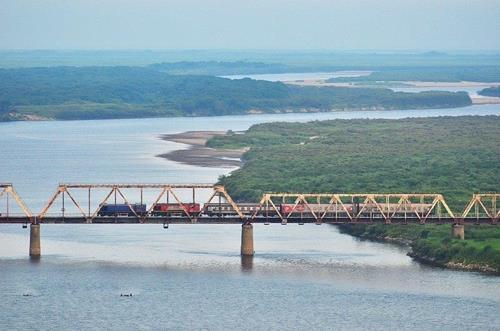
North Korea to Send Workers to Russia?The Reality of Forced Labor for North Korean Overseas Workers Lee Seung-hyunResearch Fellow at SAND InstituteDuring their June summit, North Korea and Russia agreed to build a bridge over the Tuman River, hinting at more North Korean workers being sent abroad. These workers face harsh conditions and must surrender over 70% of their earnings, raising serious human rights concerns often termed 'slave labor.'On June 19, Russian President Vladimir Putin visited North Korea and signed a 'Comprehensive Strategic Partnership Treaty' with North Korean leader Kim Jong-un. This treaty includes an agreement to build a road bridge at the Tuman River border. The Tuman River delineates the border between North Korea and Russia, where currently only the railway Friendship Bridge connects Rason and Primorsky Krai.In 2015, North Korea and Russia planned to build a road bridge connecting Khasan in Primorsky Krai and Rajin in North Korea, but the project was canceled. However, nine years later in February, the Najin-Khasan road bridge project resumed, and this new agreement finalizes its specifics.The 'Friendship Bridge,' a railway bridge over the Tuman River on the North Korea-Russia border/ Wikipedia photoThe new automobile bridge over the Tuman River is expected to be built below the Friendship Bridge. According to Radio Free Asia (RFA) in February, the project will feature a bridge 10 meters wide and 830 meters long, located about 400 meters downstream from the railway bridge. This new road is likely to boost the exchange of people and goods more than the existing railway.Given that more than 90% of North Korea's foreign trade occurs through China, the surge in North Korean overseas workers is expected to align more with Russia's labor needs and North Korea's foreign currency requirements than with any substantial increase in trade between the two nations.Rather than deploying combat troops, North Korea is likely to send construction workers to the four regions of Donetsk, Luhansk, Kherson, and Zaporizhzhia Oblast in Ukraine, which Russia claimed as new territories in 2022. North Korean military engineers and construction soldiers might be dispatched in civilian attire instead of military uniforms. North Korea has been sending some construction soldiers to Russia since 2016 due to sanctions.With international sanctions further isolating North Korea, sending workers abroad has become a vital source of foreign currency. By deploying active-duty soldiers instead of regular paid workers, North Korea can generate more foreign currency.North Korean workers at a construction site in Vladivostok, Russia / Voice of America (VOA)There have been several indications of North Korea's efforts to send workers to Russia. Last October, a job listing for North Korean workers appeared on a Russian government website before being removed. In December, intelligence agencies noted trends in North Korea's deployment of workers to Russia.Following the recent summit, the likelihood of North Korean workers being dispatched to Russia has increased, bringing their human rights issues back into focus.The '2024 Report on North Korean Human Rights,' recently released by the Ministry of Unification, includes testimonies from 649 defectors and sheds light on these issues. The report reveals that North Korean workers sent to Russia, the Middle East (UAE, Kuwait), Europe, Africa, and Mongolia face long hours, constant monitoring, and excessive tribute payments. They work long hours daily with nearly no holidays, and have to surrender over 70%, sometimes up to 90%, of their wages as "state planning fees" and other costs.A North Korean defector testified that workers sent to Russia in 2019 worked from 8 a.m. to 12 p.m. for the morning shift and from 1 p.m. to 10 p.m. for the afternoon shift, noting that "if they did not meet their quotas, it was common to work until 5 a.m."Workers in the Middle East reportedly had Fridays off for Islamic worship but worked 16-hour days from 5 a.m. to 10 p.m. on the other six days.There have also been reports of collective actions by dissatisfied workers. In 2020, North Korean workers in Russia reportedly tried to avoid work by pretending to be ill due to dissatisfaction with long hours and unpaid wages.A comprehensive investigation is needed to address the human rights abuses faced by North Korean workers dispatched abroad, who serve as a significant source of revenue for Kim Jong-un.
24.07.05 -
 [Current Affairs Analysis]
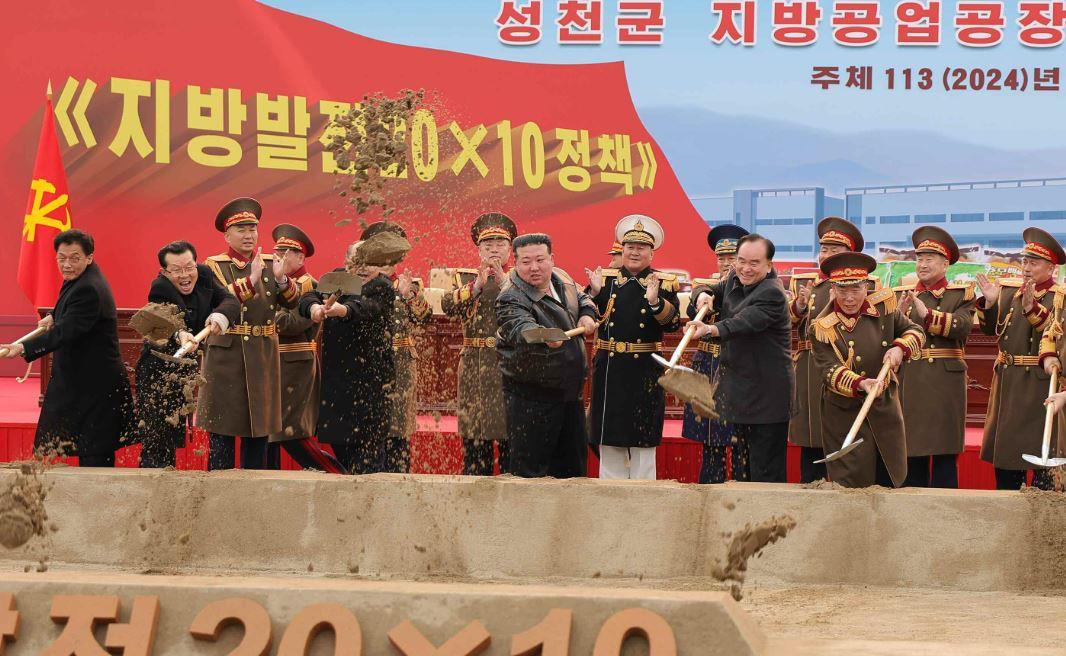
Kim Jong-un's Leadership at Risk if Local Industrial Policy FailsHan Ki-beomthe deputy director of the NIS(Visiting Researcher at The Asan Institute for Policy Studies)In his January 15 speech to the Supreme People's Assembly, Kim Jong-un called the severe shortage of essential supplies for local residents a "serious political issue." He proposed the "20×10 regional development policy," aiming to build light industry factories in 20 cities and counties each year for the next 10 years to produce basic food, clothing, and daily necessities. In North Korea, "local industrial factories" are small- and medium-sized enterprises producing essential goods like soy sauce, soybean paste, socks, and soap. Since the regime's early days, North Korea focused on heavy industry, relying on local factories for essential consumer goods. By the early 1980s, there were about 3,300 local factories.Many of these ceased operations during the mid-1990s economic crisis, and about 1,800 factories were closed during early 2000s restructuring. Today, around 2,900 rebuilt and modernized factories maintain the local economy, but these industries remain vulnerable due to unstable raw material procurement, power supply, and management efficiency, all relying on local self-management without central support.Ongoing efforts since Kim Jong-un took power haven't significantly advanced local development. However, North Korean media have been promoting local industry development more frequently this year. This follows Kim Jong-un's promise to expand light industry factories after addressing the severe shortage of essential supplies at the Supreme People's Assembly meeting in January. He highlighted the unmet "simple living requirements of our people" and the severe "gap between the capital and local areas," announcing the "20×10 regional development policy."To solidify this initiative, North Korea convened the Politburo of the Workers' Party on January 23-24 at Myohyang Mountain. Kim Jong-un emphasized that "the reality of not being able to provide even basic daily necessities to local residents is a serious political issue," calling the "20×10 regional development policy" a transformative policy for actual implementation, not mere propaganda. His remarks hinted at critical local sentiment, reminiscent of Kim Il-sung’s "National Meeting of Machine-Industry Workers" in July 1994, held just before his death to address an economic crisis.Kim Jong-un breaks ground at the ceremony for a local industrial factoryin Songchon County, South Pyongan Province, on February 28. / Rodong SinmunThe "local industrial development" policy involves the central government providing necessary funds, materials, and equipment, the military mobilizing construction personnel, and local areas managing operations. At the Songchon County factory groundbreaking ceremony on February 28, Kim Jong-un declared, "The state will fully guarantee the funds, efforts, cement, and steel needed for factory construction." The military, tasked with construction, formed the "Emergency Defense Ministry Command for 20×10 Regional Development" under the Ministry of Defense, creating regional organizations such as the 124th Regiment, mobilizing an estimated 40,000 military construction workers.Kim Jong-un is pushing the local industrial development policy and rushing factory construction with full party, government, and military support mainly due to the unusual discontent among local residents who feel relatively deprived compared to those in Pyongyang. According to defectors, since Kim Jong-un took power, the gap between Pyongyang and the provinces has worsened due to elite corruption and wealth accumulation. Public services like food distribution, medical care, heating, and water supply have also declined. Since 2017, economic sanctions, border closures, and COVID-19 have further shrunk the economy, worsening living conditions for local residents.When COVID-19 controls were lifted in fall 2022, local residents, nearly starving, began to express their dissatisfaction. Food distribution outside Pyongyang worsened, causing even Kaesong residents to starve. This deprivation is hinted at by Kim Jong-un’s remarks during the February 28 groundbreaking ceremony for the "Emergency Defense Ministry Command for 20×10 Regional Development," where he said, "I feel ashamed and sorry for starting only now," and the residents' reactions, "We are so grateful to him for doing it.“ (Rodong Sinmun, February 11).Kim Jong-un's rush in local industrial development seems to show goodwill ahead of the 80th Party Foundation Day in October 2025 and the 9th Congress of the Workers' Party in January 2026. With next year marking the "8th Congress business review," North Korean authorities need achievements to improve people's lives. The "20×10 regional development policy," spanning 10 years, also appears to be a strategy to buy time.Promoting local economic development aims to boost the domestic market amid ongoing sanctions. Despite increased foreign trade, 90% of exports remain restricted, limiting foreign currency earnings. Investing in local industries to supply essential goods and generate revenue is seen as a way to meet domestic demand. In conclusion, the "20×10 regional development policy" is expected to achieve limited, temporary success given Kim Jong-un's determination and propaganda trends. Newly established factories will provide certain benefits to local residents for 2-3 years. However, without confirmed priority adjustments for urgent economic projects, securing continuous investment funds remains challenging. The policy, aimed at buying 10 years of time to mitigate public dissatisfaction, is unlikely to fundamentally resolve local residents' living difficulties.Kim Jong-un's sudden directive, without considering business conditions and prospects, may negatively impact other economic policies. He previously criticized the "five-year economic development strategy (2016-2020)" for failing due to "unrealistic subjective desires" of officials. If the "20×10 regional development policy" fails for similar reasons, his leadership could suffer, and local resentment could grow. Kim Jong-un's economic projects, such as the Masikryong Ski Resort, Wonsan-Kalma Coastal Tourist Area, over 20 economic special zones, and the Pyongyang General Hospital, were poorly executed but largely escaped blame. However, this new policy directly affects the daily lives of local residents, and its failure could have significant internal repercussions.Recently, Kim Jong-un has introduced several major policy initiatives. Following the internal "erasing of the nation" after defining inter-Korean relations as hostile, he has reinforced his solitary stance by "erasing the predecessors" since the Sun's Day in April. Emphasizing the "benevolent father" image by promoting local industrial development amid a severe "shortage economy" suggests spreading negative perceptions of Kim Jong-un's leadership due to the prolonged nuclear missile advancement policy.If the nationwide effort to promote local development fails amid the confusion, public sentiment in North Korea will worsen, damaging Kim Jong-un's leadership. Although unlikely, success with the "20×10 regional development policy" could reduce his belligerence and lead to positive changes by expanding economic interests.
24.07.05 -
 [News & Issues]
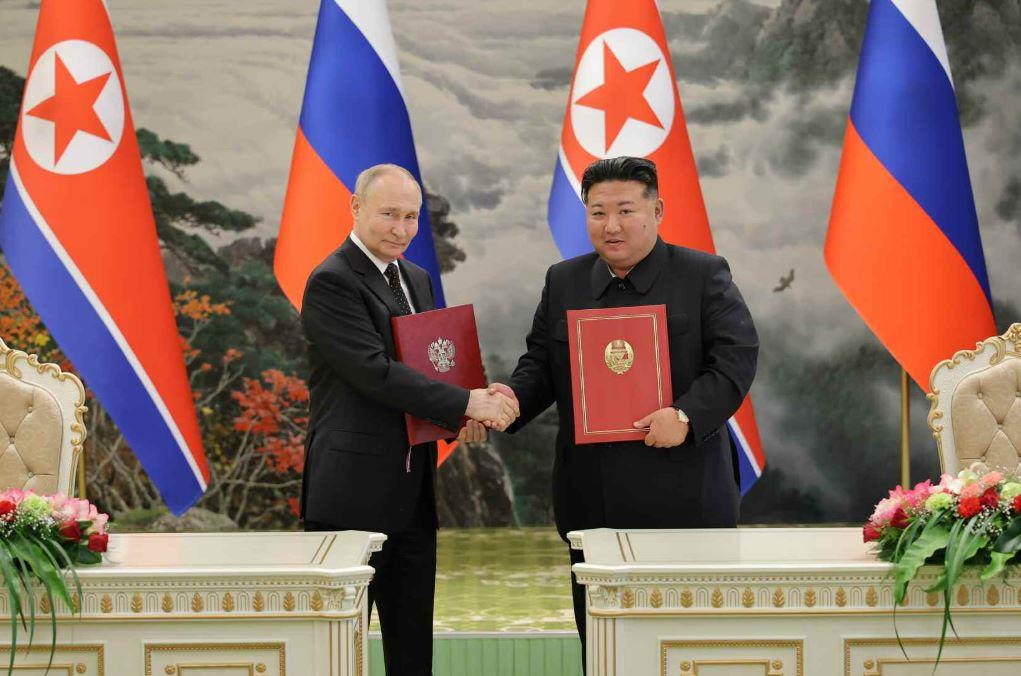
Russia's Determination: Why We Should Be WorriedLee Ju-yeonResearch Fellow at the Asia-Pacific Research Center, Hanyang UniversityRussia's Alliance Strategy in Different Domestic and International Situations On June 19, 2024, President Vladimir Putin visited North Korea for a summit with leader Kim Jong-un, his second visit since July 2000. Comparing the two visits, the differences and implications are clear, especially that this visit is driven more by international factors than domestic ones. In 2000, when Putin was first elected, his approval rating was a steady 70%, but he hadn't yet fully controlled domestic politics. By contrast, in 2024, he was re-elected with 87% of the vote, securing overwhelming support for his fifth term and complete control over domestic politics through his inner circle, including the Siloviki. Unlike the stable domestic situation, Russia's international circumstances have changed dramatically. In the 1990s, Russia experienced significant political and economic turmoil, reducing its global influence. However, in the 2000s, rising international oil prices and a shift to state capitalism through the renationalization of key industries enhanced Russia's global presence, leading to a more aggressive foreign policy. On February 24, 2022, Russia invaded Ukraine in what it called a "special military operation," and the Russia-Ukraine war continues. Therefore, Putin's recent visit to North Korea appears driven more by international factors like the Ukraine war rather than domestic stability.Russian President Vladimir Putin (left) and Kim Jong-un hold a press conference after their meetingin Pyongyang, North Korea, on the 19th. /RodongshinmunPutin's visit to North Korea can be linked to several factors related to the Ukraine war. First, the war is stabilizing. After Russia repelled Ukraine's counteroffensive in 2023, the front lines reached a stalemate, giving Russia a more aggressive stance. Second, the Ukraine war has divided the international community, reminiscent of Cold War-era bloc conflicts. For example, the South Korea-U.S.-Japan summit took place at Camp David on August 18, 2023, and Kim Jong-un visited Vladivostok for a North Korea-Russia summit on September 13, 2023. Third, the visit serves as a warning to unfriendly countries and signals a red line to South Korea. In summary, as the Ukraine war stabilizes, Russia is bolstering its ties with traditional allies like North Korea, leading to this summit.Strengthening Russia-North Korea Military Relations and the Korean Peninsula CrisisThe summit led to Russia and North Korea announcing a "comprehensive strategic partnership," highlighting much closer ties between the two nations. Articles 3 and 4 of the treaty, made public by North Korea, could be problematic for South Korea as they permit mutual military intervention during emergencies. Despite ongoing debates, it appears that a security relationship akin to a military alliance has been established. For Russia, gaining a reliable ally in Northeast Asia marks this visit to North Korea as highly successful. The issue is that these close military ties between Russia and North Korea pose a serious security threat to South Korea. While some might view Putin's subsequent visit to Vietnam as part of Russia's broader strategy for a multipolar international community, from an optimistic standpoint, the strengthening of traditional alliances could be seen as both a cause and a result of Putin's visit to North Korea. Russia's stance on the Korean Peninsula has traditionally been more favorable to South Korea, valuing economic benefits over the geopolitical stability and military cooperation offered by North Korea. While Russia hasn't actively pushed for Korean unification, it has shown interest in denuclearization and peace on the peninsula. However, the recent Russia-North Korea summit indicates a shift in Russia's focus from economic benefits to security interests.So, the current situation shouldn't be viewed with simple optimism because Russia and North Korea share similar tendencies. While their influence in the international community and their economic and military scales may differ, they both have significant conflicts with the U.S. and the West. If their domestic stability is threatened, they are likely to use force actively. This means that beyond just forming alliances, practical military actions are possible. There is also the possibility that Russia might transfer nuclear missile technology to North Korea or tolerate North Korea's possession of nuclear weapons, even without direct military moves like in the Ukraine war. The chances of Russia and North Korea triggering worst-case scenarios, like starting a war on the Korean Peninsula or transferring nuclear technology, are still low. However, we can't ignore Russia's decisiveness, as shown in the Ukraine war. We need to be cautious not only about Russia's energy resources, nuclear weapons, military power, and close ties with North Korea but also about their underlying resolve.Closer military ties between Russia and North Korea undoubtedly threaten South Korea's security, necessitating an active response. South Korea should address security crises through its alliance with the U.S. and strengthen cooperation with friendly countries. However, we must not overlook Russia's decisiveness. Rather than severing diplomatic relations, South Korea should maintain these ties and work to resolve the crisis on the Korean Peninsula through diplomatic means.
24.07.05 -
 [Column]
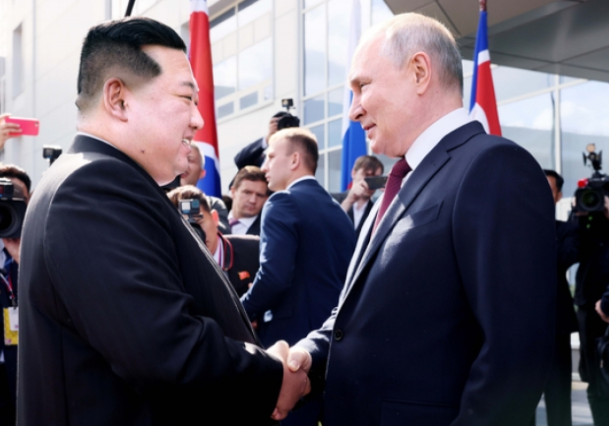
North Korea's Complicity in Russian War Should BeActively Considered for Referral to the ICCKim Tae-hoon, LawyerChairman of North Korean Human Rights,Honorary President of Lawyers for Human Rights and Unification of KoreaAs Russian President Vladimir Putin’s visit to North Korea seems imminent, a senior official from the presidential office recently stated that “President Putin’s visit to North Korea is just days away,” making it almost certain. Structures for welcoming Putin have been spotted in satellite images at Kim Il Sung Square in Pyongyang.AP=Yonhap NewsIf this visit occurs, it will be the first in 24 years since July 2000 and a return visit nine months after North Korean leader Kim Jong-un’s visit to Russia’s Far East in September last year. Putin's visit will highlight the strengthened ties between North Korea and Russia amid the new Cold War atmosphere. In his congratulatory message for Russia’s National Day on the 12th, Kim Jong-un stated, “The century-old strategic relationship will evolve to a higher level of national relations.” This aims to elevate cooperation based on the agreements from the North Korea-Russia summit last September.Since the invasion of Ukraine began on February 24, 2022, Russia, struggling with a shell shortage, has intensified its offensive with North Korea’s extensive ammunition support, causing significant difficulties for Ukraine. After the Kim-Putin talks in September last year, thousands of containers were traded between North Korea and Russia in a “dangerous deal.” North Korea supplied Russia with conventional weapons like shells and rockets in exchange for food, refined oil, weapon parts, and technology. Additionally, Russia has neutralized the UN’s monitoring of sanctions against North Korea.As a result, the damage to Ukrainian civilians and civilian facilities has been severe. According to the Office of the United Nations High Commissioner for Human Rights (OHCHR), in May alone, Russian forces expanded missile and bomb attacks on densely populated areas in Kharkiv in northeastern Ukraine, resulting in 174 civilian casualties, the highest since June 2023. According to the Royal United Services Institute (RUSI), which has tracked North Korea’s arms shipments to Russia, around 7,000 North Korean containers had been imported to Russia by January, carrying millions of rounds of ammunition and rockets capable of large-scale bombardment. Ukraine, providing evidence that North Korean weapons were used, released photos of missile fragments, criticizing Russia for attacking seven regions of Ukraine with North Korean missiles 12 times between late December and early February. They claimed that Russia launched 50 North Korean missiles into Ukrainian territory, killing at least 24 people and injuring over 70.Despite this, North Korea’s weapon supply to Russia continues. In April, the Russian cargo ship Lady R, sanctioned by the U.S. for transporting weapons used in the Ukraine war, reportedly docked at Vostochny Port in Russia’s Far East and Rajin Port in North Korea, according to satellite images analyzed by The Yomiuri Shimbun on the 9th. The Yomiuri Shimbun suggests this was part of an illegal arms trade between North Korea and Russia, with North Korea supplying weapons and ammunition for Ukraine attacks in exchange for refined petroleum products from Russia.The international community is concerned about the possibility of expanded and intensified arms transactions between Russia and North Korea during Putin’s visit. There is a possibility of North Korea increasing its supply of conventional weapons, such as shells, ammunition, and ballistic missiles, to Russia in exchange for nuclear submarine, ICBM technology, reconnaissance satellites, and fighter jets, or even agreeing on joint weapon system development and military cooperation. On the 9th, U.S. President Joe Biden and French President Emmanuel Macron, during Biden's first state visit to France since taking office, condemned Russia’s invasion of Ukraine and strongly criticized North Korea’s provision of ballistic missiles and ammunition to Russia.The Ukraine war marks a significant crisis, with a Permanent Member of the UN Security Council invading another sovereign nation, violating Article 2, Paragraph 4 of the UN Charter. It raises serious questions about the existence and usefulness of the UN system and the Security Council. Russia continues to receive weapons and supplies from North Korea in direct violation of UN sanctions. On March 28, due to Russia's veto, the expert panel under the UN Sanctions Committee on North Korea, which had been extending its activities annually since 2009 to monitor violations, ceased its activities on April 30.This blatant act of condoning and encouraging North Korea’s illegal actions is due to Russia’s need for weapons for the Ukraine war. If North Korea receives information and technology to enhance its Weapons of Mass Destruction (WMD) capabilities in exchange for supplying conventional weapons to Russia, the North Korea-Russia military transactions pose a significant military threat not only to Ukraine but also to South Korea's security and peace, as well as global peace and stability.The international community has long tried to hold North Korea accountable for its human rights violations by referring the North Korean situation to the International Criminal Court (ICC). On the 12th, during the UN Security Council meeting on North Korean human rights, OHCHR’s High Commissioner Volker Turk emphasized the need for accountability for long-standing severe and widespread human rights violations, supporting the UN Commission of Inquiry (COI) recommendation from ten years ago to refer the North Korean situation to the ICC. However, such a referral has been blocked by China and Russia, both Permanent Members of the Security Council. Nevertheless, Russia’s war crimes in Ukraine and North Korea’s complicity in these crimes fall under the jurisdiction of the ICC without needing a UNSC referral.Russia’s invasion of Ukraine, marked by intentional and indiscriminate attacks on civilians and infrastructure, is a serious breach of the Geneva Conventions of August 12, 1949. These actions likely constitute war crimes under Article 8, Paragraph 2 (a) of the Rome Statute of the ICC, including willful killing (Clause 1), inflicting great suffering or serious injury (Clause 3), and extensive destruction and appropriation of property not justified by military necessity (Clause 4). North Korea’s provision of shells and missiles to Russia supports these war crimes, potentially violating Article 25, Paragraph 3 (c) of the ICC Statute by aiding the commission or attempted commission of war crimes.For the ICC to address war crimes or aiding and abetting such crimes, it must have jurisdiction. This can be established in three ways: first, a State Party to the Rome Statute may refer a situation where crimes under the Court's jurisdiction appear to have been committed (Article 13 (a)); second, the UNSC can refer a situation under Chapter VII of the UN Charter (Article 13 (b)); third, the ICC Prosecutor can initiate an investigation proprio motu (Article 13 (c)). Except for UNSC referrals, the following conditions must be met under Article 12, Paragraph 2 of the Rome Statute: the State where the crime occurred is a Party to the Statute or has accepted the Court’s jurisdiction, or the accused is a national of a State Party or one that has accepted the Court’s jurisdiction.On March 5, the ICC issued arrest warrants for Russian Air Force Lieutenant General Sergey Kobylash and Navy Admiral Viktor Sokolov, based on reasonable grounds to believe they committed war crimes by attacking civilian infrastructure in Ukraine with missiles from October 10, 2022, to March 9, 2023. Earlier, on March 17, 2023, the ICC issued arrest warrants for President Vladimir Putin and another individual for war crimes, including forcibly deporting children. The ICC could issue these warrants because, although neither Russia nor Ukraine is a State Party to the Rome Statute (Russia withdrew in 2016), Ukraine accepted the ICC’s jurisdiction over crimes committed on its territory since February 2014. Therefore, the ICC also has jurisdiction over North Korea as a co-perpetrator of Russia’s war crimes on Ukrainian territory. On the 24th of last month, the South Korean and Japanese governments independently announced sanctions against individuals and entities involved in North Korea-Russia arms transactions.The South Korean Ministry of Foreign Affairs stated "Our government's actions were taken in close collaboration with our allies and are anticipated to strengthen the international sanctions network." In a similar move, Japan's Ministry of Foreign Affairs imposed sanctions on nine Russian companies, one individual, and two companies operating outside Russia and Belarus. Looking ahead, South Korea and Japan should enhance their cooperation beyond sanctions, aiming to judicially condemn North Korea’s arms supply to Russia and to halt North Korea-Russia military cooperation based on international criminal law.Both South Korea and Japan are ICC State Parties and active members of the UN Security Council. The trilateral cooperation between South Korea, the U.S., and Japan, solidified during the Camp David summit in August, aims to improve North Korean human rights and foster global peace. To combat human rights violations from North Korea’s military support to Russia, South Korea should monitor civilian casualties in Ukraine, publicize North Korea’s arms activities, mobilize international pressure, and seriously consider referring North Korea and Russia’s war crimes complicity to the ICC.
24.06.21 -
 [NK Focus]
Why North Korea is Removing Traces of Kim Jong-un’s BiologicalMother on Her 20th Death AnniversaryThis year marks the 20th anniversary of Kim Jong-un's biological mother, Ko Yong-hui's death (May 24). North Korea has recently started recalling and deleting videos related to her, sparking interest as it seems aimed at removing traces of Kim Jong-un's Korean-Japanese heritage. The goal appears to be minimizing any negative impact on the 'Mount Paektu bloodline' legitimacy while focusing on idolizing Kim Jong-un and preparing for the fourth generation succession. According to a report by Radio Free Asia on the 31st of last month, North Korean authorities have begun recalling and deleting the video 'Mother of Great Songun Korea,' which is related to Kim Jong-un’s biological mother. This propaganda video, created in the first half of 2012 during Kim Jong-un’s first year in power, was designed to idolize Ko Yong-hui and distributed to officials by North Korean propaganda authorities.A scene from the video 'Mother of Great Songun Korea,' featuring Kim Jong-il and Ko Yong-hui,distributed to officials in early 2012. / Video capture.However, the distribution of the video was halted around 2015-2016 due to concerns that revealing Ko Yong-hui's Korean-Japanese origins and her status as not being Kim Jong-il's official wife was counterproductive to the idolization efforts.Despite stopping the distribution, it is reported that North Korea quietly continued to foster an atmosphere of praise for Ko Yong-hui internally.In the video 'Mother of Great Songun Korea,' Ko Yong-hui is shown guiding a young Kim Jong-unin his drawing. / Video capture.The learning materials for North Korean military political officers, released by Monthly Chosun in December 2019, include a statement from 'Pyongyang’s Mother' (Ko Yong-hui) saying, "People should have a conscience. If you are trusted, it is your moral duty to honor that trust." The materials urge officers to reflect on their loyalty to their Supreme Leader, noting that disloyal actions arise from failing to internalize this principle.In November 2020, on 'Mother’s Day,' a song titled 'Thank You, Thank You,' which idolizes Ko Yong-hui, became popular among North Korean women, according to Daily NK. Created by the North Korean People's Army Art Troupe, the song was performed at events like the 'Art Festival of the Korean People's Army' in the early 2010s when Kim Jong-il was alive. This sparked speculation that North Korean authorities were cautiously starting an idolization campaign for Ko Yong-hui while keeping her background discreet.North Korea reportedly screened a video idolizing Ko Yong-hui at the National Mothers Meeting last November. Sources say Kim Jong-un attended the 5th National Meeting of Mothers, where the video was shown to officials. In his opening speech, Kim Jong-un said, “Whenever I find it difficult to manage party and state affairs, I always think of mothers. Their courage and dedication have instilled in me a sense of duty, immense responsibility, and strength.” Kim Jong-un reportedly shed tears, highlighting his mother’s love. This has led to speculation that the release of Ko Yong-hui’s idolization video indicates Kim Jong-un’s official biography might soon be released.Kim Jong-un wipes his tears with a handkerchief while listening to a speech at the National Mothers Meetingheld in Pyongyang in November 2023. / Korean Central TelevisionNorth Korea kept Kim Jong-un’s biological mother largely under wraps due to her background. Born in 1952 in Osaka, Japan, Ko Yong-hui moved to North Korea at age 10 with her parents. She became a dancer for the Mansudae Art Troupe and caught Kim Jong-il's eye. She then lived with him for 28 years, giving birth to Kim Jong-chol, Kim Jong-un, and Kim Yo-jong. However, since she was not an official wife, she was not recognized by the public or even by Kim Il-sung, and lived a secluded life until her death from breast cancer in 2004. Ko Yong-suk, who cared for young Kim Jong-un and Yo-jong in Switzerland, defected to the U.S. with her husband. This added to Ko Yong-hui’s background, highlighting her Korean-Japanese heritage and defector ties.Perhaps because he was aware of his biological mother’s Korean-Japanese origins, North Korea has shown special interest in the General Association of Korean Residents in Japan. On the 25th of last month, Rodong Sinmun featured an article on the association's 69th anniversary, quoting Kim Jong-il saying, “I am always with you, and we must share our fate as one family.” Kim Jong-un also referred to them as “our people living abroad,” giving it special significance. In May 2012, his first year in power, Kim Jong-un designated November 16th as Mother’s Day and made it a public holiday.The recent recall and deletion of videos about Ko Yong-hui, just six months after North Korea unsealed them, suggest that preparations for Kim Jong-un’s official biography are still incomplete.A source suggested that North Korea sees idolizing Kim Jong-un's mother as unfeasible due to suspicions. Revealing her Korean-Japanese biography could undermine the legitimacy of the Mount Paektu bloodline as Kim Jong-un builds his own personality cult.
24.06.21 -
 [Kim Myongsung’s Inside North Korea] [SAND Exclusive]
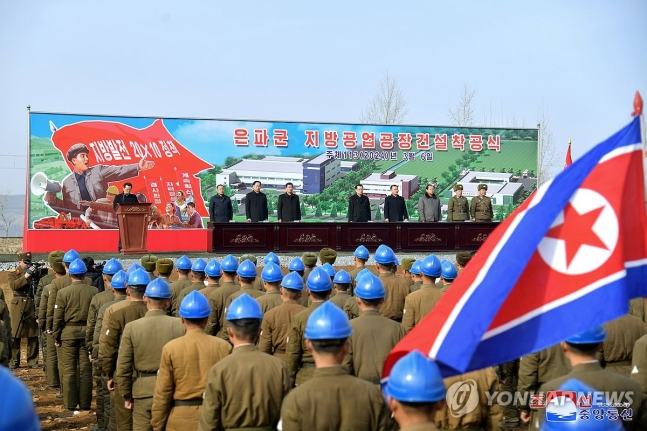
Kim Myongsung’s Inside North Korea· [SAND Exclusive] Local Construction Projects Burden Residents: Forced Labor and $30 Bribes to Avoid Mobilization· Dozens of North Korean Soldiers Cross MDL, Multiple Casualties in DMZ Mine LayingKim MyungsungSAND's senior researcher[SAND Exclusive] Local Construction Projects Burden Residents: Forced Labor and $30 Bribes to Avoid MobilizationAs North Korea intensifies efforts on Kim Jong-un's '20×10 regional development policy,' excessive mobilization of local residents for construction is causing significant hardship. To avoid forced labor, residents are paying bribes amounting to 60% of a worker’s monthly salary, or $30 per day, turning a supposed benefit into a burden.On March 7th, KCNA reported the start of local industrial factory construction in South and North Pyongan,North Hwanghae, North Hamgyong, and Nampho City./Yonhap News AgencyA source in Hoiryong, North Hamgyong Province, reported on the 15th that while People's Army units are mobilized for local factory construction, many local residents, including university and technical school students, are also conscripted.According to the source, while military personnel stay on-site, locally mobilized residents commute daily with packed lunches, working from 7 AM to 7 PM and returning home utterly exhausted. Recently, rising food prices at North Korean local markets (Jangmadang) have made it difficult for mobilized individuals to prepare daily lunches. As of May, rice cost about $6 per kilogram, and pork was $30 per kilogram. In response, authorities reportedly increased workers' monthly salaries from $2 to over $50, a 25-fold increase, since April. However, high inflation has negated the impact of this salary increase.Preparing a single lunch costs over $30, leading to growing complaints from residents mobilized for construction.The source stated, “Workers mobilized from enterprises, universities, and technical schools must prepare lunches 10 to 15 times a month. To avoid mobilization, they have to pay bribes of $30 per day to the responsible officials. To skip 15 days of mobilization, they must pay $500 won.” In one university in Hoiryong, over 70% of those mobilized pay bribes to avoid the arduous construction labor.The 20×10 regional development policy aims to build modern factories in 20 counties annually, improving living standards within 10 years. However, excessive mobilization of local residents has led to complaints that the policy is increasing their burdens. A source said, “Although it aimed to reduce the gap between Pyongyang and the provinces to prevent discontent, both the mobilized military and local residents are expressing fatigue.”Although Kim Jong-un attended the groundbreaking ceremony for the first factory under the 20×10 regional development policy in February and stated, “We will ensure the project does not burden local people,” critics argue this is merely lip service. They criticize the policy for mobilizing residents who struggle to support their families and secure three meals a day, claiming it ignores the reality of their livelihoods.sDozens of North Korean Soldiers Cross MDL, Multiple Casualties in DMZ Mine LayingSouth Korean military authorities announced that dozens of North Korean soldiers crossed the MDL on the morning of the 18th, following a similar incursion on the 9th, and returned north after receiving warning shots. Since April, North Korea has built four anti-tank obstacles up to several hundred meters long north of the MDL in the DMZ, suffering multiple casualties from explosions during the mine-laying process.The Republic of Korea Joint Chiefs of Staff stated, “At around 8:30 AM, several North Korean soldiers working in the central DMZ briefly crossed it and returned north after receiving our military's warning broadcasts and shots.” On the 9th, dozens of North Korean soldiers in the central DMZ crossed the MDL but retreated after our military's warning shots.The Republic of Korea Joint Chiefs of Staff released photos on the 18th showing North Koreansoldiers building anti-tank obstacles in the DMZ / Republic of Korea Joint Chiefs of StaffThey also stated, "Since April, North Korea has deployed troops to build four anti-tank obstacles in the eastern, western, and central fronts, also developing barren lands at about ten locations to strengthen their defenses." An official added, "North Korea is laying mines and reinforcing tactical roads. After nullifying the 9.19 Inter-Korean Military Agreement last November, they restored guard posts by January and are now laying mines around inter-Korean roads."North Korean soldiers have recently been reported removing streetlights and railway tracks along the Donghae Line, following Kim's January directive to sever inter-Korean ties.The Republic of Korea Joint Chiefs of Staff reported that North Korea continues mine-laying operations despite accidents injuring multiple soldiers. A military official said, "Considering conditions, North Korea will likely expand its work areas, increasing anti-tank obstacles and mine-laying regions in the DMZ.”The Joint Chiefs of Staff explained, "These activities seem aimed at strengthening internal control by preventing defections and crossings. While North Korea may attempt to nationalize the MDL, it's difficult to make a definitive judgment at this time."
24.06.21 -
 [Kim Myongsung’s Inside North Korea]
Kim Myongsung’s Inside North Korea· Increased Provocations after Satellite Failure: Kim Jong-un Directs Artillery Drills Targeting South Korea Three Days Later· North Korea Released Over 1,000 Garbage-Filled Balloons and Continued GPS Jamming, Causing 1,400 Cases of Interference· North Korea Lays Mines along 284km of the Armistice Line... First Comprehensive Mine Deployment since the 1953 Armistice AgreementKim MyungsungSAND's senior researcherIncreased Provocations after Satellite Failure: Kim Jong-un Directs Artillery Drills Targeting South Korea Three Days LaterOn the night of the 27th last month, North Korea launched the reconnaissance satellite 'Malligyong-1-1', but the rocket's first stage exploded two minutes after launch. Since then, North Korea has escalated provocations against the South, including garbage-throwing, GPS jamming, and launching over 10 Super-large Multiple Launch Rocket Systems, believed by analysts to divert attention from the satellite launch failure.The Korean Central News Agency (KCNA) reported on May 28th that North Korea's National Aerospace Technology Administration launched the reconnaissance satellite 'Malligyong-1-1' with a new carrier rocket from the West Sea Satellite Launch Site on the 27th. However, the rocket's first stage exploded mid-flight, leading to a failed launch.The recent launch was the first in about six months since November 21 of last year. North Korea had attempted to launch reconnaissance satellites on May 31 and August 24 of the same year but failed to place them into orbit. According to our military analysis, even the first reconnaissance satellite, which North Korea claims was successful, was not functioning properly in its reconnaissance role.The satellite launch coincided with the Korea-China-Japan summit in South Korea, where a joint declaration on 'denuclearization of the Korean Peninsula' was announced. Analysts believe North Korea, favoring a North Korea-China-Russia bloc against South Korea-US-Japan, launched the satellite as retaliation against the closer South Korea-China relationship but failed due to technical issues.On the 28th of last month, a day after the satellite launch failure, Kim Jong-un visited the State Academy of Defense Sciences and declared that North Korea would take 'absolute and overwhelming decisive actions' against the South.A scene of North Korea simultaneously launching 18 Super-large MLRS with a range of 400km from the Pyongyang Sunan area on the morning of May 30th / Korean Central News Agency Yonhap NewsOn the 30th, North Korea announced that under Kim Jong-un's guidance, they conducted a power demonstration using Super-large Multiple Launch Rocket Systems targeting the South. The launcher, codenamed KN-25 by South Korean and US intelligence, is an SRBM with a range of 400km, capable of carrying tactical nuclear warheads.On the 31st of last month, the KCNA reported that “when the enemies attempt to use military force against the Republic, the demonstration firing of the super-large rocket launcher units was conducted to clearly show our will to preemptively exercise our right to self-defense, including preemptive strikes if necessary.” The agency reported that Kim personally ordered the organization of the demonstration firing.The Republic of Korea Joint Chiefs of Staff announced that they detected more than 10 short-range ballistic missiles (SRBMs) presumed to be launched from the Pyongyang Sunan area towards the East Sea around 6:14 a.m. the previous day. North Korea clarified that the multiple rocket launcher firing was a 'demonstration firing' to show their response to the South, emphasizing its nature as a show of force.KCNA reported that Kim Jong-un declared, "Today's power demonstration firing will unmistakably show our adversaries the severe consequences they will face if they dare provoke us," adding, "Our nuclear forces must be thoroughly prepared to swiftly and accurately execute their critical mission of war deterrence and achieving war dominance under any unforeseen circumstances."The firing was executed using the 'Integrated Fire Command System,' part of the national nuclear weapons management system. After the Central Military Commission of WPK sent the 'secret code command,' Kim Jong-un issued the order from the observation post. Artillerymen claimed they "successfully hit the island target 365km away and excellently performed the power demonstration mission." Photos released by North Korea showed 18 Transporter Erector Launchers (TELs) lined up, each launching a super-large rocket simultaneously.North Korea Released Over 1,000 Garbage-Filled Balloons and Continued GPS Jamming, Causing 1,400 Cases of InterferenceSince last month, North Korea has launched over 1,000 garbage-filled balloons into South Korean territory on two occasions and continued GPS signal jamming attacks. Analysts interpret these actions as efforts to destabilize South Korean society and incite anxiety while avoiding direct military retaliation through low-intensity provocations.The Republic of Korea Joint Chiefs of Staff reported that about 260 garbage-filled balloons from North Korea were detected in various regions on the 28th and 29th of last month. Around 720 more were found on the 1st and 2nd of this month. Including unconfirmed sightings, it's estimated that over 1,000 balloons were launched, a third of North Korea's total.On June 2nd, KCNA reported that Kim Kang-il, North Korea's vice minister of defense, announced a temporary halt to the garbage balloon releases. He stated, "From the night of May 28th to early June 2nd, we released 15 tons of waste paper using over 3,500 devices near the South Korean border and in the metropolitan area."On June 2nd, a suspected North Korean balloon damaged a car's windshield in a villa parking lotin Danwon-gu, Ansan, Gyeonggi Province. / Gyeonggi Nambu Provincial PoliceThe indiscriminate release of garbage balloons from North Korea has caused various damages. Balloons found in and around Incheon International Airport disrupted aircraft takeoffs and landings for about 91 minutes.According to police reports, at 10:22 a.m. on June 2nd, a 5kg plastic bag with a garbage balloon attached fell on a Grandeur car in a villa parking lot in Gojan-dong, Danwon-gu, Ansan, shattering the windshield. Earlier, at 5:40 a.m., a balloon fell on a parked Sorento in Sinjeong-2dong, Yangcheon-gu, Seoul, breaking the passenger seat window. By June 2nd, police received 860 reports related to the garbage balloons.A garbage-filled balloon from North Korea found in a rice fieldin Wicheon-myeon, Geochang County, on May 29th. / KyungnamShinmunMeanwhile, North Korea's GPS signal jamming attack, which began on May 29th, caused significant issues for South Korean naval vessels, which experienced GPS signal reception problems 101 times. According to the government's 'Daily Management Situation for National Safety,' a total of 1,409 reports of GPS signal reception issues, including those from naval vessels, were received between May 29th and June 2nd. These GPS jamming attacks by North Korea also significantly impacted fishermen.In response, the South Korean government held an emergency National Security Council (NSC) meeting on June 2nd and announced, "We have decided to implement measures that North Korea will find difficult to endure." These measures reportedly include resuming psychological warfare tactics, such as loudspeaker broadcasts aimed at North Korea.Analysts suggest that North Korea's swift decision to temporarily suspend the release of garbage balloons was influenced by the South Korean government's move to resume loudspeaker broadcasts targeting North Korea.In January 2016, right after North Korea's fourth nuclear test, soldiers from a front-line unit in Gyeonggi Province broadcasted messages aimedat North Korea (right). The left photo shows the loudspeakers used./Kukmin IlboNorth Korea Lays Mines along 284km of the Armistice Line... First Comprehensive Mine Deployment since the 1953 Armistice AgreementNorth Korea is currently laying mines along the northern areas of the 248km-long Military Demarcation Line (MDL) from east to west. This marks the first comprehensive mine deployment in the Armistice Line area since the signing of the Armistice Agreement in 1953. Analysts believe this move aims to create a permanent physical division of the Korean Peninsula.South Korean soldiers detecting mines in the Demilitarized Zone (DMZ) in 2018./ Ministry of National DefenseAccording to a South Korean government source in mid-May, North Korea has been deploying hundreds to thousands of troops daily since April to lay mines along the Armistice Line. The mined areas extend from the eastern coastal axis near Goseong, Gangwon Province, to the northern sections of the central front near Cheorwon and Yeoncheon in Gyeonggi Province. Recently, operations have expanded to the southern areas of Kaesong on the western front, covering the entire front line established during the Korean War.Previously, in early December, North Korea began laying mines in the DMZ, including the Gyeongui Line land route. In a January speech to the Supreme People's Assembly, Kim Jong-un stated that "step-by-step measures must be taken to thoroughly separate north-south connections in the border areas." The current comprehensive mine-laying efforts are seen as part of a larger strategy to turn the inter-Korean demarcation line into a de facto national border following Kim's directive.In December last year, North Korea laid mines on the Gyeongui Line (western) and Donghae Line (eastern) routes within the DMZ, the only land connections between North and South Korea, leading to the Kaesong Industrial Complex and Mount Kumgang. Mines were also laid in the northern section of the DMZ's Arrowhead Hill tactical road, opened for joint remains excavation as part of the 9.19 Inter-Korea Military Agreement. By targeting roads symbolizing inter-Korean exchange and reconciliation, North Korea emphasized its intent to sever relations. Now, the regime is extending these efforts by deploying large-scale troops to densely mine previously unmined sections.Starting this month, North Korea has significantly expanded mine-laying areas by deploying heavy equipment, such as excavators, within the DMZ. While small excavators were used in October 2018 for the Arrowhead Hill tactical road, this is the first time since the armistice that large excavators have been brought in for hostile purposes.North Korea's extensive mine-laying across the entire front, covering the western, central, and eastern areas, is seen as an attempt to revert inter-Korean relations to the hostile confrontation period immediately after the Korean War or the Armistice Agreement. In his January speech, Kim Jong-un declared that "the very concepts of unification, reconciliation, and same ethnicity must be completely eliminated" and instructed that South Korea be designated as the 'primary enemy' in North Korea's constitution.
24.06.07 -
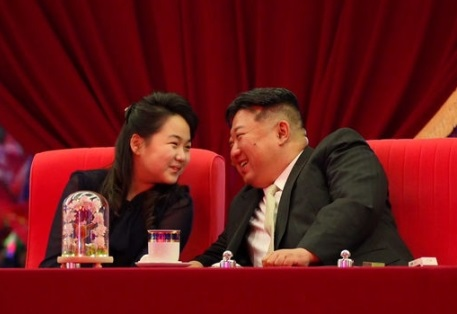 [News & Issues]
Kim Ju-ae's Appearance at Apartment Completion Ceremony PubliclyDisclosed, Presence at Missile Drill Not MentionedNorth Korean media omitted any mention of Kim Ju-ae, the daughter of leader Kim Jong-un, accompanying him on a military field inspection at the end of May. This is unusual, as they previously reported her attendance at a large apartment complex completion ceremony in Pyongyang on the 14th of last month. Analysts interpret this omission as an effort to maintain focus on provocations against South Korea by downplaying Kim Ju-ae's presence.Kim Jong-un and his daughter Kim Ju-ae are seen conversing at the Jonwi Street opening ceremony in Pyongyang on May 14/ Korean Central TelevisionOn May 31, North Korean media, Rodong Sinmun, reported that Kim Jong-un had overseen a demonstration of the 600mm Super-large Multiple Launch Rocket Systems the previous day, releasing photos showing 18 of these systems firing simultaneously and hitting an island target.However, one of the released photos showed Kim Ju-ae's reflection on a monitor screen. Despite the intention to capture only Kim Jong-un and military officials, Kim Ju-ae, standing in the background, was visible. It is unusual for North Korean media to omit Kim Ju-ae from the report despite her accompanying her father on the inspection.Previously, on May 14, North Korean media, including Rodong Sinmun, reported Kim Ju-ae's attendance at the Jonwi Street opening ceremony in Pyongyang.Kim Jong-un and his daughter Kim Ju-ae attending the Jonwi Street opening ceremony in Pyongyang / Korean Central News AgencyJonwi Street connects Sosan Intersection, near the Pyongyang Three Revolutions Exhibition, to Sambong Bridge and is part of the Sopho Area in northwestern Pyongyang.The Sopho Area project, aiming to build 4,100 households, is one of three major initiatives proposed by the Workers' Party of Korea last year. Construction began in February, conducted entirely by 100,000 'youth volunteers' including the Paektusan Hero Youth Shock Brigade and the Speed Battle Youth Brigade, rather than the military.The name 'Jonwi Street' was officially announced on December 5 last year by the Standing Committee of the Supreme People's Assembly. It is named after 'Chongnyon Jonwi,' a youth group that leads in achieving North Korea's ideological and construction goals.At the ceremony, Kim Jong-un personally cut the red ribbon and encouraged the youth involved in the construction. The broadcast highlighted Kim Ju-ae's presence, stating, "Amid welcoming music, when our great leader Kim Jong-un arrived at the opening ceremony with his beloved daughter, there were enthusiastic cheers from the crowd."On May 31, Kim Ju-ae was seen on a monitor screen as Kim Jong-un watched the Super-large Multiple Launch Rocket System firing drill/ Korean Central TelevisionJu-ae also attended the Sopho Area groundbreaking ceremony last February and the Jonwi Street opening ceremony this time, symbolizing the 'beginning and end' of the project. Throughout the event, she stayed close to Kim Jong-un, frequently whispering to him.This move aims to connect Kim Ju-ae with the youth, portraying her as a future-generation icon. Born in 2013, she drew attention with her mature appearance, suggesting she is being styled to convey future leadership. Despite this focus, North Korean media did not report her accompanying Kim Jong-un to the Super-large Multiple Launch Rocket System firing drill. Analysts believe this omission was to avoid drawing attention to her during heightened tensions with South Korea following a reconnaissance satellite failure and subsequent provocations.Some speculate that North Korea is limiting Kim Ju-ae's public exposure in response to internal and external criticism of presenting such a young child as a potential successor.
24.06.07 -
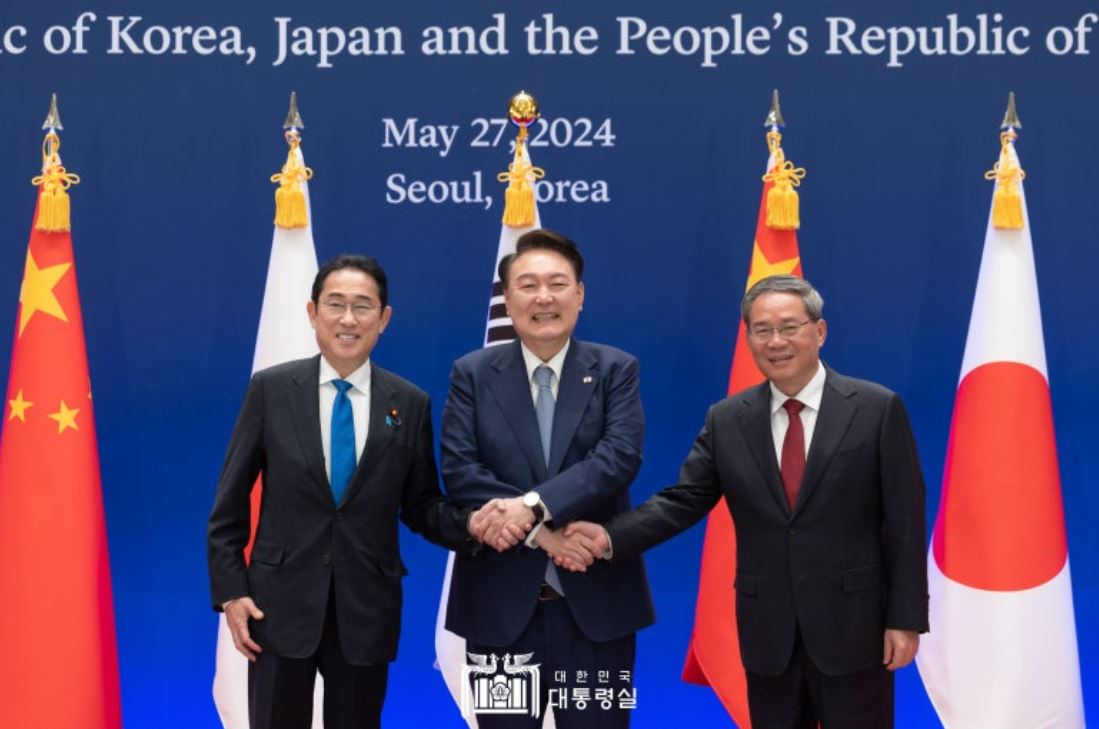 [Current Affairs Analysis]
Assessment of the 9th China-Japan-South Korea Trilateral Summit and South Korea's PositionLee Ki-taeDirector, Global Strategy Research Division at the Korea Institute for National UnificationOn May 27, 2024, the 9th China-Japan-South Korea Trilateral Summit took place in Seoul, attended by South Korean President Yoon Suk-yeol, Japanese Prime Minister Kishida Fumio, and Chinese Premier Li Qiang. The summit, delayed since 2019 due to COVID-19 and Korea-Japan conflicts, marked its return after 4 years and 5 months. A significant outcome was the commitment by the three leaders to regularize future summits.President Yoon Suk-yeol, Japanese Prime Minister Kishida Fumio, and Chinese Premier Li Qiang shaking handsat the 9th Trilateral Summit held in Seoul on May 27 / Office of the President Republic of KoreaSince Yoon administration began in 2022, there have been significant improvements in Korea-Japan relations and progress in Korea-U.S.-Japan security cooperation. The discussions on trilateral cooperation among South Korea, Japan, and China are crucial, as they helped address the criticisms that the Yoon administration was overly focused on the Korea-U.S.-Japan framework. This summit has helped to some extent in alleviating these criticisms.The 9th summit resulted in several key achievements. The leaders adopted a joint declaration focusing on six major areas: human exchanges, sustainable development through climate change response, economic and trade, health and aging, scientific and technological digital transformation, and disaster relief and safety. They set a goal to increase the number of travelers among the three countries from 30.54 million in 2018 to 40 million by 2030, emphasizing the importance of strengthening ties through exchanges between future generations. The joint declaration also included a commitment to "continue discussions to accelerate negotiations" for a Free Trade Agreement (FTA) among the three countries. This agreement is seen as a response to China's request amid its worsening economic situation, with both South Korea and Japan believing that promoting fair free trade in China would be beneficial.The summit's high-level agreement on economic cooperation in six key areas and the active communication among the leaders are praiseworthy. However, significant divisions between South Korea, Japan, and China on security issues, including economic security, were also evident. In the joint declaration issued after the summit, the three countries reaffirmed their commitment to "upholding the international order based on the rule of law and international law." They also emphasized that "maintaining peace, stability, and prosperity on the Korean Peninsula and in Northeast Asia is a common interest and shared responsibility," particularly in light of North Korea's nuclear and missile developments.However, unlike the 2018 joint declaration, which committed to the complete denuclearization of the Korean Peninsula and expressed hope for the early resolution of the abduction issue, the current declaration only reiterated the countries' respective positions on "regional peace and stability, denuclearization of the Korean Peninsula, and the abduction issue." This highlighted the differing stances of South Korea, Japan, and China on North Korea-related security issues, showing that trilateral cooperation on these matters is challenging. The differences in stance on the North Korean issue among the three countries were also evident in their reactions to North Korea's announcement of a reconnaissance satellite launch just before the summit. President Yoon called for a firm international response, while Prime Minister Kishida Fumio stated that such a launch would violate United Nations Security Council resolutions if it proceeded. In contrast, Premier Li Qiang did not mention the launch and instead repeatedly emphasized opposition to "the world being divided into camps and blocs," seemingly referring to efforts to contain China. Although not included in the joint declaration, China sought to enhance cooperation in the industrial chain in addition to the supply chain. Japan rejected this, viewing it as China's attempt to dominate global markets in key industries like EVs and AI. China's concept of the "industrial chain" implies involvement in the entire manufacturing process, from raw materials and components to finished products.China's participation in the trilateral summit aims to revitalize its economy by expanding economic exchanges with South Korea and Japan amid a slowing economic growth trend. This is also a response to the Korea-U.S.-Japan cooperation amid U.S.-China strategic competition. Given the current U.S.-China confrontation, China needs to strengthen its single-party rule system, which requires continued economic development. The agreement to resume negotiations for the Korea-Japan-China FTA aims to expand trade, including South Korea and Japan, and to build an economic sphere excluding the U.S. in the Asia-Pacific region. Another intent is to disrupt the Korea-U.S.-Japan cooperation system, which is strengthening security cooperation amid the U.S.-China confrontation. During the joint press conference, Premier Li Qiang proposed strengthening strategic communication and deepening political mutual trust, emphasizing the need for consideration of each other's core interests and major concerns and adherence to genuine multilateralism, warning against U.S. involvement in Taiwan. The "Korea-Japan vs. China" structure is expected to become more pronounced, particularly in economic and North Korea-related security issues. Historically, the trilateral summit often stalled due to conflicts between Korea-Japan and China-Japan, forming a "Korea-China vs. Japan" dynamic. However, future confrontations are likely to see South Korea and Japan, which share values of liberal democracy, human rights, and the rule of law, united against China over political and security issues like North Korea and Taiwan. Considering this, South Korea should adopt the following foreign policy stance in the trilateral relationship: First, South Korea should solidify the Korea-U.S. alliance-centered Korea-U.S.-Japan security cooperation system, keeping in mind that stability and peace on the Korean Peninsula lead to stability and peace in East Asia. However, it should actively avoid the perception that Korea-U.S.-Japan security cooperation aims to contain China, limiting the target of cooperation to North Korea. Future detailed discussions on how Korea and Japan will proceed with security cooperation within the Korea-U.S.-Japan framework are necessary. Second, South Korea should pursue "conflict management" diplomacy to reduce potential conflicts among South Korea, Japan, and China. Despite the progress in Korea-Japan cooperation, potential conflicts remain over historical issues and Dokdo. South Korea needs to seek long-term solutions to these issues while managing them in the short term to prevent them from escalating into conflicts. Similarly, with China, it is important to enhance economic cooperation while reducing security-related conflicts through active dialogue and mutual exchanges.
24.06.07 -
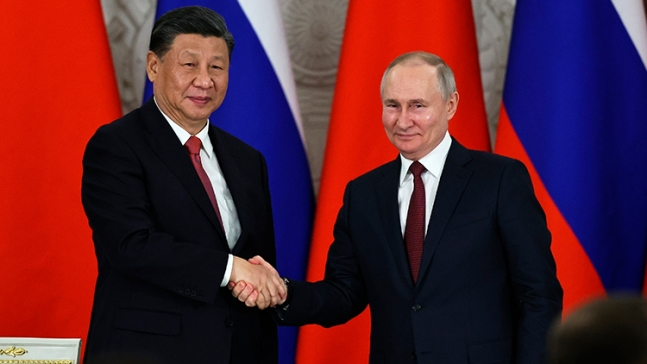 [Issue Focus]
Diverging Interests of North Korea, China, and Russia: Analyzing theChina-Russia Summit and Its Implications for North Korean Policy· Is North Korea Viewing China and Russia's 'Opening of the Lower Tuman River' Demand as 'Pressure'?· China and Russia Urge North Korea, Amid Its Hostile Policies Toward South Korea, to Resume International Negotiations· China Distances Itself from Military Cooperation or Alliance with North Korea and RussiaDongchan Kim Assistantprofessor of the Graduate School of International Studies at Yonsei UniversityReasons and Goals for Maintaining the Comprehensive Strategic Partnership between China and RussiaPresident Vladimir Putin chose China for his first international visit after securing his fifth term in office. During the China-Russia summit held in Beijing on May 16, 2024, President Xi Jinping and President Vladimir Putin reaffirmed that their countries share a "comprehensive strategic cooperative partnership." Despite historical tensions such as the Sino-Soviet split during the Cold War and lingering issues after the Soviet Union's dissolution, China and Russia have overcome these challenges. The main factor driving this partnership is their shared strategic stance towards the United States.As the strategic competition between the U.S. and China intensifies, China finds it crucial to strengthen its strategic cooperation with Russia to compete effectively against the United States. During the Cold War, Henry Kissinger’s strategy to foster U.S.-China détente secured American strategic superiority over the Soviet Union, paving the way for an eventual U.S. victory. In the same vein, Kissinger advised the U.S. goverment to achieve strategic superiority over China by compromising with Russia during Trump's first term in office. However, after Russia's invasion of Ukraine in 2022, the likelihood of such a compromise significantly diminished. Yet, any strategic compromise between the U.S. and Russia would be extremely detrimental to China, making the prevention of such an event a top priority for Chinese diplomacy.Chinese President Xi Jinping (left) and Russian President Putin / AP=Yonhap NewsMeanwhile, President Putin likely sees the United States as the only country capable of obstructing his vision for a resurgent Russia. Given Russia's limited economic power, collaboration with China—an economic powerhouse engaged in strategic rivalry with the U.S.—is essential for Russia. The official statement from China’s Ministry of Foreign Affairs about the summit highlighted these perspectives. Both Xi Jinping and Vladimir Putin repeatedly emphasized their "comprehensive strategic partnership of coordination." Putin stated that "the development of Rusia-China relations is conducive to international strategic stability" and noted that "Russia is ready to continue to expand bilateral cooperration with China keep close communication and coordination within the frameworks of the United Nations, BRICS and the Shanghai Cooperation Organization and work for more just and equitable international order". Xi Jinping also commented that the enhancde comprehensive strageic coordination between China and Russia "made positive contributions to maintaining global strategic stability and promoting greater democracy in international relations." He further emphasized the need to build "a just and equitable global governance system" through their cooperation. These remarks from the Chinese and Russian leaders indicate that both countries are collaborating to ensure strategic stability in their relations with the United States. By advocating for “a multipolar world” and "greater democracy in international relations," they clearly oppose the U.S.-dominated international order and share a goal of establishing a "just and equitable global governance system."Analysis of North Korea-related Content in the China-Russia Joint StatementBuilding on their shared views, China and Russia released a joint statement right after the summit titled "A Joint Statement on Deepening the China-Russia Comprehensive Strategic Partnership of coordination for the New Era." This statement outlines not only how China and Russia plan to enhance cooperation in various sectors but also their intention to strengthen collaboration in the United Nations General Assembly, the United Nations Security Council, and the Shanghai Cooperation Organisation. It also details their joint stance on the Non-Proliferation Treaty (NPT) and the Biological Weapons Convention (BWC), along with their positions on issues related to the United Nations Framework Convention on Climate Change, the Convention on Biological Diversity (CBD), and marine pollution. An interesting aspect of this statement is found in the third part, which discusses economic cooperation between China and Russia. It includes a section stating, "Both parties will engage in constructive dialogue with the Democratic People's Repubilc of Korea regarding the navigation of China vessels through the lower Tumen River to the sea." This issue is crucial for China's economic development in its northeastern region, but it has not been resolved because it requires consent from both North Korea and Russia. The inclusion of this issue in the joint statement suggests that China has raised the matter with Russia again, and Russia has agreed to discuss it with North Korea. However, if this statement was made without prior consultation with North Korea, North Korea might perceive it as pressure from China and Russia.Another significant point concerning North Korea is found in the tenth part of the statement. Here, China and Russia oppose the hegemonic actions of the United States attempting to alter the balance of power in the region through military capability expansion and alliance consolidation in Northeast Asia. At the same time, however, they also urge North Korea and other relevant countries to resume negotiations based on the principles of mutual respect and consideration for each other's security interests. This position from China and Russia contrasts with North Korea's recent hostile policies towards South Korea.Implications of the China-Russia Summit for North Korea PolicyFollowing the strengthening of military cooperation between North Korea and Russia, there have been significant concerns in South Korea about the potential for increased military ties between China, Russia, and North Korea. However, China seems to have maintained a clear boundary regarding military cooperation with either Russia or North Korea. The recent China-Russia summit included various cooperative plans in their joint statement and widespread criticism of the United States. Nevertheless, the official stance on China-Russia relations, as agreed upon by both countries, is defined by "non-alignment, non-confrontation and non-targeting of any third party."To understand this stance, the following reasons should be considered. For China to win the strategic compettion with the United States, it must prevent Russia or North Korea from improving ties with the U.S. and turning against China. However, engaging in military cooperation or forming a military alliance with Russia—already in a hostile relationship with the U.S. due to the Ukraine war—or with North Korea, which claims a new Cold War has begun, does not benefit China. The national of three countries and the dynamics of the U.S.-China strategic competition that China, Russia, and North Korea aim to shape are quite different. This provides significant policy insights for South Korea.Before President Vladimir Putin's visit to China, media reports predicted that he would also visit North Korea. However, after traveling to Heilongjiang Province, President Putin returned to Russia without visiting North Korea. Some interpret this decision as being influenced by China's position. Furthermore, ten days after the China-Russia summit, Chinese Premier Li Qiang attended the South Korea-China-Japan summit. Shortly after this summit, on May 27, North Korea launched a reconnaissance satellite, which some see as a sign of North Korea's dissatisfaction with China. Following the South Korea-China-Japan-summit, a "2+2 Ministerial Dialogue" focused on diplomacy and security between South Korea and China will be held in June. If the North Korean issue can be discussed at this meeting, it could serve as an important starting point for restoring mutual trust between South Korea and China.
24.06.07
News Letter
We are leading the global communication via Newsletter.
We will deliver the latest information and proven facts on Korean Peninsula status including North Korea situation.