

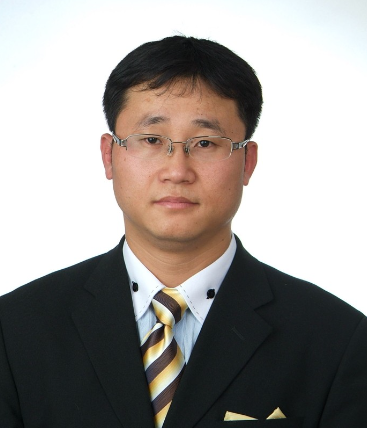
Kim Kyeong-san, Public Official from Ministry of Unification
I am reminded of Lothar de Maizière's words to South Korean officials: "South Korea only asks what it will do for reunification, not what North Koreans want."
As I contemplate the place of my birth, which stole my youth and kept me in a destitute environment, I feel a sense of guilt for being one of the few who managed to survive in a better place, and a sense of responsibility to contribute to the unification that represents a new direction for my entire life.
North Koreans who travel abroad experience a stark contrast and a completely different world. Unlike in North Korea, people in other countries move around freely without needing a 'movement permit' or paying bribes for things like travel permits, party papers, or military permits . They can live wherever they want. Neighboring countries around the Korean Peninsula live in a world of abundance and prosperity that North Korea cannot even imagine, despite poor countries in Africa.
Even though North Korea upholds the policy of 'plant your feet on your own land and see the world', there are no newspapers or broadcasts that objectively show the outside world. Even in impoverished Africa, people can access the internet anytime with their smartphones and easily find out in real-time how the 34,000 North Korean defectors (as of 2022) who have come to the South are living just by searching for the term 'North Korean defectors'.
North Koreans who have been abroad often remain silent due to their survival instincts, with their highest form of resistance often being hypocritical behavior that appears to comply with the state and party authority. Those who recognize the bleak prospects of North Korea's progress towards advanced countries quickly adapt, becoming spies for the State Security Department or inciting cruelty towards each other at the forefront of the crowd.
There are many people who, having never been abroad, live their lives under the assumption that "this is just how the world is". They have succumbed to the shrewd herd mentality of "political life", which believes that even in death, one can live forever. Even though their lives are difficult and futile, they compete for loyalty, trying to show who has suffered more for their "political life." They keep telling grandiose lies such as North Korea's 10 Socialist Goals and the creation of a strong and prosperous state, using Adolf Hitler's theory of agitation propaganda that "people are more easily deceived by big lies than small ones," hypnotizing the people. Instead of questioning such social phenomena, people are more afraid of being cast out of the crowd, so they tend to be timid and cautious.
When an individual becomes part of a crowd, they enter an unconscious state of ignoring their subjectivity. This is not due to the ignorance of the individual, as both daily and state security workers become similar once they join the crowd. A collective mentality is created, and they live their lives like Lee Su-bok , one of revolutionary soldiers, as if it were their duty to society. This blind devotion to their group justifies even abnormal behavior such as prioritizing the rescue of propaganda videos over national equipment bought with the sweat and blood of thousands during a fire. This is how revolutionary humans are created.
The constant life review sessions, lectures, study sessions, policy briefings, and Pochi – facilitating a project by dividing team tasks and sharing operations manuals – that take place on a weekly and monthly basis, even during supply shortages, are merely unconscious actions that have become a part of daily life. If the principles of anti-socialism were followed, then those who go to work every day, even if they are not given rations for months, and show off that they are still alive, while carefully cleaning the dust off the portrait of the supreme leader, should all be sent to prison.
Those who only believed in the state's rations and looked up to the government without engaging in anti-socialist behavior are no longer alive. During the period of the "March of Suffering" in the mid to late 1990s, those who remained loyal to the party and the state chose to die at home rather than going to Jangmadang (local markets). It is a true sin to send these innocent people to their deaths simply because they believed only in the party and the state. In the face of human death, we must all be humble regardless of who we are. Who should be held responsible for this?
The individuals who perished from starvation during the "March of Suffering" did not have the opportunity to sacrifice themselves heroically like those who die in a war without weapons to defend themselves. Even after numerous battles that have persisted till this day, the ones who survived have turned into mere skeletons of deluded heroes, who still advance fearlessly for the "victory of the revolution.“
North Korea, which possesses those brave warriors, still has an annual income of only $1,300 per capita (according to the World Bank in 2022), while South Korea has become the seventh country with a population of over 50 million to achieve $30,000 in 2018. In 2021, South Korea's trade volume reached a record high of $980.1 billion, even under the circumstances of COVID-19. In the north, the trade volume, which was $6.3 billion in the year the current regime started (December 17, 2011), has decreased to $860 million after 10 years in 2021. If we simply compare North and South, the difference is a staggering 1,136 times.
As I reflect on my hometown in the North and the growing disparity with advanced nations, sleep eludes me. Inspired by the words of Lothar de Maizière, the last prime minister of East Germany, I contemplate how I can contribute to the unification as a North Korean. It's one of those nights where I find myself staying up late once again.
-
PREV [From the Editor-in-chief]
-
NEXT [Issue]