

Prof. Emeritus of Nuclear Engineering, Seoul National University
Kune Y. Suh
The United States (US) conducted the first nuclear explosion on Amchitka near Alaska in 1965.[1] An 80 kiloton (kt) nuclear bomb was set off underground. Scientists used this blast for research purposes. Seismologists had taken the opportunity to analyze the test results to later help check whether other countries were conducting underground nuclear testing.[2]
A second bomb was set off 1.22 km underground in 1969. This test was utilized to understand how larger underground explosions might damage the island, trigger seismic activity, or potentially generate tsunamis.[2]
The most infamous ‘Project Cannikin’ was conducted in 1971. At 5 megaton (Mt), this blast was 333 times more powerful than the Hiroshima bomb. It was 17 times North Korea’s sixth test bomb that had most likely yielded 300 kt. It was detonated 1.6 km underground.[1] The detonation caused the ground surface to rise, then fall by as much as 6 m. A crater 1.6 km wide and 12 m deep serves as a menacing reminder of the massive explosion. The shock from the explosion measured 7.0 on the Richter scale.[2] This is tantamount to the earthquake which hit Papua New Guinea on 3 April 2023.
Radioactivity continued to leak into the ocean, groundwater, and air in and around Amchitka. These blasts created underground, rubble-filled cavities that trapped high concentrations of radioactive pollution underneath Amchitka. Groundwater moving through these cavities picked up radioactivity, carrying it to the Bering Sea. This is going to be the East Sea for North Korea’s nuclear tests in general and the sixth in particular.
Scientists have worked to figure out how these blasts had affected, and continued to affect, Alaska.[2] Anchorage biologist Pam Miller, working on a research project for Greenpeace in 1997, found radioactive particles including, but not limited to, Pu-239, Pu-240, and Am-241 in freshwater samples from the edge of the Bering Sea.[2]
Meanwhile, decades of nuclear testing has contaminated an estimated 6 trillion liters (L) of groundwater in the Nevada Test Site (NTS). Nevada’s Cold War legacy is troubling state officials who are coping with water shortages and a population boom. The state had won a federal agreement to conduct a new environmental assessment of the 3,575 km2 NTS, almost twice the size of Jejudo, 121 km northeast of Las Vegas. They determined the extent of radioactive contamination in the area and assessed cleanup and compensation for water lost.
The NTS has hosted nuclear testing since 1951, with the first of a series of atomic tests. Early tests were conducted above ground, creating mushroom clouds that could be seen from 161 km while spreading radioactive fallout downwind. Even spectators gathered from all over the country to witness the ‘event’ without wearing proper personal protective gears at the time. Some of them knowingly or unknowingly suffered from radiation exposure later in their lives. By then, children and others living in downwind areas were beginning to develop leukemia. As time passed, people in affected areas suffered extraordinarily high rates of cancer and thyroid ills.
Later tests were conducted underground, leaving massive craters in the desert floor. Over 1,000 nuclear tests were conducted until 1992. Nevada hydrogeologist T.S. Buqo studied the issue for Nevada’s Nye County, where the NTS is located.[3] He estimated that the underground tests polluted some 6 billion tons of water, which, if they hadn’t been contaminated, would be worth more than $50 billion today. This is equivalent to ~1,000 times the amount of water reserved at Lake Seokchon in Seoul.
Now, on the other side, the Semipalatinsk Test Site (STS) was one of the primary locations for the Soviet Union above and below ground nuclear testing from 1949 to 1989. The first Soviet nuclear test took place at the STS on 29 August 1949. In total, 456 nuclear tests, including 340 underground and 116 atmospheric tests, were conducted at the STS.[4]
The STS was officially closed by Kazakhstan’s President Nazarbayev on 29 August 1991. The STS facilities are now under the jurisdiction of the National Nuclear Center of the Republic of Kazakhstan, which is involved in civilian activities and conversion of the site to non-defense uses.
From 1997 to 2000, 181 test tunnels and 13 test shafts were sealed at the STS as part of a joint US-Kazakhstan effort under the Nunn-Lugar Cooperative Threat Reduction Program. President Obama of the US, President Medvedev of Russia, and President Nazarbayev of Kazakhstan officially announced the formally secret program of Trilateral Threat Reduction Cooperation at the Seoul Nuclear Security Summit in March 2012.
A delegation of five scientists participated in a US National Research Council program to review the status of research on the health and environmental impacts of nuclear testing at the STS in 2000. They visited several research institutes in Kazakhstan and consulted with numerous Kazakh researchers from academic disciplines ranging from radioecology to public health and medicine.
They focused on reviewing data on the health and environmental impacts resulting from the testing. The health effects caused by the testing at STS have received a fair amount of study. Research using modern techniques such as fluorescence in situ hybridization and nuclear magnetic resonance increased the credibility of dose reconstruction.
Now, back to Mt. Mantap. Figure 1 summarizes a deformation scenario for the sixth test on 3 September 2017.[5] The events go through the sequence of A. explosion, B. collapse, and D. compaction, with different associated surface displacements. Collapse occurs quickly (~1 s), while compaction happens slowly (~1 week). The implosive source C may be shallow and contributes only to localized surface displacements. The radar imagery reveals the deformation as indicated by arrows in D.
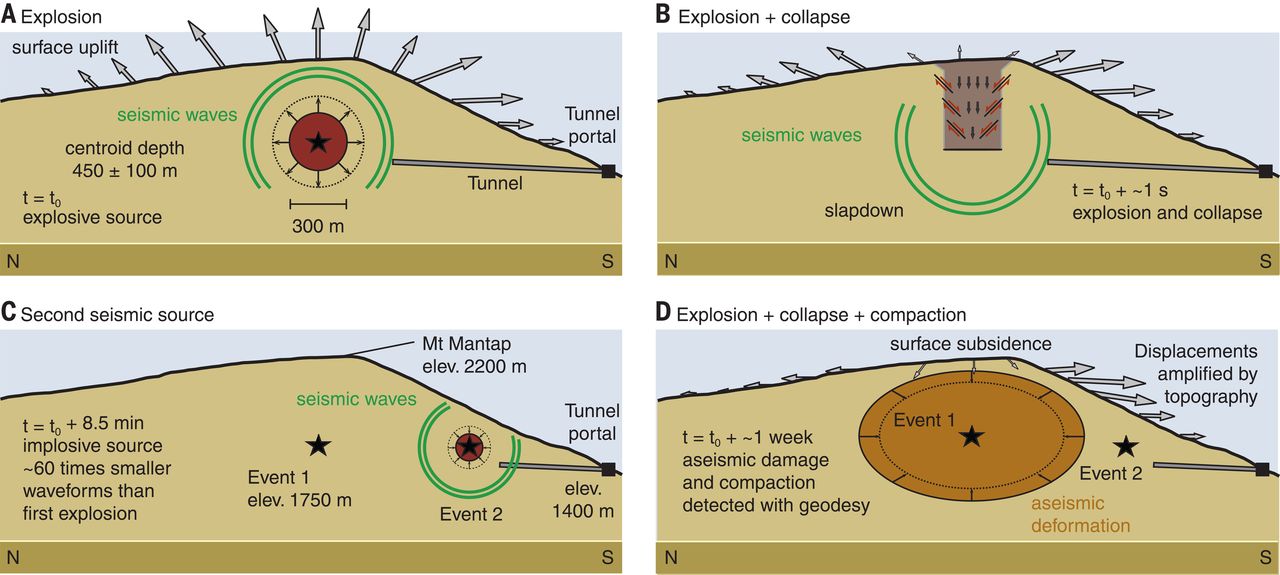
Figure 1. Deformation scenario for Mt. Mantap (Source: Science 10.1126/science.aar7230, 2018)
Figure 2 depicts the structure of the tunnels used for the Punggye-ri Test Site (PTS).[6] The horizontal tunnels include 9 doors and 10 corners to absorb the shock of the blast. The entrance to the tunnel is located approximately halfway up Mt. Mantap. Other countries had conducted tests by digging vertically underground. North Korea, on the other hand, developed its tunnels and testing system by excavating horizontally.
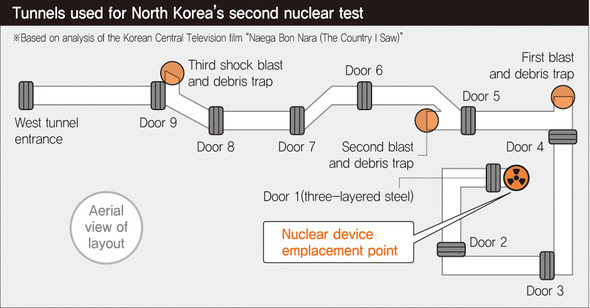
Figure 2. Schematic of the Mt. Mantap test chamber (Source: Ministry of National Defense, Republic of Korea)
The PTS consists of four distinct tunnel systems, identified respectively as Tunnel 1 (East Portal), Tunnel 2 (North Portal), Tunnel 3 (South Portal), and Tunnel 4 (West Portal). Of these four, Tunnel 1 was used in 2006 but abandoned shortly thereafter owing to contamination. The five successive tests were conducted in Tunnel 2. No tests have yet been done at Tunnel 3, where excavation ended in late 2013, or in Tunnel 4, where excavation began in 2017. Tunnels 2, 3 and 4 were all explosively sealed in May 2018.
As North Korea has excavated a new portal 50 m east of Tunnel 3, there is speculation that North Korea could conduct a nuclear test in the foreseeable months. Based on the terrain, geology, topography, and tunnel schematics, the two drifts shown in Figures 3 and 4 are estimated to be capable of containing explosions from 50 to 120 kt, respectively.[7]
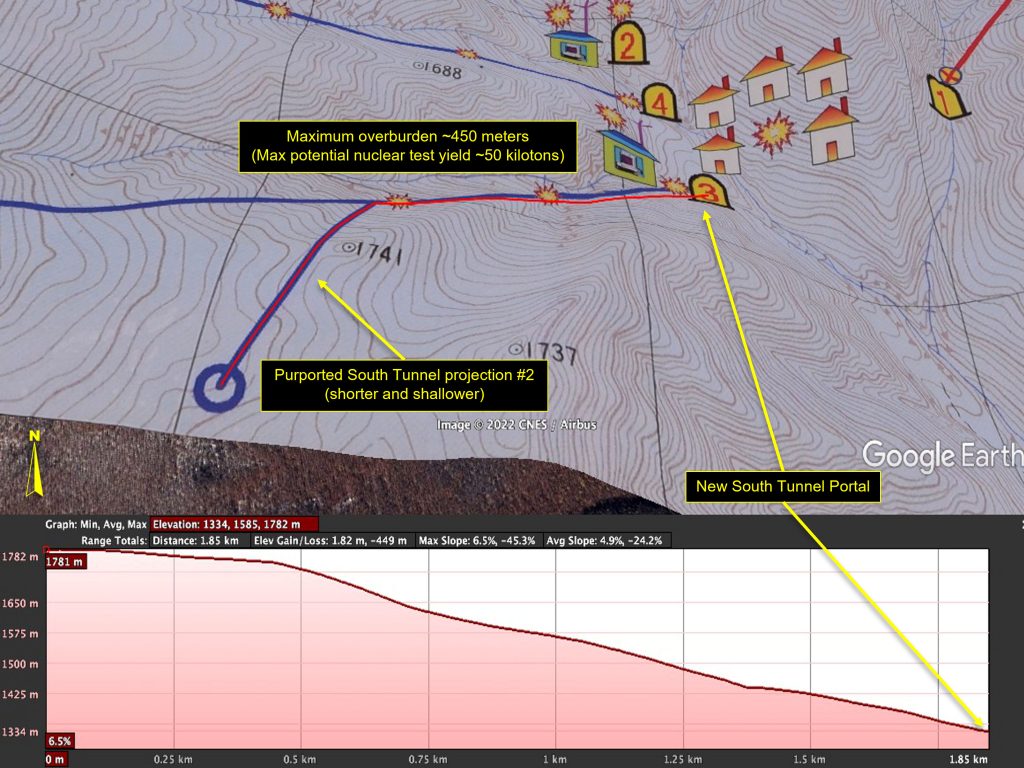
Figure 3. Terrain
profile of purported Tunnel 3 projection, drift 1 (Source: 38 North)
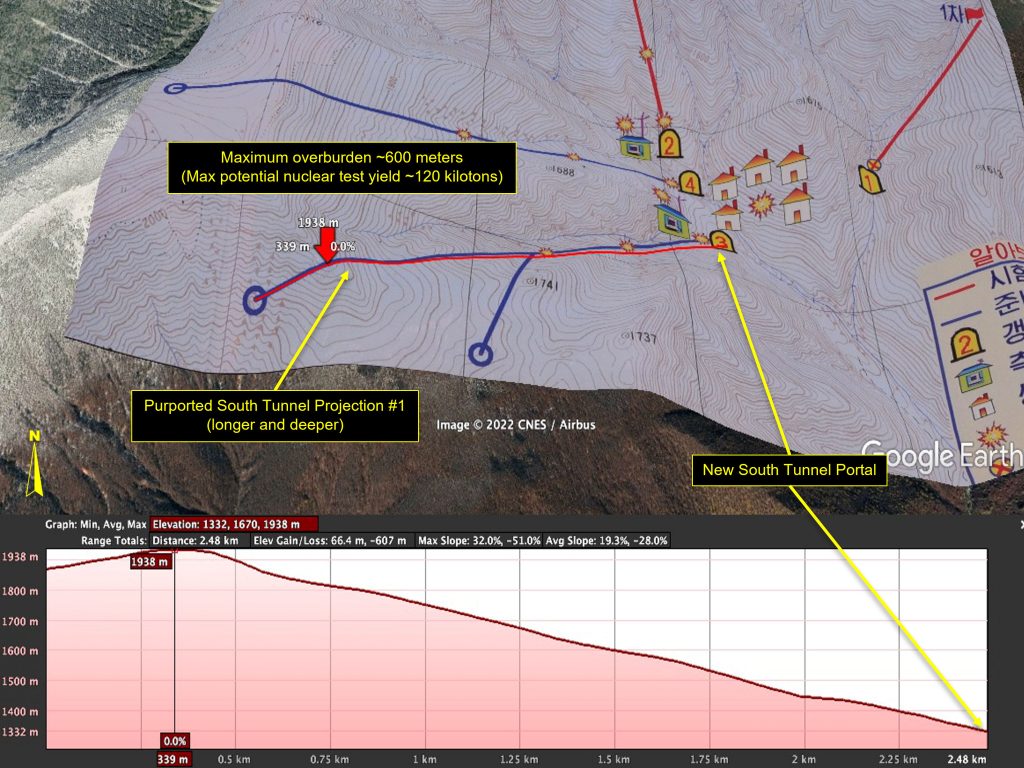
Figure 4. Terrain profile of purported Tunnel 3 projection, drift 2 (Source: 38 North)
Obviously, yield limit estimates do not mean North Korean will test to the maximum available capacity or tell us what specifically they may be planning to do next. Nevertheless, it does suggest that this tunnel complex is incapable of containing explosions the yield of the sixth test.[7]
Should additional tunneling be conducted, then Mt. Mantap could endure a similar maximum overburden as was previously available. A hypothetical drift could be extended under the high plateau, providing a maximum available overburden of ~800 m, which would provide a capability to safely test up to 282 kt.[7]
In this regard, concerns have grown more than ever of a substantial leak of radioactive materials particularly after the sixth test. The problem is grave enough and a nuclear leak seems ‘fait accompli.’ There must be cracks and fractures through which radionuclides tend to leak.
Now, a big concern has to do with the groundwater that will in turn be contaminated, polluting the plants and animals. Finally the people, who may accidentally consume mushrooms and meat from the area for instance, will be seriously affected. Some of them may even wash and drink from the nearby streams.
In a nutshell, the groundwater belongs to the people of Gilju County of 1,033 km2. This is almost twice the area of Seoul. In the next and final write-up for the Mt. Mantap untold stories, special attention will be given to the concentration of main radioisotopes that might have been released from the six tests. They include, but are not necessarily limited to, H-3 (tritium), C-14, Sr-90, I-131, Cs-137, Pu-239, Pu-240, and Am-241 that may have been stored in the groundwater spanning the area.
In addition, attention will be paid to tracing the spatial demarcation of the most heavily contaminated spots in the area, and to noting the human exposure that may have caused a significantly increased incidence of thyroidal cancer locally and regionally.
The PTS shall be one of the important examples of assessing the correlation between the increase in the thyroid cancer incidence rate and the groundwater radioactive contamination with I-131, a radioisotope which must have been released during the six nuclear tests.
A fair amount of work by multinational and multilateral researchers shall have to be done to characterize the PTS and to determine its biological, ecological impact. Special Mission Taskforce needs to be organized to characterize the residual contamination in tunnels, soil and ground water in and around Gilju County.
There is an imperative need to prepare a joint proposal to conduct comprehensive as well as systematic characterization of the PTS. The aim is to determine the impact of radionuclides on the biochemistry of representative humans, flora and fauna. The mission report shall be presented at the regional, national and global levels.
Meanwhile, some experts are also raising concerns of a volcanic eruption from nearby Mt. Baekdu on the North Korea-China border, 114 km northwest of the PTS. At the time of this writing, though, there appears to be little valid basis to expect that to take place. Any underground nuclear test contained within the geologic setting of the PTS would not trigger a subsequent eruption of the M. Baekdu volcano in the foreseeable future.
Seventy-eight years since the first mushroom cloud from ‘Trinity’ in the ‘Jornada del Muerto (Journey of the Dead)’ desert, all governments of all testing nations have mastered how to lie to their own people regarding these weapons of mass destruction and lethal radiation. Now more than ever, from the transitional justice point of view, every single one of us should become audacious enough to communally deny any further nuclear testing on the face of Our Blue Planet.
Literature Cited
1. K. Mulvaney, “A Brief
History of Amchitka and The Bomb,” Greenpeace, 25 August 2007, https://www.greenpeace.org/usa/a-brief-history-of-amchitka-and-the-bomb/.
2. N. Rozell, “The
Unknown Legacy of Alaska's Atomic Tests,” University of Alaska Fairbanks, 18 January
2001, https://www.gi.alaska.edu/alaska-science-forum/unknown-legacy-alaskas-atomic-tests.
3. The Los Angeles Times,
US Department of Energy Nevada Test Site website, 15 November 2009.
4. https://www.nti.org/education-center/facilities/semipalatinsk-test-site/.
5. T. Wang et al., “The
rise, collapse, and compaction of Mt. Mantap from the 3 September 2017 North
Korean nuclear test,” Science 10.1126/science.aar7230, 2018.
6. https://english.hani.co.kr/arti/english_edition/e_northkorea/572835.html.
7. 38 North, “North
Korea’s Next Nuclear Test: How Big Could It Be?” 29 April 2022.
-
PREV [Defectors' Podium]
-
NEXT [North Korean Glossary]