

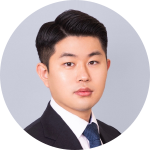
Kim Geum-hyuk
Future Unification Planning Committee Member
(Graduate of Kim Il Sung University)
Upon arriving in South Korea, I initially kept a low profile. Despite receiving numerous interview requests and broadcasting opportunities, I hesitated to accept them due to concerns for my college friends and family still residing in North Korea. However, in 2019, I gradually started engaging in public activities, and it has been slightly over two years since then.
I have become a great disappointment to my parents. From North Korea's perspective, my choice to leave has exposed my family, including myself, to serious dangers. Furthermore, considering the positive reputation and prosperity we once had, the impact is likely to be even more profound.’If I had simply enjoyed my life as a student abroad and returned to North Korea like others, it wouldn't have caused my parents any distress. Perhaps by now, as a graduate of Kim Il Sung University, I could have been working as a diplomat or a party cadre.
People often said to me after I came to South Korea, "If I were you, I would have lived a comfortable life in North Korea. With qualifications like yours, I would have belonged to the top 0.1%. So why did you go through all this suffering by coming here?"
In a sense, they might be right. Honestly, I never experienced poverty or hunger while living in North Korea. I was spared from all the difficulties and hardships that many defectors consistently testify to, and I spent a privileged childhood benefiting from the loyalty of my grandfather and father. It may sound like self-praise, but with a favorable environment for studying, I always achieved top grades and easily entered prestigious schools that were considered essential for North Korean elites. I was very fortunate. Until 2009, university students, especially liberal arts students, were not allowed to study abroad. However, Kim Jong-un became the successor with the changing atmosphere, new opportunities opened up, allowing liberal arts students to study abroad and learn many new things before returning. But there were two conditions: one was that the student had to bear the entire cost of studying abroad, and the other was that a guardian had to accompany them. Fortunately, my father was conducting business in Beijing at the time, and we had the financial means to meet both of these conditions.
Not many students could meet these criteria. Only a select few were chosen, and out of approximately 2,000 applicants, around 300 individuals made it onto the first list. I was among them.
In January 2010, I took a flight with Air Koryo from Pyongyang Sunan International Airport (FNJ) and landed at Beijing Capital International Airport. Little did I know that the Air Koryo plane would be so small. It was quite contrasting to see a Korean Air plane right next to it. The discrepancy was hard to overlook. Boarding a plane in North Korea is a significant privilege. At the age of 19, I was elated to revel in that privilege. However, that excitement and self-assurance were shattered within a mere two hours. As I observed the multitude of airplanes from around the world crowding Beijing Capital International Airport, an indescribable sense of desolation washed over me. But the embarrassment didn't end there. In order to emphasize our status as North Korean students, we all wore matching uniforms adorned with portraits of Kim Il-sung and school badges on our chests. Yet, throughout our entire journey at Beijing Capital International Airport, we were the sole group donning such attire.
It was embarrassing. We, who once boasted as North Korea's finest elite, suddenly felt like insignificant beings in this world, realizing how far removed we were from the progressive global landscape. Furthermore, the experience at Beijing Capital International Airport marked the starting point of disillusionment for North Korean students towards the regime.
Every Saturday, we would gather at the embassy for the Life Review Session, where we were required to give reports on our week's activities and even provide details about the people we had interacted with. It was mandatory to wear Kim Il-sung's portrait on our left chests when entering the embassy. However, none of us followed this rule. It was only when we reached the back gate of the embassy that we hurriedly put on the portrait. North Korean students were reluctant to reveal their origins. When asked about our hometown, including myself, we would claim to be from South Korea. And once we became fluent in Chinese, we would identify ourselves as Korean Chinese.
North Korea brought about a great deal of shame. And I mean, a tremendous amount of it.
The majority of North Korean students go through a similar transformative journey, entering a world that is drastically different from what they were familiar with. They embark on their exploration of the internet, freely enjoying South Korean dramas and movies without any restrictions. By learning Chinese, they establish connections and develop deep friendships with students from various countries. These experiences are simply unimaginable in North Korea, where access to such information and relationships is strictly prohibited. They are confronted with astonishing revelations, information that is strictly forbidden within the confines of North Korea. Details about the personal life of Kim Jong-il, such as his multiple wives and the fact that many members of the Kim family pursue studies abroad, come to light. Equally shocking is the extravagant lifestyle of Kim Jong-il, who spent millions on luxury items like cognac and wine while millions of North Koreans suffered during the Arduous March. At first, skepticism and denial grip their minds - I was no exception. I dismissed such information as manipulative propaganda from imperialist forces aimed at undermining our cherished socialist republic. Many other students shared the same view, as we were mentally conditioned to think that way. However, as we delve deeper into the truth behind these facts, even more profound and unsettling truths await us. We confront the existence of political prison camps, stories of defection, and the widespread purges that have taken place. It is a disorienting experience that brings forth a mix of excitement and fear. The more we uncover the realities of true democracy, human rights, and freedom, the stronger our feelings of indignation and determination grow.
Defector students are divided into two distinct groups when faced with these revelations. Some choose to disregard them, preferring to remain ignorant and holding onto their previous perspectives. On the other hand, there are those who react to these newfound truths with a combination of anger, despair, and an unwavering determination to speak out against the North Korean regime. I, personally, belong to the latter group.
Admittedly, only a few select individuals take this path. It is far easier to turn a blind eye, allowing life to pass by without consequence. Those who complete their studies at esteemed institutions like Peking University or Tsinghua University and return to North Korea may be greeted with a brighter future if they navigate the regime's intricate web of loyalty. They may secure a life of privilege within the upper echelons of society. In contrast, those who embrace the truth must confront a relentless state of fear. They live with the constant uncertainty of exposure, worries for their families' safety, and the haunting specter of being subjected to political imprisonment or even execution.
Despite the challenges and risks, I couldn't turn a blind eye to everything I had come to know. Each revelation of the regime's contradictions fueled my resentment and anger towards those responsible for our country's current state. During a conversation with a close friend about North Korea, my frustration overflowed, and I involuntarily said, "Kim Jong-il, that son of a bitch!" The anger towards the Kim family had built up, making it impossible to turn back. To my surprise, my friend shared the same sentiment. We were both taken aback. Thankfully, we connected over our shared thoughts. We engaged in an intense, ten-hour conversation that led to successful persuasion. Soon, we were joined by around ten other students who shared our vision. I still remember the words that we questioned ourselves during our initial gathering.
“Do we truly deserve the privileges we enjoy today? Is it solely because of our academic achievements or attending prestigious universities? Is it merely because we were fortunate enough to be born into affluent families? Can we justify the opportunities, happiness, and wealth we have experienced?”
That day was filled with tears as my friends and I watched documentaries portraying the hardships of Kotjebi, the homeless children of North Korea. Our emotions overflowed as we confronted the harsh realities of political prison camps, fueling our anger.
While we enjoyed extravagant meals and extravagant birthday parties costing over 200 yuan per meal, the children in the documentary roamed the streets in search of food. Our privileged lives were a result of our parents' loyalty and obedience to the regime, while ordinary people lacked power, connections, and endured constant hardships.
Out of compassion, I secretly brought a Kotjebi child, who was my age, to my house without my mother's knowledge. Witnessing him begging for leftover ice cream, only to find none, I decided to bring him fresh ice cream from my place. I packed the remaining rice and side dishes into a plastic bag and handed it to him. After saying goodbye, I found a secluded spot and cried profusely. Those side dishes were leftovers that my mother intended to throw away. It was heart-wrenching to see the joy on that child's face, knowing their difficult circumstances. He didn't even have shoes. I asked my mother why people who were all the same had to suffer so much. My mother couldn't provide an answer.
We sought the answer ourselves. The North Korean dictatorship regime granted privileges to a select group of elites, while the rest of the population was ignored and subjected to surveillance and control. The chosen few inherited these privileges, perpetuating corruption and injustice that affected ordinary people. The powerful oppressed the weak and submitted to those even more powerful. That was the answer we discovered.
Motivated by a desire for change, we immersed ourselves in rigorous studies, passionate debates, and dreams of a new world. We knew that without someone taking the first step, change would remain elusive. With our firsthand experience of a different world, we aimed to enlighten and awaken others, coming together as a united force. Our discussions took place in the student cafeteria at Peking University, continued in the dormitories of Beijing Language and Culture University, and extended to a pub along the banks of the Taedong River. Though it may have seemed like a group of determined twenty-year-olds engaging in intellectual debates, we were revolutionaries driven by lofty aspirations.
On December 19, 2011, the news of Kim Jong-il's sudden passing reverberated across the globe. As the news reached us during class, we gathered at the embassy for a memorial event, filled with a mix of intense emotions. In this charged atmosphere, we came together and celebrated.
January 2012 in Beijing, a somber mood settled over the city. Rumors circulated about a swift purge of security agents in Pyongyang, and my close friends from Dandong City grew evasive in their communications. Eventually, one of our group members was suddenly summoned, and later I learned that he was found with a Korean translation of Plato's "The Republic."
The seriousness of the situation heightened due to the Korean translation. By early February, I could no longer ignore the constant feeling of surveillance. Instances of someone following me became frequent, and I suspected my phone conversations were being monitored. All I could do was discreetly warn the other group members about potential risks and advise them to keep a low profile for the time being. Amidst these circumstances, on February 8, I received a summons from the embassy, and it immediately became clear to me that it was a trap to lure me back to North Korea. Aware that my room had been searched multiple times and constantly feeling threatened even after changing dormitories, I had no doubts about the necessary course of action.
I chose the path of escape, leaving the dormitory behind. Despite facing numerous challenges along the way, I managed to reach South Korea by the end of March.
This is my story of defection. While it has been briefly shared through various media outlets, this is the first time I am recounting the detailed account in writing. There is no embellishment or exaggeration involved.
"If I were you, I would have lived a comfortable life in North Korea. With qualifications like yours, I would have belonged to the top 0.1%. So why did you go through all this suffering by coming here?" I hope my story provide an answer to this question.
My dream remains steadfast. I hope to dismantle the dictatorship in North Korea and establish a world where the basic human rights of individuals are respected. I strive to put an end to the irrational rule of three generations of dictatorship and turn North Korea into a country that stands equal to others. By harnessing the incredible potential of the Taedong River, I yearn to bring prosperity to the people of North Korea. Additionally, I am committed to contributing to the reunification of the Korean Peninsula and the growth of a strong and prosperous South Korea. From my standpoint, these dreams are firmly grounded in reality.
Dreams belong to those who have the courage to envision and pursue their aspirations.