

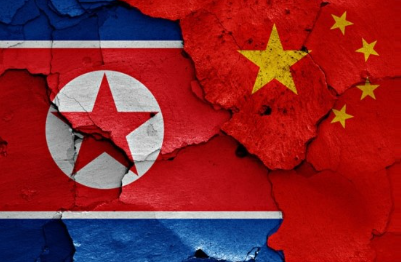
Strengthening of North Korea-China Solidarity:
Emphasizing Anti-US and Pro-Joseon Sentiments in the Korean War
Xi Jinping on the Korean War and North Korea and China’s Anti-America Coalition

Choo Jaewoo
Kyung Hee University
The relationship between North Korea and China goes beyond a mere alliance, possessing unique characteristics that surpass traditional state relations. While Chinese diplomatic authorities may describe it as "normal state relations," this oversimplifies the distinct nature of socialist state connections. Acknowledging this special bond requires a deeper understanding of the political structure, diplomatic significance, China's stance on Korean Peninsula unification, and Xi Jinping's role in restoring the North Korea-China relationship during his leadership. Xi Jinping stands as the sole leader of China who has commended the involvement of the Chinese People's Volunteer Army in the Korean War, adopting an anti-US and pro-Joseon stance, and hailing it as a "Just war" with a victorious outcome deemed "just." Mao Zedong, Deng Xiaoping, Jiang Zemin, Hu Jintao, and other leaders have never portrayed China's endeavors in anti-US and pro-Joseon terms. Under Xi Jinping's leadership, China's support for North Korea has continued to fortify. This article aims to explore the robustness of the China-North Korea relationship, considering the political structure, diplomatic significance, China's position on the Korean Peninsula's unification issue, and Xi Jinping's fundamental standpoint concerning the reestablished China-North Korea relationship during his leadership from 2018 to 2019.
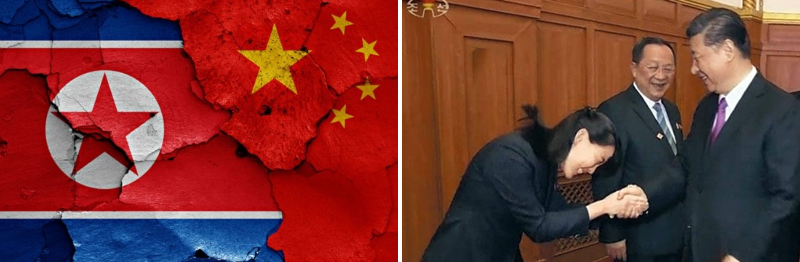
Robust North Korea-China Relations
Essentially, within socialist state relations, the party's authority takes precedence over that of the state and government. Referring to these relations between socialist states as "normal state relations" is a viewpoint that focuses on the party rather than the state. From a realpolitik standpoint, considering the party's perspective, normal "state relations" can be seen as a subset of "party-to-party relations" within the state. The party-to-party relations between socialist states truly embody a distinct and exceptional bond.
Another reason why Chinese diplomatic authorities depict the North Korea-China relationship as "normal state relations" is due to the contextual background at the time. Specifically, since 2005, economic cooperation between North Korea and China has been transferred from party control to government jurisdiction. In this sense, Chinese government agencies describe their relations with North Korea as a form of state relations. From the perspective of the Communist Party of China, the relationship between North Korea and China remains special. The Chinese Communist Party has never characterized the relationship between the two countries as "normal state relations." The Workers' Party of Korea in North Korea shares the same view. In the past, during the Cold War era, both parties described their relations as a "blood alliance." It was only in the 2000s that such expressions from the Cold War era disappeared, and the term "traditional friendship" replaced it. Both the North Korean and Chinese leaders have designated this traditional friendship as a "precious shared asset" of the two parties, two countries, and their peoples, emphasizing the principle of passing down this asset from generation to generation. In this sense, the unique relationship between North Korea and China is maintained.
The intentions of North Korea and China were reaffirmed through the verbal correspondence between Kim Jong-un and Xi Jinping on March 23, 2021. Both leaders demonstrated a willingness to strengthen cooperation between North Korea and China. Kim Jong-un expressed his belief that the relationship with China will evolve into a relationship that the world envies. The Chinese side recalled the long-standing North Korea-China traditional friendship that had been maintained since 2005 as a "precious shared asset" between the two countries. Especially, China is making continuous efforts to maintain the uniqueness of its relationship with North Korea. This can be observed from two aspects. Firstly, China's support for Korean Peninsula unification is a one-sided stance. Secondly, Xi Jinping's chairpersonship in 2018 introduced what is known as the "Three Unwavering Changes" regarding the North Korea-China relationship. For North Korea, unification is its greatest national goal. Xi Jinping's "Three Unwavering Principles" guaranteeing North Korea's survival are promises made by China.
Therefore, Kim Jong-un obtained substantial backing in dealing with the United States, akin to having a thousand troops supporting him. This bolstered his confidence in confronting the United States and served as a foundation for exerting pressure as a means of survival, as explicitly stated in his New Year's Address on January 1, 2019. All of this implies that North Korea trusts China and believes it can return to a "brinkmanship" tactic. North Korea believes it can rely on China and participate in provocative actions without worry. Ultimately, it can once again aim for the desired effect of "brinkmanship."
In this situation, North Korea no longer needs to be bound by the demand for nuclear disarmament. It can insist on a peace treaty with China as a compensation for its cooperation. Sanctions are no longer a source of fear. There is confidence in being able to rely on China for self-rejuvenation. It only needs to procure essential resources from China and use domestic production as a means of self-rejuvenation, as emphasized by Kim Jong-un at the Sixth Conference of Cell Secretaries of the Workers' Party of Korea (WPK) on June 6th.
China's First Visiting Country for New Leaders Always North Korea
China recognizes the importance of North Korea as an irreplaceable ally. While China openly aims to transition the North Korea-China relationship into normal state relations, the meetings and speeches of top leaders from both countries reveal a continued emphasis on "inheriting the traditional friendship from generation to generation." The Chinese side is further intensifying efforts to achieve this goal.
It is widely known that in North Korea, it is customary for the successor to visit Beijing to seek endorsement before assuming power. However, this practice has only occurred once in North Korea's history. What is particularly intriguing is the pattern observed among China's future leaders. Without any exceptions, several top Chinese leaders, upon being identified as successors, have chosen to make their inaugural official overseas visits to North Korea. In other words, their initial diplomatic engagements as recognized future leaders have taken place in North Korea.
Xi Jinping officially visited North Korea in 2003 after ascending to the central political stage. China's former leader Hu Jintao also visited Pyongyang in 1993. In the case of Jiang Zemin, he assumed the role of the top leader abruptly due to the Tiananmen Square incident, without going through the usual process of leadership training. Nevertheless, his first official overseas visit as the leader was to North Korea.
China's next-generation leaders visiting North Korea early in their leadership training process can be seen as a way to familiarize themselves with the importance and value of the North Korea-China alliance. Leaders like Hu Jintao and Xi Jinping, who come from a different generation without direct experience of the Korean War or the revolutionary era, may find it challenging to fully grasp the significance and practical implications of the alliance. This raises concerns among the senior generation of Chinese leadership and the Communist Party. Thus, this can be seen as a form of "experiential learning" about the North Korea-China alliance.
Considering this, it is possible that the Communist Party of China assigns greater strategic and security significance to the North Korea-China alliance than what is commonly perceived. Until now, there has been a belief that the sense of kinship and shared values regarding the alliance has been gradually diminishing among China's future leaders.
China's Unilateral Support for Korean Unification
China maintains a basic position of supporting the unification of the Korean Peninsula, as long as it is achieved independently, autonomously, and peacefully by the Korean people without foreign interference. However, there is a trap in this stance. The trap lies in China's unilateral support for North Korea's position, rather than supporting the agreements between North and South Korea. We have mistakenly accepted this support without recognizing the difference between China's private messages to North Korea and its public statements.
We have mistakenly accepted this support without recognizing the difference between China's private messages to North Korea and its public statements. China has maintained a consistent stance since North Korea officially adopted the Korea Confederation as a unification approach in 1980. The concerning aspect of China's support lies in its alignment with the content of the "peace treaty" advocated by the United States for the current denuclearization efforts.
In 1982, China officially expressed its support for the Korean Confederation concept introduced by Kim Il-sung through a resolution at the United Nations General Assembly. Alongside this support, China emphasized the immediate implementation of UN General Assembly resolution 3390B, adopted in 1975, as a prerequisite for resolving the "North Korean issue." This resolution implies the dismantlement of the United Nations Command (UNC), the withdrawal of US forces from South Korea, and the conclusion of an armistice agreement leading to a peace treaty through negotiations with relevant parties. China reaffirmed its support for the federated state concept of North Korea in 1990 under the same conditions. These actions laid the foundation for China's proposal in 2017 to include the peace treaty in the "simultaneous pursuit of denuclearization and a peace regime." The validity of China's unilateral support for North Korea is also evident from statements made by top leaders of the Communist Party of China. Although China has mentioned inter-Korean peace and unification since establishing diplomatic relations with South Korea, it has concealed the requirement for the South to adhere to North Korea's unification approach. Regrettably, our past governments and leaders overlooked this distinction and naively accepted China's position as presented.
Continued Strengthening of North Korea-China Solidarity
In March 2023, Xi Jinping visited Russia, and the joint statement issued after the summit, titled "Joint Statement on Deepening the Comprehensive Strategic Partnership of the China-Russian New Era," clearly showed China's determination to counter the United States by aligning with Russia.
In relation to the Korean Peninsula issue, the leaders of China and Russia consider the "simultaneous pursuit" approach as the best solution. This means they support both the denuclearization of North Korea and the establishment of lasting peace on the Korean Peninsula concurrently. This is not a new concept, as Russia has held this position since the first North Korean nuclear crisis, and China reaffirmed it in March 2017. However, the joint statement from the China-Russian summit omitted the "Dual-halt" principle, indicating a change in China's stance. China's joint statement with Russia urged the United States to address North Korea's legitimate concerns regarding missile tests and nuclear issues.
Therefore, China and Russia have demonstrated that they recognize North Korea's ongoing missile tests and the anticipated seventh nuclear test as exercises of North Korea's inherent right to self-defense under international law. As a result, while the United States continues its joint military exercises with South Korea as part of the ROK-US Alliance, China and Russia are willing to tolerate North Korea's missile tests.
This ultimately explains why earlier this year, the international community, including the United States, failed to pass a resolution at the United Nations Security Council (UNSC). China and Russia had preemptively expressed their opposition to any UNSC resolution related to North Korea's military provocations. In essence, as long as the United States continues joint military exercises with South Korea and refrains from engaging in dialogue with North Korea, China and Russia will not oppose North Korea and may even tacitly support its missile tests. Furthermore, as long as tensions persist on the Korean Peninsula, it can be anticipated that China and Russia will continue their combined military exercises, including regular joint flights, in the region. This may result in increased incidents of airspace intrusions into our Korea Air Defense Identification Zone (KADIZ). Such joint military actions by China and Russia will ultimately strengthen the alliance among North Korea, China, and Russia.
The recent actions by China, revealed before and after the joint statement of the China-Russian summit, make it evident that the international dynamics around the Korean Peninsula will further escalate into a confrontation between North Korea-China-Russia and ROK-the US-Japan. In light of this situation, it is urgent to adjust our national security and diplomatic strategies. Hoping for economic development and prosperity while our security and sovereignty are not guaranteed is an unrealistic proposition. Therefore, proactive participation in security cooperation mechanisms that guarantee our security, such as the "Indo-Pacific Strategy," "Quad Working Groups," and ROK-the US-Japan military cooperation, is necessary, as our government has stated.
Amidst the deepening strategic competition between the US and China, the solution for North Korea's survival lies with China. As this strategic option becomes clearer, the US's North Korea strategy becomes more complex, as it is not easy to address the intersection of human rights and the North Korean nuclear issue. Hence, more than ever, cooperation between ROK and the US, ROK-the US-Japan cooperation, and coordination of international pressure are required to resolve the challenges posed by North Korea. To achieve this, it is crucial to break free from China's temptations and establish a peaceful foundation for resolving our North Korean challenges.
Key Words: China-North Korea Relations, China’s Three Unwavering Changes, Korea Confederation, Dual Halt