

Exploratory Dialogue:
The Thawing of U.S.-China Relations and its Impact on North-South Korea

Jung Seung-hun, Professor extraordinary
Department of Politics and International Studies at Sunmoon University
Former head of office of the Inter-Korean Dialogue;
Former chief of North Korea Intelligence and Analysis Bureau;
Worked at the Ministry of Unification from 1990 to 2020
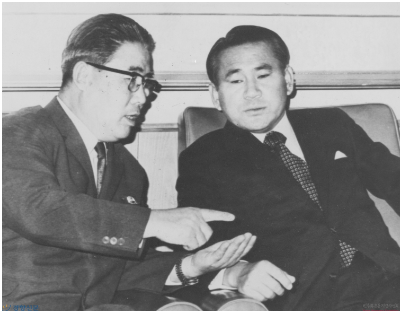
51 years ago, on July 4, 1972, South and North Korea announced the "South-North Joint Statement," which contained the agreements reached during a secret envoy exchange between Seoul and Pyongyang.
The July 4 South-North Joint Statement agreed upon the Three Principles of unification: independence, peace, and unity. It also included agreements on the cessation of slander and armed provocations, the implementation of comprehensive exchanges, cooperation through the South-North Red Cross Conference for resolving the issue of separated families, the establishment of a direct telephone line between Seoul and Pyongyang, and the operation of the South-North Coordinating Committee as a dialogue platform between the authorities of both sides.
These agreed-upon principles and ongoing major agenda items serve as guidelines for future improvements in inter-Korean relations and discussions on the issue of unification.
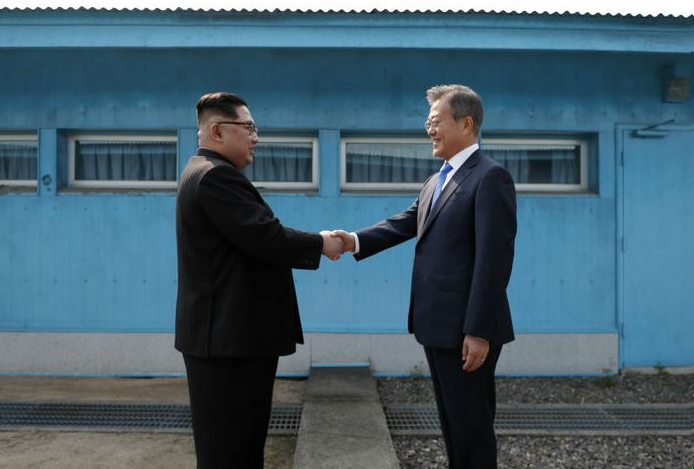
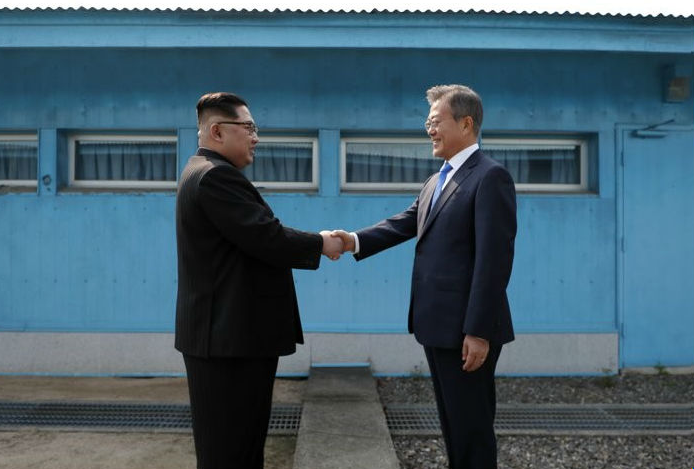
While interpretations of the Three Principles of Reunification may differ between South and North Korea, their validity has been reaffirmed in subsequent agreements, such as the "Agreement on Reconciliation, Non-Aggression, and Exchanges and Cooperation between the South and the North" adopted on February 13, 1991. The cessation of slander and armed provocations were further elaborated in the "Panmunjom Declaration" between the leaders of North and South Korea on April 27, 2018, and the "September 19 South-North Korea's Military Agreement" signed in Pyongyang in the same year. The resolution of the separated family’s issue is the responsibility of practical discussions within the framework of the Red Cross, supported by cooperation at the governmental level. The direct telephone line between North and South Korea has experienced interruptions and resumptions due to North Korea's whims, but the physical connection remains, and there is potential for utilizing it as a hotline. The South-North Coordinating Committee has operated in the form of high-level meetings involving Prime Ministers or Ministers.
During the tumultuous period of 20 years following the division of Korea in 1948 and the devastating Korean War from 1950 to 1953, South and North Korea remained entrenched in deep hostility. The two countries did not recognize each other as dialogue partners and showed little willingness to engage in meaningful discussions. Political leaders lacked the necessary resolve to peacefully address conflicts and foster cooperation.
In that regard, the early 1970s marked a significant turning point for South and North Korea, heralding a new era of "dialogue-driven inter-Korean relations."
The contemporary backdrop was influenced by the changing international landscape rooted in the improvement of U.S.-China relations and the political will of South and North Korean leaders to cope with these changes.
On July 25, 1969, U.S. President Richard Milhous Nixon introduced the Guam Doctrine, which emphasized that the primary responsibility for defense in Asian ally countries should lie with those nations themselves, leading to a reduction of U.S. military intervention. As part of this policy, the United States gradually reduced its military presence in both Vietnam and South Korea. In March 1971, the U.S. 6th Division withdrew approximately 20,000 troops from South Korea, reflecting the implementation of this approach.
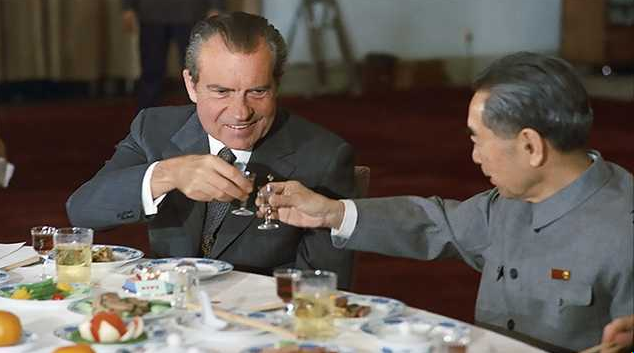
In July 1971, following a secret visit to China by Henry Kissinger, the White House National Security Advisor, China replaced Taiwan and became one of the permanent members of the United Nations Security Council. In February 1972, President Nixon visited China and issued the Shanghai Communiqué with Zhou Enlai, which included discussions on the Korean Peninsula in the joint statement. Notably, the United States expressed support for efforts to seek relaxation of tensions and enhanced dialogue on the Korean Peninsula.
The shift in U.S.-China relations caused concerns for South and North Korea, who saw them as key allies. The potential loss of a security shield raised apprehensions. Recognizing the security risks, the two Koreas engaged in direct dialogue to explore cooperation opportunities.
The exploratory dialogue initiated in the early 1970s between South and North Korea, amidst lingering mutual distrust and hostility, only confirmed their differences and was suspended from August 1973 onwards. Instead of seeking serious negotiations to find ways to reduce threats and achieve security, each side focused on enhancing their defense capabilities and consolidating their respective governance systems.
The significance of the initial South-North dialogue lies in the mutual recognition by both sides of the principle that "the issue of the Korean Peninsula should be peacefully resolved through dialogue." This principle garnered recognition not only within South and North Korea but also within the international community, including the United States and China.
(It continues in our next issue.)