

<Inter-Korean Relations Series 4>
Bridging the North-South Dialogue with North-US Nuclear Negotiations and Exploring New Solutions to the Korean Peninsula Issue

Jung Seung-hun, Professor extraordinary
Department of Politics and International Studies at Sunmoon University
Former head of office of the Inter-Korean Dialogue;
Former chief of North Korea Intelligence and Analysis Bureau;
Worked at the Ministry of Unification from 1990 to 2020
In February 2018, as North Korea took part in the Pyeongchang Winter Olympics on South Korean soil, a renewed phase of Inter-Korean dialogue commenced. This resurgence prompted high-level discussions, exchanges of special envoys between North and South Korea's political leaders, and paved the way for subsequent Inter-Korean summits. Over the course of that year, three such summits transpired, yielding tangible outcomes, including the landmark "Military Agreement" that curtailed inadvertent conflicts and alleviated tensions across the Military Demarcation Line.
Early March saw a pivotal moment as North Korean leader Kim Jong-un expressed his commitment to denuclearization and dialogue with the U.S. leadership during a meeting with South Korean special envoys in Pyongyang. Swiftly, President Donald Trump embraced the proposition, culminating in a consequential summit meeting. The Singapore Summit on June 12th marked a milestone with a principled consensus across four key themes: the normalization of U.S.-North Korean relations, the pursuit of a peaceful Korean Peninsula, comprehensive denuclearization, and the recovery of US human remains from the Korean War.
Yet, 2019 DPRK–USA Hanoi Summit, held over two days from February 27th to 28th, encountered substantive hurdles. The negotiations faltered as North Korea sought sanctions relief in return for partial nuclear dismantlement, a proposition that didn't align with the U.S. aspiration for comprehensive denuclearization.
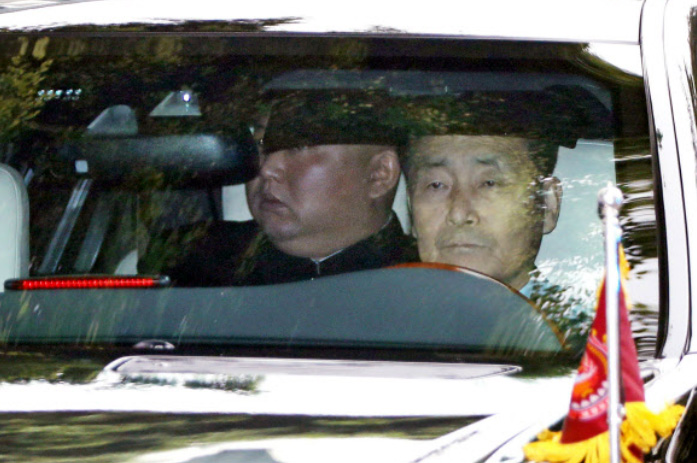
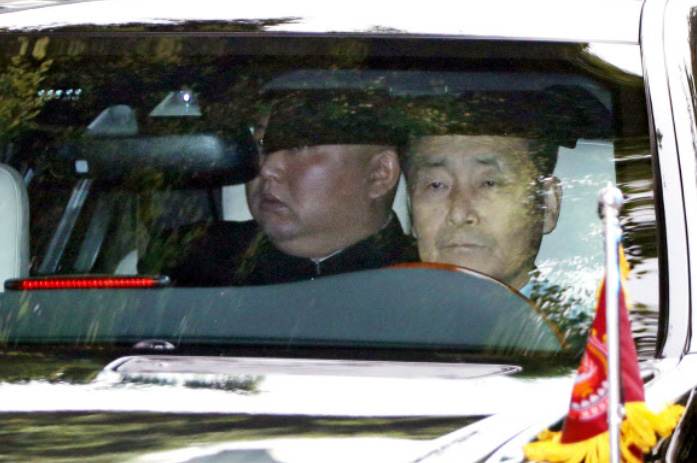
Kim Jong-un in transit following the disrupted US-North Korea summit in Hanoi on February 28, 2019 (local time) (Photo by Yonhap News Agency)
Amidst the US-North Korea summitry, China took a significant role, offering resources such as aircraft and a dedicated train for North Korean leader Kim Jong-un's use within its borders. Four visits to China underscored Kim's exchanges with President Xi Jinping, reflecting collaboration on the Korean Peninsula's denuclearization discourse and synchronizing strategies for U.S.-North Korea negotiations.
It has been three and a half years since the DPRK–USA Hanoi Summit, yet meaningful dialogue between South and North Korea, as well as between the US and North Korea, remains elusive. While a Trump-Kim-Moon DMZ Meeting took place in Panmunjom on June 30, 2019, it failed to yield productive outcomes. During this period, North Korea's nuclear capabilities have continued to advance, while sanctions and pressure have persisted, resulting in an enduring stalemate.
In mid-June of this year, US Secretary of State Anthony Blinken embarked on a visit to China, where he urged the nation to wield its influence over North Korea. During a press conference, Blinken underscored that China holds a "unique position" capable of pressuring North Korea to engage in dialogue and curtail hazardous actions.
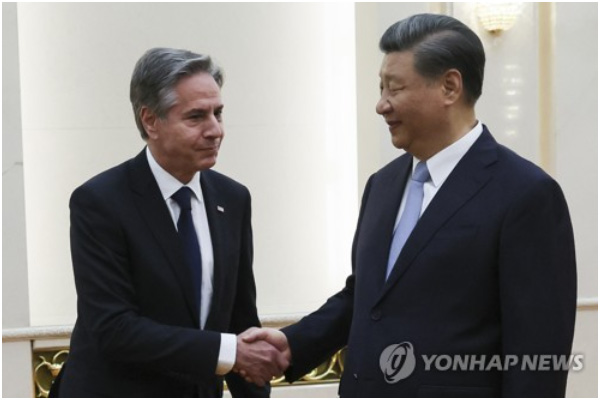
US Secretary of State Antony John Blinken, shaking hands with Xi Jinping during his visit to China, on June 18-19, 2023 (Photo by Yonhap News Agency)
The North Korean nuclear issue, which emerged in the early 1990s, has remained a core issue to be resolved for over 30 years. Leaving it unresolved without diplomatic efforts only worsens the situation. For sanctions and pressures to be effective, there needs to be a consolidated effort from the international community. However, this momentum is waning, and the background to this is the competition and conflict phases between the US-China and US-Russia.
The North Korean nuclear issue is not a standalone issue. It is linked to other issues, such as the establishment of a peace regime on the Korean Peninsula, normalization of DPRK-US relations, and economic cooperation. Not only South and North Korea, who are the direct parties of the Korean Peninsula issue, but also other neighboring countries, including the US, China, Russia, and Japan, have intertwined interests. Without progress in resolving the North Korean nuclear issue, it's impossible to create a space for agreement between North and South Korea through negotiations.
Will China, in response to the US's request, take action to curb North Korean provocations and facilitate their return to the negotiating table? Considering the intensifying rivalry and clashes between the US and China, it appears challenging to anticipate China's capacity to wield influence. Nevertheless, the silver lining emerges in the form of the North Korean nuclear issue, providing a potential avenue for cooperation between the US and China.
Keywords:
Inter-Korean dialogue history, external environment and U.S.-China relations, North Korean nuclear issues, bilateral-multilateral negotiation approaches
-
PREV [Opinion]
-
NEXT [Defectors' Podium]