

US Suggests Interim Steps for Denuclearization,
Russia Describes North Korea's Nuclear Defense as
'Their Own Nuclear Umbrella'
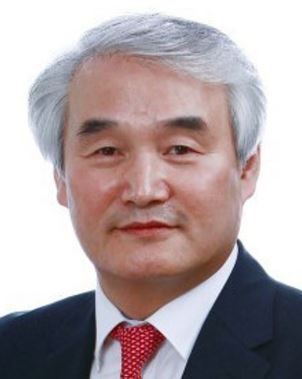
Son Gi-woong
Former President of the Korea Institute for National Unification
Recent comments from US senior officials and Russian President Putin on North Korea's nuclear issue have sparked concern.
Mira Rapp-Hooper, the National Security Council's Senior Director for East Asia and Oceania, stated at a forum on March 4th that the United States is open to considering interim steps towards North Korea's denuclearization.
She highlighted that the Biden administration has continuously offered unconditional dialogue with North Korea and is now prepared to engage in discussions with North Korea about 'reducing threats' in light of the current situation on the Korean Peninsula. These 'interim steps,' which could aid in regional and global stability, might initiate new dialogues with North Korea.
At a forum on March 5th, U.S. Senior Official for North Korea, Jung Pak, highlighted the need for interim steps towards denuclearization, stating that it wouldn't happen "overnight" and underscored the importance of intermediate steps towards this goal.
Meanwhile, some experts in the US argue that negotiations with North Korea should aim at reducing its nuclear arsenal, given the improbability of achieving complete denuclearization amidst ongoing development and enhancement of nuclear capabilities by North Korea.
Adam Mount, Senior Fellow at the Federation of American Scientists (FAS), in his contribution to the United States Institute of Peace (USIP) on March 4th, argued for a strategy that involves peaceful coexistence with a nuclear-armed North Korea. He suggested arms control as a means to stabilize the situation on the Korean Peninsula, particularly focusing on the reduction of tactical nuclear weapons that North Korea is likely to use in a crisis.
This stance suggests a US strategy to stabilize the Korean Peninsula by managing the scale and development of North Korea's nuclear capabilities while recognizing the regime's survival.
The existence of a 'North Korean villain' with nuclear capabilities justifies the 'US police' role, ensuring its sustainability in Northeast Asia. By offering a nuclear umbrella, the US can keep South Korea and Japan in a military alliance. Well-managed nuclear capabilities in North Korea could also serve as a strategic point against China. Hence, negotiating nuclear disarmament with North Korea and easing international sanctions are considered strategies for reducing regional tensions.
Negotiations for a 'freeze' on North Korea's nuclear program and 'partial lifting of sanctions' as 'interim steps’ are possible but must be part of the entire resolution process of the North Korean nuclear issue. Regardless of whether it's “Complete, Verifiable, Irreversible, Denuclearization (CVID)” or “Final, Fully Verified Denuclearization (FFID)”, a roadmap involving North Korea's agreement, international consensus, and a series of phased measures based on the current situation should be developed.
It's vital not to label negotiations and dialogue with North Korea as ‘disarmament.' Using this term would allow North Korea to take advantage, complicating efforts to progress beyond the disarmament framework.
The Yoon Suk-yeol government should challenge the Biden administration's motives and act decisively for peace and denuclearization in North Korea, honoring the "Joint Declaration on the Denuclearization of the Korean Peninsula" and the NPT, yet overlooking self-armament or reintroducing US tactical nukes in South Korea.
We must reaffirm the commitment to the "complete denuclearization of North Korea," urging it to abandon its nuclear and missile programs as per the "Camp David" declaration last August.
Additionally, it's important to recall the tripartite leaders' commitment to a "free and peaceful reunification of the Korean Peninsula," with the goal of establishing "One Korea."
The statement by Russian President Vladimir Putin, which seems to accept North Korea's nuclear capabilities by referring to it as ‘their own nuclear umbrella’, should be strongly protested and countered.
All South Koreans, whether part of the ruling party, the opposition, conservatives, or progressives, must unite in declaring that living under the threat of North Korean nuclear weapons and coexisting with the worst dictatorship does not align with our national interests or the aspirations of our people.