

Key Takeaways and Strategic Implications from the
2024 NATO summit in Washington

Lee Soo-hyung
Senior Research Fellow at INSS Institute for National Security Strategy
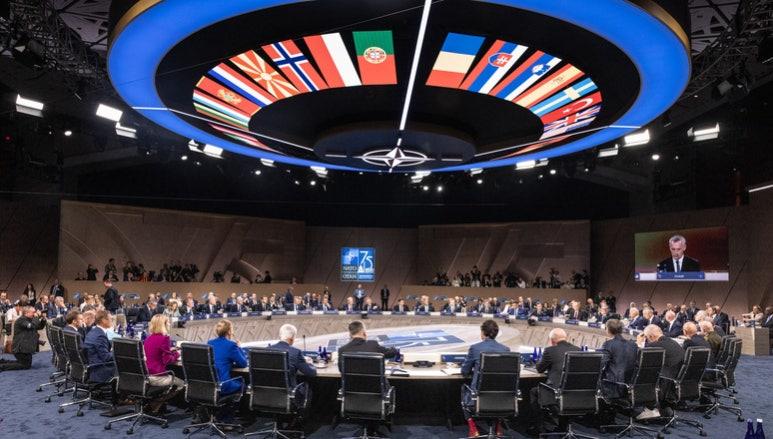
The NATO summit, held in Washington, D.C., USA, from July 9 to 11, 2024, commemorated NATO’s 75th anniversary. This summit occurred amidst significant internal and external challenges. Key issues included the ongoing Russian invasion of Ukraine, the debate over Western support for Ukraine, former President Trump’s critical views on NATO, which have become contentious during the 2024 U.S. presidential election, and the strengthened North Korea-Russia relations following the June summit in Pyongyang, which negatively affect the Ukraine conflict and Korean Peninsula security. These factors contributed to a tense atmosphere for the Washington summit. Thus, the summit was not merely a celebration of 75 years of the Euro-Atlantic Partnership, but a crucial meeting to discuss and address the pressing security threats and future challenges facing NATO.
Given these factors, this article aims to explore the key takeaways from the Washington summit and identify their strategic implications. The primary topics discussed at the summit included support for Ukraine in relation to the ongoing conflict, enhancing NATO’s defense capabilities, NATO’s stance and response to Russia, and security cooperation with partner countries.
Firstly, NATO committed to long-term security support for Ukraine during the Washington Summit Declaration. The alliance decided to establish NATO Assistance and Security Training for Ukraine (NASTU) to coordinate the provision of military equipment and training. NATO affirmed its commitment to help Ukraine build an army capable of repelling Russian aggression and deterring future invasions, agreeing to provide at least 40 billion euros in funding by 2025.
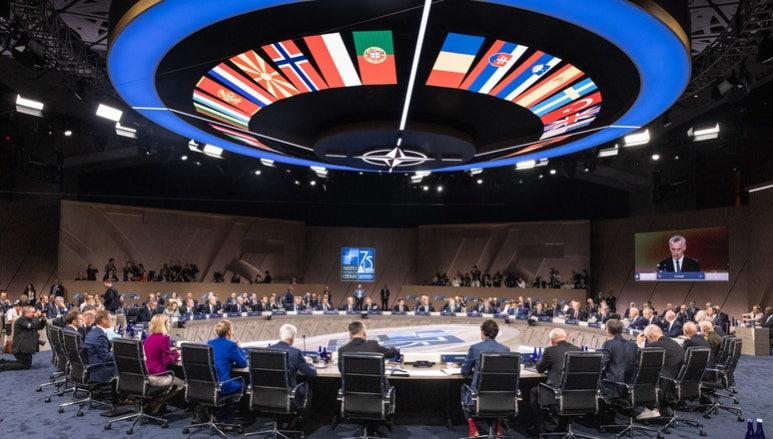
33rd NATO Summit in 2024/NATO homepage
This commitment to long-term military support for Ukraine is also seen as a strategic move in light of the potential election of Trump, who has been less supportive of aid to Ukraine. NATO thus reaffirmed its dedication to Ukraine’s security, independent of the potential political changes in the U.S.
Another significant aspect of the summit was the enhancement of NATO’s defense capabilities amid rising military tensions and conflicts in Europe due to Russia’s invasion of Ukraine. At the Madrid summit in June 2022, NATO introduced a new Force Model to counter the Russian threat, capable of mobilizing 100,000 troops within 10 days, 200,000 within 30 days, and 500,000 within six months. The 2023 Vilnius summit adopted a regional defense plan to activate NATO Response Force and provide reinforcement troops against Russian aggression.
The Washington summit reaffirmed the commitment made at Vilnius to fully implement the defense commitments, aiming to strengthen NATO’s defense capabilities by providing the necessary troops, resources, and infrastructure for the new defense plan. Additionally, NATO decided to enhance its missile defense system based on a holistic approach.
The summit also focused on evaluating and understanding the threat posed by Russia and its allies. At the Madrid summit, NATO identified Russia, the aggressor in Ukraine, as a significant and direct threat. This perspective remained unchanged at the Washington summit. NATO stressed that Russia aims to fundamentally alter the Euro-Atlantic security framework. The threats from Russia are expected to continue long-term, with Russia diversifying its nuclear arsenal, increasing reliance on nuclear systems, developing new ones, and deploying short and medium-range dual-strike capabilities, which pose a growing threat to the alliance. NATO also expressed concern over Russia's aggressive hybrid actions across the Euro-Atlantic region. In response, NATO plans to develop strategic approaches to counter Russia’s threats at the Hague summit in June 2025.
North Korea and China are closely linked with Russia’s efforts to change the European security structure. North Korea, along with Iran, exacerbates Russia's war in Ukraine by providing military support such as munitions and drones, severely affecting Euro-Atlantic security and undermining the global non-proliferation regime. China, having formed an extensive partnership with Russia, plays a crucial role in supporting Russia's defense industry in the Ukraine war.
Therefore, NATO calls on China to halt all material and political support for Russia's war efforts, including the transfer of dual-use materials like weapon components, equipment, and raw materials. NATO is also concerned that, aside from supporting Russia, China continues to challenge Euro-Atlantic security by rapidly expanding and diversifying its nuclear arsenal with more warheads and sophisticated delivery systems. NATO emphasizes that it remains open to constructive engagement with China, urging China to join strategic risk reduction discussions and promote stability through transparency.
This Washington summit, like the 2022 Madrid summit, identified China as a systemic challenger. However, since China was first mentioned in NATO’s official documents at the 70th-anniversary London summit in 2019, NATO’s perception of China has evolved from viewing it as a competitor to recognizing it as a significant security threat. U.S. Secretary of State Blinken highlighted in this summit that the current security threat in Europe is the most severe since the Cold War, attributing this to China’s support for Russia and the deepening North Korea-Russia relationship.
Lastly, the summit underscored the importance of security cooperation with partner countries. NATO highlighted that its cooperation with the European Union, a strategic partner, has reached unprecedented levels. NATO and the EU are enhancing practical cooperation in areas such as space, cyber, climate, defense, and emerging and disruptive technologies (EDTs). NATO also celebrated the 30th anniversary of the Mediterranean Dialogue and the 20th anniversary of the Istanbul Cooperation Initiative, inviting these partner countries to the summit to promote stability and peace in the Middle East and surrounding regions.
Particularly, NATO emphasized the security link between the Euro-Atlantic and Indo-Pacific regions, stressing the importance of addressing common security challenges and enhancing practical cooperation with NATO IP4 countries: South Korea, Japan, Australia, and New Zealand.
The Washington summit, held to mark NATO's 75th anniversary, focused more on addressing current and future security threats than on celebration. The primary strategic implications derived from this summit include the likelihood of a prolonged conflict between NATO and Russia, given NATO’s view of Russia’s invasion of Ukraine as a fundamental restructuring of European security. This tension will likely serve as a major battleground for global order reorganization, leading Europe into a long-term conflict phase. Secondly, NATO increasingly views China as a significant security threat.
NATO's changing perception of China is part of a broader global competition aimed at altering the rules-based liberal international order. This rivalry is expected to grow and become more intense across political, economic, and security spheres at both regional and international levels. Additionally, the strengthened ties between Russia and North Korea has increased the security interdependence between the Euro-Atlantic and Indo-Pacific regions, reflecting in the realities of international politics. Consequently, most security issues in these regions will likely escalate into broader bloc issues, grouping related actors regardless of their national or regional affiliation. If not managed properly, a specific issue could evolve into a “chain-gang” problem, involving all directly or indirectly connected parties.
-
PREV [Column2]
-
NEXT [Defectors' Podium]